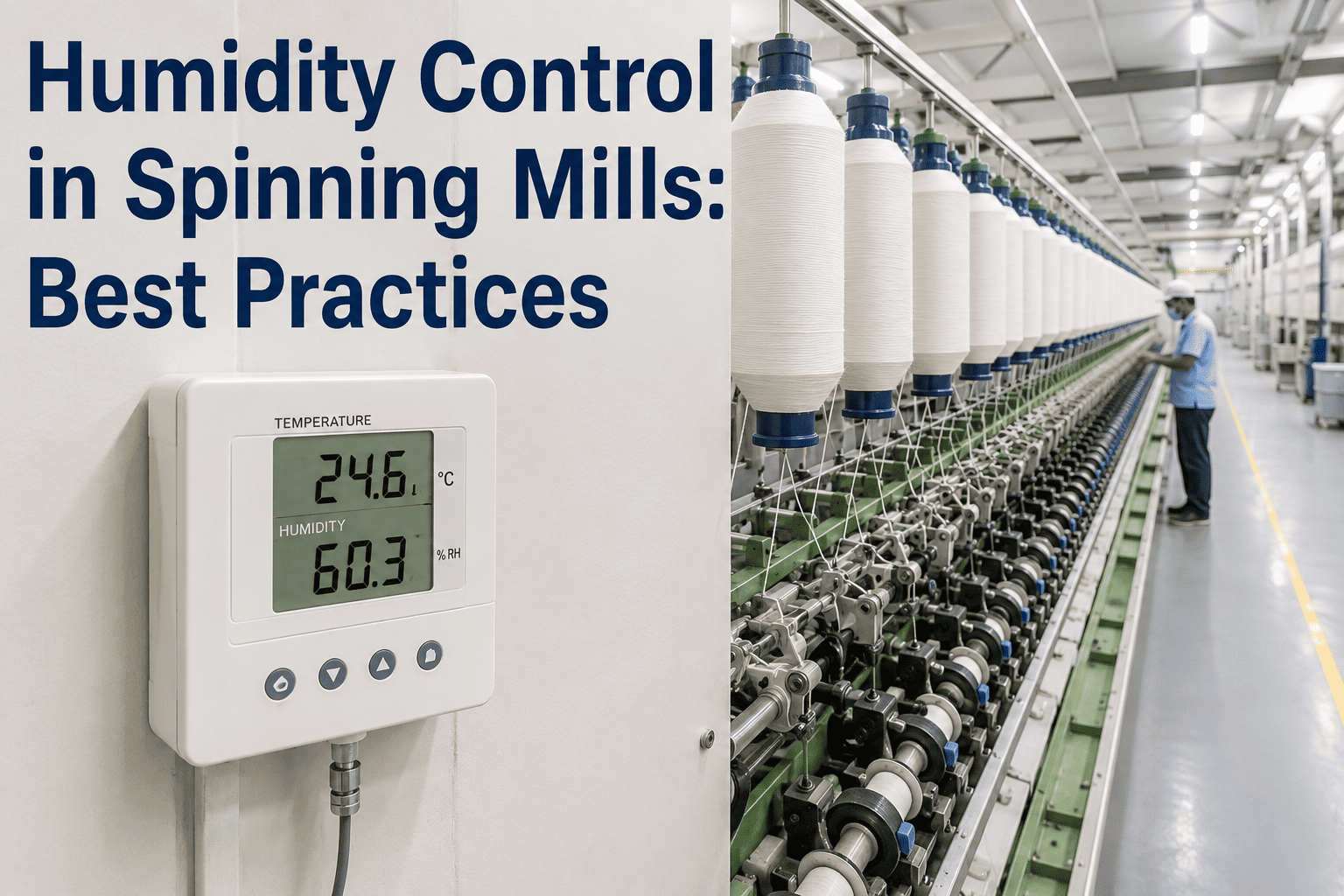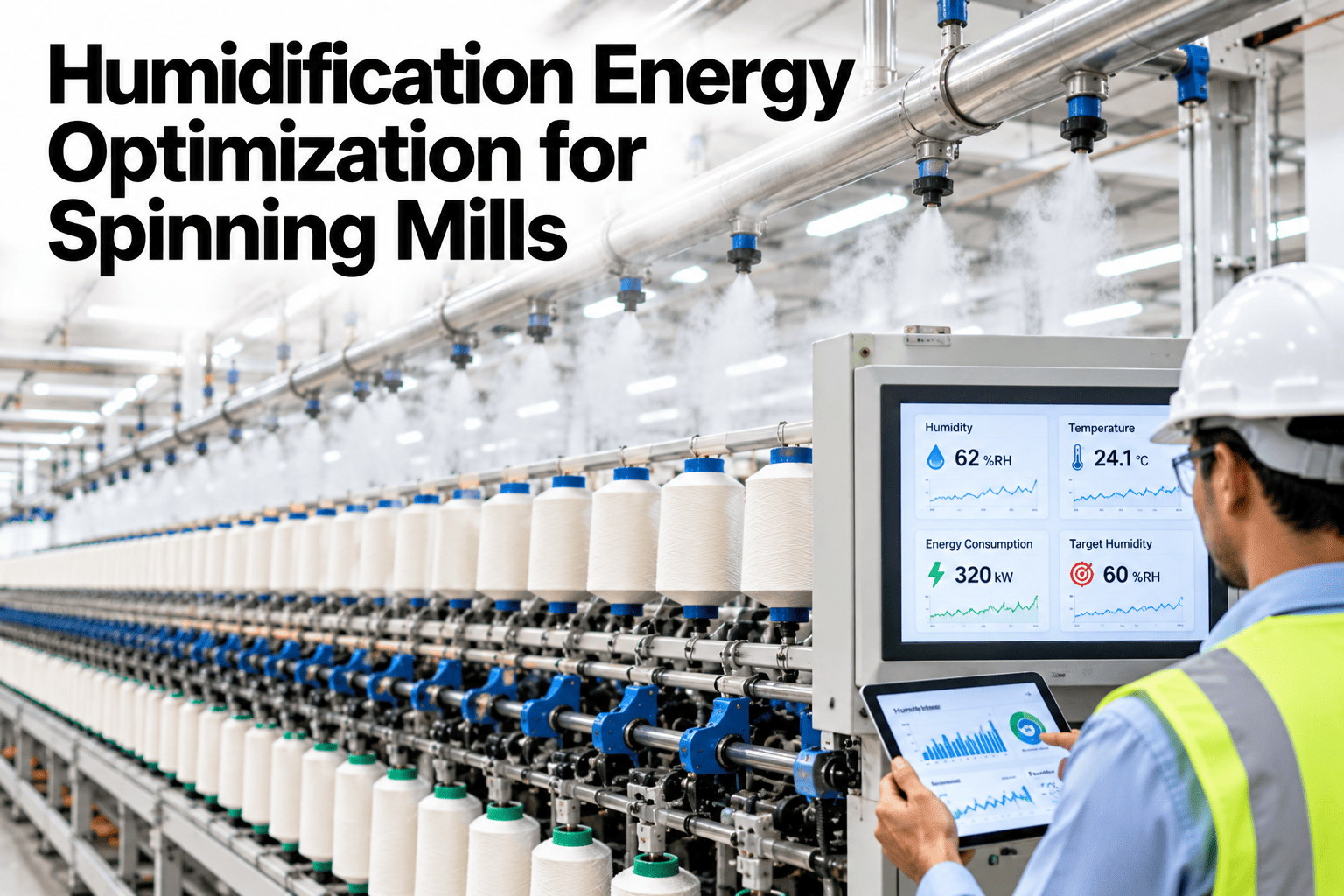
Running humidification at a conservative, round-the-clock setting feels safe, but it quietly burns energy a mill rarely gets back. The humidity a spinning room actually needs shifts by hour, by season, and by which zone is running which fiber, yet many systems are set once and left alone for years. Balancing humidity targets against energy use means watching room conditions, humidification load and production output together, so the system runs hard only when the process actually demands it. This guide covers how that balance is found. Mills ready to see their own humidification load analysed can book a demo with the iFactory AI team.
Humidification Energy Optimization for Spinning Mills
Balance humidity targets with energy use by monitoring room conditions, humidification load and output across departments.
Why a Fixed Setting Wastes Energy
A humidification system set to hold one target around the clock has to work hardest during the driest hours and does unnecessary work during the many hours conditions are already closer to target on their own.
Matching the system's effort to actual demand, rather than running flat out as a precaution, is where most of the energy saving sits.
What Drives Humidification Load
A handful of factors determine how hard the humidification system has to work at any given hour.
| Driver | Effect on Load | How It Is Tracked |
|---|---|---|
| Outdoor humidity and season | Drier outside air increases system effort | Weather and outdoor sensor data |
| Production schedule | Equipment heat and fiber mix shift internal conditions | Production and shift records |
| Zone target band | A tighter band demands more continuous correction | Zone target configuration |
| Door and airflow traffic | Frequent openings pull in dry outside air | Operational pattern by shift |
Finding the Balance
The optimization runs as a short, repeatable sequence that keeps quality protected while reducing unnecessary energy use.
Run Humidification to Match Demand, Not a Clock
Book a 30-minute walkthrough and see your own humidification load matched against real conditions and output.
A Sample Load Comparison, Illustrative
The figures below are invented to show the shape of the saving, not to benchmark your mill.
Common Optimization Mistakes
The same errors repeat across mills attempting to cut humidification energy for the first time.
Where This Fits Into a Broader Energy Program
Humidification is rarely a mill's single biggest energy line, but it is often one of the easiest to optimize without touching production equipment directly.
Many mills treat it as an early, low-risk win inside a broader energy program, since the savings are measurable quickly and the quality risk stays well controlled throughout.
Frequently Asked Questions
How much energy saving is realistic?
Savings vary by climate and current setpoint strategy, but a meaningful double-digit percentage reduction is common for mills moving from a fixed setting to a demand-matched approach. Book a demo to estimate your own potential saving.
Does this risk yarn quality to save energy?
No, adjustments stay within the quality-safe humidity band for each zone, so the system only trims effort during windows where conditions are already comfortably inside that band.
Does this work with our existing humidification equipment?
In most cases, yes. The optimization adjusts setpoints and scheduling on your existing system rather than requiring new humidification hardware. Ask support which systems connect.
How long before the saving shows up on the energy bill?
Most mills see a measurable reduction within the first few weeks of demand-matched operation, with the full seasonal saving pattern becoming clear after a complete yearly cycle.
Stop Humidifying for Hours the Process Does Not Need
iFactory AI matches humidification effort to real demand without risking yarn quality. Book a walkthrough built around your mill.