Every combing shed runs on a trade-off that rarely gets discussed out loud: push the noil percentage up and yarn quality climbs, but so does raw material cost, because every extra percent of noil is fiber leaving the mill as waste rather than yarn. Push it down to save cost and the short fibers you were supposed to remove start showing up as neps, hairiness, and imperfections three processes later, usually as a customer complaint. The mills that get this balance right aren't guessing — they are watching lap uniformity, comb setting, and detaching roll timing together as one system, and adjusting before the balance sheet or the quality lab tells them something went wrong. If your combing noil percentage has been drifting and nobody can say exactly why, book a demo with our team and we'll walk through your comber data together.
Textile Manufacturing · Spinning Process
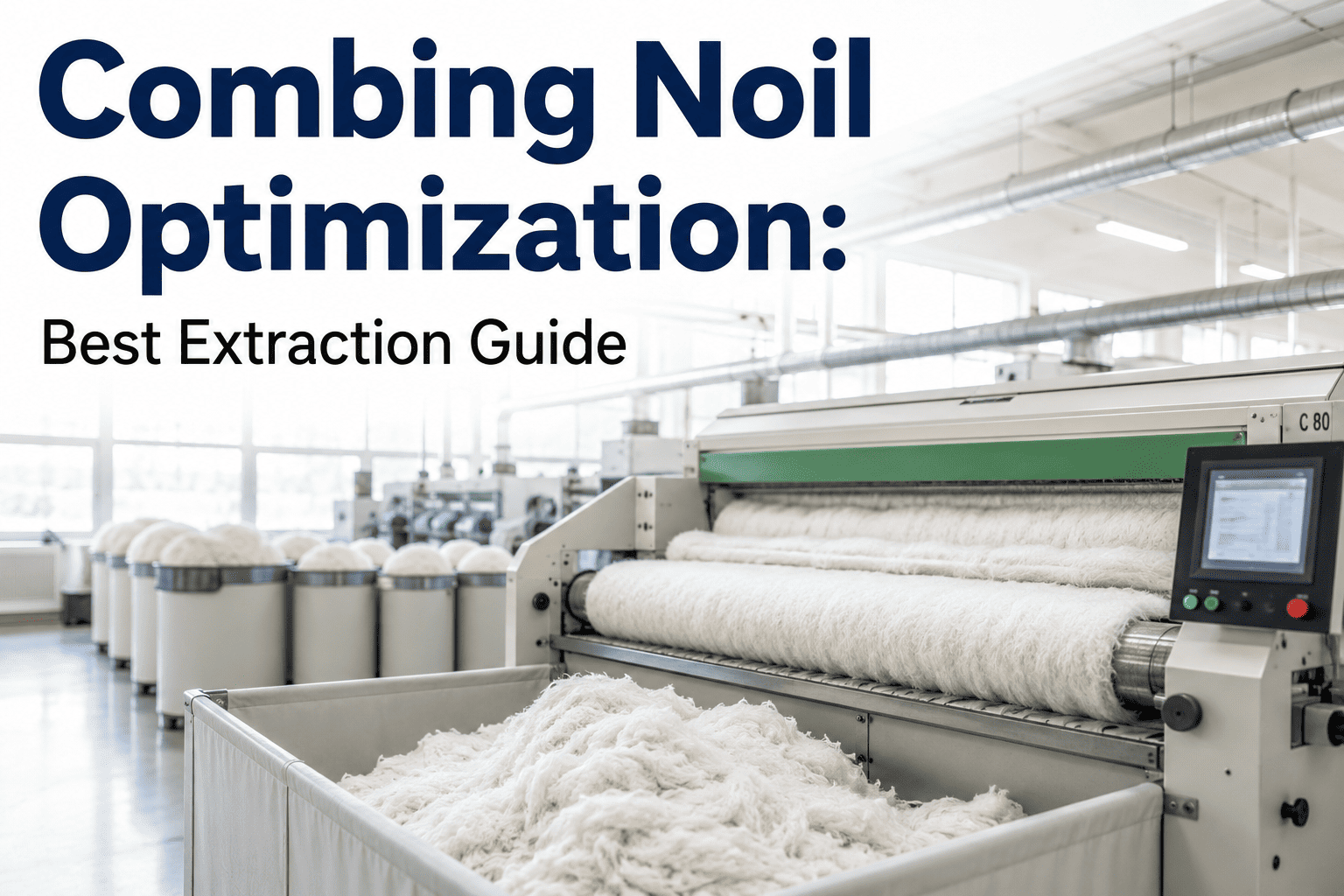
Combing Noil Optimization: The Real Guide to Extraction Without Waste
Noil percentage is the single most misunderstood setting on the comber. Too low and short fibers escape into your combed sliver. Too high and you're paying premium cotton prices to throw fiber in the waste bin. Here's how to find the number that actually works for your yarn count.
12-18%
Typical noil range, fine counts
1%
Noil shift can move yarn cost 1.5-2%
3
Settings that drive 80% of noil variation
Why Noil Percentage Is Never Just One Number
Ask five mill managers what the "right" noil percentage is and you'll get five different answers, and all five can be correct — because the right number depends on the fiber you're feeding, the count you're spinning, and the market you're selling into. A mill combing for 40s carded-equivalent yarn destined for basic knitwear has no business running the same noil percentage as a mill combing for 100s two-fold yarn going into premium shirting. The first mill is paying for fiber it doesn't need to remove; the second is risking quality if it doesn't remove enough.
Noil Set Too Low
Short fiber content in sliver stays high, hairiness increases downstream
Neps per gram climbs, especially with immature or stressed cotton
Yarn evenness (U%) degrades, more frequent clearer cuts at winding
Fiber cost looks good on paper, quality cost shows up later
Noil Set Too High
Good, spinnable fiber length is removed along with the short fiber
Raw material cost per kg of finished yarn rises noticeably
Noil resale value rarely covers the lost fiber value
Quality gain plateaus — you're paying for improvement you don't get
The Three Settings That Actually Move Noil Percentage
Most combers have a dozen adjustable parameters, but in practice, three settings account for the overwhelming majority of noil percentage variation. Get these three right and the rest of the machine tends to follow. Get them wrong and no amount of fine-tuning elsewhere will fix the underlying imbalance.
1
Lap Preparation Uniformity
A comber can only extract as consistently as the lap feeding it is uniform. Uneven laps from the sliver lap or ribbon lap machine force the comber to overcompensate on the tightest spots, driving average noil up across the whole run even when most of the lap was fine.
2
Comb Setting and Needle Density
The gauge of the top comb and circular comb, and the distance they sit from the nipper line, determines how aggressively short fiber is combed out. Tighter settings pull more noil but risk damaging good fiber; looser settings protect fiber length but let short fiber pass through.
3
Detaching Roll Timing
The overlap between the incoming and outgoing fringe at the detaching rolls controls piecing quality and noil extraction together. Timing drift here is the most common silent cause of noil creep — it changes gradually and rarely gets checked until quality complaints force a review.
Building a Noil Percentage Benchmark for Your Own Mill
Generic industry ranges are a starting point, not a target. The table below gives typical noil ranges by application, but the number that matters is the one you establish from your own fiber, your own comber model, and your own downstream quality data over a full production cycle.
Yarn Application
Typical Noil %
Priority Driver
Basic knit, coarse count
8-11%
Cost efficiency
Standard combed yarn, medium count
12-15%
Balanced
Premium shirting, fine count
16-19%
Evenness and hairiness
Compact or two-fold export yarn
18-22%
Zero-defect quality target
See Your Own Noil Data, Not Just Industry Averages
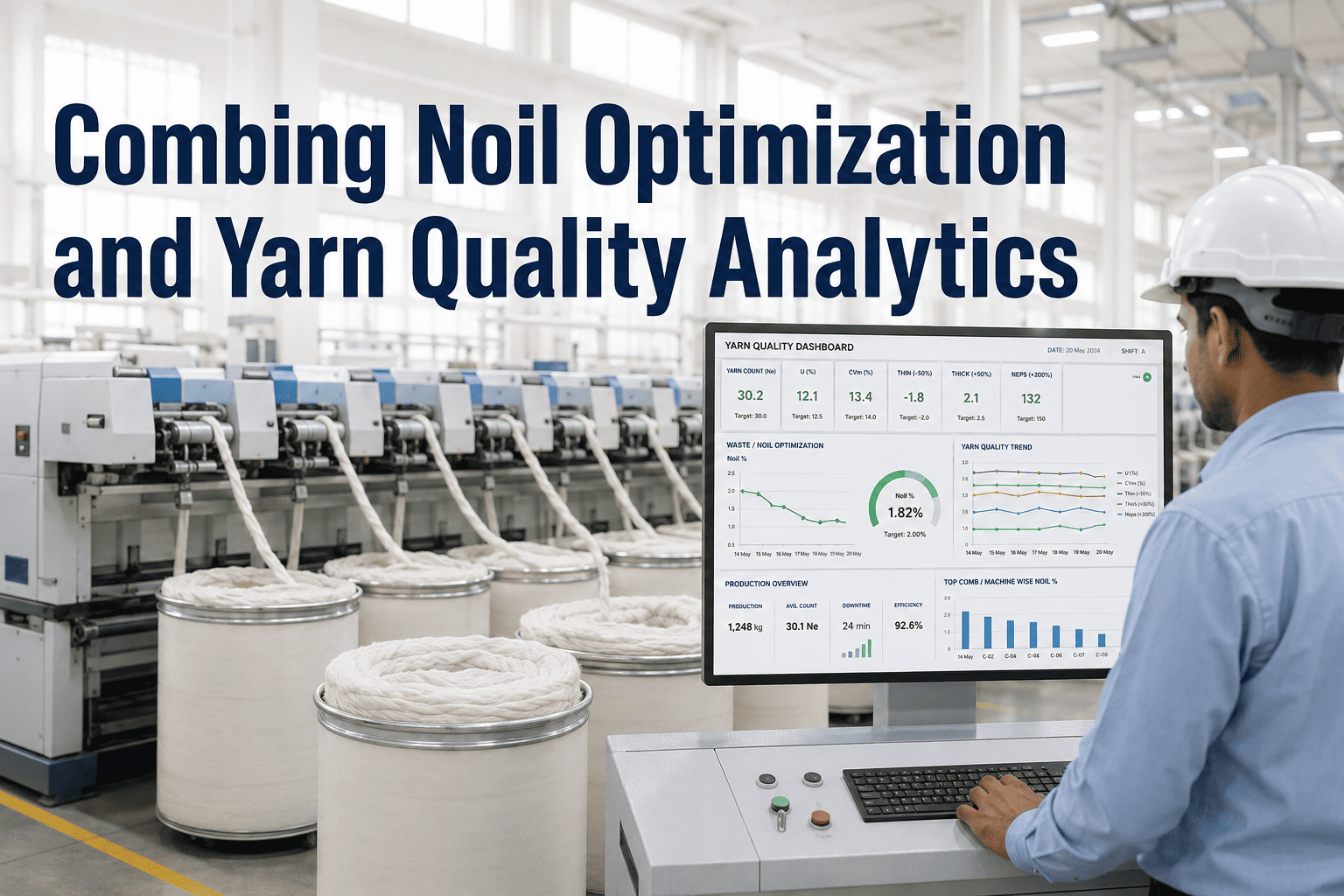
iFactory pulls comber, lap, and downstream quality data into one view so you can see exactly which shift, which machine, and which setting drift is driving your noil percentage — before it shows up as a cost or quality problem.
Reading the Warning Signs Before Noil Percentage Drifts Too Far
Noil percentage rarely jumps overnight. It creeps, a fraction of a percent at a time, as needles wear, as detaching roll timing loosens, and as lap quality fluctuates with cotton batch changes. The mills that stay ahead of it are watching a small set of leading indicators rather than waiting for the monthly cost report to flag a problem.
Sign 1
Comber waste percentage varies more than 1.5 points between shifts on the same lot — usually points to inconsistent lap feed or operator setting drift rather than fiber variation.
Sign 2
Short fiber content in combed sliver creeps upward across a needle set's service life, even with stable noil percentage — a sign the extraction is becoming less efficient per unit of waste.
Sign 3
Neps per gram in combed sliver rise while noil percentage stays flat, suggesting the comb setting is removing volume but not the specific short fiber fraction causing neps.
Sign 4
Noil resale grade drops even though extraction weight stays the same — often traced back to detaching roll timing pulling in more good fiber alongside the short fiber.
What Good Noil Control Looks Like Month to Month
A well-controlled comber doesn't produce a flat noil percentage — it produces a predictable one that moves in a known, explainable band as fiber batches change, and returns to baseline as soon as the batch normalizes. That predictability is what separates a mill that is managing its combing process from one that is simply reacting to it.
Weekly Lap Uniformity Check
Spot-check lap weight variation at the sliver lap stage. A 2% swing in lap weight can translate to a 1% or more swing in comber noil, so catching it here is far cheaper than catching it at the comber.
Needle Wear Tracking
Log running hours against needle sets rather than relying on visible wear alone. Extraction efficiency degrades before wear becomes visually obvious, and by then noil percentage has usually already crept up.
Detaching Roll Calibration
Build detaching roll timing checks into your preventive maintenance schedule rather than treating it as a reactive fix. Timing drift is gradual and easy to miss until piecing quality or noil percentage moves noticeably.
Batch-Linked Noil Review
Tag noil percentage data to the specific cotton batch running through the comber, not just the date. This is the fastest way to separate genuine setting drift from expected variation caused by fiber quality changes.
Connecting Noil Cost to Fiber Batch Quality
The noil percentage that made economic sense on last month's cotton batch may not be the right number for this month's batch, and mills that treat noil percentage as a fixed setting rather than a variable tied to incoming fiber quality end up either over-paying for unnecessary extraction or under-delivering on quality without realizing why. Cotton with higher short fiber content going into the comber needs a different noil target to hit the same downstream quality outcome than cotton with lower short fiber content, even when both are nominally the same grade on the bale classification sheet.
This is where a lot of mills leave money on the table without knowing it. A comber running a static 15% noil setting across every batch is, in effect, over-extracting on good-quality batches and under-extracting on poor-quality ones, because the setting was never designed to flex with incoming fiber. The fix isn't complicated in principle — link noil percentage targets to a short fiber content measurement taken at bale mixing or lap stage — but it does require the discipline to actually measure fiber quality as it changes, rather than relying on the classification data that came with the cotton purchase, which may be weeks old by the time the fiber reaches the comber.
Mills that make this connection typically find their average noil percentage across a full production cycle stays roughly the same, but the variance narrows considerably, and the quality outcomes become more predictable batch to batch. That predictability is often worth more to a mill's customer relationships than a marginally lower average noil percentage would be, because customers notice inconsistency in combed yarn quality far more readily than they notice a percentage point of raw material cost.
Frequently Asked Questions
What noil percentage should I target for combed cotton yarn?
Most combed cotton yarn runs between 12% and 19% noil depending on count and end use, with finer counts and export-grade quality requirements trending toward the higher end of that range. There is no universal correct number — the right target depends on your fiber's short fiber content going in, your customer's quality specification, and the cost tolerance your pricing allows. The only reliable way to set your own number is to trial a range across several batches and track both quality outcomes and noil resale value. If you want help building that benchmark from your own comber data,
book a session with our team.
How does lap quality affect comber noil percentage?
Lap quality is the single biggest upstream driver of noil percentage variation. An uneven lap forces the comber's extraction settings to compensate for the tightest, densest sections, which pulls noil percentage up across the entire lap even where fiber density was already fine. Mills that tighten lap weight uniformity at the sliver lap and ribbon lap stage typically see noil percentage stabilize within a tighter band without touching the comber settings at all, which is usually the cheapest and fastest fix available.
Why does noil percentage drift even when settings haven't changed?
The most common cause is gradual needle wear combined with detaching roll timing that shifts slightly as machine components age, neither of which shows up as an obvious mechanical fault. Fiber batch changes are the second most common cause — cotton with different maturity or short fiber content going into the same nominal settings will produce a different noil percentage without any operator input. Tracking noil percentage against both machine running hours and cotton batch data separately is the fastest way to tell these two causes apart.
Can I reduce noil percentage without hurting yarn quality?
Yes, but only by improving what's happening upstream rather than simply loosening comb settings. Tightening lap uniformity, maintaining detaching roll timing on a strict schedule, and replacing needle sets before extraction efficiency degrades all let you run a lower noil percentage while removing the same or more short fiber, because the comber is working more efficiently rather than working harder. Simply loosening comb settings to cut noil without addressing these upstream factors almost always shows up as increased hairiness or neps within a few production cycles.
How can iFactory help monitor noil percentage across multiple combers?
iFactory connects comber output data, lap quality measurements, and downstream quality lab results into a single dashboard, so mills can see noil percentage trends per machine, per shift, and per cotton batch instead of relying on end-of-month cost reports. This makes it possible to catch setting drift or needle wear while it's still a small deviation rather than a quality complaint. Mills running multiple combing lines use it to compare machine-to-machine performance and standardize on whichever settings are producing the best cost-to-quality balance.
Book a demo to see it against your own comber data.
Stop Guessing at Your Noil Percentage
The mills getting this balance right aren't running a single fixed number — they're watching lap uniformity, comb settings, and detaching roll timing together and adjusting before cost or quality data forces the issue. iFactory gives you that visibility across every combing line in one place.