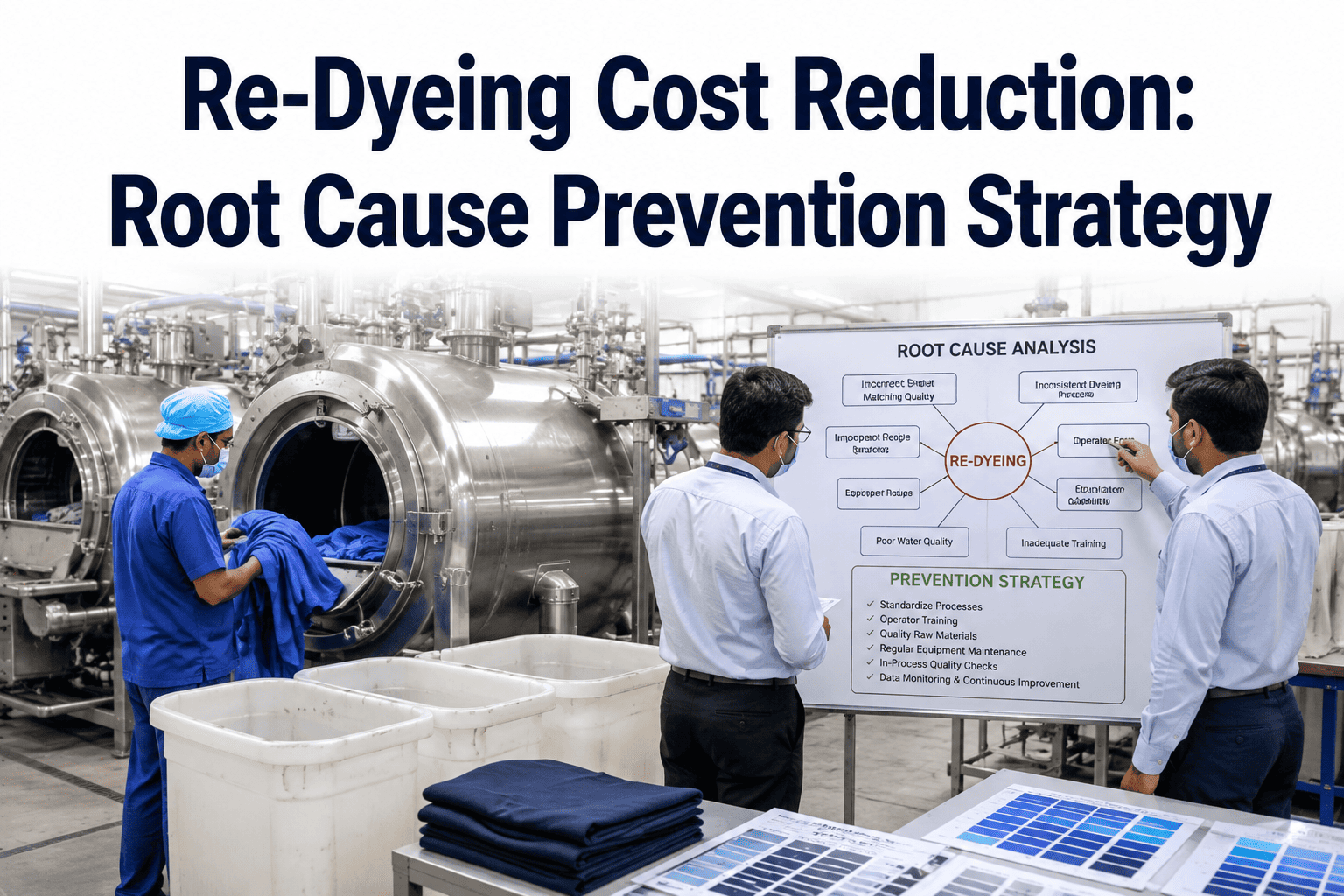
The same ring frame bearing fails for the third time this year, and the work order says "replaced bearing" with no mention of why it keeps happening. That's the quiet cost of skipping root cause failure analysis — every repeat failure gets treated as a fresh incident instead of a symptom of something upstream that was never actually fixed. A structured RCFA process turns "it broke again" into a documented chain of cause and effect that a maintenance team can actually act on. See how iFactory structures failure investigations for textile plants.
Stop Replacing the Same Part. Start Finding Out Why It Keeps Failing.
Root cause failure analysis (RCFA) is a structured investigation method that traces a failure backward through its contributing causes until it reaches the true origin — the condition that, if corrected, prevents the failure from recurring at all.
Why Textile Failures Keep Repeating Even After the "Fix"
Spinning, weaving, and finishing equipment runs in conditions that make surface-level repair tempting — high throughput pressure, tight changeover windows, and a maintenance team incentivized to get the machine running again rather than to ask why it stopped. A bearing gets swapped, a belt gets replaced, a sensor gets reset, and the line restarts within the hour. But if the actual driver was misalignment, contamination ingress, or a control parameter drifting out of range, the replacement part is simply on the same countdown as the one it replaced. Textile RCFA has to account for fiber dust, humidity swings, and continuous three-shift operation, all of which accelerate degradation in ways that generic RCFA training rarely covers in enough depth to be useful on the mill floor.
The economics make the case on their own. A single unplanned stoppage on a ring frame or a rapier loom rarely costs just the price of the replacement part — it costs the lost production hours, the rush freight on an expedited spare, the overtime paid to catch up on the shift's target, and often a quality deviation on the batch that was mid-run when the failure occurred. When the same failure repeats three or four times a year on the same asset, that cost multiplies while the underlying condition remains untouched. Plants that track this properly usually find that the cumulative cost of a chronic repeat failure, spread across a year, is several times higher than the one-time cost of a proper investigation would have been. The reluctance to invest an afternoon in a structured RCFA is almost always a false economy once the repeat cost is added up honestly.
There is also a quieter cost that rarely shows up in a downtime report at all: the erosion of trust between production and maintenance teams. When the same fault reappears repeatedly despite repair after repair, production supervisors stop believing that maintenance can actually solve the problem, and start building slack time and buffer inventory into their planning just to absorb the next inevitable stoppage. That buffer is itself a hidden cost, quietly baked into schedules and staffing levels because nobody trusts the fix to hold. A properly closed RCFA, one that demonstrably stops the failure from recurring, does more than eliminate downtime — it rebuilds the confidence that lets production plan tightly again instead of padding every schedule against a fault everyone has learned to expect.
The Investigation Ladder: Five Steps From Symptom to Source
Define the Failure Precisely
Document exactly what failed, when, under what operating condition, and what the immediate symptom was — vague descriptions like "machine stopped" make every later step weaker.
Gather Physical and Data Evidence
Preserve the failed part, pull vibration or temperature trends leading up to the event, and interview the operator who was present, before memory or evidence degrades.
Map the Causal Chain
Apply 5 Why or fishbone analysis to move from the immediate mechanical cause back through the conditions that allowed it, not stopping at the first plausible answer.
Verify the Root Cause
Test the identified cause against the evidence — if correcting it would not have prevented the failure, the investigation has stopped one layer too early.
Assign and Track Corrective Action
Convert the root cause into a specific, owned action with a deadline, and track whether the failure mode actually stops recurring over the following months.
A Repeat Failure Is a Question Nobody Finished Answering
iFactory logs every failure event against its equipment history automatically, so the third occurrence of the same fault surfaces on its own instead of waiting for someone to notice the pattern.
Three Investigation Methods, Matched to Failure Complexity
5 Why Analysis
A sequence of five "why did that happen" questions, each answer becoming the next question, best suited to single-cause mechanical failures like a snapped drive belt or a seized bearing.
Fishbone (Ishikawa) Diagram
Organizes potential causes into categories — machine, method, material, manpower, and environment — useful when a failure could plausibly stem from several different directions at once.
Fault Tree Analysis
Works backward from the failure through a logic tree of AND and OR conditions, best reserved for failures with multiple interacting contributing factors, such as a spinning frame end-break spike.
A Fishbone Breakdown Applied to a Real Weaving Loom Stoppage
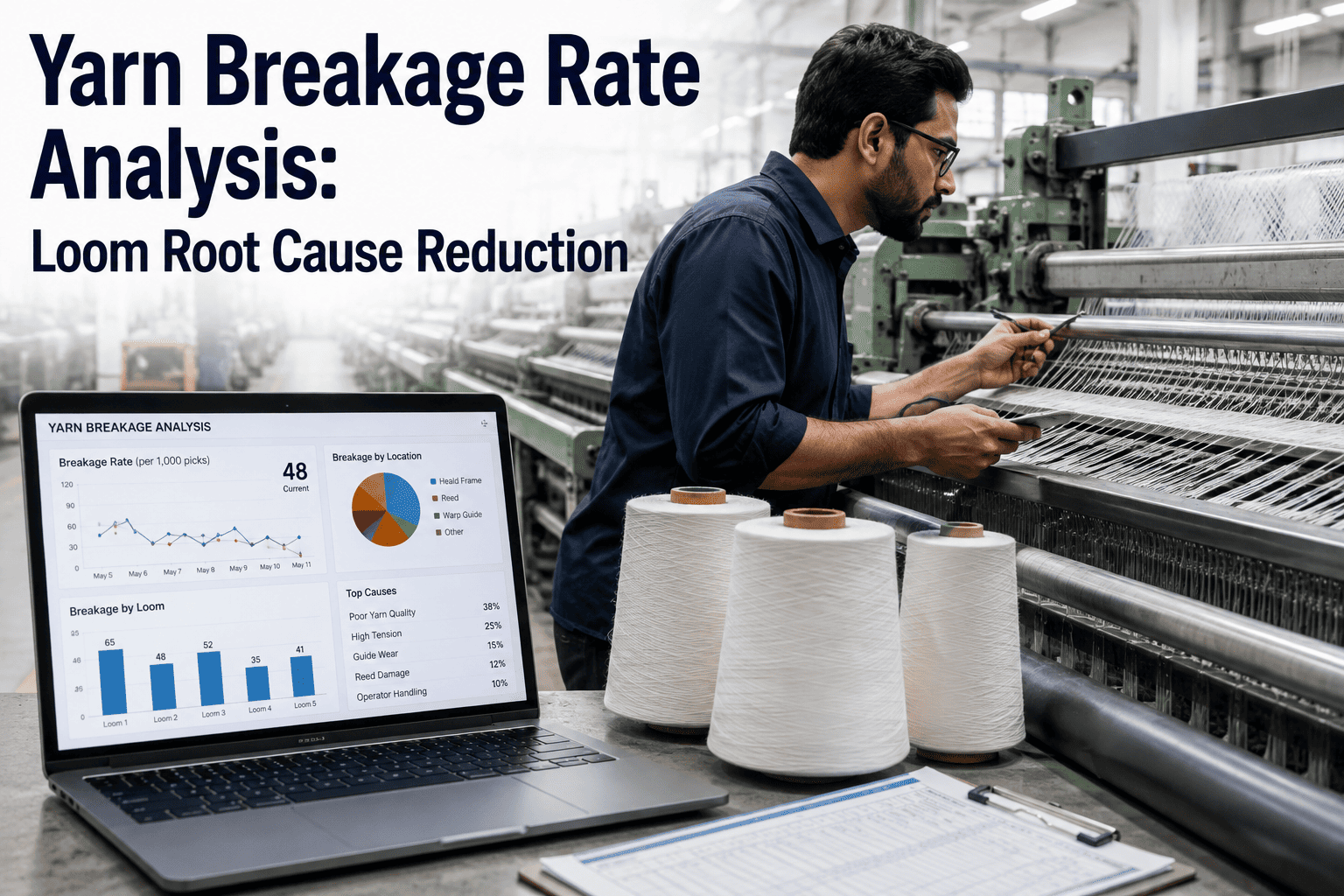
A recurring warp break on a rapier weaving loom had been logged eleven times over four months, each time closed out with "warp yarn replaced" and no further note. When the maintenance team finally ran a fishbone analysis, they sorted potential contributing factors across five categories rather than accepting the first explanation offered by the operator on shift.
The worn heald wire turned out to be the dominant factor, confirmed by microscopic inspection of the break point on three separate yarn ends, but the investigation also flagged the outdated tension standard as a contributing condition that would have kept causing intermittent breaks even after the wire was replaced. Both were corrected together, and the loom ran eight months without a repeat of that specific break pattern.
Common Mistakes That Quietly Invalidate an RCFA
Stopping at the First Plausible Cause
"The bearing failed because it was worn" is a symptom description, not a root cause — the investigation has to explain why it wore out faster than its rated life in the first place.
Treating Operator Error as the End Point
Blaming a missed step usually just relocates the question — why was the step easy to miss, why wasn't it caught downstream, and why did the process allow it to matter this much.
Skipping Verification of the Root Cause
A hypothesis that sounds reasonable in a meeting room needs to be checked against the physical evidence before it becomes the basis for a corrective action plan.
No Follow-Up to Confirm the Fix Worked
An RCFA that ends at the corrective action, without tracking whether the failure mode actually stopped recurring, never confirms whether the real cause was found at all.
Fault Tree Analysis for a Multi-Factor Spinning Frame Failure
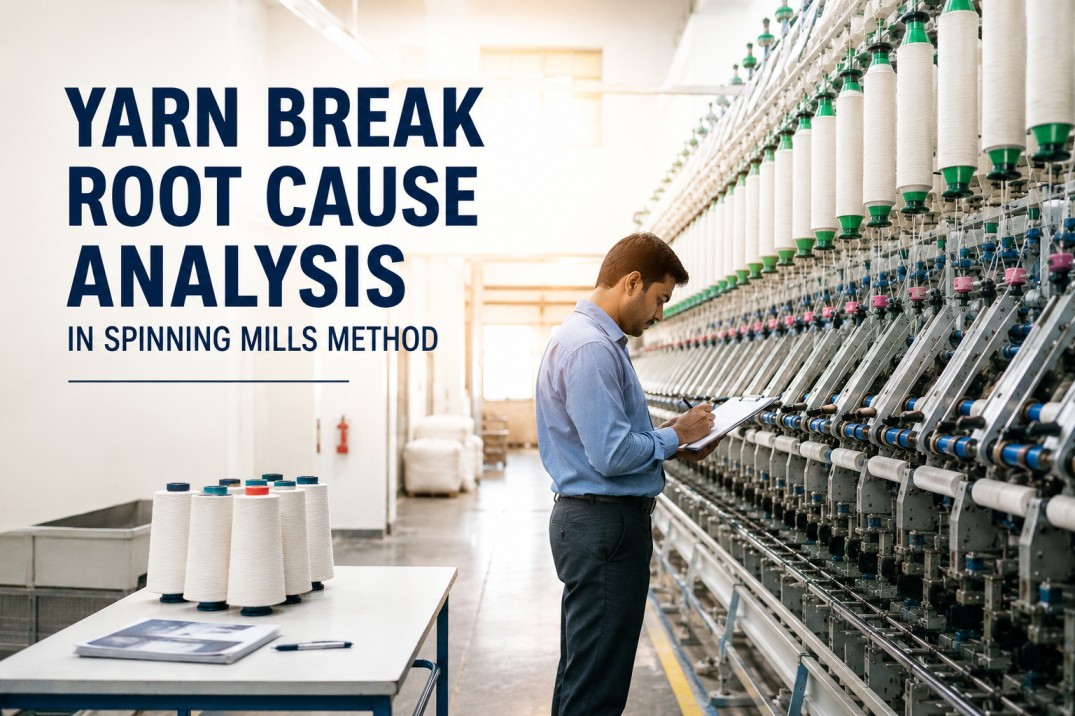
A textile mill's ring spinning frame experienced a sharp increase in end breaks across a two-week period, but unlike the loom example, no single factor explained the full pattern. Fault tree analysis proved better suited here because the failure appeared to require the interaction of more than one condition rather than a single dominant cause. The team started with the top event — the abnormal end-break rate — and worked backward through a logic structure of intermediate conditions, testing each branch against the shift-by-shift data rather than relying on a single technician's intuition.
The investigation revealed that the spike required two conditions to occur together: a slightly elevated spindle speed introduced during a recent efficiency adjustment, combined with a humidity drop in the spinning hall during a particular week of unusually dry weather. Neither condition alone had caused problems previously — the plant had run at the new spindle speed for six weeks without issue, and humidity had dipped before without a corresponding break spike. It was the combination, exceeding a threshold neither factor reached independently, that pushed yarn tension past its breaking point often enough to matter. This is precisely the kind of interaction that a simple 5 Why chain tends to miss, since it naturally follows a single line of reasoning rather than testing for compounding factors. The corrective action added a humidity-triggered spindle speed adjustment to the control logic, addressing the interaction directly rather than reversing either change in isolation.
RCFA Trigger Thresholds by Equipment Criticality
| Equipment Criticality | RCFA Trigger | Investigation Depth | Sign-Off Required |
|---|---|---|---|
| Critical (bottleneck asset) | Any unplanned stoppage | Fault tree or fishbone, cross-functional team | Plant maintenance manager |
| High (single-line dependency) | Second occurrence within 90 days | Fishbone, maintenance lead and shift supervisor | Maintenance lead |
| Medium (redundant capacity exists) | Third occurrence within 90 days | 5 Why, technician-led | Shift supervisor |
| Low (non-bottleneck, low-cost part) | Pattern noted, no immediate trigger | 5 Why, logged for quarterly review | Logged only |
What a One-Page RCFA Record Should Actually Contain
The documentation format matters almost as much as the method itself, because a template technicians find tedious simply won't get filled out consistently during a busy shift. The most effective RCFA records in textile plants tend to be a single page, organized around a handful of fields: the asset identifier and failure date, a precise description of the symptom as observed, the physical and data evidence collected, the causal chain as mapped through 5 Why or fishbone, the verified root cause with supporting evidence noted, the corrective action assigned with an owner and due date, and a follow-up field left blank until enough time has passed to confirm whether the failure mode actually stopped recurring. Plants that add photo attachments of the failed part directly into this record find it dramatically easier to spot patterns later, since a picture of a worn heald wire or a pitted bearing race often triggers recognition of a similar failure on a different machine that a text description alone would not.
Keeping the format lightweight is deliberate. A technician under pressure to get a loom back into production will not fill out a four-page investigation form with the same care as a one-page record they can complete in fifteen minutes at the end of a shift. The goal is to make disciplined documentation the path of least resistance rather than an extra burden competing with production targets.
Building an RCFA Habit Into a Textile Maintenance Team
The methods themselves are simple enough to teach in an afternoon; the harder part is building a culture where a repeat failure automatically triggers an investigation instead of another quick part swap. That shift usually depends on three things working together: a clear threshold for when RCFA is mandatory rather than optional, a lightweight documentation format technicians will actually fill out under time pressure, and visible follow-through showing that findings lead to real process or design changes rather than disappearing into a file nobody reopens. Plants that get this right treat the RCFA log itself as a diagnostic tool — reviewing it quarterly to spot equipment classes or shifts where repeat failures cluster, which often points to a training gap or a spare-parts quality issue well before it would surface any other way.
Turning Individual Investigations Into a Plant-Wide Pattern View
A single RCFA fixes a single failure, but the real leverage in the method shows up once dozens of investigations accumulate and someone starts reading across them for patterns. A quarterly review of closed RCFA records often surfaces trends that no individual investigation would catch on its own — a particular spare parts supplier associated with a disproportionate share of premature bearing failures, a specific shift where tension-check steps get skipped more often than others, or an equipment class that consistently traces back to inadequate lubrication scheduling rather than a design flaw. These cross-cutting patterns are usually invisible at the level of any single work order, because each individual failure looks like an isolated mechanical event until it's placed next to a dozen similar ones.
Building this pattern view requires that RCFA records be structured consistently enough to search and filter — by equipment type, by root cause category, by shift, by supplier — rather than living as free-form notes in a maintenance log. This is where a digital record beats a paper file cabinet decisively: a plant can filter every RCFA from the last year down to those with a root cause category of "material quality" and immediately see whether one supplier accounts for a disproportionate share, informing a conversation with procurement that no individual maintenance technician would otherwise have the visibility to initiate. The habit of periodically reviewing this aggregated view, not just closing individual investigations, is what separates a plant that merely performs RCFA from one that actually reduces its chronic failure rate over time.
Is Your Plant Ready to Formalize RCFA
You can pull failure history by asset, not just by work order
If finding the last three failures on a specific ring frame takes more than a few minutes, the data structure itself is the first thing worth fixing.
Technicians have a standard template for logging findings
A one-page 5 Why or fishbone template lowers the barrier enough that investigations actually get documented during a busy shift rather than skipped.
Someone owns reviewing patterns across investigations
Individual RCFAs only compound in value when someone is looking across all of them for recurring categories of cause.
Frequently Asked Questions
How is RCFA different from a standard maintenance work order note?
A work order note records what was done to restore the equipment, typically a part replacement or adjustment, while RCFA asks the separate question of why the failure happened in the first place. A work order can be closed the same day a machine restarts, but a proper RCFA often takes longer because it requires gathering evidence, testing hypotheses, and verifying that the identified cause actually explains the failure pattern. Without that separate step, the same underlying condition keeps generating new work orders indefinitely. Visit support to see how failure history and work orders connect in one view.
When should a textile plant use 5 Why versus a fishbone diagram?
5 Why works best for failures with a single, relatively linear cause chain, such as a fuse that blew because a motor drew excess current because a bearing seized. Fishbone diagrams are better suited to failures where the cause could plausibly come from several unrelated directions at once, like a recurring warp break that could stem from machine wear, yarn quality, tension settings, or environmental humidity. Starting with 5 Why and escalating to fishbone if the answers branch in multiple directions is a practical way to match effort to complexity.
How many times should a failure repeat before RCFA becomes mandatory?
The right threshold depends on the criticality of the asset — a bottleneck machine with no redundant capacity often warrants a full investigation after the very first unplanned stoppage, while a low-cost, non-critical part might reasonably wait until a third occurrence before triggering formal analysis. Setting these thresholds explicitly, by criticality tier, prevents both wasted effort on trivial failures and dangerous complacency on the assets that actually drive downtime cost.
What evidence should be preserved immediately after a failure?
The failed physical part itself, any available sensor or condition-monitoring data leading up to the event, photographs of the failure point before disassembly, and a same-shift interview with the operator or technician present all degrade in value quickly if collection is delayed. Waiting even a day or two to gather this evidence often means the physical part gets scrapped, the data window rolls out of retention, and the operator's memory of the exact sequence of events has already blurred.
How does a plant confirm that a root cause was correctly identified?
The strongest confirmation is a sustained absence of the same failure mode after the corrective action is implemented, tracked over a meaningful period rather than just the next few weeks. A secondary check is asking whether the identified cause, if it had been present from the start, would fully explain every detail of the failure evidence gathered — if it only explains part of the pattern, the investigation likely stopped one layer too early. Book a demo to see how iFactory tracks recurrence after a corrective action is logged.
Every Repeat Failure Is a Question the Last Repair Left Open
iFactory connects failure history, technician notes, and equipment data into one traceable record, so a recurring pattern surfaces before it becomes the twelfth "warp yarn replaced" entry on the same loom.