The factory floor conversation goes the same way almost everywhere: "the goods are fine, they're all up to standard." Then the shipment reaches the buyer, and a phone full of photos comes back showing color mismatch, failed stitching, or crushed packaging — and the entire lot gets rejected, not because the factory was lying, but because internal confidence and a statistically valid pre-shipment inspection are two completely different things. A buyer's audit doesn't ask whether a factory believes its goods are good. It asks whether a properly drawn sample clears a pre-agreed defect threshold. iFactory helps mills run that same audit on themselves before goods are ever booked, not after a buyer's inspector already has.
A Shipment That Passes Internal Checks Can Still Fail a Buyer's Audit — Here's the Gap Between Them
Pre-shipment rejection prevention comes down to running the same statistically valid AQL sample and documentation standard a buyer's inspector will apply, before goods are packed and booked, not after a rejection notice arrives.
Three Inspection Stages, and Why Skipping the Early Ones Guarantees Surprises Later
A shipment rejection almost never traces back to a single missed defect at the final check — it traces back to a systemic issue that started earlier in production and was never caught because inspection only happened once, at the very end, when correcting anything meant reworking finished goods instead of fixing the process.
The three-stage structure exists precisely because each stage catches a different category of risk, and none of the three substitutes for the others. A factory that only runs pre-production checks has no visibility into whether workmanship stays consistent as the run progresses. A factory that only runs final inspection has no chance to correct a systemic problem before the entire order is already built. The stages work as a layered system, each one narrowing the range of possible surprises still waiting at the next.
Fabric, Trims, and Approved Samples
Checking fabric quality before cutting and confirming trims and labels match the approved sample catches material-level problems before they're built into every unit downstream.
30-50% Completion
Checking workmanship, stitching, and construction while a meaningful share of the order is still ahead catches a systemic problem while there's still time to correct it in production rather than in rework.
80-100% Completion, Export-Packed
The AQL-sampled inspection that determines pass or fail before goods ship, run once the order is complete and packed the way it will actually leave the factory.
Skipping straight to final inspection and treating it as the only checkpoint is the single most common pattern behind late-stage rejections, because by that point a systemic issue — a fabric batch variation, a stitching problem that crept in partway through the run — has already been built into a large share of the order rather than caught and corrected early.
AQL Sampling: What a Buyer's Audit Is Actually Checking
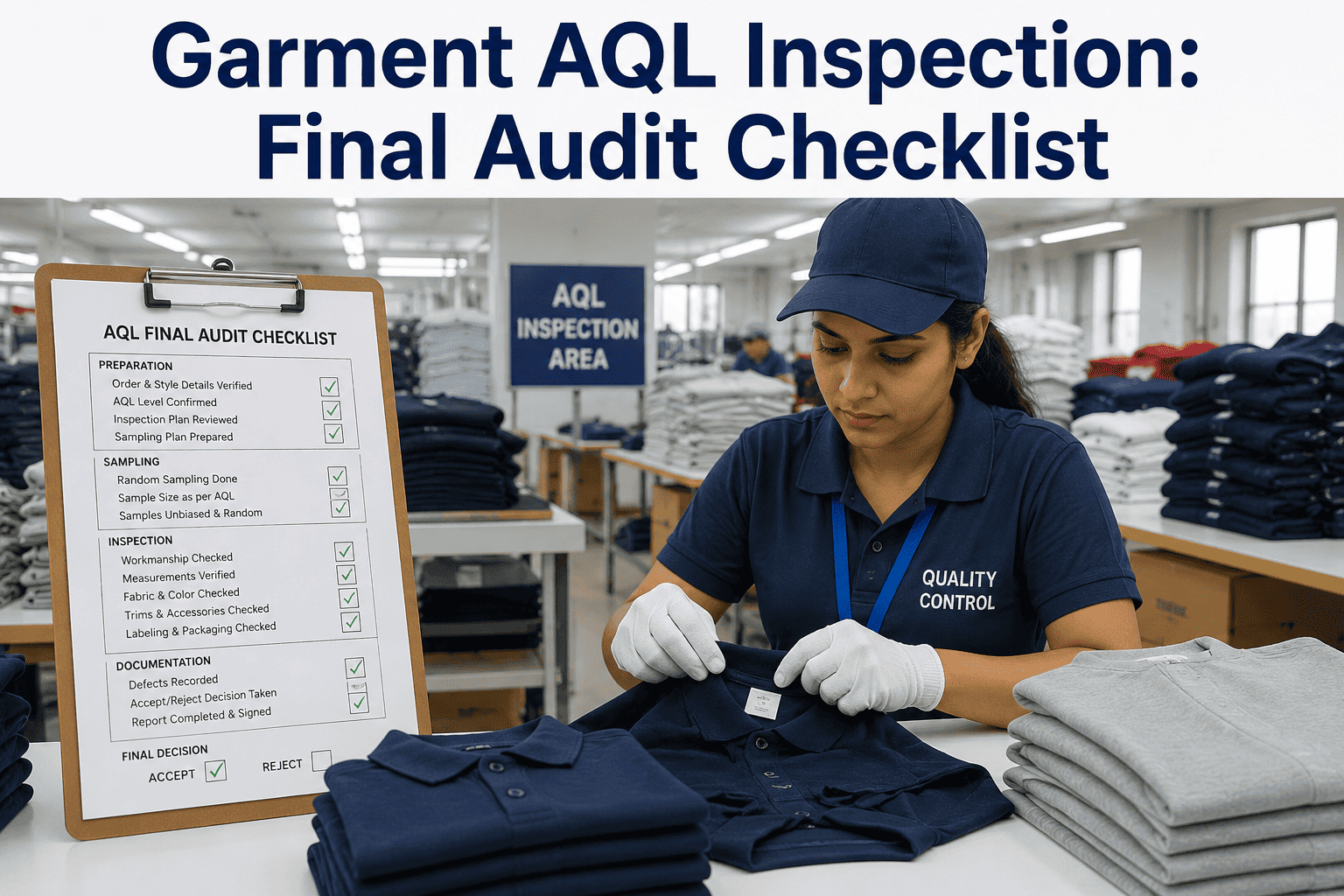
Acceptable Quality Limit sampling is the statistical method almost every buyer's final inspection is built around, and understanding its mechanics is what lets a factory predict, rather than guess at, whether its own goods will pass. Instead of checking every unit in a shipment, an inspector examines a randomly drawn sample sized to the lot, counts defects by severity, and compares the result against a pre-agreed threshold.
The statistical logic behind sampling rather than 100% inspection is worth understanding, because it explains why AQL results carry real, quantifiable risk on both sides of the transaction. A good lot that's only marginally better than the agreed threshold still carries a real, calculable chance of being rejected purely due to sampling variation, just as a lot that's only marginally worse than the threshold still carries a real chance of passing. Neither outcome means the sampling plan failed — it means both the factory and the buyer are operating within a known, documented statistical risk rather than a guaranteed certainty in either direction.
| Defect Class | Typical AQL Level | What It Covers |
|---|---|---|
| Critical | Zero tolerance | Safety-related issues; a single critical defect typically fails the shipment outright |
| Major | Commonly 2.5 | Flaws a customer would notice and likely reject the garment for — broken stitching, incorrect color, non-functioning components |
| Minor | Commonly 4.0 | Issues unlikely to affect function or usability — loose threads, slight color variation within an approved range |
These specific numbers — 2.5 for major, 4.0 for minor — are buyer-selected starting points rather than a value mandated by the sampling standard itself, and the current ISO 2859-1:2026 revision remains the reference framework defining how the sample size and acceptance numbers scale against total lot size and inspection level.
A Shipment Doesn't Fail Because a Factory Lied. It Fails Because Nobody Ran the Buyer's Own Math First.
iFactory logs and classifies defects by severity throughout production, so the AQL math a buyer will run is never a surprise at final inspection.
Sample Size and Randomness: The Two Details Most Self-Audits Get Wrong
Running an internal pre-shipment check without pulling a properly sized, properly randomized sample defeats the purpose of doing an AQL-based self-audit at all — a sample drawn from the easiest-to-reach cartons, or sized arbitrarily rather than against the standard sampling table, doesn't actually predict what a real buyer audit will find.
Sample Size Scales With Lot Size
The sampling table defines exactly how many units to check based on total shipment quantity and the agreed inspection level, not an arbitrary round number chosen for convenience.
Randomness Across the Full Lot
The sample needs to be drawn randomly across cartons spanning the entire lot, not concentrated in whichever cartons happen to be easiest to open and check.
Readiness Before Sampling
AQL sampling is only representative once the order is at or near completion and export-packed — sampling an incomplete order only tells a factory about the portion already finished.
A common and costly mistake is checking a small, convenient handful of units and calling it a final inspection — technically an inspection happened, but it wasn't the sampling plan a buyer's own audit will actually apply, which means it doesn't predict the buyer's result with any real confidence.
Color Consistency: The Defect Category That Fails Shipments Most Often
Across apparel, textile, and home goods categories, color discrepancy is consistently reported as one of the most common and most commercially damaging pre-shipment rejection causes — and it's also one of the categories where subjective visual judgment differs most between a factory's own quality team and a buyer's inspector.
Relies on an inspector's eye and lighting conditions that can vary from station to station
A subtle but real batch-to-batch color shift can pass an internal visual check yet still read as visibly different to a buyer
A color difference meter quantifies the actual gap between batches in objective, repeatable units
A documented case found a ΔE of 3.2 between batches — a difference visible to the naked eye and enough to cause rejection under a 2.5 AQL grade
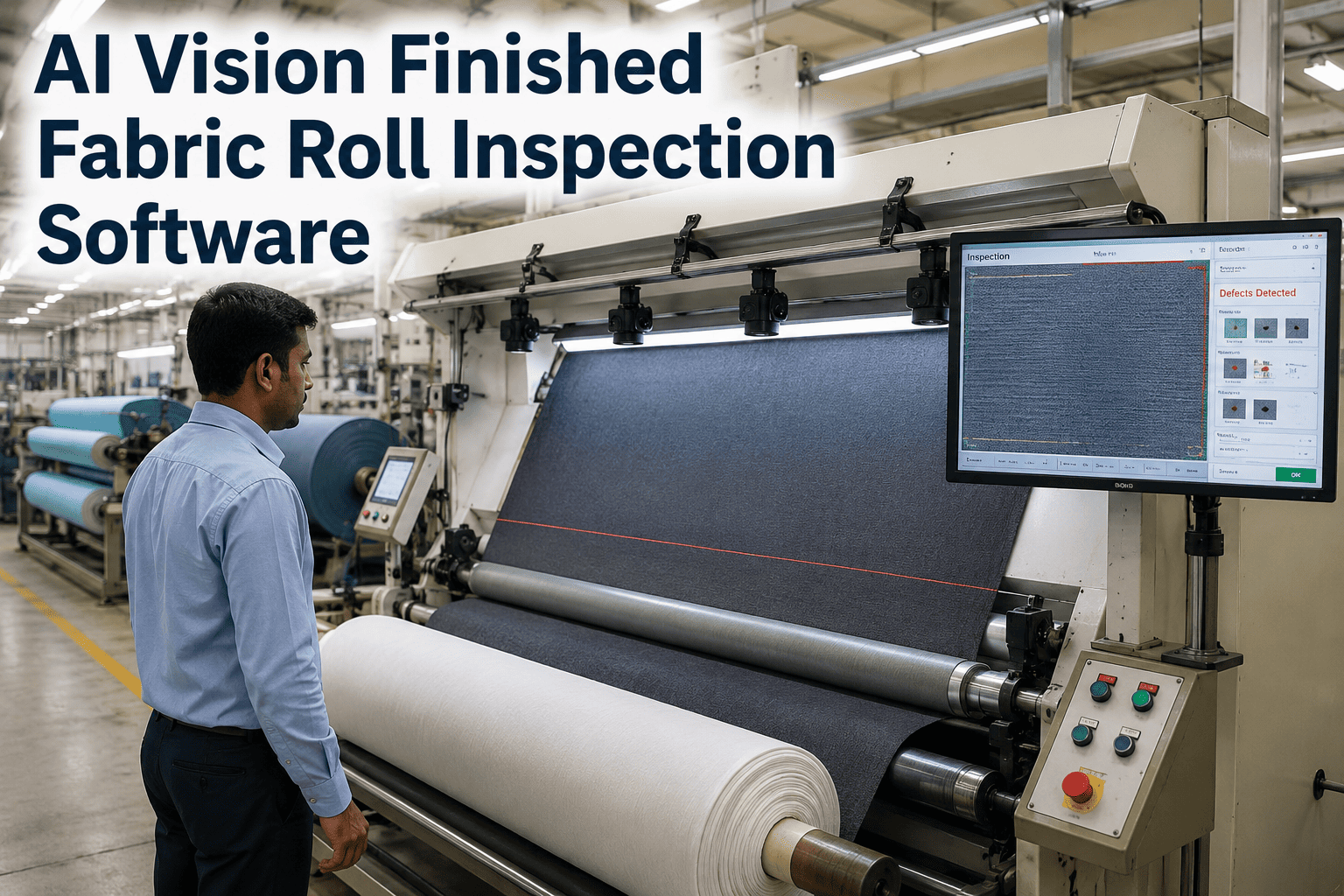
Quantifying color difference with a meter before shipment, rather than relying on a visual pass/fail judgment call, catches exactly the kind of batch drift that a factory's own eyes can miss after staring at the same color range for an entire production run.
A Color Shift That's Invisible on the Floor Is Rarely Invisible to a Buyer
iFactory measures color consistency objectively across every batch, catching drift before it becomes a shipment-ending discrepancy.
Measurement Tolerance: The Single Most Common Rejection Cause in Garments
Measurement deviation is frequently cited as the leading cause of garment rejections specifically — a category that sounds mechanical and easy to control, yet consistently trips up shipments because tolerance drift accumulates gradually across a production run rather than appearing as a single obvious error.
What makes measurement drift particularly deceptive is that it rarely originates from one clear mistake a quality team can point to. A cutting table that's drifted slightly out of calibration, a pattern grading inconsistency introduced partway through a size run, or simple accumulated variation across different operators and machines can each independently push measurements outside tolerance, and any one of them is far easier to catch through routine in-line spot checks than through a single inspection at the very end of the run.
Key Points of Measure
Chest width, collar, cuff, body length, and inseam are among the standard points of measure checked against the approved specification sheet for each garment type.
Standard Tolerance Bands
Typical tolerances run around plus or minus 1 centimeter for most points, tightening to roughly half a centimeter for collar and cuff, and widening slightly for body length and inseam.
The Lot-Level Threshold
Measurements falling outside tolerance on more than roughly 20% of sampled garments is commonly enough to trigger lot rejection, regardless of how minor any single deviation looks in isolation.
Documentation: The Difference Between a Fast Re-Inspection and a Lost Shipping Window
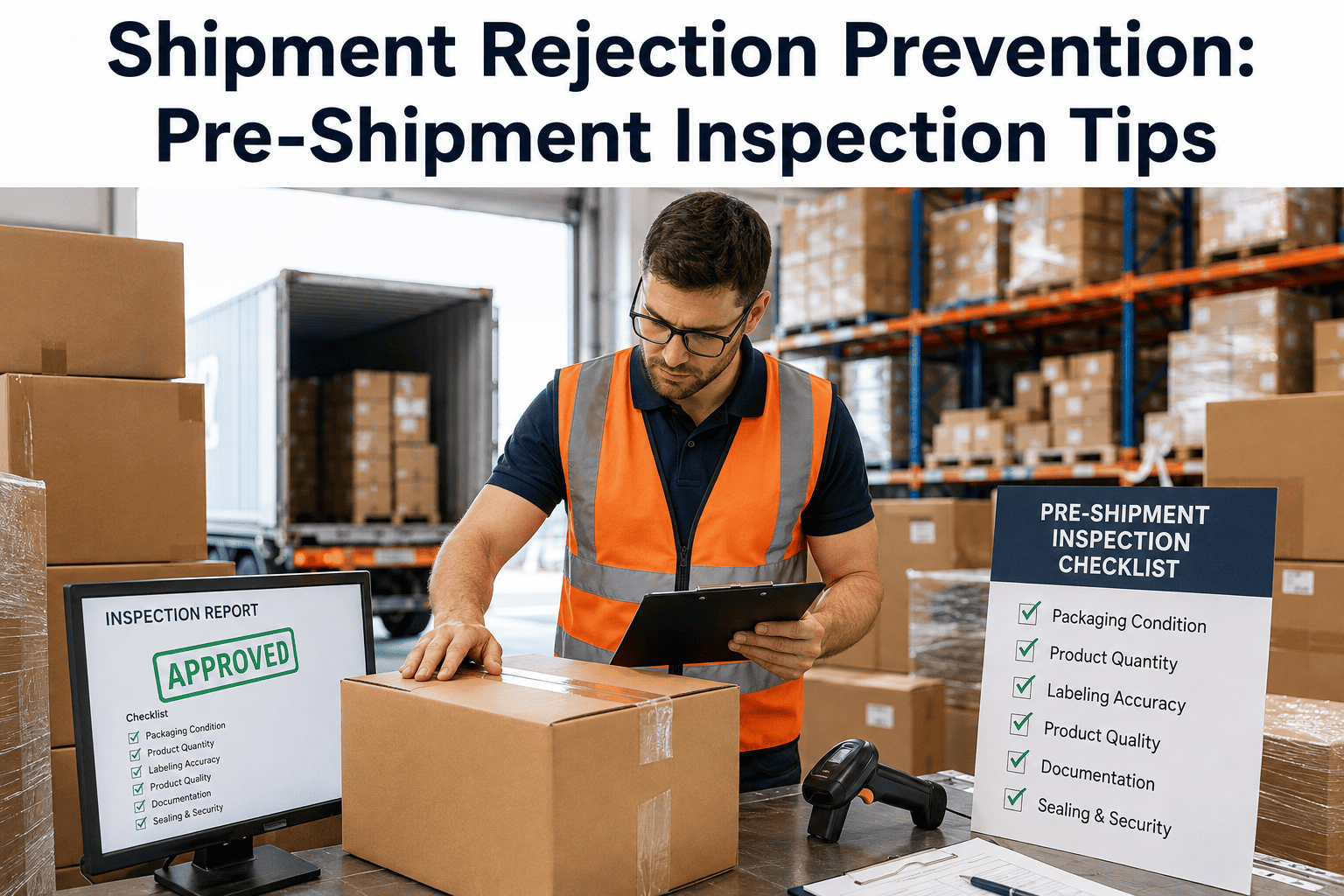
A final inspection checks more than visible defects — measurements, workmanship, labels, quantity, packaging, barcodes, and carton marks all need to match the approved specification, and a factory that hasn't organized documentation to prove each of those in advance loses time proving compliance during the inspection itself rather than simply presenting evidence already prepared.
The time cost of disorganized documentation compounds badly when a shipment is already running close to a booking deadline. An inspector who has to wait while a factory searches for the original approved sample, or reconstructs a defect history from memory rather than a maintained log, isn't just experiencing an inconvenience — every hour spent locating records is an hour closer to a missed vessel booking or air freight slot, turning a documentation gap into a schedule problem entirely separate from the actual quality of the goods.
Approved Sample Reference
Keeping the buyer-approved sample on hand and organized makes side-by-side comparison immediate rather than requiring a search through records mid-inspection.
Defect Log by Severity
A running record of defects classified by severity throughout production gives a factory its own AQL projection before a buyer's inspector ever arrives.
Packaging and Marking Records
Carton marks, barcodes, and packaging specifications confirmed and documented in advance prevent a final inspection from stalling on details unrelated to the garments themselves.
A Composite Scenario: The Shipment That Passed Its Own Audit Before the Buyer's Arrived
A composite mid-size apparel factory had a recurring pattern of final inspection failures tied to measurement deviation on a specific garment style, with roughly one in four shipments in that category requiring rework or facing rejection at the buyer's final random inspection. Reviewing internal quality data showed the factory had never run a properly sized, randomly sampled internal AQL check before booking a shipment — quality control consisted of spot-checking a handful of convenient units near the end of packing.
The factory implemented a formal internal final inspection matching the buyer's own inspection level and sample size, pulled randomly across the full lot rather than from convenient cartons, run once the order reached 80% completion and export packing had begun. The internal audit caught a systemic measurement drift on the affected style — traced to a cutting table calibration issue — before the goods were ever booked for the buyer's inspection, allowing correction during the remaining production run rather than after full completion. Shipment rejection rate on that garment style dropped sharply over the following quarter as the internal audit consistently caught issues the previous spot-check approach had missed.
Assumptions That Lead to Preventable Rejections
If the factory's own quality team believes the goods are good, a formal AQL self-audit is an unnecessary extra step.
A buyer's audit applies a specific statistical sampling method, not a subjective judgment call, and the only way to predict its outcome reliably is to run the same method internally before goods are booked.
A quick spot-check of a few easy-to-reach cartons is close enough to a real AQL sample.
Sample size and randomness are both defined precisely by the sampling standard, and a smaller or non-random sample doesn't reliably predict what a properly drawn buyer sample will find.
Color and measurement issues caught visually are reliable enough without objective measurement tools.
Both color and measurement drift can accumulate gradually enough to pass a visual check while still failing an objective, tool-based measurement — which is exactly the gap that turns an internally approved shipment into a buyer rejection.
A Pre-Shipment Checklist Before Goods Are Booked
The internal final inspection uses the buyer's actual AQL level and sample size
Confirming inspection level, sample size, and acceptance numbers from the purchase order before sampling avoids running a check that doesn't actually predict the buyer's result.
The sample is drawn randomly across the full lot, not from convenient cartons
A non-random sample undermines the statistical basis of the entire AQL method, regardless of how many units are checked.
Color and measurement are checked with objective tools, not visual judgment alone
A color difference meter and calibrated measurement process catch drift that a visual check consistently misses.
Documentation — approved sample, defect log, packaging records — is organized before inspection begins
Having evidence ready in advance keeps a final inspection focused on the goods themselves rather than on locating records mid-audit.
Frequently Asked Questions
What AQL level should a factory use for its own internal pre-shipment check?
The internal check should match whatever AQL level, inspection level, and sample size the buyer's purchase order specifies, since the entire point of a self-audit is to predict the actual audit the buyer will run rather than apply a different, potentially looser standard. Visit support to confirm the right parameters for a specific buyer's requirements.
At what stage of production should the final AQL inspection actually happen?
Final AQL inspection should run once the order is at or near completion — commonly 80 to 100 percent — and export-packed, since sampling an incomplete order only reflects the portion already finished and doesn't represent the full shipment as it will actually leave the factory.
How much does color difference need to vary before it's likely to cause a rejection?
Documented cases have shown a measured color difference around 3.2 delta-E being visible to the naked eye and sufficient to trigger rejection under a common 2.5 AQL grade, which is why measuring color objectively rather than relying on visual judgment matters. Book a demo to see objective color monitoring in practice.
Does catching a defect at in-line inspection actually prevent a final shipment rejection?
Yes — a systemic issue caught during in-line inspection, while a meaningful share of the order is still ahead, can be corrected in the remaining production run, whereas the same issue caught only at final inspection usually means expensive rework or outright rejection of finished goods.
What happens if an internal pre-shipment audit finds a defect rate near the AQL threshold?
A result close to the threshold is a signal to investigate the root cause and consider corrective action or additional sampling before booking, since a marginal internal pass can still fail a buyer's independently drawn sample due to normal sampling variation. Contact support to review a borderline result before making a shipping decision.
Run the Buyer's Audit on Your Own Goods First
iFactory logs defects by severity throughout production and helps structure a properly sampled internal final inspection, so a shipment rejection is never the first time an issue gets caught.