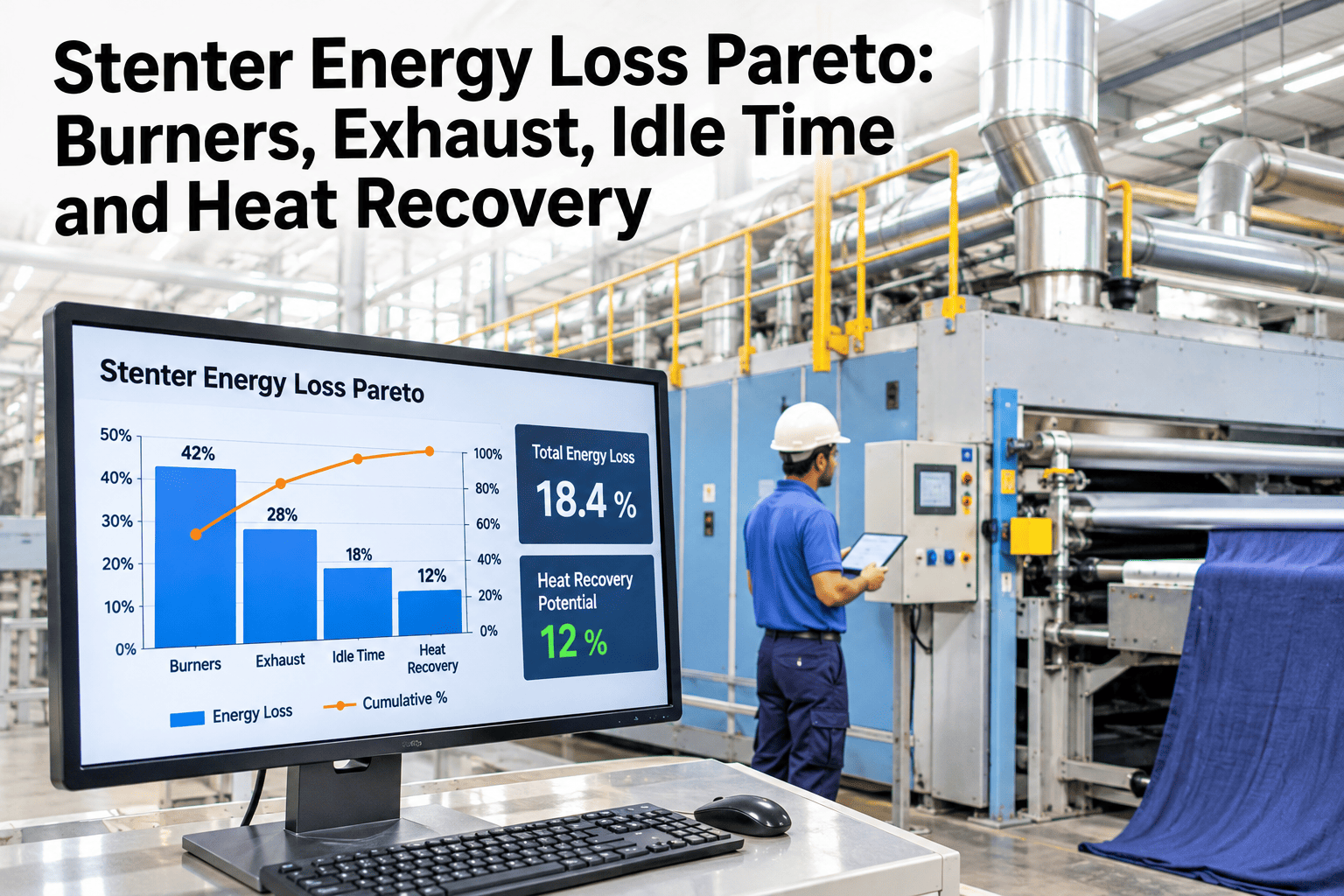
A stenter energy loss Pareto ranks every place a stenter wastes fuel and power, from exhaust venting and burner losses to idle running, over-drying, airflow and missed heat recovery, so you fix the biggest bucket first. Most finishing lines have only a monthly gas or thermal-oil bill, which hides whether the waste sits in the exhaust, between lots or in the burner. Published field work puts the saving from optimal stenter operation at 15–20%, yet few plants know which bucket to attack first. iFactory, an on-premise industrial AI platform, builds the ranking from meter and PLC data you already have. Judge it in a live demo.
Stenter Energy Loss Pareto: Burners, Exhaust, Idle Time and Heat Recovery
Stop guessing which stenter fix pays first. Rank six loss buckets by the energy each one wastes, then work down the chart.
What is a stenter energy loss Pareto?
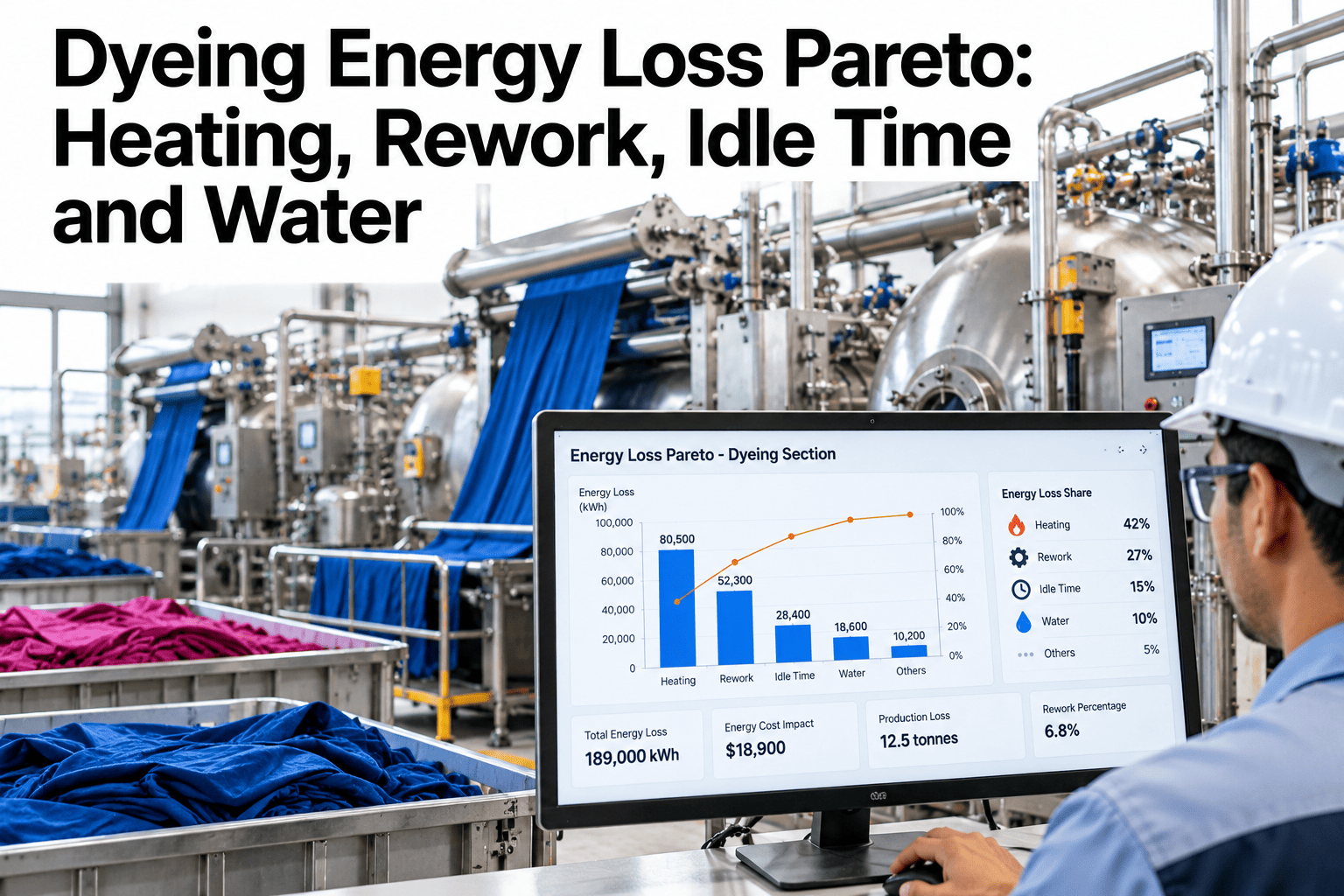
It is a descending ranking of loss buckets with a running total, built from measured kWh and fuel flow instead of estimates. The rule it applies is simple: a few causes hold most of the waste. Published field work shows how much is at stake, and this walkthrough applies it to your machine.
Which six loss buckets belong on a stenter Pareto?
Each bucket needs its own signal, so each can be measured and ranked separately.
Exhaust heat
Hot humid air leaves continuously. Meter exhaust temperature and humidity.
Idle time
Fuel burned while no fabric moves. Compare gas flow with fabric speed.
Burner losses
Combustion efficiency and firing rate against load. Log gas or thermal-oil input.
Over-drying
Heat spent drying below target moisture or above needed temperature.
Airflow
Circulation and exhaust fan kW against the setting the fabric needs.
Leakage
Slot leakage, poor insulation and open doors that bleed hot air.
How do you build the Pareto from meter data?
Start from physics. Evaporating one kilogram of water needs about 0.63 kWh of latent heat, so water removed sets a floor for drying energy. The gap between that floor and actual input is the loss pool, which you then split into buckets. The support desk can share a worked sheet.
What do burners and exhaust really cost a stenter?
Exhaust control is where measurement pays quickly. Monforts guidance puts the optimum exhaust moisture at 10–15% by volume: below that, too much fresh air is heated, and above it, drying slows and energy is wasted. A demo session shows this band tracked live.
Heat recovery alone
Reuses exhaust heat to preheat incoming air. A like-for-like comparison at a Mexican mill reported 20% gas savings against an older machine without recovery (Textile World, 2017).
Exhaust control first
Cuts the volume that needs heating at all. A smaller exhaust stream also makes any recovery unit cheaper to size and keeps it clean longer.
Where does idle time and over-drying hide?
Between lots the burner keeps chambers hot while no fabric moves. That fuel never reaches a metre of cloth. Over-drying is quieter: fabric leaves drier than it needs to be. Residual moisture targets differ by fibre (Monforts guidance), so one setpoint rarely fits all.
Which bucket is biggest on your stenter?
Bring a week of gas, fan and speed data. iFactory ranks all six loss buckets and shows where the first fix sits.
How much can heat recovery actually save?
Results vary with fabric, fouling and how well exhaust is controlled. Treat these as evidence points, not promises, and size your case from your own baseline.
The field study also found operating temperature has the largest influence, and that running below 130°C hurts performance. Recovery is one bucket's answer, and it never replaces fixing idle time or over-drying.
How do you turn the Pareto into a work plan?
Plot each bucket by size and effort, then act in this order. The support team can help classify yours.
Do first
Exhaust setpoints, idle setback, residual moisture targets.
Plan next
Heat recovery unit, burner replacement, fan drives.
Fit in
Slot seals, door discipline, insulation repair.
Hold
Revisit when the Pareto shifts.
One limit: a Pareto only ranks what you measure. Unmetered thermal-oil losses or an uncalibrated humidity sensor will distort the order, so verify sensors before acting on the top bar.
How does iFactory deliver this on-premise?
iFactory ships a pre-configured NVIDIA AI server, racked and ready, with software pre-loaded. Rack it, plug in power and Ethernet, and the AI is live. Scope covers cabling, network, PLC and SCADA integration, operator training and 24×7 remote monitoring. Ask for a pilot call to size yours.
Ship, network, data
Server arrives; gas, fan and speed tags connect.
Train and pilot
Six buckets validated on one pilot stenter.
Go live and train
Pareto per line, alerts and operator training.
Frequently asked questions
What is a stenter energy loss Pareto?
It is a ranked bar chart of where a stenter wastes fuel and power, largest loss first. Instead of treating every inefficiency equally, you fix the few buckets that hold most of the waste. Book a walkthrough to see one built from your own gas, thermal-oil and fan data.
Which stenter loss is usually the biggest?
Exhaust is the usual starting point, because hot humid air leaves the machine continuously and heats fresh air all day. Field studies found the exhaust stream carries large recoverable energy. Your own ranking may differ, so request a baseline before spending on equipment.
Does heat recovery fix every stenter energy problem?
No. It reuses exhaust heat but does nothing for idle running, over-drying or temperature overshoot, and fouling can erode its gain. Pair it with exhaust moisture control. The support desk can explain sensor options, or talk to a specialist about sequencing.
How do I measure stenter idle time without new hardware?
Combine the fabric-speed or entry-sensor signal with burner or gas flow already in your PLC. Fuel burned while speed is zero is idle energy. iFactory reads those tags directly, and a short scoping call confirms what your machine already exposes.
How long does iFactory take to go live on finishing lines?
A typical turnkey rollout takes 6 to 12 weeks: ship and network, train and pilot, then go live with operator training. The server arrives pre-configured and ready to rack. Plan your pilot or ask the team about your site.
Put every stenter loss in rank order
Get a turnkey on-premise setup that ranks burner, exhaust, idle, airflow and heat recovery losses, live in 6 to 12 weeks.