Running polyester through a spinning line built and tuned for cotton is a bit like driving a car designed for gravel roads on ice — the machine still moves, but every setting that worked perfectly on the original material now works against the new one. Synthetic fibers behave nothing like cotton at the physical level, and processing them through a cotton-type system without adjusting lubrication, static control, and drafting parameters is one of the most common causes of chronic quality issues on mixed-product spinning floors. See how parameter tracking adapts across fiber changeovers with Book a Demo.
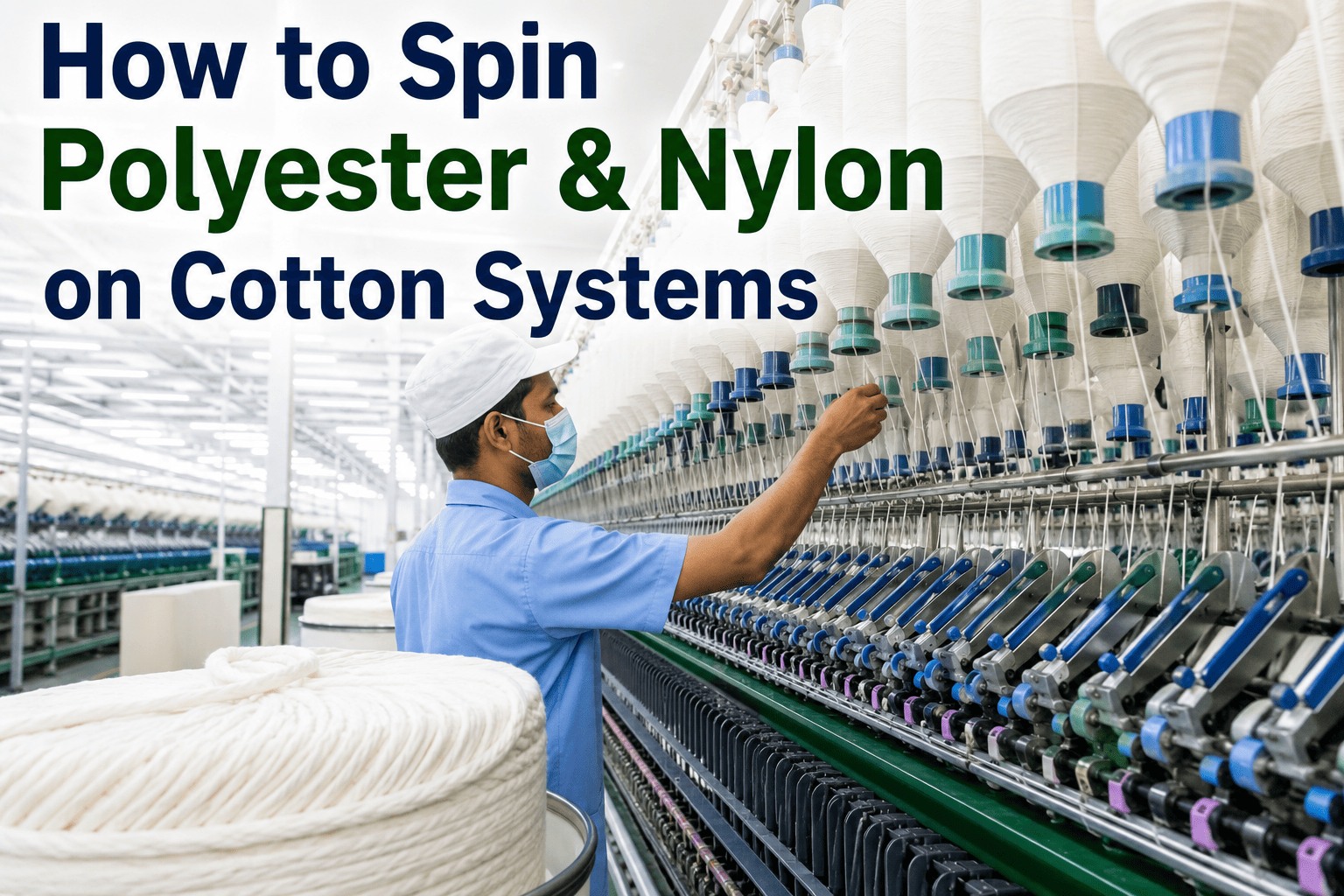
How to Spin Polyester & Nylon on Cotton Systems
A practical guide to processing polyester, nylon, and acrylic fibers through cotton-type spinning systems, covering lubrication, static control, and the parameter shifts each synthetic fiber demands.
How Each Synthetic Fiber Behaves Differently From Cotton
Every synthetic fiber brings its own combination of surface friction, static tendency, and thermal sensitivity, which is why a single blanket adjustment rarely works across all three.
Low Friction, High Static
Smooth fiber surface reduces cohesion during drafting and generates significant static charge in low humidity, requiring anti-static finish and tighter humidity control than cotton alone needs.
High Elasticity, Heat Sensitive
Elastic recovery affects draft ratio stability, and nylon softens at lower temperatures than polyester, making roller heat buildup a more immediate quality risk.
Bulk-Prone, Fragile Under Draft
Acrylic fiber is more prone to breakage under aggressive drafting than polyester, requiring gentler draft ratios despite its bulkier, wool-like fiber structure.
Adjust Every Parameter Automatically at Fiber Changeover
See how parameter profiles switch automatically when the line changes over from cotton to a synthetic blend.
Five Adjustments to Make Before Running Synthetic Fiber
Apply fiber lubrication and anti-static finish appropriate to the specific synthetic fiber, not a generic all-purpose spin finish.
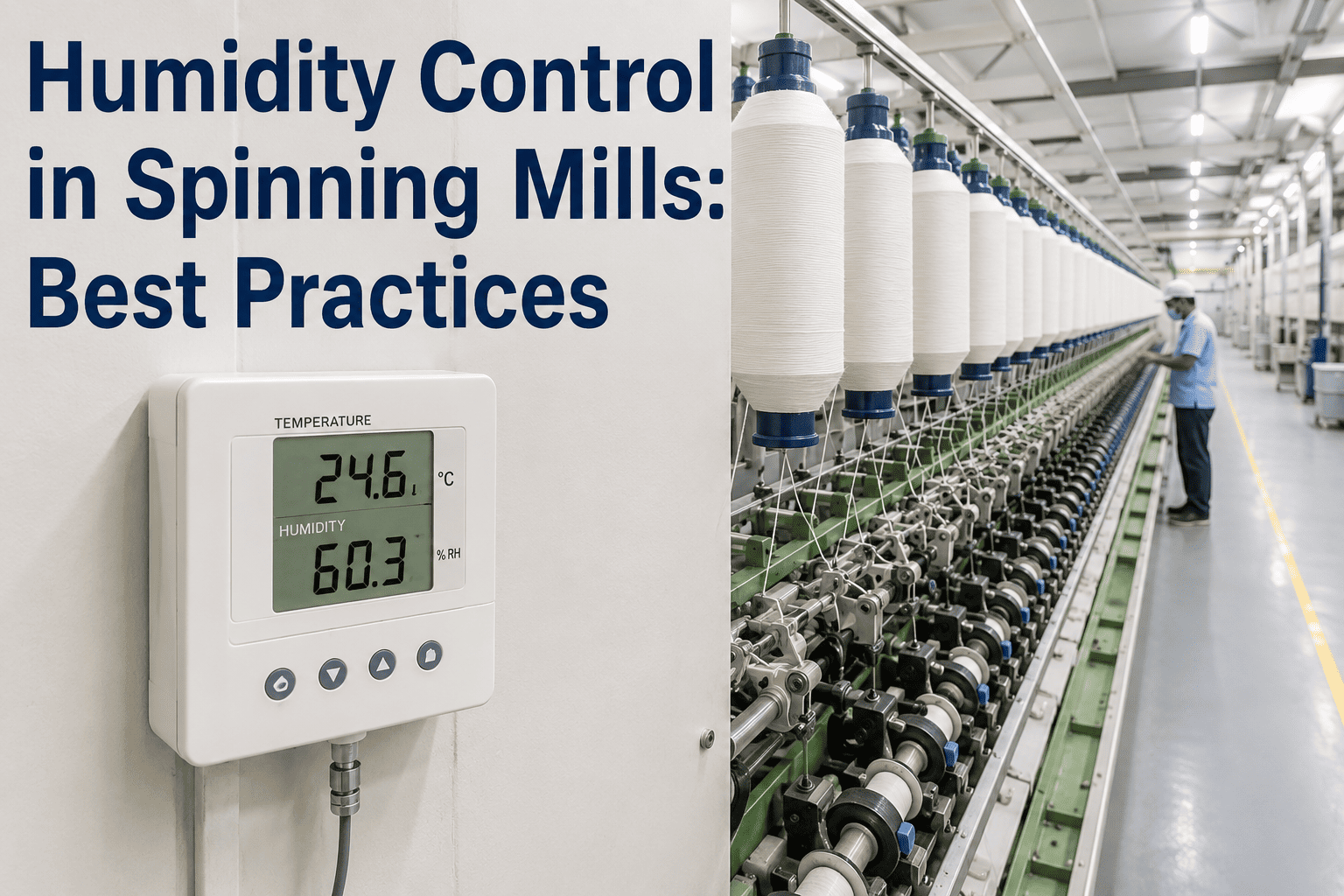
Raise department humidity toward the upper end of the acceptable range to suppress static generation during opening and carding.
Reduce draft ratio aggressiveness for acrylic and nylon fibers, which tolerate less mechanical stress than cotton under the same draft settings.
Inspect and clean card wire and drafting rollers more frequently, since synthetic fiber finish residue accumulates differently than cotton wax and trash.
Adjust traveller weight downward for lighter, smoother-surfaced synthetic fibers to avoid excess friction heat at the ring-traveller interface.
Why Static Control Deserves Its Own Attention
Fly Attraction
Static-charged fiber attracts loose fly and lint, contaminating the yarn surface and increasing downstream imperfection counts.
Roller Wrapping
Charged fiber clings to drafting rollers instead of releasing cleanly, causing lapping that stops the machine and damages the roving.
Uneven Drafting
Static-affected fiber does not separate evenly under drafting force, producing localized thick and thin places in the finished yarn.
Operator Shock Hazard
High static buildup can produce a mild but repeated shock hazard for operators handling material directly during doffing and creeling.
Processing Synthetic Fiber as Part of a Blend
Most synthetic fiber processed on cotton-type systems is part of a blend rather than 100 percent synthetic, which introduces an additional layer of parameter tuning beyond adjusting for the synthetic fiber alone.
Blend point selection matters more for synthetic-cotton combinations, since uneven blending is more visually and functionally obvious than in all-cotton yarn.
Draft ratio settings need to accommodate the more fragile component of the blend rather than being optimized purely for the dominant fiber.
Humidity targets for blended runs typically split the difference between the pure-cotton and pure-synthetic recommended ranges.
Quality testing should track both fiber components separately where possible, since a blend can pass average tests while one component underperforms.
Frequently Asked Questions
Q: Can the same cotton spinning line run synthetic fiber without any hardware changes?
In most cases, yes, with parameter and finish adjustments rather than hardware replacement, since cotton-type spinning systems are mechanically capable of processing many synthetic staple fibers. The changes needed are primarily in fiber preparation, lubrication, humidity, and settings rather than the machine itself, though heavily worn card wire or drafting rollers may need earlier replacement under synthetic fiber's different wear pattern. Ask about parameter profile switching for fiber changeovers with Book a Demo.
Q: Why does polyester generate more static than cotton on the same line?
Cotton has a natural moisture content that provides a degree of electrical conductivity, allowing static charge to dissipate through the fiber itself under normal humidity conditions. Polyester is inherently hydrophobic and holds almost no natural moisture, which means it lacks this built-in conductivity and accumulates static charge readily, particularly in dry conditions. This fundamental difference is why anti-static finish and elevated humidity matter far more for polyester processing than for cotton.
Q: How does roller heat buildup specifically affect nylon processing?
Nylon has a lower softening temperature than polyester, which means friction-generated heat at the drafting rollers can begin to affect fiber surface properties at temperatures that would have no effect on polyester running through the same system. Softened nylon fiber becomes tackier and more prone to wrapping around rollers, which compounds into lapping incidents if roller temperature is not actively managed through adequate cooling and cleaning intervals. Reach out through Support Contact to review roller temperature monitoring for synthetic runs.
Q: Is acrylic fiber more difficult to process than polyester or nylon?
Acrylic presents a different challenge than static-prone polyester or heat-sensitive nylon, since its main vulnerability is mechanical fragility under aggressive drafting rather than an electrical or thermal issue. Acrylic fiber can fracture under draft forces that polyester tolerates easily, producing short fiber fragments that show up as neps and imperfections in the finished yarn. Gentler draft ratio settings and careful roller pressure adjustment are the primary mitigations rather than lubrication or humidity changes.
Q: How quickly should parameters be readjusted when switching from a cotton run to a synthetic run?
Ideally, parameter changes should be made before the synthetic material reaches the affected machine rather than reactively after quality issues appear, since the first several kilograms processed under mismatched settings are often unsalvageable. Mills running frequent changeovers between fiber types benefit significantly from having pre-validated parameter sets ready to apply immediately at the point of changeover, rather than re-deriving settings from scratch on every switch.
Get Every Fiber Changeover Right the First Time
See how automated parameter tracking supports consistent synthetic fiber processing on your existing lines.