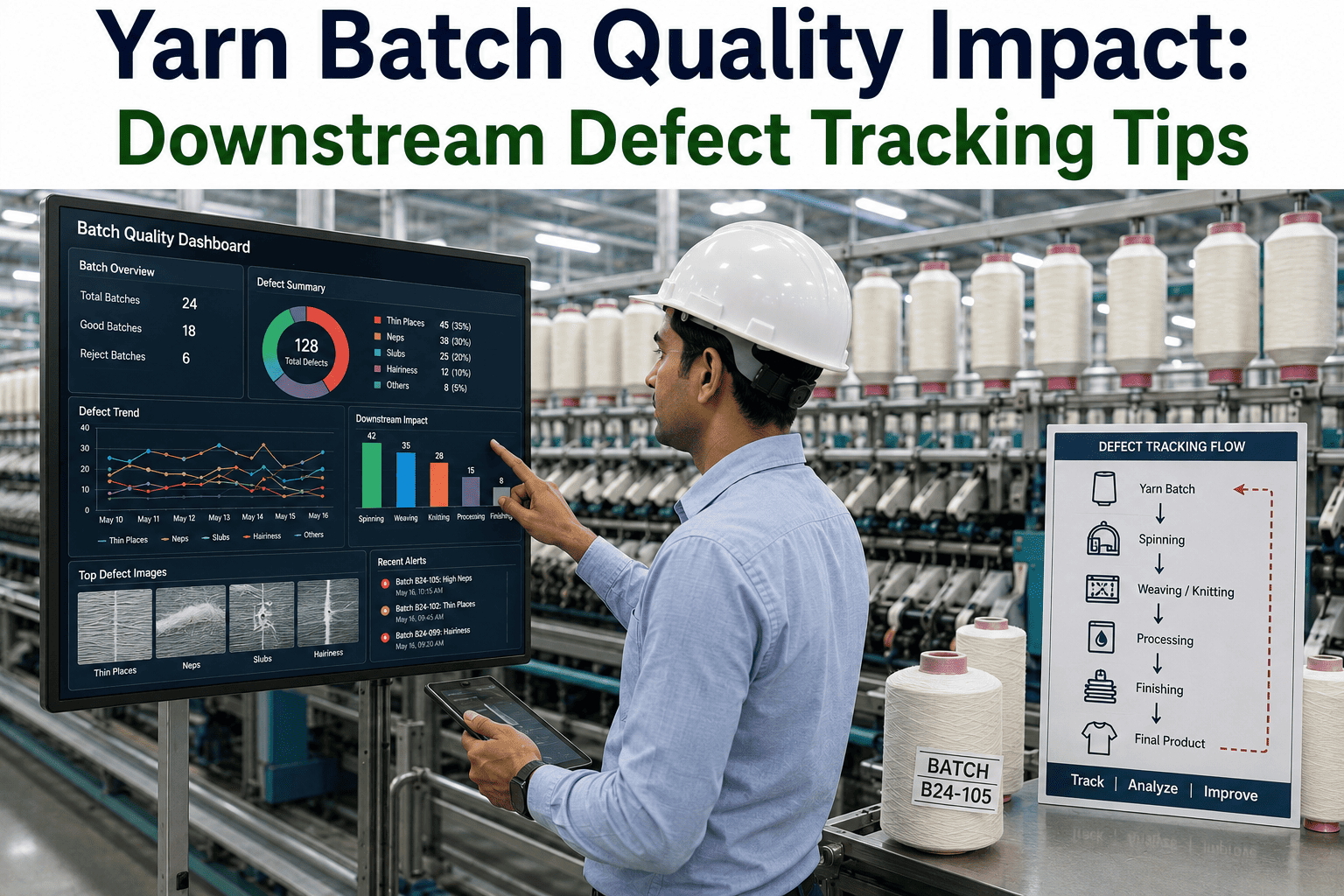
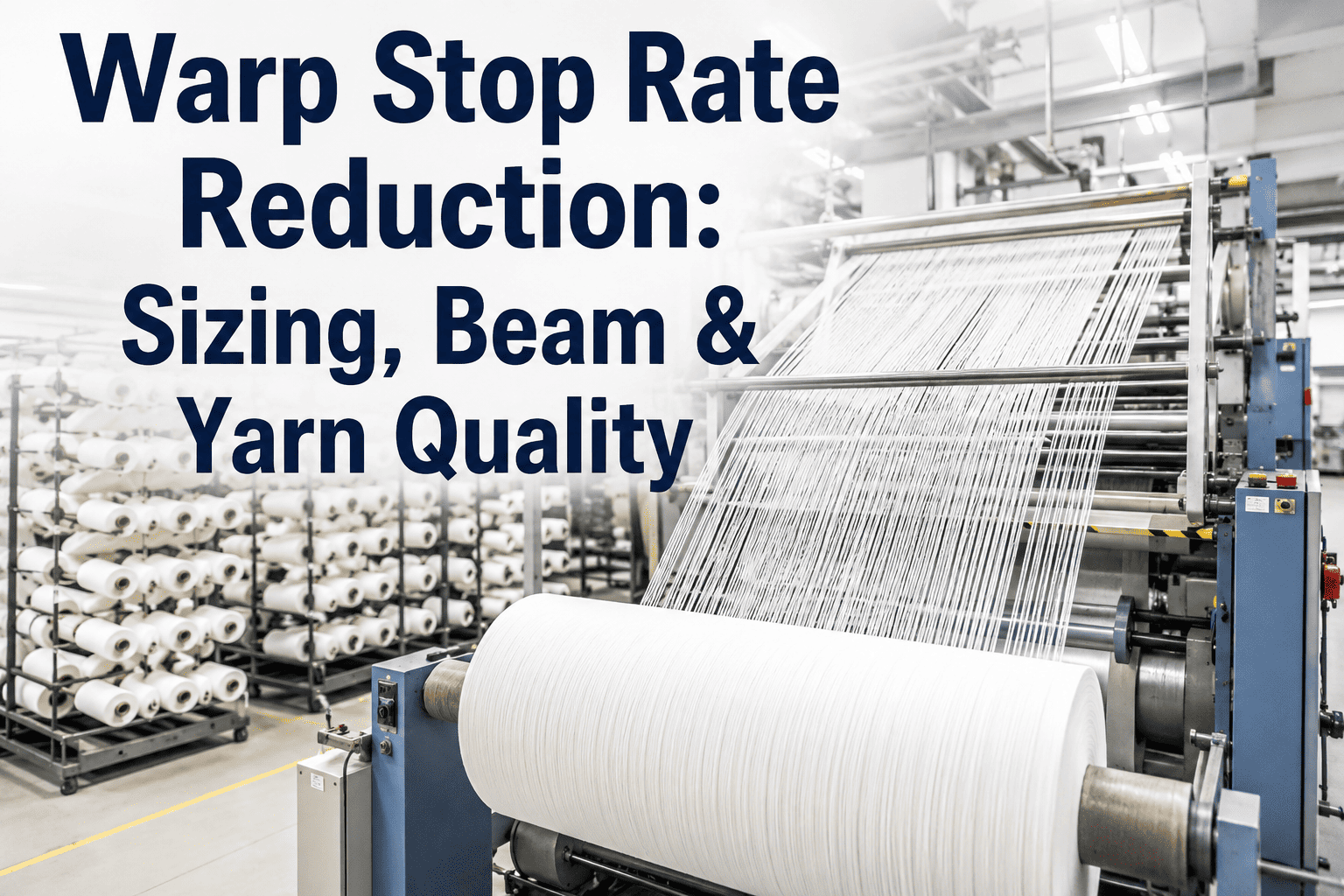
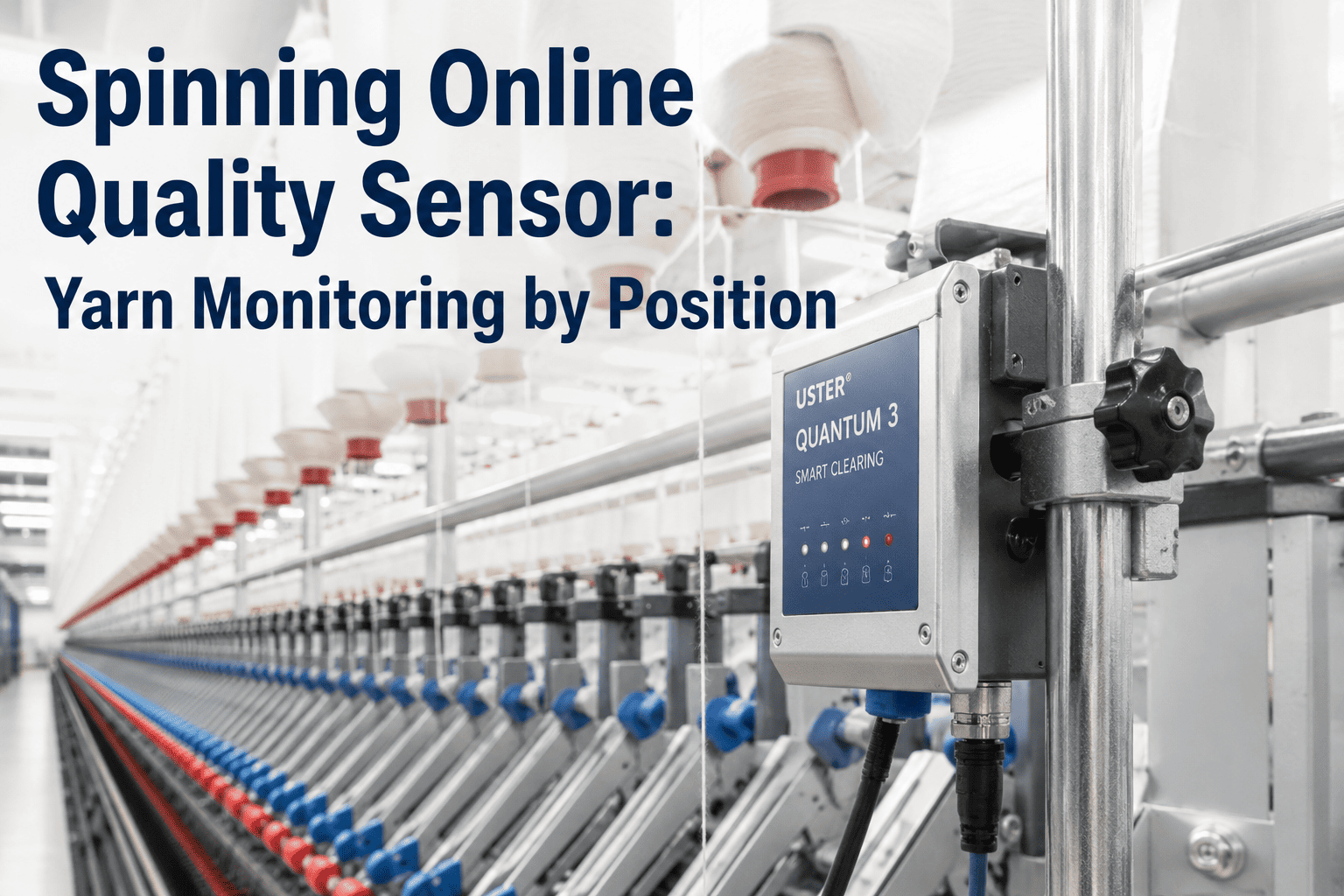
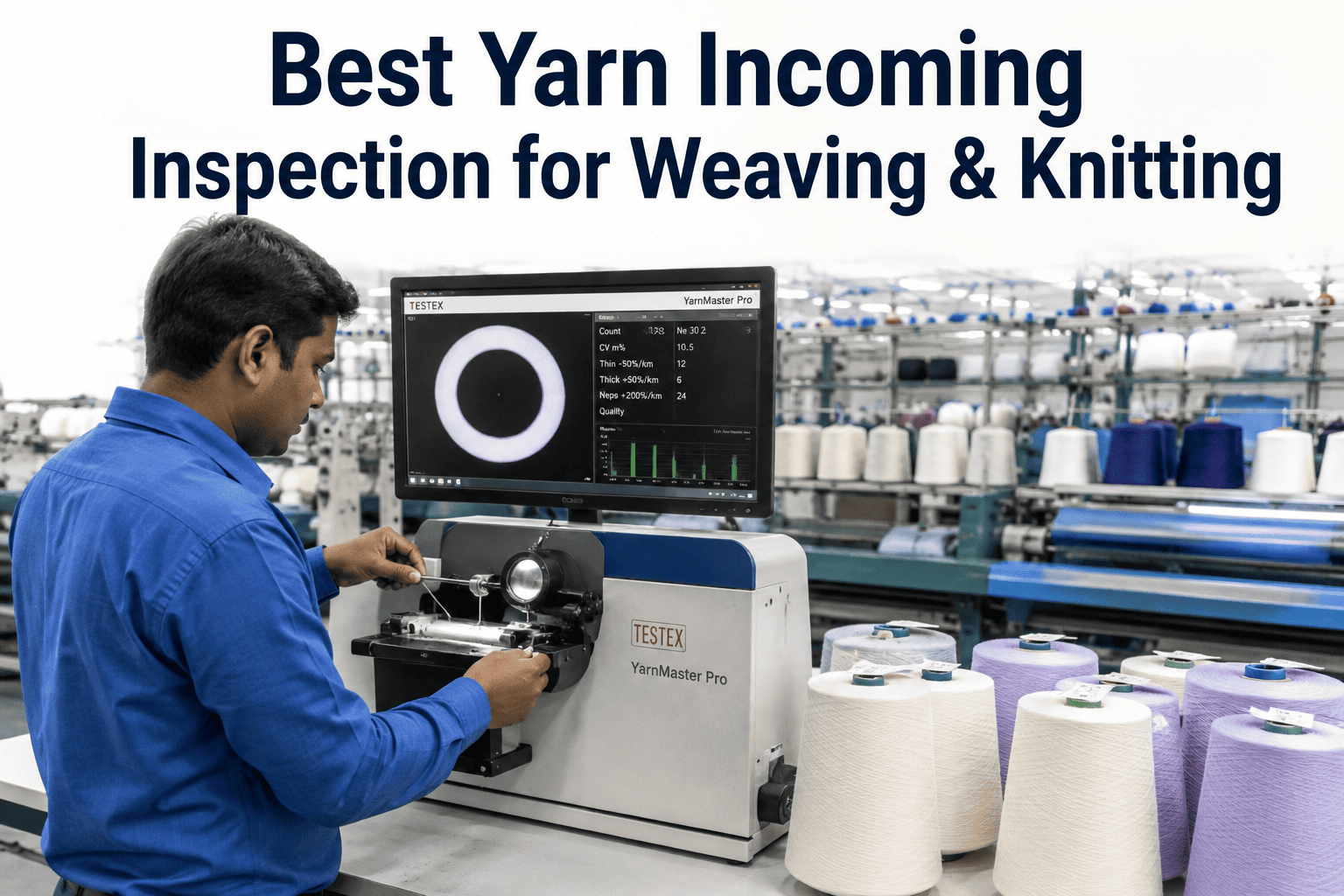
A weaver selecting which yarn beam to load next rarely has the spinning department's quality report in front of them. They have a beam number, a delivery date, and whatever verbal warning happened to reach the floor if a batch was known to be problematic. Everything else — the evenness data, the imperfection counts, the strength test results generated just days earlier one department over — stays behind in spinning's own records, disconnected from the exact decision that needed it most. Closing that specific handover gap is one of the highest-leverage fixes available in a textile mill, because it touches every meter of fabric the weaving department produces. Mills wanting to see how a live data handover actually functions can Book a Demo.
Why the Handover Breaks in the First Place
Spinning departments generate a substantial amount of yarn quality data as a routine part of production — evenness testing, imperfection counts, hairiness readings, and tensile results are all captured on modern spinning quality instruments as a matter of course. The problem is rarely that the data does not exist. The problem is that it exists in a system, report format, or physical location that stops precisely at the department boundary, while the yarn itself physically continues on to weaving regardless of whether its quality record travels with it.
This happens for structural reasons more than technical ones. Spinning and weaving are frequently managed as separate cost centers with separate reporting lines, sometimes even physically located in different buildings or facilities. Quality data generated in spinning gets compiled into shift reports and quality summaries designed for spinning management's own review, not formatted or routed for a weaving department that has a completely different set of operational questions to answer. By the time a beam physically arrives at the weaving floor, the quality data that could inform how it gets used has usually already been filed away, several process steps behind.
The result is that weaving departments allocate beams to looms based on availability and delivery sequence rather than measured yarn quality — first in, first loaded, regardless of whether that beam tested at the top or bottom of the quality distribution for that production run. This is not a failure of weaving department judgment; it is a rational response to operating without the information that would allow a better decision.
This blind allocation pattern tends to become visible to mill leadership only after the fact, when a batch of fabric shows an unusually high end-break rate or a cluster of surface defects traced back to a specific spinning lot that, in hindsight, had measurably elevated imperfection or hairiness readings the whole time. The frustrating part of these post-mortems is that the information needed to have prevented the issue was sitting in a spinning department report the entire time — it simply never reached the person making the beam allocation decision when it could still have changed the outcome. Fixing this is less about generating more data, since most mills already generate plenty, and more about building the specific pathway that gets existing data to the specific person and moment where it becomes actionable. That reframing matters for how a mill approaches the project — the work is primarily one of connectivity and workflow design, not new instrumentation purchases, which keeps the investment required considerably smaller than it might initially appear.
What Yarn Quality Data Actually Tells Weaving
Not every quality parameter measured in spinning matters equally to weaving performance. Four in particular have a direct, well-established relationship to how a yarn behaves under the tension and abrasion of the weaving process, which is exactly why they are worth prioritizing in any handover system rather than attempting to forward the entire raw dataset undifferentiated.
Building the Handover: From Lot Number to Loom Decision
A functioning spinning-to-weaving data handover follows a specific sequence of steps, each one closing a gap in the chain between when quality data is measured and when it becomes usable at the point of a beam allocation decision.
Beam Allocation: Blind vs. Quality-Informed
The practical difference this handover makes is easiest to see by comparing how a beam allocation decision actually gets made under each approach.
| Decision Factor | Blind Allocation (No Handover) | Quality-Informed Allocation |
|---|---|---|
| Basis for beam selection | Delivery sequence, availability | Measured evenness, strength, imperfection data |
| High-quality beam use | Random assignment across all fabric types | Directed to appearance-sensitive constructions |
| Loom tension setting | Standard default, uniform across beams | Calibrated to that beam's tensile profile |
| End-break response | Reactive, after breakage occurs | Preventive, anticipated from strength data |
| Defect root-cause trace | Manual investigation across departments | Direct lookup against linked lot record |
Lot Traceability Beyond the Immediate Handover
While the beam allocation decision is the most immediate benefit of a working spinning-to-weaving handover, the traceability value extends well beyond that single decision point. Once yarn quality data is linked to a persistent lot identity that survives the beam winding transformation, it remains available for every subsequent use of that data, not just the initial allocation choice.
Fabric defect investigation is the clearest downstream beneficiary. When a fabric inspection turns up a localized strength weakness or an unusual defect pattern, having the originating yarn lot's quality data available immediately — rather than requiring a separate request to the spinning department and a wait for someone to locate the relevant records — collapses what would otherwise be a multi-day investigation into a same-day lookup. This matters especially for intermittent quality issues that only appear under specific weaving conditions, where correlating fabric defects against yarn quality data across many beams over time is often the only way to identify a systemic pattern rather than treating each defect as an isolated incident.
Supplier and process improvement conversations also benefit from this continuity. When a mill can show a spinning department precisely which quality parameters correlated with downstream weaving problems across a meaningful sample of beams, that feedback is measurably more actionable than a general complaint about yarn quality. Specific, data-backed feedback — this evenness range correlated with this end-break rate — gives spinning process engineers something concrete to investigate and adjust, closing a feedback loop that stays open indefinitely in mills where the handover never happens in the first place.
Implementation Timeline: What a Realistic Rollout Looks Like
Mills planning this handover for the first time tend to overestimate the technical complexity and underestimate the process-alignment work required. The technical piece — linking a lot identifier through the beam winding process and surfacing quality data at the weaving floor — is well-understood territory for most modern spinning quality instrumentation and beam tracking systems, and rarely takes longer than a few weeks to configure once the requirements are clear.
The slower part is agreeing on the thresholds that translate raw quality numbers into the simple flags weaving floor staff will actually use — what evenness range counts as suitable for a premium appearance fabric, what strength threshold triggers a tension-setting adjustment, and who has the authority to override a flag when operational circumstances require it. These are process and quality-engineering decisions, not software configuration decisions, and getting them wrong in the early rollout tends to produce either an over-cautious system that flags too many beams as restricted, frustrating floor staff, or an under-cautious one that fails to catch the quality issues it was built to surface in the first place.
A pragmatic rollout sequence starts with a pilot on a single yarn count or fabric construction where the quality-to-outcome relationship is best understood, validates the threshold logic against real production data over several weeks, and only then expands to the full range of yarn types and constructions the mill runs. This staged validation catches threshold-tuning issues while the blast radius of a miscalibrated flag is still small, rather than discovering the same issue after the system is already governing beam allocation decisions mill-wide.
Where This Handover Fits Inside a Broader Traceability Strategy
The spinning-to-weaving handover is often the natural starting point for mills beginning a broader traceability initiative, not because it is the only handover that matters, but because it tends to offer the clearest, fastest-to-measure return relative to its implementation scope. Yarn quality data has an unusually direct, well-documented relationship to a specific downstream outcome — weaving-stage end breaks and fabric defects — which makes the before-and-after improvement easier to demonstrate than handovers further down the production chain where cause and effect are more diffuse.
Once this first handover is operating reliably and its value is demonstrated, extending the same lot-identity approach to the next handover point — typically weaving to dyeing — tends to be organizationally easier, since the mill now has an internal reference case showing what a successful handover looks like in practice. This is the phased approach worth favoring over attempting to build every departmental connection simultaneously: prove the model on the handover with the clearest cause-and-effect relationship, then extend the same architecture outward one link at a time.
It is also worth noting that the quality parameters prioritized in a spinning-to-weaving handover are not identical to what matters at later handover points. Dye affinity and absorbency characteristics matter more at the weaving-to-dyeing handover than the tensile and evenness data prioritized here, which is a useful reminder that a mill-wide traceability strategy needs each handover point designed around the specific decision it is meant to inform, rather than forwarding one undifferentiated dataset uniformly across every department boundary in the mill.