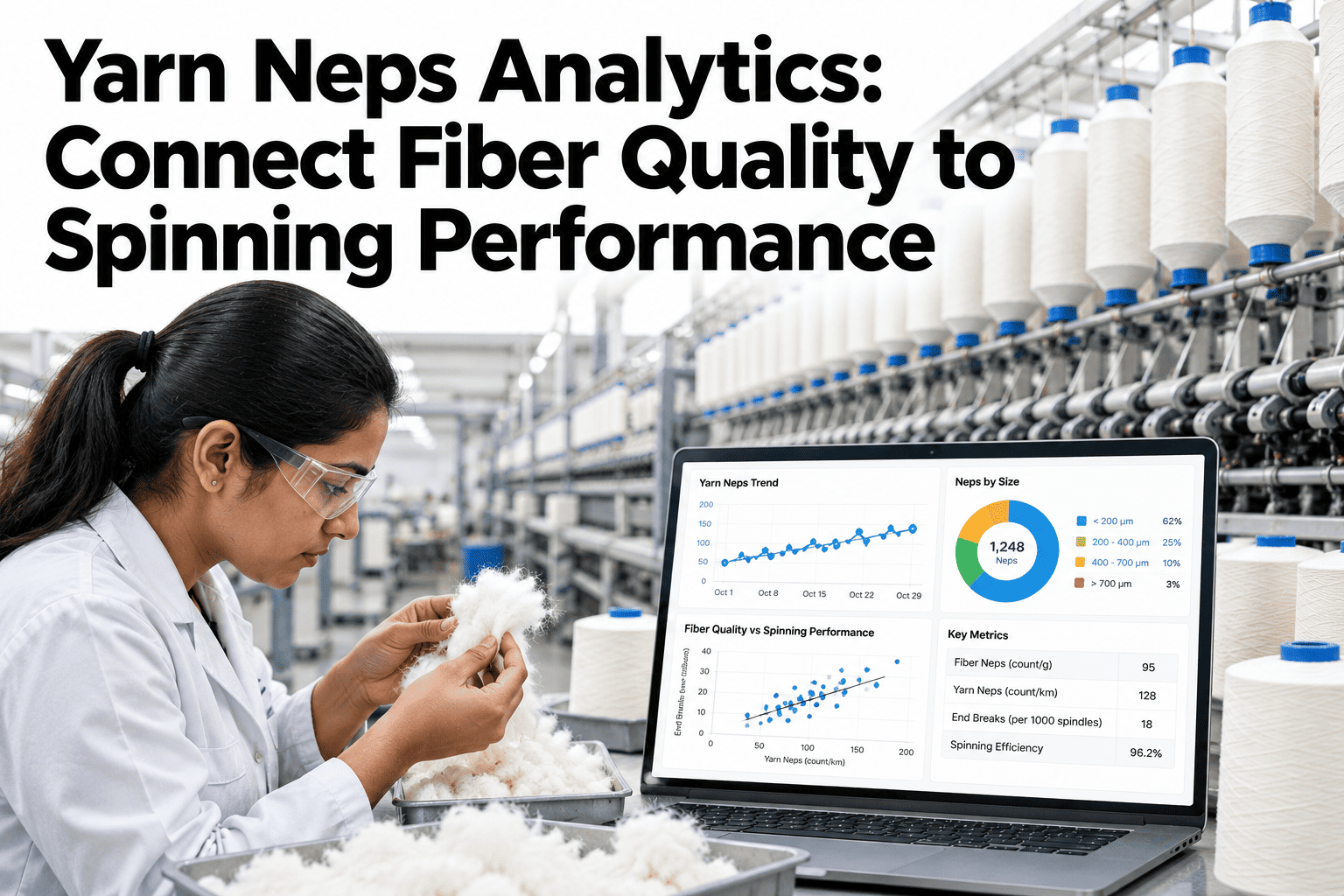
Neps in yarn carry a disproportionate commercial cost relative to their size. A single seed coat fragment or fiber entanglement can produce a visible speck in dyed fabric, creating a claim from a customer who receives what appears to them to be a contaminated lot. Managing nep levels requires understanding that neps are not one problem — they are the result of at least three different upstream processes, each contributing independently to the total count that appears in the Uster Tester result. iFactory AI connects nep data to fiber quality measurements and machine performance records so the improvement action targets the specific stage where neps are being created or failing to be removed. See how nep analytics are structured across fiber quality and machine data.
Where Your Neps Come From — and How to Reduce Them
Nep sources across the spinning process — measured, attributed, and tracked by iFactory AI so improvement actions target the right stage.
What Creates Neps — Stage by Stage
Every nep in the final yarn has a creation point somewhere in the process. Understanding the contribution from each stage is the prerequisite for targeted improvement.
Fiber neps form during harvesting, ginning, and mechanical processing of cotton before it reaches the mill. Immature fibers are particularly susceptible — their thin cell walls collapse under mechanical stress, creating entanglements that survive blow room and carding. Seed coat neps are fragments of the cotton seed that break away during ginning, carrying attached fibers. Both types are measured by the Uster AFIS instrument. High AFIS nep counts in incoming bales predict elevated nep levels in the finished yarn regardless of process settings.
Aggressive mechanical opening in the blow room generates processing neps by breaking fibers and creating new entanglements while attempting to clean and open the raw cotton. The blow room contributes to nep count while also removing some incoming neps — the net effect depends on machine settings, fiber quality, and the balance between opening intensity and cleaning efficiency. Too aggressive a setting on low-micronaire cotton generates more neps than it removes.
Carding is the primary nep removal stage in the spinning process — a well-set card with sharp clothing removes a high proportion of incoming neps. Conversely, a card running with worn clothing, incorrect cylinder-flat settings, or excessive delivery speed becomes a net nep generator rather than a nep remover. Comparing nep counts in card sliver against blow room lap measurements reveals the card's nep removal efficiency on a machine-by-machine basis.
The drafting zone at the ring frame can generate small numbers of additional neps from fiber breakage under excessive draft, worn top rollers, or incorrect apron pressure. This stage contributes a small fraction of total nep count but becomes more significant at high draft ratios or when fiber length is short relative to the drafting geometry. Nep counts that are consistently higher from one ring frame versus others running the same material are often traceable to the drafting setup.
Fiber Quality Parameters That Drive Nep Count
Material selection is the highest-leverage decision for nep management. These are the fiber parameters most directly linked to nep levels in finished yarn.
| Fiber Parameter | Instrument | Effect on Neps | Action When Elevated |
|---|---|---|---|
| AFIS nep count (fiber + seed coat) | Uster AFIS | Direct carry-through to yarn nep baseline | Adjust lot acceptance limit; blend with lower-nep lots |
| Micronaire (fiber fineness/maturity) | HVI / AFIS | Low micronaire = immature fiber = high nep sensitivity | Reduce blow room intensity; adjust carding settings |
| Short fiber content (SFC) | HVI / AFIS | High SFC increases nep formation during drafting | Adjust draft ratio; verify combing noil setting if combing |
| Fiber nep count (AFIS) | Uster AFIS | Fiber neps that survive carding become yarn neps | Check card clothing age and flat-cylinder settings |
Carding as the Primary Control Point
While raw material quality drives the nep baseline, carding performance determines how much of that baseline is removed before it reaches the yarn. Card-by-card nep removal efficiency tracking is the most actionable lever in nep management.
Card wire clothing age is the primary determinant of nep removal efficiency. Worn clothing loses its fiber-individualizing ability and passes neps rather than removing them. iFactory AI links clothing age (production tonnes since last grind or replacement) against card sliver nep count trend, making clothing replacement decisions data-driven rather than calendar-based.
Closer flat-cylinder settings improve nep extraction at the cost of increased short fiber generation. The optimum setting is fiber-specific — finer cotton tolerates closer settings, while coarser fibers need more space to avoid excessive nep generation. iFactory AI tracks setting changes against output nep count to find the optimum for each lot type.
Higher card delivery speeds reduce fiber individualization time in the carding zone, increasing the proportion of neps that pass through unremoved. When a production speed increase is implemented, nep count from affected cards typically rises. Tracking this effect by card supports speed optimization decisions that balance productivity against quality targets.
Not all cards in a department perform equally — wire age, mechanical condition, and setting consistency vary between machines. Ranking cards by nep removal efficiency (output nep count relative to input lap nep count) identifies which machines need priority maintenance attention and which are performing well enough to guide settings optimization for the others.
Trace Every Nep Back to Its Source
iFactory AI connects Uster Tester nep results to fiber quality data, card performance, and lot records so nep improvement actions target the right stage in the process. Book a session to see the analytics framework on your data.
Frequently Asked Questions
What is the difference between fiber neps and seed coat neps, and why does it matter?
Fiber neps are entanglements of cotton fibers formed under mechanical stress — they are off-white and relatively easy to remove at carding. Seed coat neps are fragments of the cotton seed with attached fibers — they are darker, harder, and more resistant to removal. Seed coat neps are more likely to survive to the yarn and cause visible specks in dyed fabric. The Uster AFIS instrument measures them separately, and the distinction affects which improvement action is appropriate. Ask how iFactory AI handles AFIS nep type data alongside Tester results.
How can we tell whether a nep increase came from the blow room or the carding stage?
Compare nep counts across the process stages: AFIS at lap entry to the card and AFIS in card sliver. If lap nep count is normal but sliver nep count is high, the card is generating or not removing neps efficiently. If both are elevated, the blow room — or the incoming material — is the source. iFactory AI stores stage measurements alongside the machine records so this comparison is available without manual spreadsheet work. Walk through stage-by-stage nep tracking in a demo.
How often does carding clothing need to be replaced to maintain good nep removal?
Clothing replacement frequency varies with fiber type, production speed, and cotton trash level — but tracking the relationship between clothing tonnes and card sliver nep count on each specific card is more accurate than any fixed calendar. iFactory AI generates this relationship from your own data, so the replacement trigger is based on measured efficiency loss rather than a standard recommendation that may not match your specific machine and material combination.
Can nep analytics support lot acceptance decisions at raw material intake?
Yes. AFIS nep counts from incoming bale sampling, tracked in iFactory AI alongside the Uster Tester yarn nep results from production using those bales, build a predictive relationship between incoming fiber nep levels and finished yarn nep count. Over time, this relationship supports lot acceptance limits — bales above a specific AFIS nep threshold can be directed to counts where higher nep levels are acceptable or blended to reduce the concentration before running on count-sensitive production.
Does iFactory AI support integration with Uster AFIS data as well as Uster Tester data?
Yes. iFactory AI integrates both AFIS fiber measurement data and Uster Tester yarn data, linking them through the lot and machine records so fiber quality at intake can be correlated against yarn quality at the output — which is the key analysis that turns raw material data into procurement decisions and process adjustments. See the AFIS and Tester integration in a live walkthrough.
Reduce Neps by Fixing the Right Stage
iFactory AI connects fiber quality, card performance, and yarn nep data into one analysis view so improvement actions go to the source. Book a session to see nep analytics on your own production data.