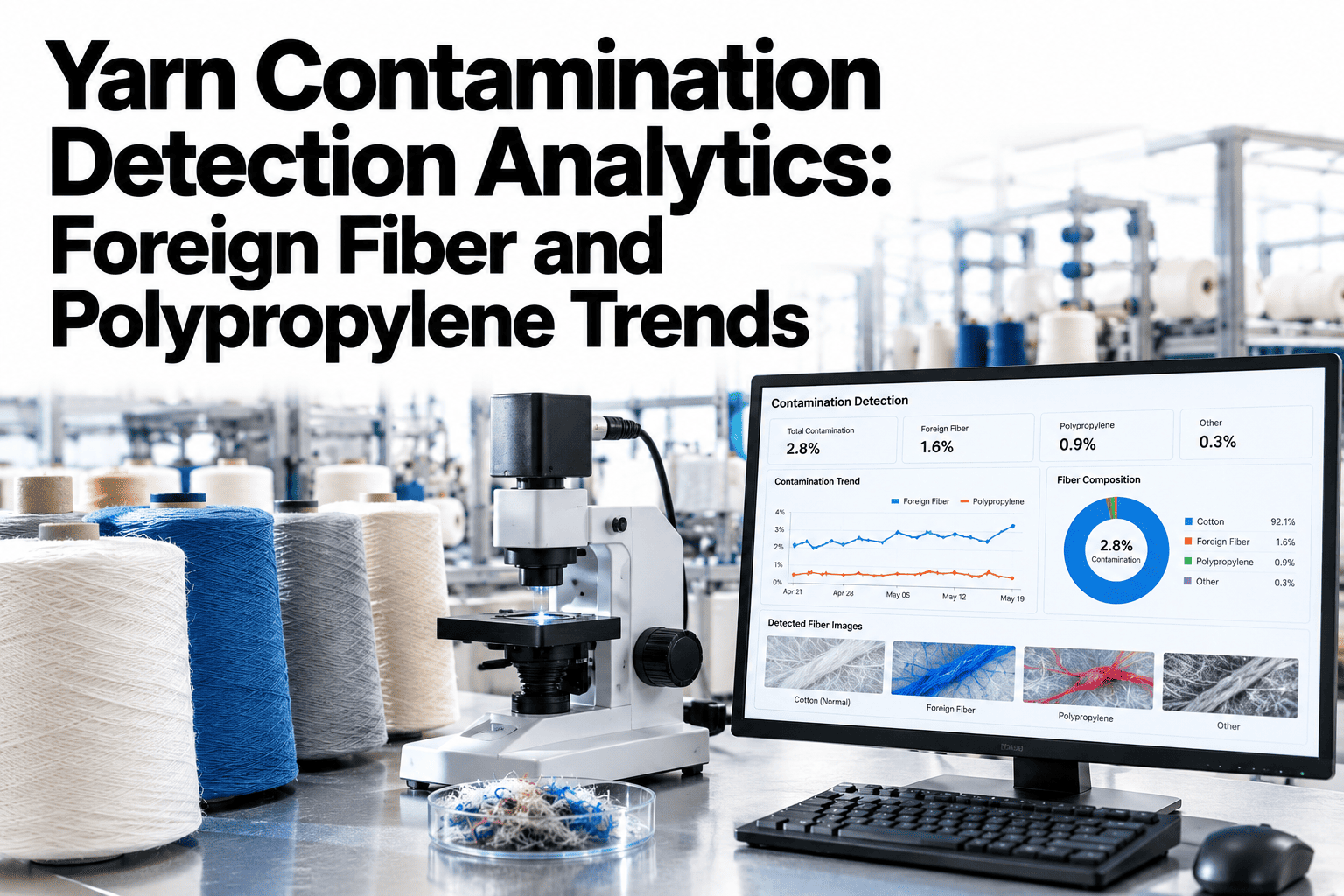
Foreign fiber and polypropylene contamination in yarn sits at the intersection of raw material quality, storage practice, and process housekeeping — and it causes disproportionate downstream damage. A single polypropylene thread woven into a fabric destined for piece dyeing can produce a white streak through an entire fabric batch that cannot be corrected. Tracking contamination trends by material source and production context is the only way to isolate where the contamination enters the process and take targeted preventive action. iFactory AI connects Classimat contamination data to material lots and machine records so the quality team can find the source rather than chase the symptom. See how contamination trends are tracked and sourced in iFactory AI.
Find Where Contamination Enters — Not Just Where It Shows Up
Foreign fiber and polypropylene contamination tracked by material lot, storage, and process stage — so the source is identified before it becomes a customer claim.
The Three Contamination Types and What They Signal
Classimat 5 separates contamination into three distinct types, each pointing to a different part of the supply chain or production process.
Non-cotton fibers — polyester, nylon, colored natural fibers — that enter with the raw material or from floor contamination. Trend spikes that correlate with a specific supplier lot point to the bale source. Spikes that occur across all lots from the same storage area suggest housekeeping or bale handling as the entry point.
Seed coat fragments, leaf, and stem material that survive ginning and blow room cleaning. High vegetable matter in yarn that varies by lot but not by machine indicates raw material quality differences between origins or harvest seasons. Consistent levels regardless of lot suggest blow room settings need adjustment.
The most commercially damaging contamination type — PP is hydrophobic, so it does not accept dye, producing white or bright streaks in dyed fabric that are impossible to correct after weaving. PP enters from bale ties, packaging twine, and packing bags that shed fibers during opening. Classimat 5 was the first instrument to classify PP separately from other contamination — the trend data drives sourcing and handling discipline.
How iFactory AI Connects Contamination Data to Source
Source identification requires connecting the Classimat contamination count to the bale lot active at the machine, the storage area the bales came from, and the opening sequence that processed them.
Trace Contamination Back to Its Source — Every Time
iFactory AI connects Classimat PP and foreign fiber counts to bale lots, machines, and process stages automatically. Book a session to see contamination analytics in action.
Contamination KPIs Worth Tracking
Not all contamination metrics carry equal downstream risk. These are the indicators that directly influence fabric quality at the customer end.
| Metric | Classimat Source | Downstream Risk | Action Threshold |
|---|---|---|---|
| PP contamination count / 100km | Classimat 5 PP channel | Dye rejection in woven and knitted fabric | Any increase from baseline — zero tolerance for PP-sensitive counts |
| Colored foreign fiber count | Foreign matter — colored channel | Visible specks in light-colored fabric | Lot-over-lot trend increase |
| Vegetable matter count | Foreign matter — VM channel | Specks in fabric, combing loss | Deviation from lot baseline by more than 20% |
| Contamination lot correlation index | Calculated from Classimat + lot data | Identifies whether material or process is the driver | High correlation signals material source action |
Frequently Asked Questions
Can iFactory AI track PP contamination separately from other foreign matter types?
Yes. iFactory AI tracks PP contamination, colored foreign fibers, and vegetable matter as separate trend lines, because they have different sources and require different corrective actions. Classimat 5 provides these as separate channels, and the dashboard displays each independently rather than aggregating them into a single contamination total. See the contamination channel breakdown in a live demonstration.
How quickly can contamination be traced to a specific bale lot?
When bale lot tracking is active and the material record is current, a contamination spike can be attributed to the responsible lot within minutes of the Classimat result appearing in the system. The critical enabler is accurate lot attribution at the machine — when that is in place, the source analysis is automatic. Ask about lot tracking setup for your blow room and ring frame operation.
Does the system build a contamination history per supplier?
Yes. iFactory AI retains contamination test results linked to supplier and origin for as long as the historical data is stored, building a supplier quality record that accumulates over seasons and years. This record supports annual supplier quality reviews and gives the purchasing team objective data for lot acceptance decisions rather than relying on sample testing alone.
What if contamination appears on machines across multiple lots — how is the source identified?
When contamination appears broadly across machines regardless of the active lot, the pattern points to a process source rather than a material source — typically blow room housekeeping, packing material contact during storage, or an opening machine component that is shedding synthetic material. iFactory AI surfaces this cross-lot pattern so the investigation focuses on the process rather than the supplier. Walk through the source diagnosis workflow in a session.
Can contamination data feed back into raw material purchasing decisions?
Yes, and this is one of the most valuable applications of long-term contamination trend data. Suppliers consistently showing elevated PP or colored foreign fiber rates can be flagged for conditional acceptance or sample testing at intake, while suppliers with a clean contamination history can be prioritized for critical or color-sensitive count production. The data converts anecdotal quality memory into structured supplier performance records.
Stop Contamination Claims Before They Start
iFactory AI tracks PP, foreign fiber, and vegetable matter trends by lot, supplier, and machine — so contamination sources are found before the yarn leaves the mill. Book a walkthrough to see the full contamination traceability framework.