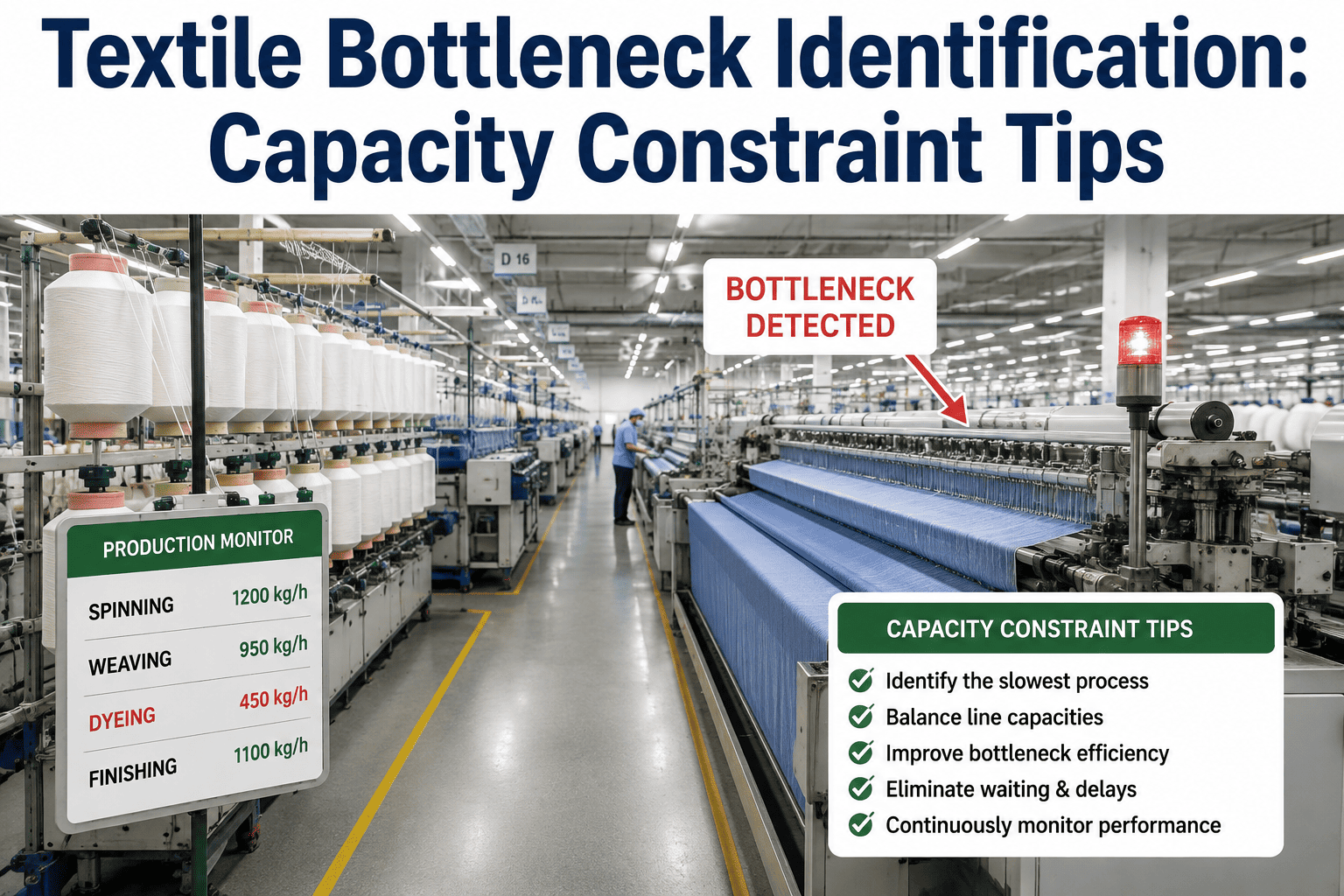
Every textile mill has a bottleneck somewhere in its value stream — the question is whether anyone actually knows where it is, or whether the plant is spending capital and attention improving departments that were never the real constraint on total output to begin with. A bottleneck isn't the busiest-looking department or the one generating the most complaints; it's the single stage whose capacity sets the ceiling for everything downstream of it, and improving any other stage beyond that ceiling produces no additional finished output at all. Identifying the real constraint requires looking at WIP accumulation, not just utilization percentages, because inventory piling up in front of a stage is one of the clearest physical signals a plant has of where its true bottleneck sits. This guide covers how to read capacity data correctly, where WIP accumulation reveals a hidden constraint, and how to avoid the common trap of "improving" a non-bottleneck department. Mills mapping capacity across departments can book a 30-minute demo to see how iFactory tracks WIP levels and department capacity utilization across the full production floor.
Textile Bottleneck Identification — Capacity Constraint
How to find the actual constraint that sets a textile mill's total output ceiling, using WIP accumulation and capacity data instead of guessing based on which department looks the busiest or complains the loudest.
Why "Busy" Isn't the Same as "Bottleneck"
It's tempting to assume the department that looks the busiest, runs the most overtime, or generates the most escalations is the bottleneck, but busyness and constraint are not the same thing. A department can run at high utilization while still keeping pace comfortably with everything feeding into it, while a quieter-looking department downstream is actually the stage capping total plant output because it simply has less raw capacity than everything upstream of it. Chasing the loudest department instead of the actual constraint is one of the most common and costly mistakes in capacity planning.
The Real Signal — WIP Accumulation
Work-in-process inventory piling up in front of a specific department is one of the clearest physical indicators available that the stage receiving that inventory has less capacity than the stages feeding it. If grey fabric is stacking up ahead of dyeing while spinning and weaving run smoothly, dyeing is very likely the actual constraint regardless of how efficiently dyeing itself appears to be operating internally. Tracking where WIP consistently accumulates over time, rather than looking at a single snapshot, filters out normal day-to-day variation and reveals the department that structurally can't keep pace.
Capacity Analysis by Department
| Department | Common Capacity Constraint | WIP Accumulation Signal |
|---|---|---|
| Spinning | Spindle count, machine speed limits | Raw fiber or roving building up before spinning |
| Weaving / Knitting | Loom count, changeover frequency | Yarn stock building up before weaving |
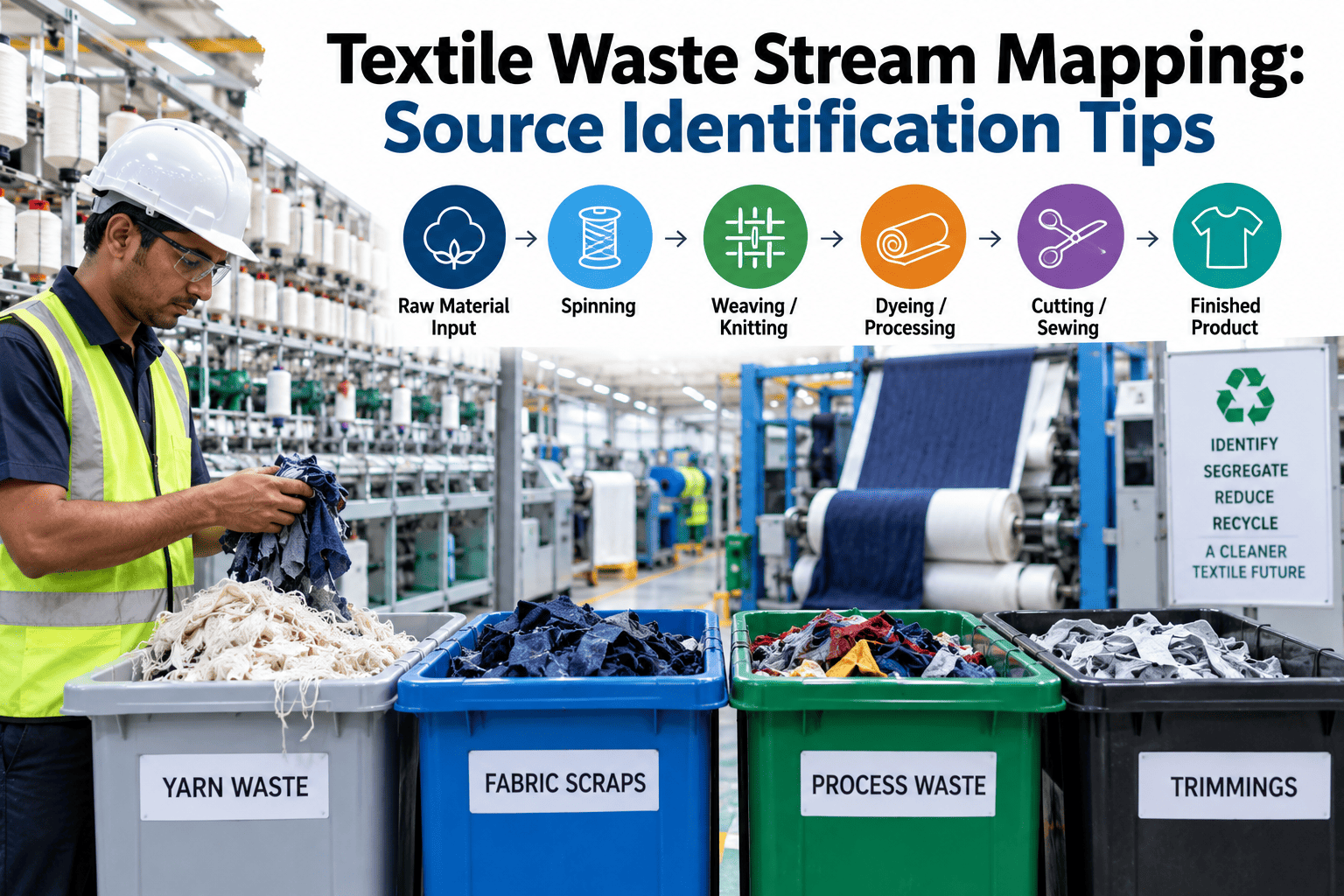
| Dyeing & Finishing | Batch machine capacity, color grouping efficiency | Grey fabric queue building up before dyeing |
| Cutting | Cutting table throughput, marker efficiency | Finished fabric rolls building up before cutting |
| Sewing & Packing | Line balance, operator staffing | Cut bundles building up before sewing |
A plant with multiple products or fabric types can have a different bottleneck department depending on the specific product mix running at a given time, which is why bottleneck identification needs to be an ongoing practice rather than a one-time exercise revisited only occasionally.
The Trap — Improving the Wrong Department
Why it happens
A department that's easy to improve, has budget already allocated, or is generating the most internal pressure often gets the improvement attention, regardless of whether it's actually the plant's real constraint.
Why it wastes investment
Improving a non-bottleneck department can raise that department's own local efficiency numbers while producing zero increase in total plant output, since the real ceiling remains wherever the actual constraint sits.
How to avoid it
Any proposed capacity investment should be checked against current WIP accumulation data first — if the department isn't where inventory is piling up, the investment is very unlikely to move total plant throughput no matter how well-justified it looks in isolation.
A Simple Constraint-Finding Routine
Map WIP levels at every department boundary weekly. A single week's data is noisy; a multi-week trend reveals the department where accumulation is structural rather than incidental.
Cross-check against rated capacity, not just headcount or machine count. A department can look adequately staffed on paper while still carrying a real capacity gap due to machine condition, changeover time, or product mix complexity.
Confirm the constraint before committing capital. A capacity investment decision should always trace back to a confirmed WIP accumulation pattern, not an assumption based on which department has complained most recently.
Re-check after every product mix shift. A new product with a different processing profile can move the bottleneck to a different department entirely, which means the constraint identified last quarter may not be the constraint today.
Frequently Asked Questions
How is a bottleneck different from a department that just looks overworked?
A bottleneck is the specific stage whose capacity sets the ceiling for total plant output, while an overworked-looking department may simply be running at high utilization without actually constraining anything downstream. A department can carry heavy overtime and staff stress while still comfortably keeping pace with what feeds into it, meaning it isn't the real limiting factor on how much finished product the whole plant can produce — the distinction matters because fixing the wrong one wastes investment without increasing output. Contact iFactory Support for help distinguishing utilization pressure from an actual capacity constraint.
Why is WIP accumulation a better bottleneck signal than utilization percentage alone?
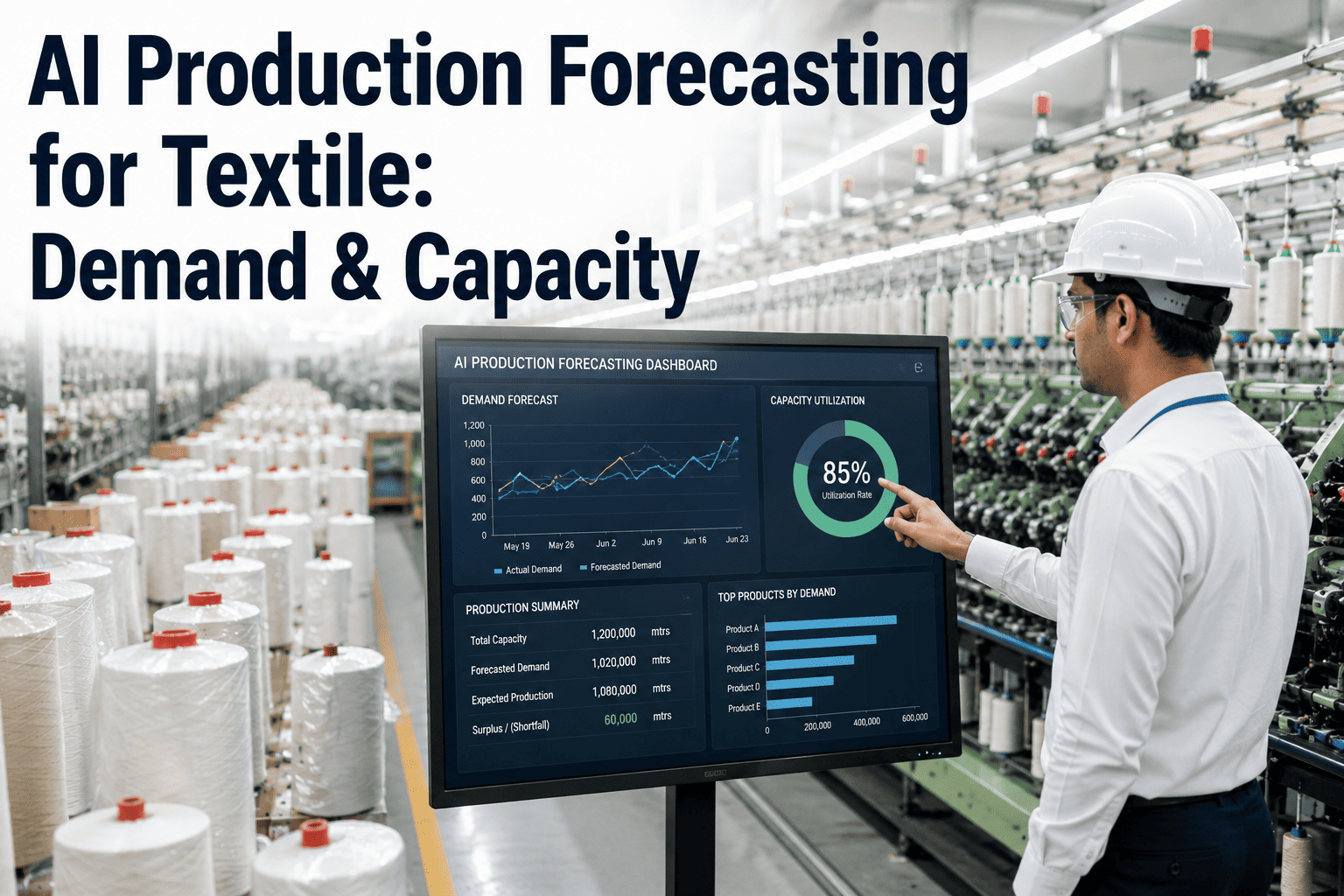
Utilization percentage measures how busy a department is relative to its own capacity, but it doesn't reveal whether that capacity is actually enough to keep pace with what's arriving from upstream. WIP accumulation is a direct physical signal of a supply-demand mismatch between stages — inventory only builds up in front of a department when that department genuinely can't process material as fast as it's arriving, which makes it a more reliable indicator of a true structural constraint than utilization data alone.
Can a plant have more than one bottleneck at the same time?
In practice, a plant's true constraint is usually a single stage at any given moment, but different product lines running through the same plant can each have a different limiting department depending on their specific processing requirements. This is why bottleneck identification needs to account for product mix — the constraint for a basics program might sit in weaving, while the constraint for a complex print program on the same floor sits in dyeing, and treating the whole plant as having one fixed universal bottleneck can miss this variation. Book a demo to see bottleneck identification segmented by product line.
How often should a plant re-check where its bottleneck actually sits?
Any time the product mix shifts meaningfully, new equipment is added anywhere in the value stream, or a sustained change in order volume occurs, since any of these can move the constraint to a different department without anyone deliberately deciding it should. Treating bottleneck identification as a one-time exercise rather than an ongoing practice is one of the most common reasons capacity investment ends up targeting a department that was the constraint a year ago but isn't anymore.
Is it ever worth improving a non-bottleneck department?
Yes, but the expectation should be set correctly — improving a non-bottleneck department can still reduce local cost, improve quality, or free up capacity headroom for future growth, but it will not increase total plant throughput today while the actual constraint elsewhere remains unaddressed. The mistake isn't improving a non-bottleneck department at all; it's expecting that improvement to move total output when the real ceiling sits somewhere else. Contact iFactory Support for help prioritizing capacity investment against the confirmed plant constraint.
Fixing the wrong department wastes investment without moving output.
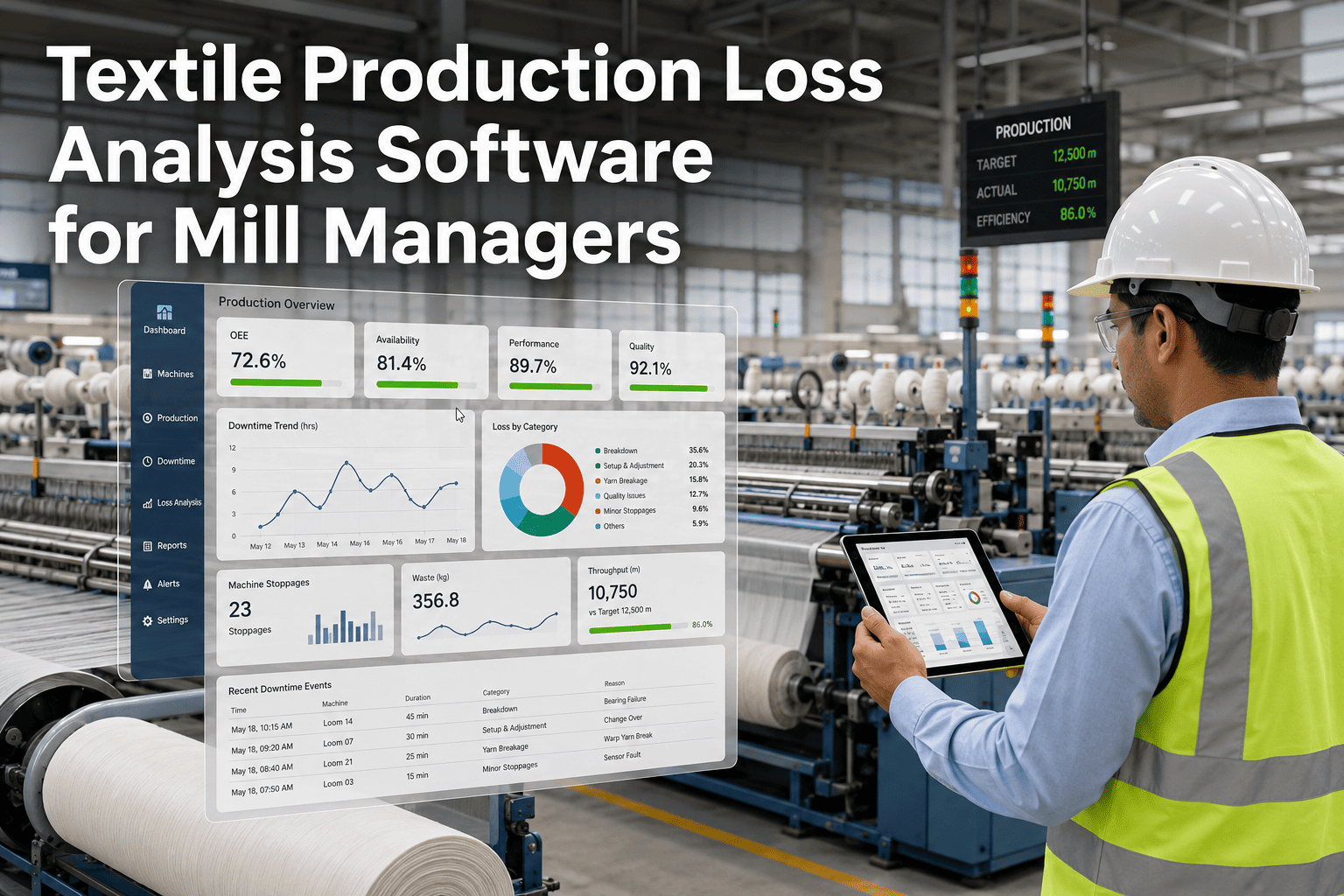
iFactory tracks WIP accumulation and capacity utilization across every department, so the real constraint on total plant throughput shows up on a dashboard instead of a guess based on who complains loudest. A 30-minute demo builds a live view against your own production floor data.