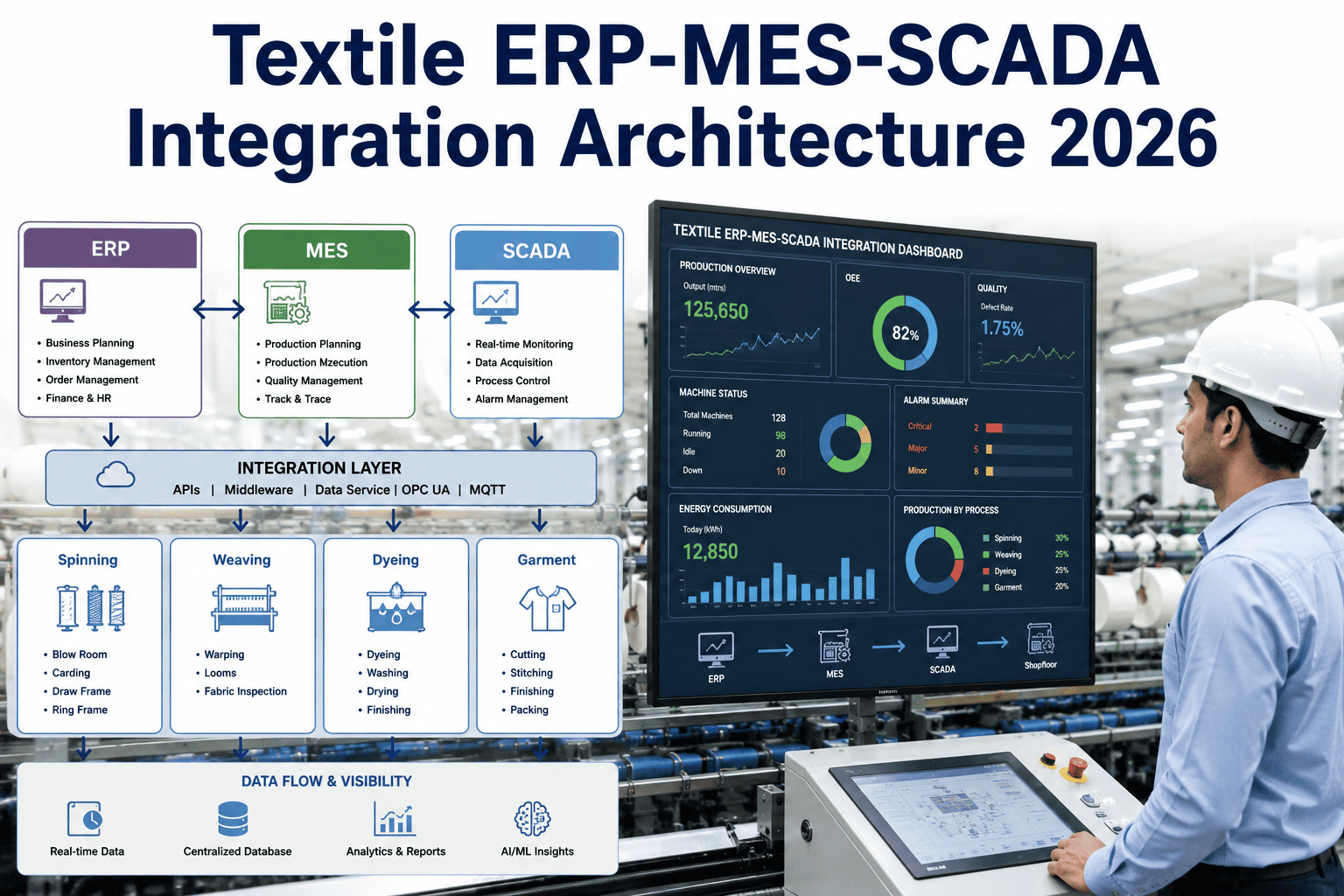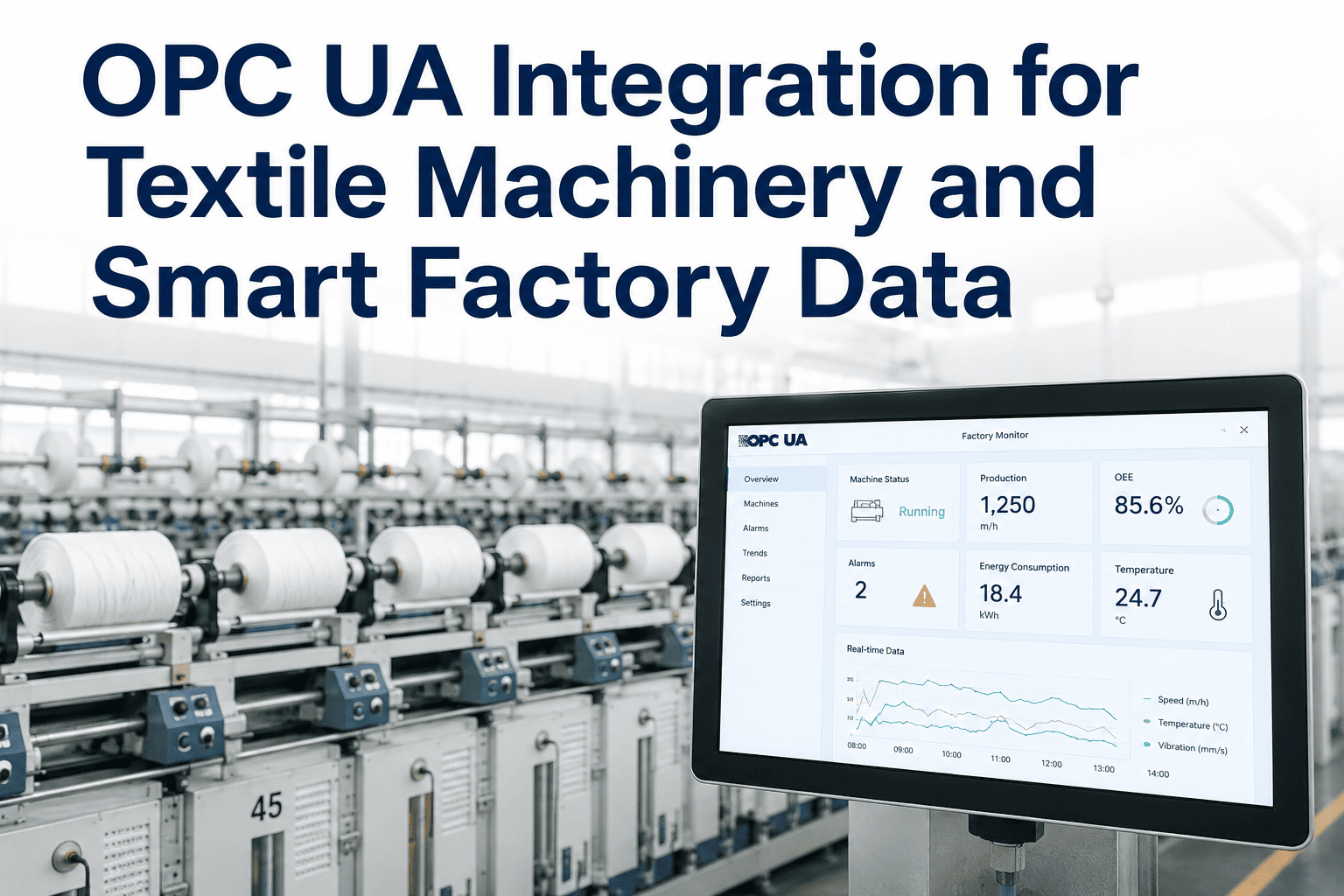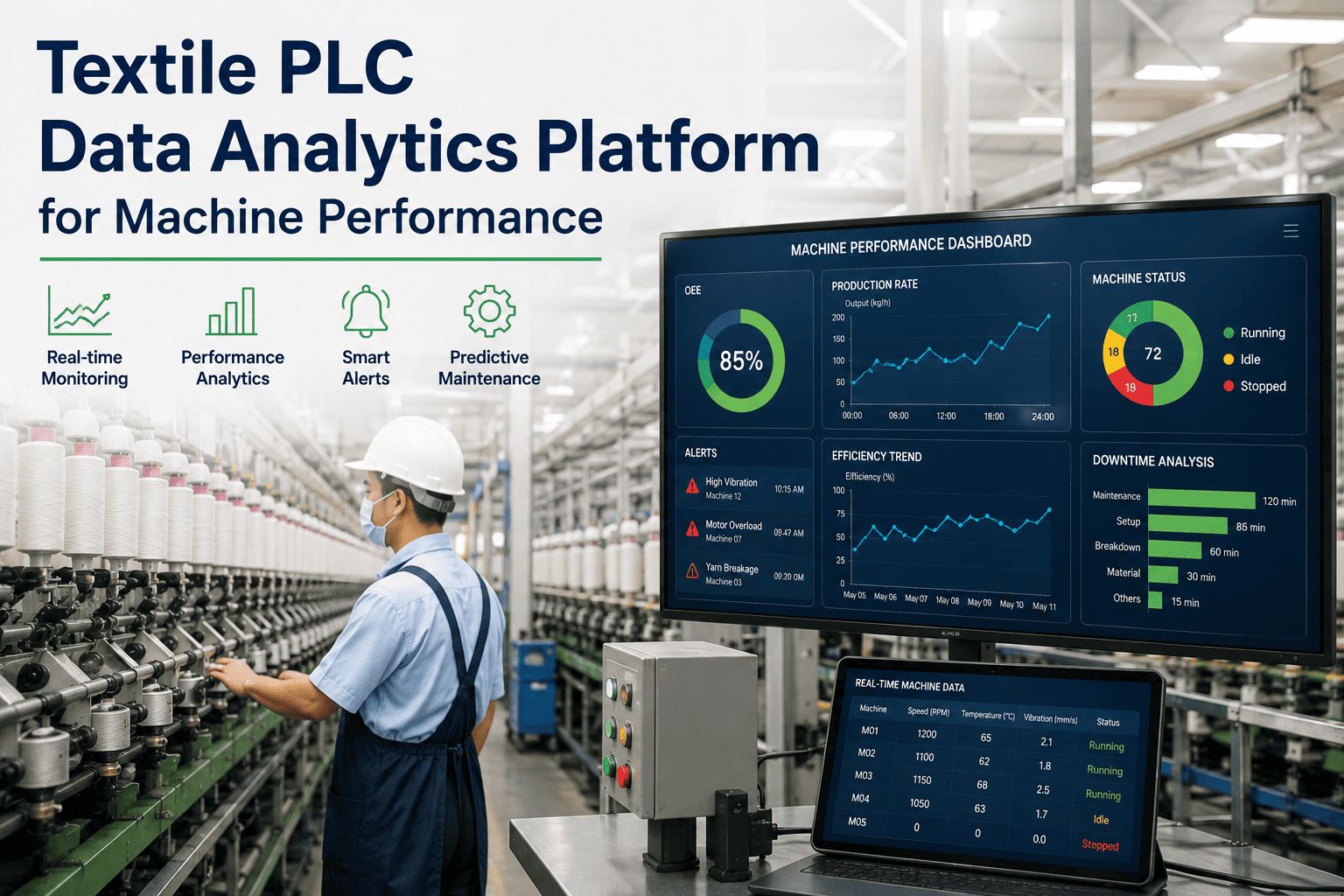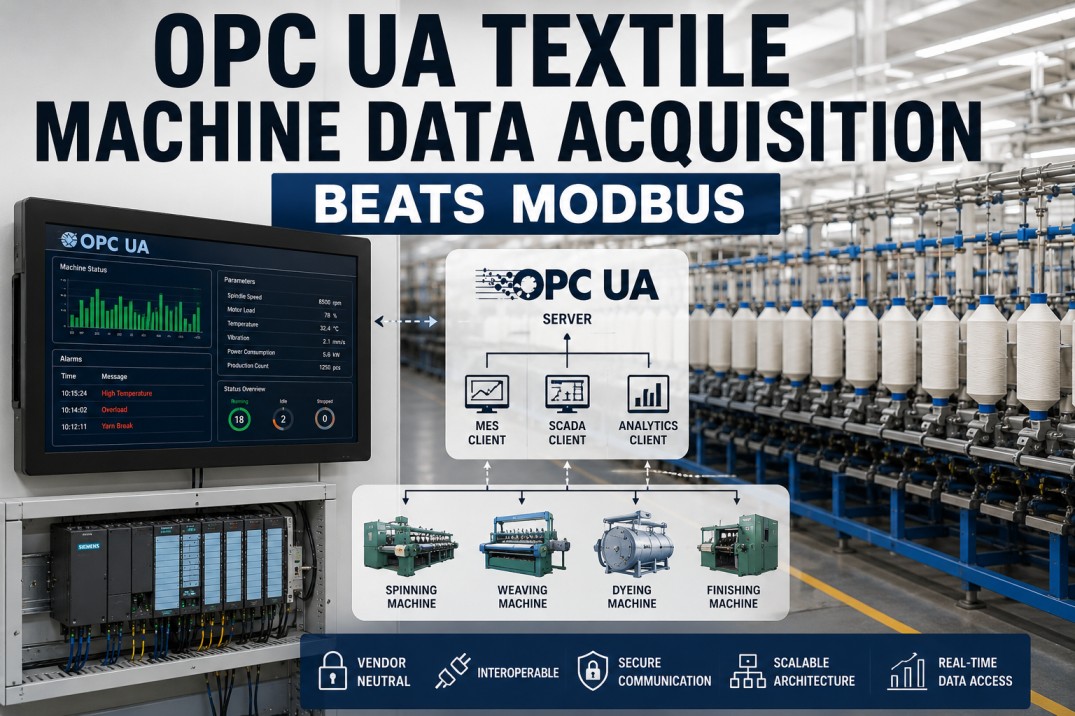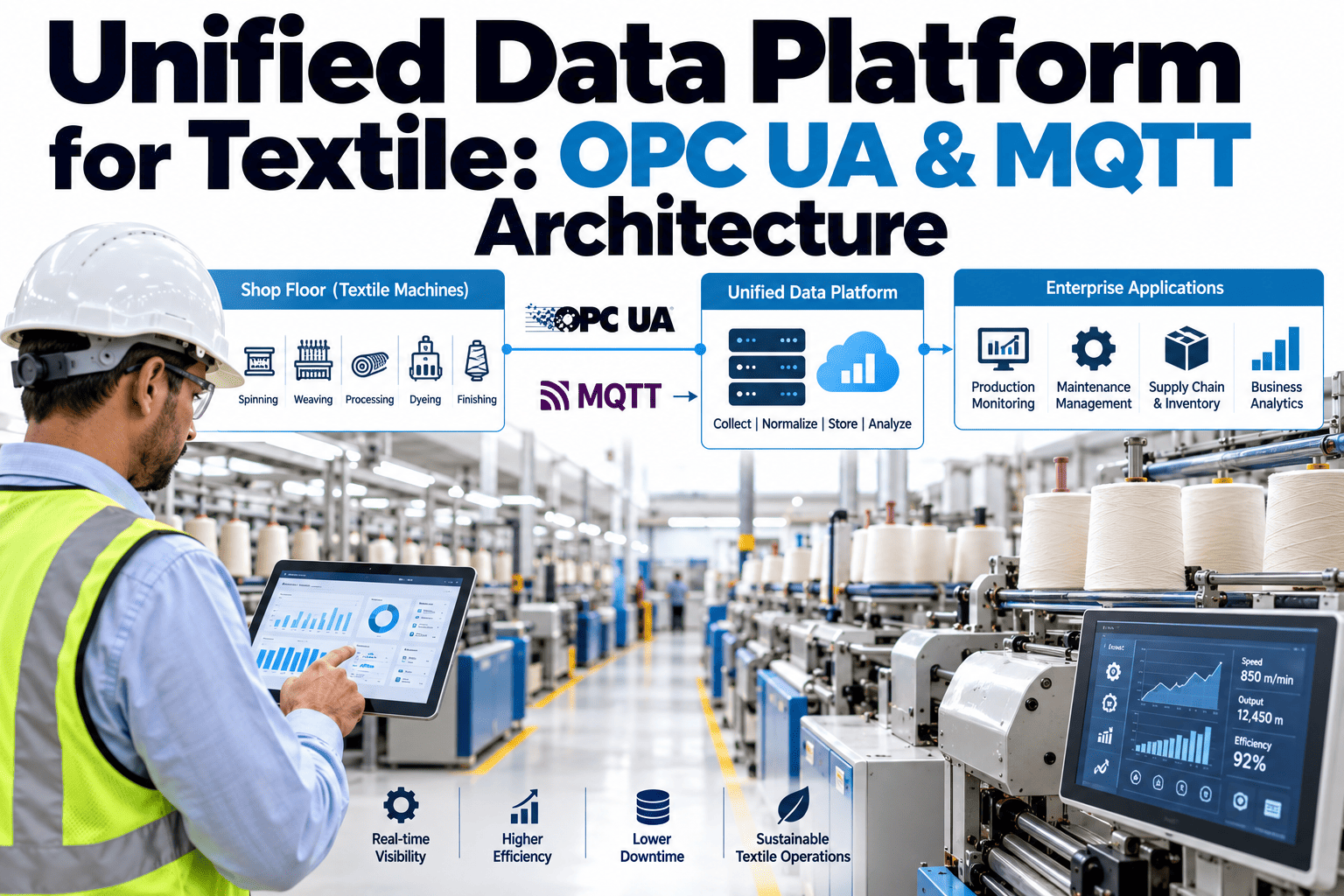
A textile mill accumulates data silos the way any manufacturing operation does — a knitting department tracking its own numbers in a spreadsheet, a dyeing department using a different system entirely, and a finishing department relying on paper logs nobody digitizes until month end, each one perfectly functional on its own and completely disconnected from the others. A unified data platform built on OPC UA for machine connectivity and MQTT for lightweight data streaming gives every department a common architecture to plug into, replacing the accumulated pile of department-specific spreadsheets and standalone systems with one consistent data layer feeding cloud analytics. Mills planning this kind of platform consolidation can start with a conversation with iFactory's support team about what an OPC UA and MQTT-based architecture looks like for a specific mill's equipment mix.
Every Department Speaking a Different Data Language Is Exactly Why Nothing Connects
OPC UA machine connectivity and MQTT data streaming give every department a common layer to plug into, replacing scattered spreadsheets and standalone systems with one unified platform.
Why Department Silos Persist Even With Good Intentions
Each department's data system usually got built to solve that department's own immediate problem, not to serve the mill as a whole, and nobody set out deliberately to create disconnected silos — they simply accumulated as each area solved its own need independently over time. Tearing all of that down and starting over is rarely realistic, which is why a unified platform approach focuses on giving every department a common connectivity layer to plug into going forward rather than demanding every existing system be replaced simultaneously.
The Four Layers of a Unified Architecture
Each layer serves a distinct purpose, and understanding the role of each is what makes the overall architecture coherent rather than another layer of complexity stacked on top of the existing mess.
Machines and Sensors
The physical layer generating raw data, spanning looms, knitting machines, dyeing equipment, and any sensors added independently across every department.
OPC UA Connectivity
A standardized, vendor-neutral protocol for pulling data off machines regardless of manufacturer, avoiding the need for a separate custom connection method per equipment brand.
MQTT Streaming
A lightweight messaging protocol well suited to the frequent, small data payloads a mill floor generates continuously, moving data efficiently from the connectivity layer up to analytics.
Cloud Analytics
The layer where data from every department finally comes together into a shared view, replacing the department-by-department spreadsheet approach entirely.
Give Every Department a Common Layer to Plug Into
Book a 30-minute walkthrough of how iFactory builds a unified OPC UA and MQTT architecture across a mill's full equipment mix.
Architecture Approaches Compared
Mills typically progress through recognizable stages on the way to a genuinely unified platform, and understanding the current stage helps prioritize the next investment.
| Stage | Typical State | Main Limitation |
|---|---|---|
| Department Silos | Each department uses its own spreadsheet or standalone tool | No cross-department visibility, heavy manual reconciliation |
| Point-to-Point Integration | Custom connections built between specific pairs of systems | Each new system requires another custom connection |
| Unified Platform | OPC UA and MQTT provide a common layer for every department | Requires upfront architecture investment across the mill |
A Composite Scenario: The Yield Number That Three Departments Each Calculated Differently
A textile mill's leadership team requested a single mill-wide yield figure for a board presentation and discovered that knitting, dyeing, and finishing each maintained their own separate spreadsheet-based yield calculation, using slightly different formulas and, in some cases, different definitions of what counted as usable output. Reconciling the three figures into one mill-wide number took the plant controller several days of manual cross-referencing before a defensible figure could be presented.
The root cause was not any individual department's calculation being wrong, but the complete absence of a shared data layer connecting the three departments, meaning each had built its own definition and process independently over years without ever needing to reconcile with the others until this specific request forced the issue. Building a unified platform with OPC UA connectivity across each department's equipment and a common MQTT stream feeding shared cloud analytics gave the mill one consistent yield calculation going forward, eliminating the need for another multi-day manual reconciliation the next time leadership asked for a mill-wide figure.
Mistakes That Undermine Data Unification Efforts
Letting Each Department Define Its Own Metrics Independently
Without a shared definition, as in the scenario above, three departments can each calculate the same-named metric differently for years before anyone needs to reconcile them.
Building Point-to-Point Connections Instead of a Common Layer
Custom connections between specific system pairs multiply in complexity as more systems are added, unlike a standardized layer like OPC UA that scales more gracefully.
Assuming Silos Will Naturally Resolve Themselves
Department silos persist and often deepen over time without a deliberate unification effort, exactly what allowed three inconsistent yield calculations to coexist for years in the scenario above.
Choosing a Proprietary Protocol Over an Open Standard
A proprietary connectivity approach tied to one equipment vendor limits flexibility as the mill's equipment mix changes, unlike vendor-neutral standards such as OPC UA.
Is Your Mill Actually Running One Data Platform or Several Disconnected Ones
Every department's key metrics are defined and calculated consistently
A shared metric definition, rather than each department's own formula, is what would have avoided the multi-day reconciliation effort in the scenario above.
Machine connectivity uses a vendor-neutral standard, not a proprietary protocol
A standard like OPC UA keeps the mill flexible as equipment from different vendors is added or replaced over time.
A single cloud analytics layer aggregates data from every department
One shared destination for department data, rather than separate spreadsheets, is what makes a mill-wide figure available on demand instead of requiring days of manual work.
Frequently Asked Questions
What is OPC UA and why does it matter for a textile mill's data architecture?
OPC UA is a vendor-neutral industrial communication standard that allows equipment from different manufacturers to be connected using a common protocol rather than requiring a separate custom integration method for each equipment brand, which is what lets a mill with a mixed equipment fleet, spanning multiple vendors across knitting, dyeing, and finishing, connect everything into one architecture rather than building point-to-point connections for each machine type.
What role does MQTT play alongside OPC UA in a unified platform?
MQTT is a lightweight messaging protocol designed for efficiently streaming many small, frequent data updates, making it well suited to move data from the OPC UA connectivity layer up to cloud analytics without the overhead a heavier protocol would introduce, particularly important on a mill floor generating continuous small updates from many machines simultaneously.
How can a mill tell if it actually has data silos, even if each department seems to be functioning fine?
A useful test is asking for a single mill-wide figure for a metric that multiple departments track, such as yield or efficiency, and observing whether producing that figure requires manual reconciliation across separate systems, exactly the test that revealed the silo problem in the scenario above even though each individual department's own tracking had been working fine in isolation for years.
Does building a unified platform require replacing every department's existing system?
Not necessarily — a unified platform approach typically focuses on adding a common connectivity and streaming layer that existing systems can feed into, rather than requiring every department to abandon its current tools immediately, which makes the transition more incremental than a full simultaneous replacement across the mill. Book a demo to see how iFactory layers a unified architecture onto an existing mixed equipment and system environment.
What is the first step for a mill wanting to unify its data across departments?
The first step is identifying which key metrics are currently calculated differently across departments, exactly the kind of audit that would have surfaced the three separate yield formulas in the scenario above before a board request forced the issue, and agreeing on a single shared definition for each before building out the underlying connectivity layer. Mills wanting help with this kind of audit can reach iFactory support directly.
Give Every Department the Same Data Language
iFactory builds a unified OPC UA and MQTT architecture across your mill's full equipment mix, feeding one consistent cloud analytics layer instead of scattered department spreadsheets. Book a walkthrough to see it running on a live textile plant.