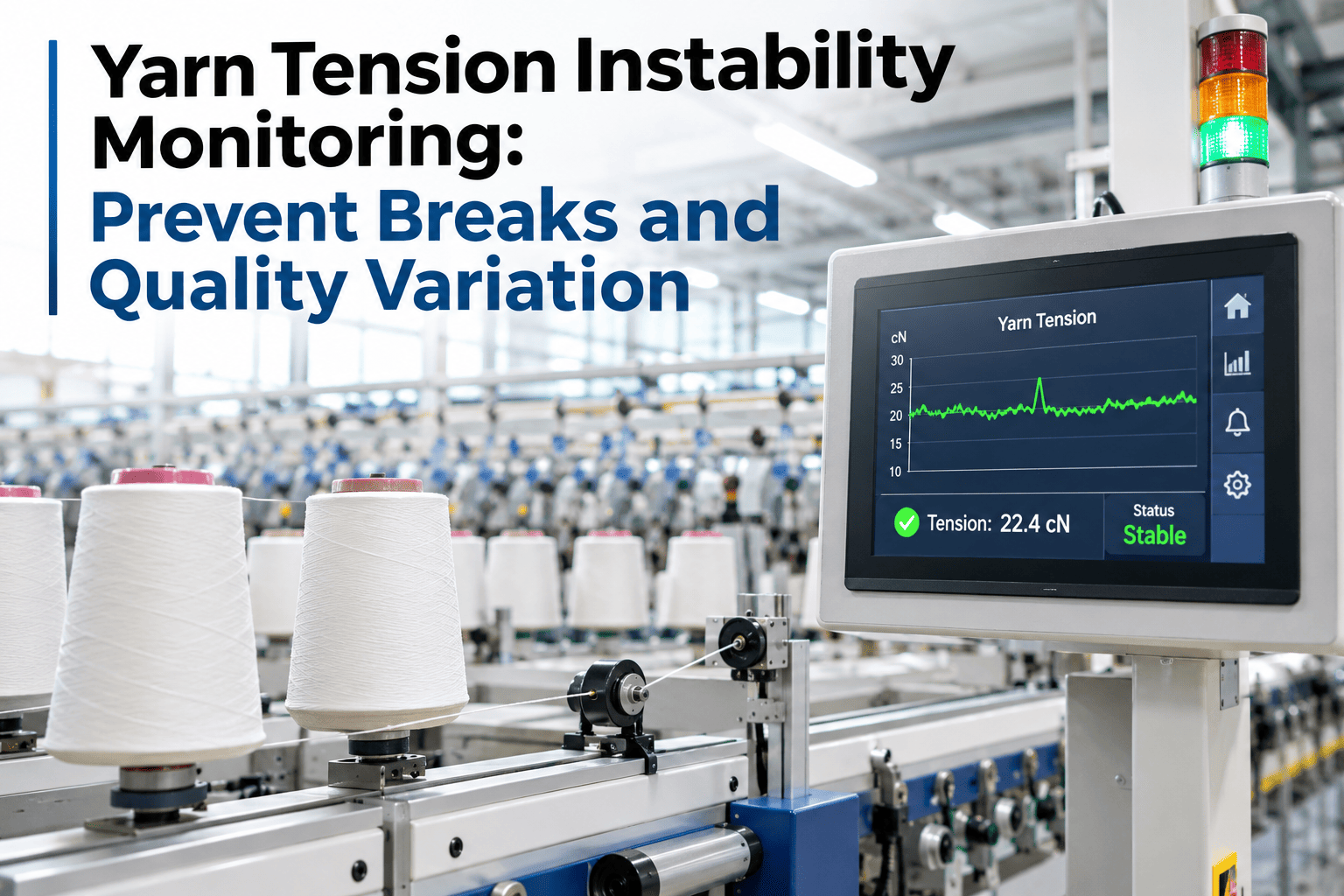
A yarn break looks like a single, isolated event when it happens, but the tension pattern leading up to it rarely is. Tension often starts drifting or spiking several seconds or minutes before the actual break, a signal that disappears the moment the break happens and the record moves on. Catching that instability pattern, rather than only logging the break itself, is what lets a mill correct a process drift before more breaks follow. Spinning mills that want their own tension signals connected to break events can review a tension instability analysis against their own break log with iFactory AI.
The Break Is the Symptom — the Tension Drift Before It Is the Signal
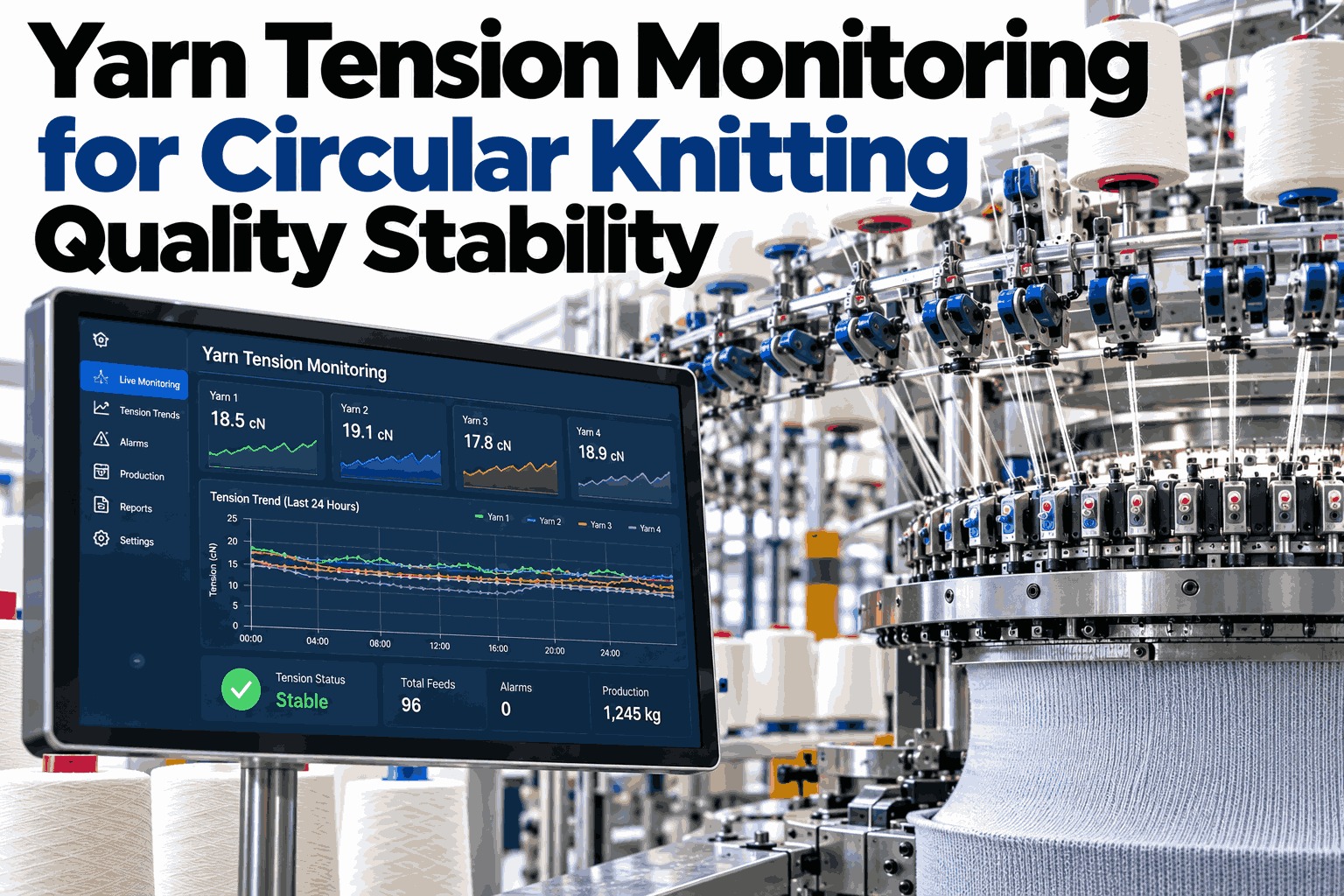
iFactory AI monitors yarn tension continuously and correlates instability patterns with breaks and machine settings, catching drift before more breaks follow.
What Tension Instability Actually Looks Like Before a Break
A break log typically records the moment of failure and little else. The tension signal leading up to it often shows a specific pattern — a gradual rise, an oscillation, or a sudden spike — that is distinct enough to recognize before the actual break occurs.
Three Instability Patterns and What They Usually Mean
| Pattern | Likely cause |
|---|---|
| Gradual rise | Developing roller or guide wear increasing resistance |
| Oscillation | An unstable setting or a developing mechanical looseness |
| Sudden spike | A material irregularity or a snag at a specific point |
See What Your Own Tension Data Shows Before Recent Breaks
Share tension sensor data around a recent break and a short session will show the instability pattern leading up to it.
A Composite Scenario: The Breaks That Shared a Signature Nobody Had Noticed
A spinning line was experiencing an elevated break rate on a specific set of spindles, and each break was logged individually without anyone connecting the tension pattern across them. Reviewing the tension signal data around each break showed a consistent gradual-rise pattern in every case, pointing toward a common developing cause rather than unrelated random events. The pattern traced back to a specific guide component wearing across that spindle group, and replacing it before further breaks occurred resolved the elevated rate — a connection iFactory AI's team can help uncover from your own tension sensor data.
Why Correcting Drift Early Prevents a Cascade of Breaks
A single break often does not stay single. If the underlying tension instability is not corrected, it tends to produce further breaks on the same or nearby spindles as the condition worsens. Catching the instability pattern at the first sign of drift, rather than after several breaks have already occurred, keeps a developing issue from becoming a recurring disruption across a whole section.
Frequently Asked Questions
Catch the Drift Before It Becomes the Next Break
iFactory AI monitors tension continuously and correlates instability patterns with breaks and likely causes. Book a walkthrough with your own tension data.