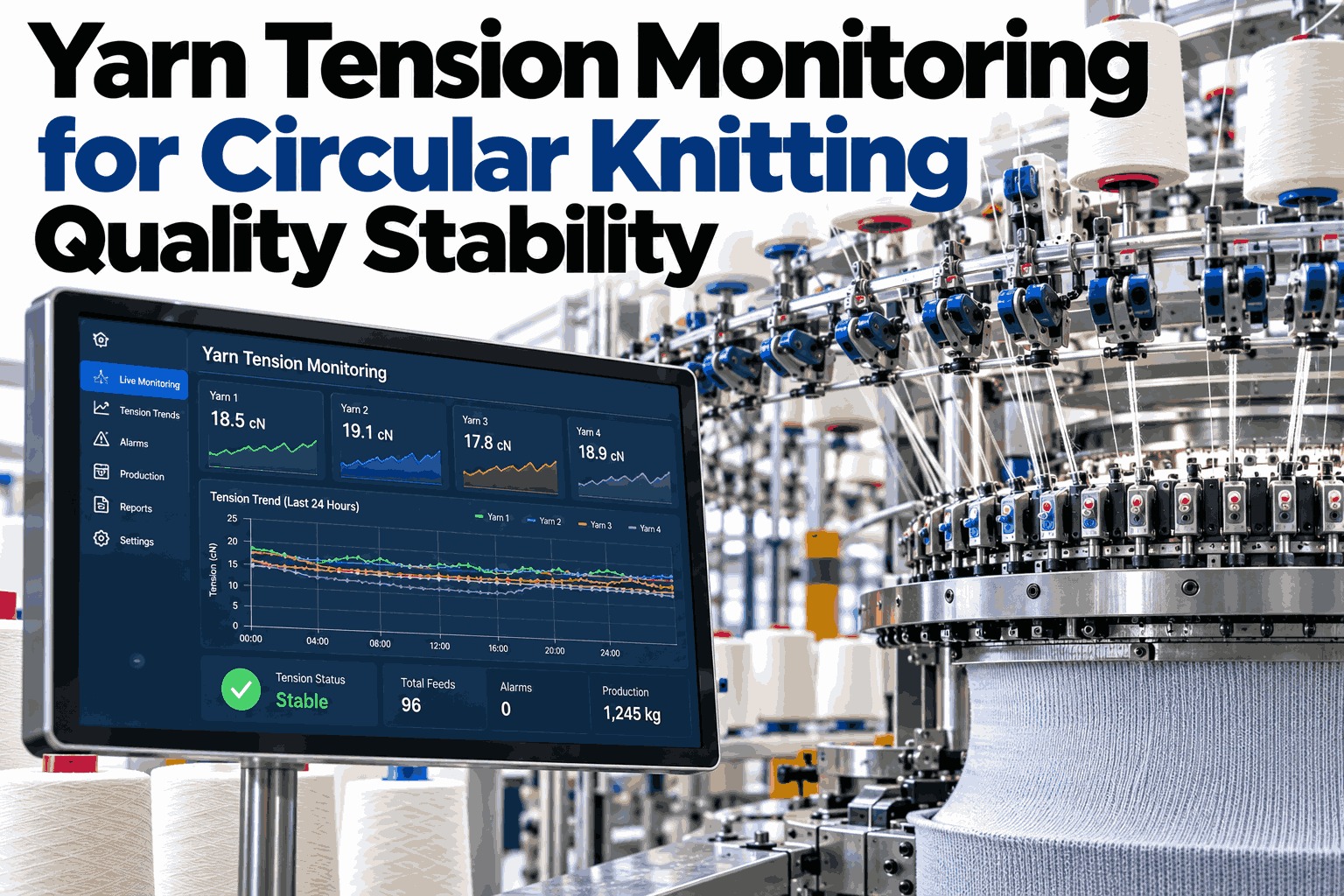
A hole in knitted fabric is rarely random. It usually marks a yarn that was too weak for the tension it met, a needle that failed to catch a loop or a setting that stretched the stitch beyond what the yarn could take. Because the fault is made at the machine but only seen at inspection or after dyeing, hundreds of metres can carry it before anyone notices. Preventing it means watching the causes continuously, not counting the holes afterwards. Knitting teams can ask iFactory AI how hole defects are linked to machine, yarn and needle data.
Prevent Holes in Circular Knitted Fabric by Watching the Causes, Not the Count
iFactory AI links yarn lot, tension, needle events and machine settings to every hole defect, so the cause is found early and the next roll comes out clean.
Four Kinds of Holes and What They Mean
Not every hole has the same cause. Recognising the form narrows the search before any investigation begins.
Yarn burst hole
The yarn snaps under tension or at a weak spot, leaving a clean hole with broken ends.
Missed loop hole
A needle fails to catch the yarn, and the missing loop unravels into a ladder or hole.
Tight stitch hole
Stitches are set too tight for the yarn, and the loop splits in the fabric or in finishing.
Damage hole
Foreign matter, rough handling or a sharp part cuts or tears the fabric after knitting.
The Most Common Causes of Hole Defects
The chart shows an illustrative ranking of causes in circular knitting. Your own mix will differ.
Reading the Hole Back to Its Cause
The way holes repeat tells you where to look. This table links patterns to likely causes and a first check.
| Pattern | Likely Cause | First Check |
|---|---|---|
| Random holes spread over many rolls | Weak yarn or knots | Yarn lot, strength results and package faults |
| Holes at the same needle position | A faulty needle | Needles at that position on that machine |
| Holes at the same feeder | Feeder tension or yarn path problem | Tension and guides at that feeder |
| Holes after a speed or setting change | Tight or over-stretched stitch | Stitch length and take-down settings |
| Holes found only after dyeing | Weak or stressed loops that failed in finishing | Yarn strength, loop length and finishing conditions |
Yarn Strength Versus Knitting Tension
Holes appear when tension meets yarn that cannot carry it. The comparison shows what changes the balance.
From Signal to Prevented Hole
Prevention is a short chain that ends in an action before the defect spreads.
Find the Machines Most Likely to Make Holes Next
Book a 30-minute session and iFactory AI will review your knitting stops, yarn lots and defect records to show where hole risk can be flagged earlier.
Which Cause Shows Up in Which Signal
The matrix, shown as an illustration, links causes to the signals that usually reveal them first.
| Cause | Stop Events | Yarn Tension | Needle Breakage | Yarn Lot Data |
|---|---|---|---|---|
| Weak yarn or knots | High | Moderate | Low | High |
| Needle wear or damage | Moderate | Low | High | Low |
| Tension too high | Moderate | High | Low | Low |
| Tight stitch setting | Low | Moderate | Low | Low |
| Lint and foreign matter | Moderate | Low | Moderate | Low |
A Worked Look at Tension and Yarn Strength
This is illustrative arithmetic. A yarn breaks at a typical force, and knitting tension uses part of that strength.
| Item | Basis | Result |
|---|---|---|
| Yarn breaking force at a weak place | Test value for a weak section | Lower than the average yarn |
| Knitting tension at the feeder | Measured at the yarn path | A fixed share of yarn strength |
| Safety margin | Strength minus tension | Shrinks sharply at weak places |
| Result at a weak place | Margin close to zero | Hole risk rises |
| Remedy | Lower tension, better yarn or both | Margin restored |
Why Hole Defects Cost More Than They Look
A hole costs more than the metre of fabric it appears in. Several costs stack up behind it.
Response Ladder for a Hole Defect Alert
A clear sequence stops improvisation. Agree the steps in advance.
Check the fabric
Look at the last metres and mark the defect.
Check needles near the suspect position
Inspect for bent hooks and sticking latches.
Check yarn and tension at the feeder
Review lot, guides and tension.
Adjust and run a short length
Confirm the defect has stopped.
Record and escalate
Log the cause and call maintenance if it returns.
Building a Hole Prevention Program in Five Steps
A first program works best on a few machines with recurring holes.
Log every hole with machine, feeder, position and roll.
Tag each by form and suspected cause.
Join defects to yarn lot, tension and needle data.
Notify the operator when conditions drift toward risk.
Check confirmed causes monthly and adjust limits.
Hole Defect Prevention Checklist
Use this list at shift start and at every yarn lot change. Each box should be answerable from records.
A Composite Scenario: Holes That Followed a Yarn Lot
This is a composite example, not a named mill. It shows how linked data ends a long argument.
Mistakes That Keep Holes Coming Back
These habits keep hole defects alive.
Changing needles for every hole
Many holes come from yarn, not needles.
Blaming the yarn without evidence
The supplier will push back without data.
Ignoring tension drift
Small increases wear weak places through.
Not recording hole positions
Patterns stay invisible.
What iFactory AI Adds to Hole Defect Prevention
iFactory AI is smart manufacturing and industrial software for knitting and other textile operations. Explore hole defect prevention in a live product tour on realistic knitting data.
A 30-Day Plan to Start
A month is enough to build a first hole defect picture for a few machines.
Review of Circular Knitting Hole Defect Prevention
A practical review of what makes hole prevention work, written as editorial guidance rather than a named expert quote.
Look at yarn and tension together
Holes appear where strength and tension meet.
Record the position
A hole with a position is a clue, and one without is a complaint.
Give the supplier evidence
Linked data turns an argument into a fix.
Frequently Asked Questions
What causes holes in circular knitted fabric?
Common causes are weak places and knots in the yarn, tension too high for the yarn strength, worn or sticking needles, tight stitch settings and damage from lint or handling. See causes tracked on a live machine in a short demo. The pattern of repetition shows which one it is.
How do I tell a yarn hole from a needle hole?
Holes repeating at the same needle position point to the needle, while random holes across many rolls point to yarn or tension. Recording position makes this quick. Always inspect before replacing parts.
Can lowering tension prevent holes?
Often yes, because it restores the margin between yarn strength and load, but it may change fabric properties. Ask support how tension changes are tracked against fabric quality in your mill. Confirm GSM and appearance after any change.
Do we need new sensors?
Not always. Many machines already provide stop and breakage data, and yarn lot and defect records exist in most mills. Linking them is the first gain.
How soon can we see results?
Many mills find a pattern within weeks of linking defects to yarn and machine data. Book time to scope a hole prevention pilot on a few machines. A prevented hole pattern is the clearest proof.
Stop Holes Before They Reach the Inspection Table
iFactory AI links defects to yarn, tension and machine data so causes are caught early. Book a walkthrough to see it on your own knitting floor.