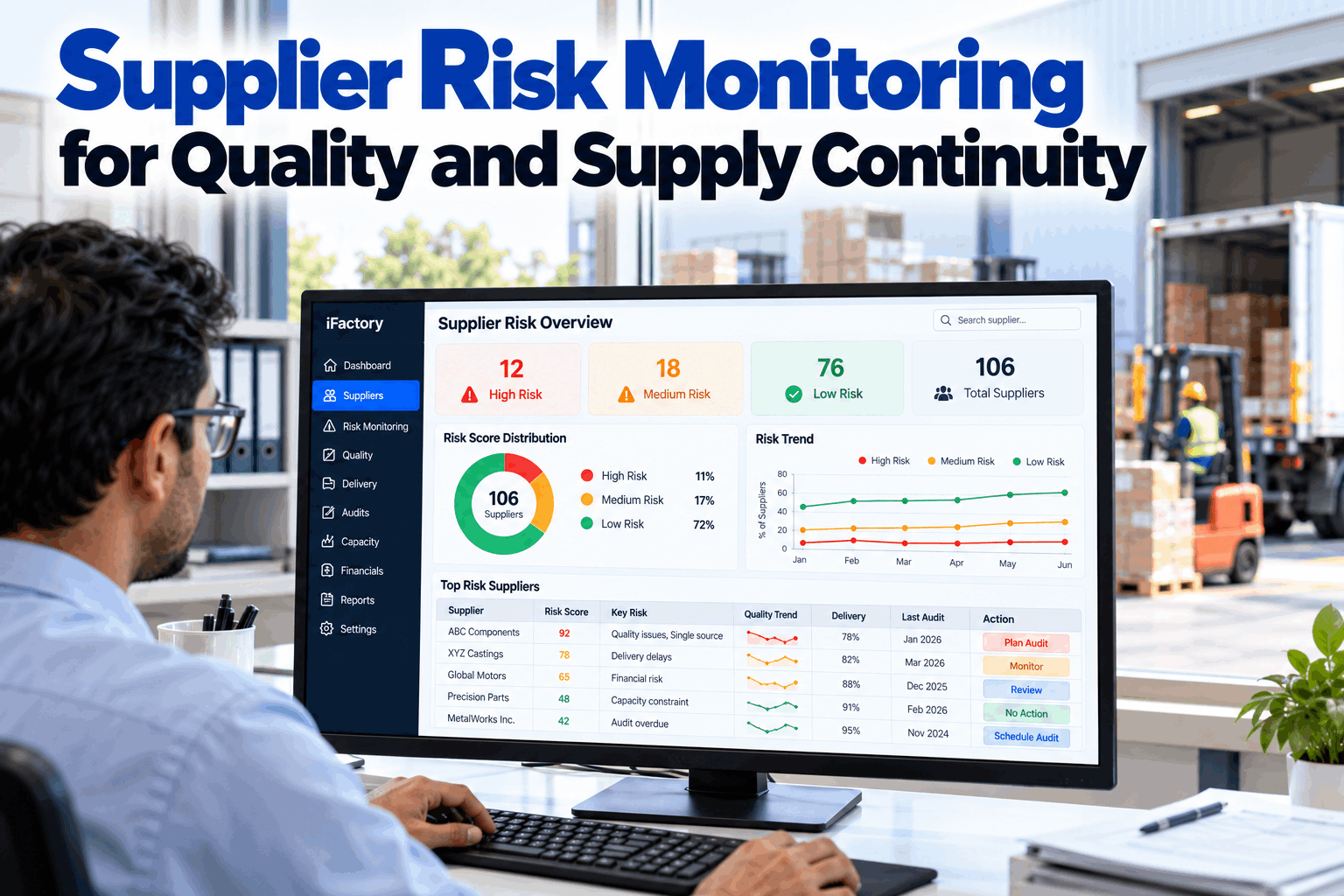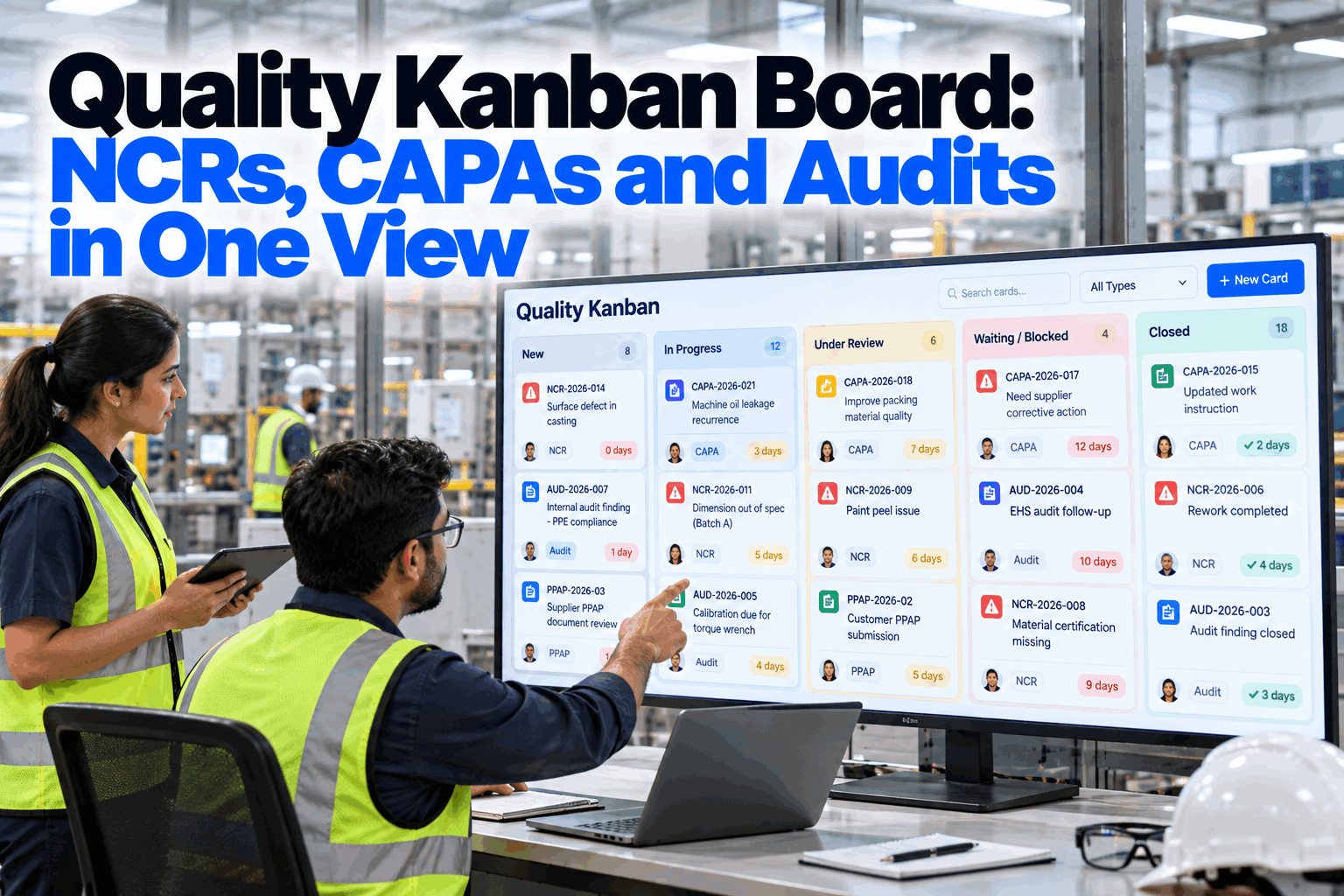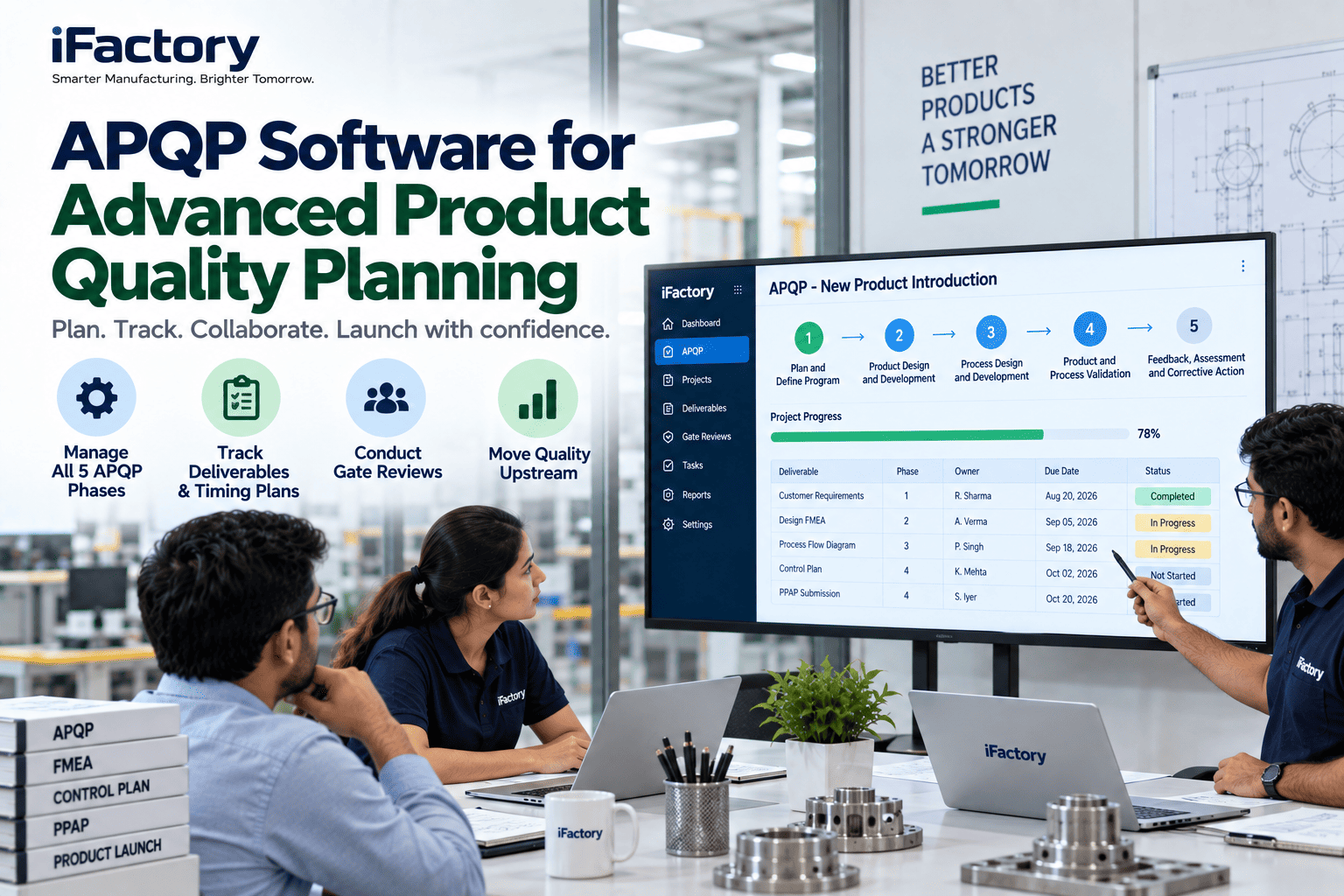
For an automotive supplier, passing the IATF 16949 audit is only the starting line. Each OEM adds its own customer-specific requirements, its own PPAP and audit expectations and its own scorecard, and a bad quarter can bring controlled shipping or a hold on new business. Most quality teams track all of this in spreadsheets, portals and email. This guide explains what OEMs ask for and how to keep it visible in one place before a customer has to escalate. See it on a live supplier board in a short supplier quality demo.
Know Where You Stand With Every OEM Before They Tell You
The iFactory Automotive Quality Pack keeps your CSR matrix, PPAP, layered process audits, traceability and customer scorecards in one system. AI watches the signals together and alerts you when escalation risk is rising.
Three Layers of Requirements on Every Part You Ship
An automotive QMS is built in layers. IATF 16949 sets the common base for the whole sector. The core tool manuals from AIAG and VDA explain how to plan, approve and control a process. On top sit each customer's own requirements, which often decide what an auditor or a supplier quality engineer actually checks. Sort out which layer each rule comes from with our automotive quality team.
Customer-Specific Requirements, Mapped in One Matrix
IATF 16949 clause 4.3.2 says customer-specific requirements shall be evaluated and included in the scope of your QMS. Most suppliers do this with a CSR matrix: one row per requirement, one column per customer, and a pointer to the procedure that meets it. The IATF Global Oversight site publishes CSRs for its member OEMs, including GM, Ford, Stellantis, BMW, Mercedes-Benz and Volkswagen, and they are revised regularly. The rows below are a generic illustration, so always work from the current CSR documents. Build your own matrix in a CSR mapping session.
The 18 PPAP Elements and the 5 Submission Levels
The AIAG PPAP manual, 4th edition, lists 18 elements that show your process can make the part to drawing at rate. The customer decides how many are submitted. Level 3 is the usual default, and some OEMs now publish their own PPAP requirements, so check the CSR first. Ask our PPAP specialists how a submission is assembled.
Two Toolkits, One Shared FMEA
North American OEMs mostly follow the AIAG manuals, while German OEMs work from VDA volumes. The two now share one FMEA method: the AIAG-VDA FMEA Handbook from 2019 uses a seven-step approach and Action Priority in place of the old RPN. AIAG also made the control plan a standalone manual, CP-1, in 2024, which adds a safe launch phase. Plan a mixed customer base in a core tools review.
- APQP manual for launch planning
- PPAP 4th edition for part approval, plus OEM PPAP CSRs
- AIAG-VDA FMEA Handbook for DFMEA and PFMEA
- CP-1 control plan, with safe launch controls
- CQI-8 for layered process audits
- VDA 2 PPA for production process and product approval, now risk based
- VDA 6.3 process audit, elements P2 to P7 scored, P1 for potential analysis
- VDA 6.3 rating: A at 90% or more, B at 80 to 89%, C below 80%
- Same AIAG-VDA FMEA Handbook
- Customer portals for approvals and concerns
See Escalation Risk Before the Customer Does
iFactory reads your scorecards, open concerns, LPA findings and PPAP status together. When the signals stack up for one customer, it alerts the quality manager and shows what to close first.
Layered Process Audits That Find Problems Early
A layered process audit is a short, frequent check that the key controls are in place while the work runs. AIAG's CQI-8 guideline, now in its 2nd edition, describes audits by several layers of management, from line supervisors to senior leaders, with frequency rising the closer the auditor is to the floor. The cards below show a typical cadence, not a CQI-8 rule; your customer may set its own. The best checklists come from your PFMEA and control plan, and findings are closed fast. Set up your audit layers with our support team.
The Escalation Ladder Every Supplier Wants to Stay Off
When quality slips, OEMs escalate in steps. Names and rules differ by customer, but the pattern is similar. In Controlled Shipping Level 1, the supplier adds its own extra inspection, separate from production. In Level 2, a third party approved by the customer inspects, at the supplier's cost. GM's CSR asks suppliers to tell their certification body within 5 business days of CS2 or a New Business Hold, and a hold leads to suspension of the IATF certificate. Review your exposure in an escalation risk review.
Customer and Tier 1 instructions commonly ask for a confirmed root cause, a set period with no recurrence, the fix applied to similar parts, PFMEA and control plan revised, and written exit approval from the customer.
The Scorecard Measures OEMs Watch
IATF 16949 asks you to monitor customer satisfaction through indicators such as delivered part quality, customer disruptions, field returns and warranty, delivery performance and customer notifications on quality or delivery. OEM scorecards report the same themes, each with its own formula and weighting. PPM is defective parts divided by parts shipped, times one million. Track them all together with help from our scorecard specialists.
Trace a Suspect Lot in Minutes, Not Days
When a concern arrives, the first question is how many parts are suspect. Good traceability keeps that number small. IATF 16949 expects a traceability plan based on product risk, and safety parts often need traceability down to the individual part. Each part or lot should link back to material, process and checks, and forward to the shipment. Test a trace on your own data in a traceability demo.
What Every 8D Record Should Hold
The 8D method began at Ford in the 1987 Team Oriented Problem Solving manual, and Ford's Global 8D later added a D0 step for preparation and emergency response. AIAG's CQI-20 guide covers effective problem solving more broadly. Most OEMs still ask for an 8D on every formal concern. Ask our support team for an 8D template.
Three Situations Where Linked Data Changes the Outcome
These are illustrations of typical situations, not case studies. Your own CSRs and procedures decide the real response. Walk through a recent concern in a concern review.
A Time Worksheet With Assumed Inputs
The largest gains, avoiding controlled shipping or a hold, are hard to price and should not be inflated. Start with the time your team spends finding records. Every input below is assumed, so replace each one with your own figures. Our team can help you build the full case.
Multiply the hours you can actually save by your loaded labour rate. Then add tighter containment scopes, fewer late 8D steps and less premium freight, using your own history.
Quality Records, AI Alerts and NVIDIA Server in One Package
iFactory delivers the Automotive Quality Pack as a turnkey bundle. A pre-configured NVIDIA AI server ships racked and ready with the escalation risk models and quality workflows pre-loaded, so plant data stays on site. You rack it, plug in power and Ethernet, and the AI is live. To scope it for your plants, request a turnkey quote.
- Pre-configured NVIDIA AI edge server, racked and ready
- CSR matrix with revision tracking per customer
- PPAP workspace for all 18 elements and 5 levels
- LPA checklists by layer, with mobile audits
- Lot and part traceability linked to MES data
- Scorecard and 8D tracking with escalation risk alerts
- 24×7 remote monitoring of models and hardware
CSRs mapped for your top customers, MES and ERP data connected, server installed.
Open PPAPs, concerns and LPA plans loaded, one plant runs the new workflow.
Risk alerts switched on, quality and plant teams trained, scorecards reviewed monthly.
Supplier Quality Built Around Your OEMs
iFactory keeps every customer's requirements and every signal in one place, so your team spends time fixing problems instead of finding records. Our support team can walk you through a pilot plan.
What Quality Managers Ask About Meeting OEM Requirements
Stay Ahead of Every OEM Scorecard
Keep CSRs, PPAP, LPAs, traceability and scorecards in one system, and let AI warn you when escalation risk rises. Delivered turnkey and live in 6 to 12 weeks.