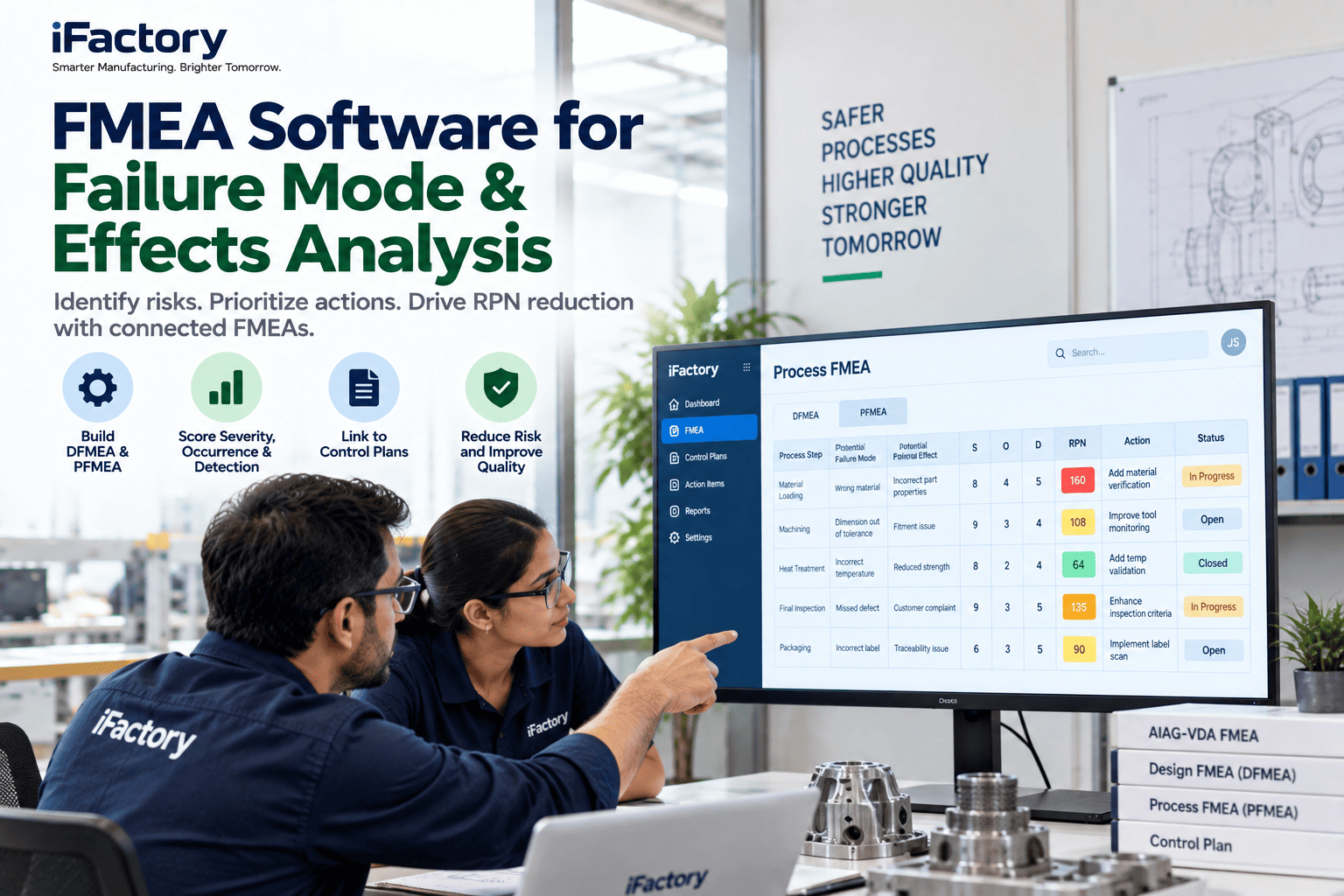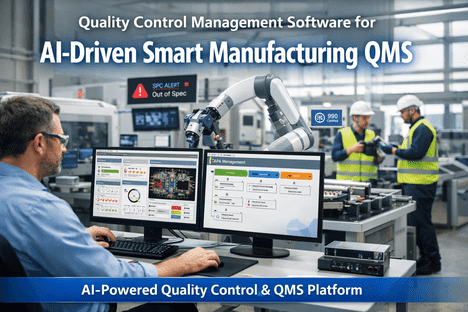
Every complaint about a defect that reached the customer has two parts. One is the moment the defect was made. The other is the station that should have stopped it and didn't. Most investigations spend their effort on the first part and say little about the second, so the same kind of escape comes back with a different defect. Quality escape prevention means treating the missed detection as a failure in its own right and fixing it. See how that works on your own complaint history in a short escape analytics demo.
Find the Station That Should Have Stopped It, Not Just the One That Made It
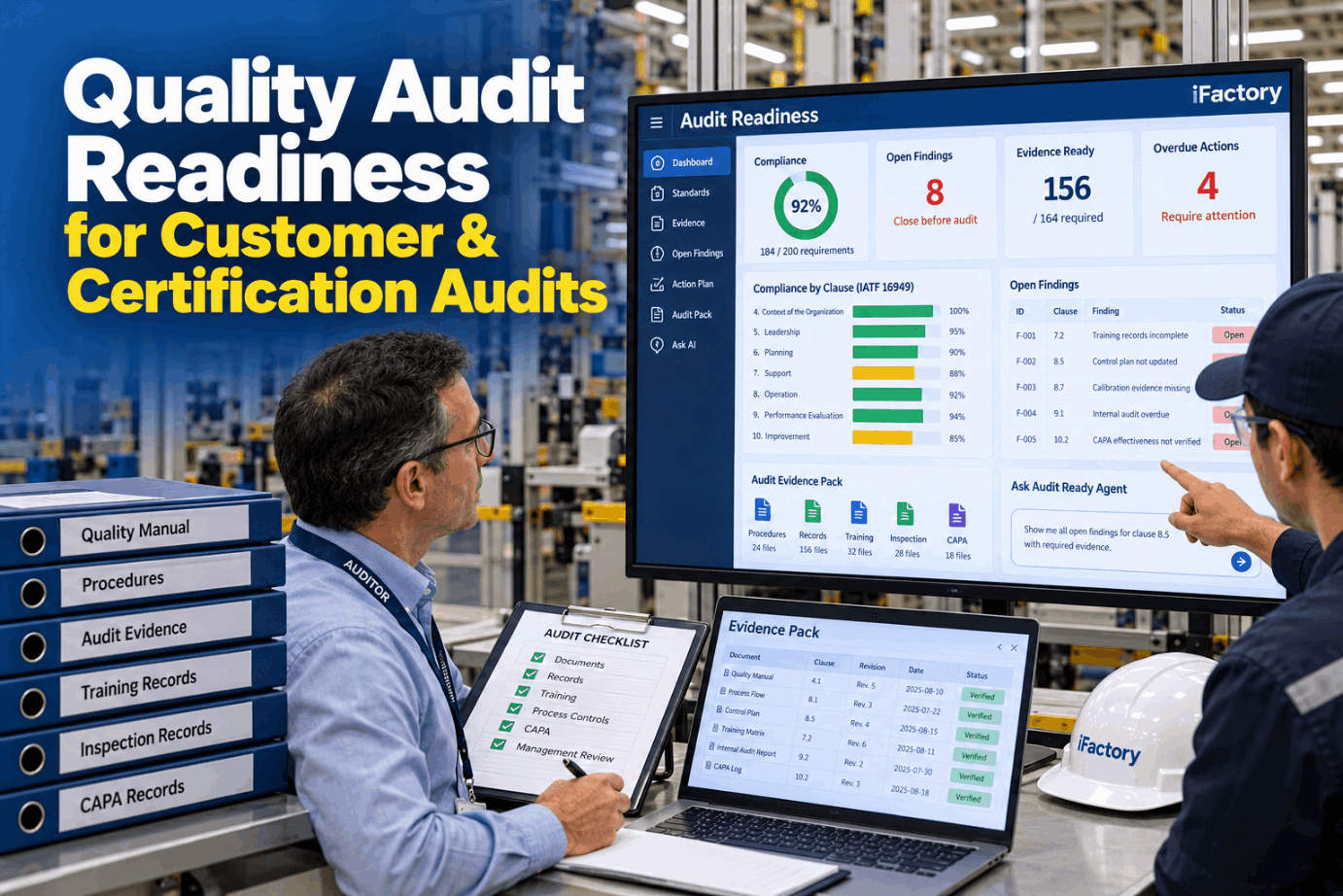
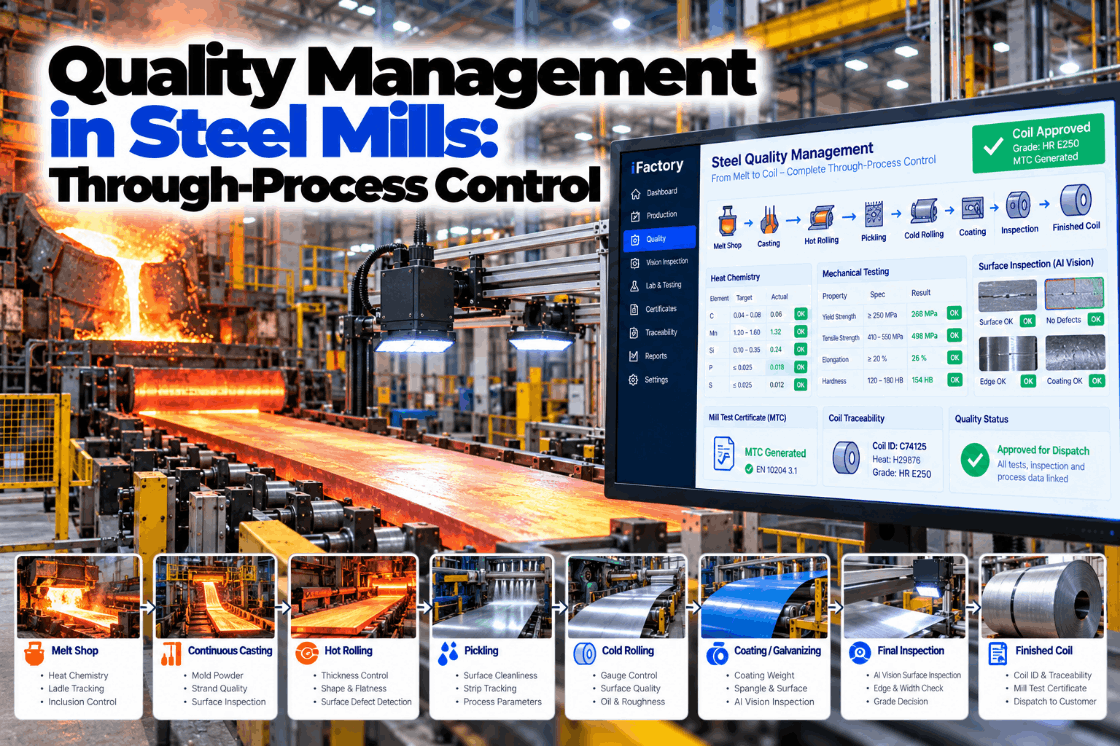
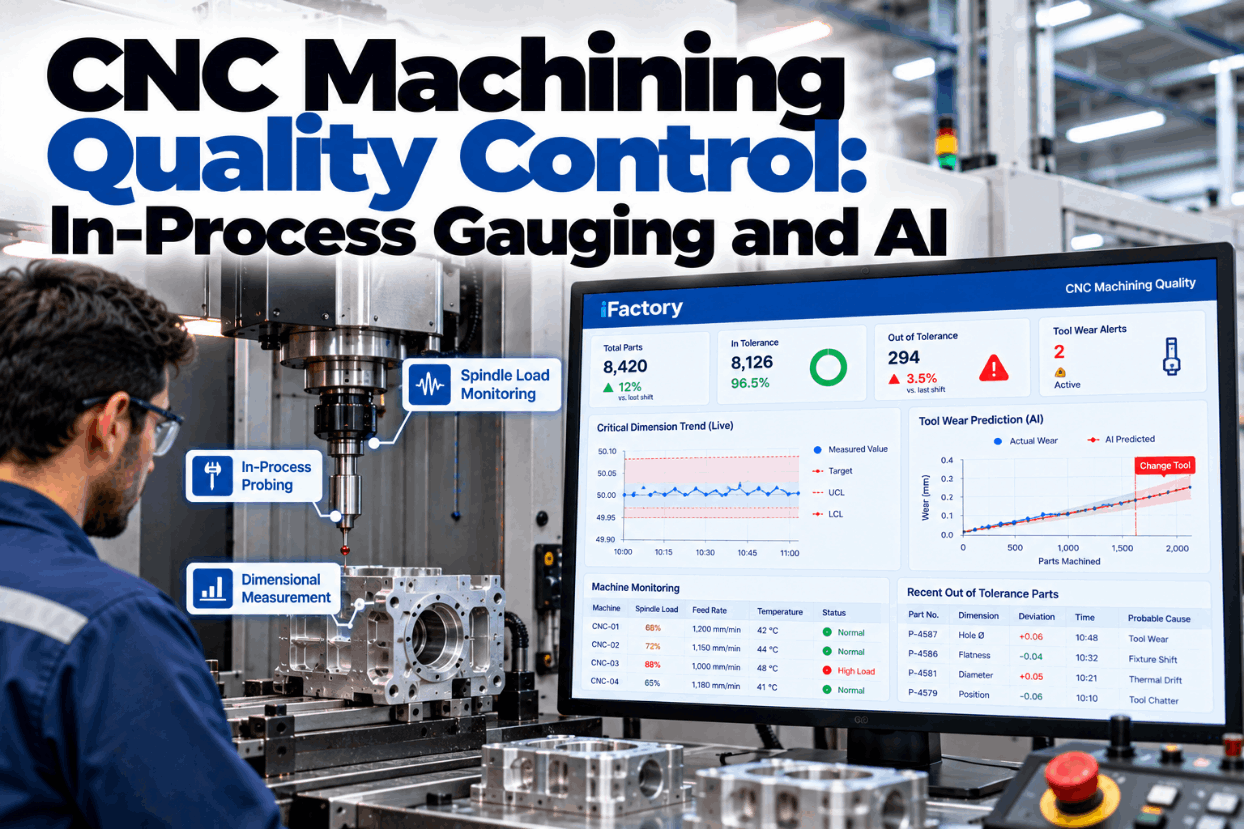
iFactory Escape Analytics runs escape-point analysis on every customer complaint, flags missing detection controls in the PFMEA and trends escape rate by product. Detection gaps become clear before the next complaint arrives.
Where It Was Made vs Where It Should Have Been Stopped
In 8D problem solving, the escape point is the place in the process where the problem should have been detected but was not. D4 asks two questions side by side: why did it occur, and why was it not detected? The point of occurrence and the escape point are often several stations apart, and they need different fixes. Map your own process stations with our quality support team.
Fixing the weld lowers how often the defect occurs. Fixing the leak test path stops this defect, and any other leak, from reaching the customer. An 8D that only fixes the weld leaves the escape point open.
One Escape, Three Chains of Why
The 3-legged 5-why runs three separate chains for the same problem. The occurrence leg asks why the defect was made. The detection leg asks why it was not caught. The systemic leg asks what in the management system allowed both. The illustration below follows a reversed polarised capacitor on a circuit board that reached a customer. Try the method on a live complaint in a guided walkthrough.
- Part was hand-loaded at the through-hole station
- Polarity mark on the board print was hard to see
- No keyed fixture for that part number
- AOI program did not check polarity on that part
- Library entry was copied from a non-polar part
- No AOI program review after the engineering change
- PFMEA credited AOI as detection without evidence
- No rule that a control must be proven before it is rated
- New part numbers did not trigger a PFMEA review
How the AIAG-VDA Detection Rating Reads a Control
In the AIAG and VDA FMEA Handbook, the detection rating (D) runs from 10 to 1. It depends on how mature the detection method is and whether it is proven to work, not just on what kind of check it is. Action Priority (high, medium, low) replaces the old RPN, so a weak detection rating on a high-severity failure stays visible. The bands below are summarised; use the handbook wording in your own PFMEA. Our support team can help map your current ratings.
If a defect escaped past a control rated D 5 or better, either the rating was wrong or the part found a path around the control. Both are findings for the PFMEA, not just the 8D.
Five Rungs, From Can't Happen to Hope Someone Sees It
Detection controls are only part of the answer. The strongest fix makes the defect impossible, so nothing needs detecting. Plants commonly rank error-proofing from design changes at the top to inspection at the bottom. When an escape happens, move the control up at least one rung rather than adding another inspector. Rank your own controls in a PFMEA review session.
Ask Which Controls Your Escapes Got Past
iFactory links each complaint to the station where it was made, the station that should have caught it and the PFMEA line behind that station. Ask a plain question and get the gap, not a pile of reports.
Four Escapes, Four Control Gaps
The pattern repeats across industries. A defect is made at one station, a weaker control further down misses it, and the fix that lasts strengthens that control. These are illustrations, not case studies. Talk through your own escape types with our quality team.
Escapes per Million Shipped, Worked Through
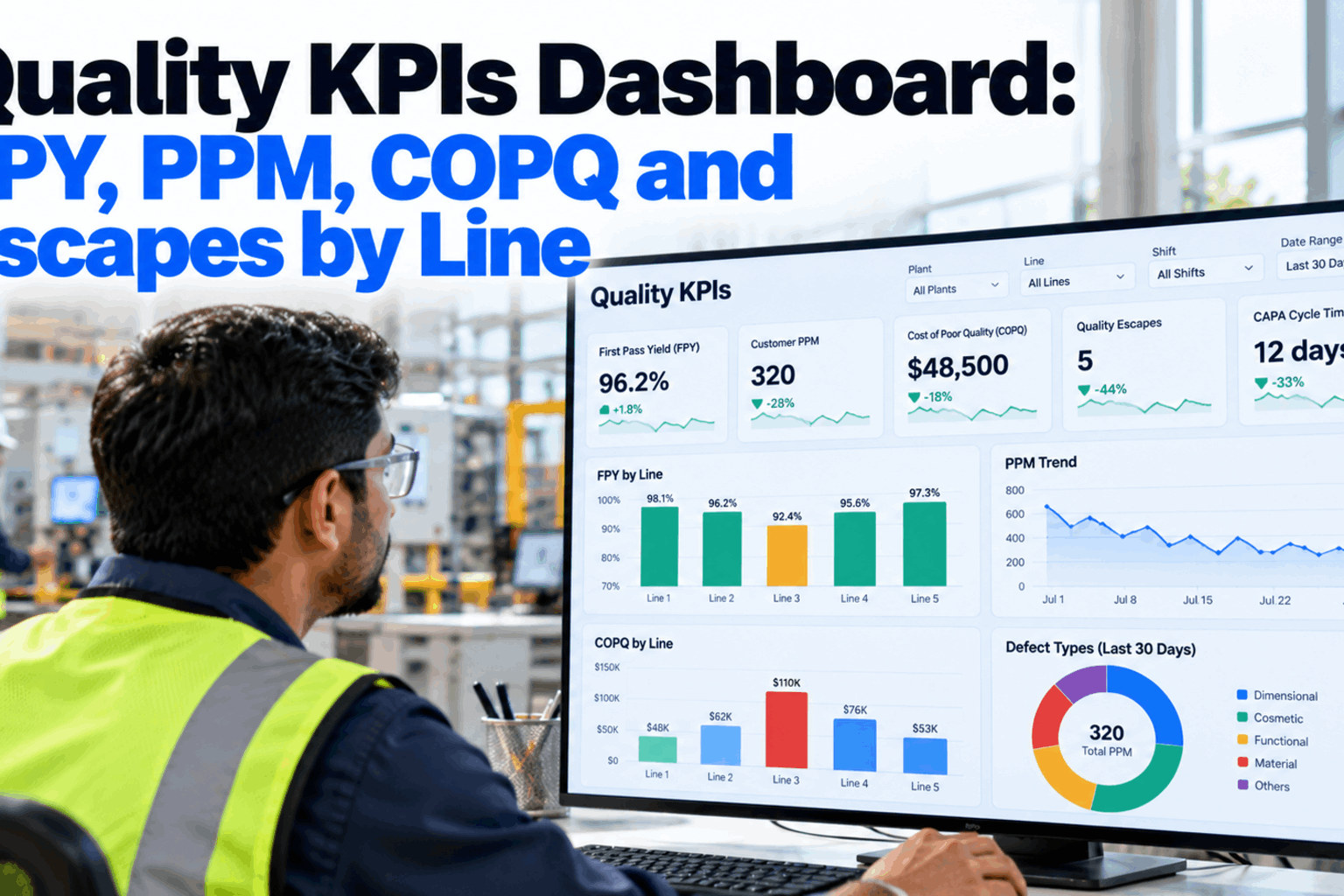
Two measures tell different stories. Customer PPM counts defective parts per million shipped. Escape rate counts escape events, one complaint however many parts, per million shipped. A plant-wide figure can hide a product that is far worse than the rest. The numbers below are illustrative only. See escape rate trending by product in a live product view.
Contain First, Then Close the Escape Point
Containment protects the customer while the investigation runs. It is not the fix. If escapes repeat, customers may place a supplier on controlled shipping. Ask our support team how containment records link to each escape.
The Escape Record, Field by Field
An escape record should capture the escape point and the detection fix as clearly as the root cause. If the detection fields are blank, the record is not finished. Get a blank version after a short template walkthrough.
Five Steps to Closing Escape Points for Good
Start with the complaints you already have. Last year's escapes usually point to a small number of weak controls. Plan the rollout with our implementation team.
Size the Handling Cost With Your Own Inputs
The full cost of an escape includes customer charges, sorting and lost trust, and it differs for every plant. Size the part you can measure, the internal hours each escape takes, with your own figures. Every input below is assumed. Build the case with your data in a cost review call.
Customer charges, third-party sorting and freight sit on top of this. Add them only from your own records.
Escape Analytics and an AI Server That Arrive Ready
iFactory delivers Escape Analytics as a turnkey package. A pre-configured NVIDIA AI server ships racked and ready, with connectors for your complaint system, test stations and PFMEA files set up before it arrives. You rack it, plug in power and Ethernet, and the AI is live. Scope it with our deployment team.
- Pre-configured NVIDIA AI server, racked and ready
- Escape-point analysis on every customer complaint
- PFMEA and control plan links with detection gap flags
- Connectors to MES, test stations and complaint records
- Escape rate and PPM trending by product and customer
- Plain-language questions for quality engineers
- 24×7 remote monitoring of models and hardware
Server installed, complaints, routings and PFMEA files linked, past escapes loaded.
Escape points assigned to past complaints and reviewed with your quality engineers.
New complaints analysed on arrival, detection gaps flagged, monthly trend review started.
Built Around the Detection Question
iFactory works alongside your 8D and PFMEA process and makes the escape point a required part of every complaint. See the full flow in a 30-minute session.
What Plant Managers Ask About Quality Escape Prevention
Close the Escape Point, Not Just the Complaint
Trace every complaint to the control that missed it, flag the PFMEA line behind it and watch escape rate by product. The system ships turnkey and goes live in 6 to 12 weeks.