A gearbox usually tells you it is in trouble through its temperature, and the rise matters as much as the figure. A case that is 8 °C hotter than last week is worth a look even when it is still under the limit. In iFactory Inspection the temperature is one High priority item in the ready Gearbox weekly check. This page covers the limit, the weekly rise and the items on the same round that usually explain a hot gearbox. Add the gearbox check in your workspace once your company is set up.
Inspection · Gearbox temperature
Gearbox Temperature Check: Limit and Weekly Rise
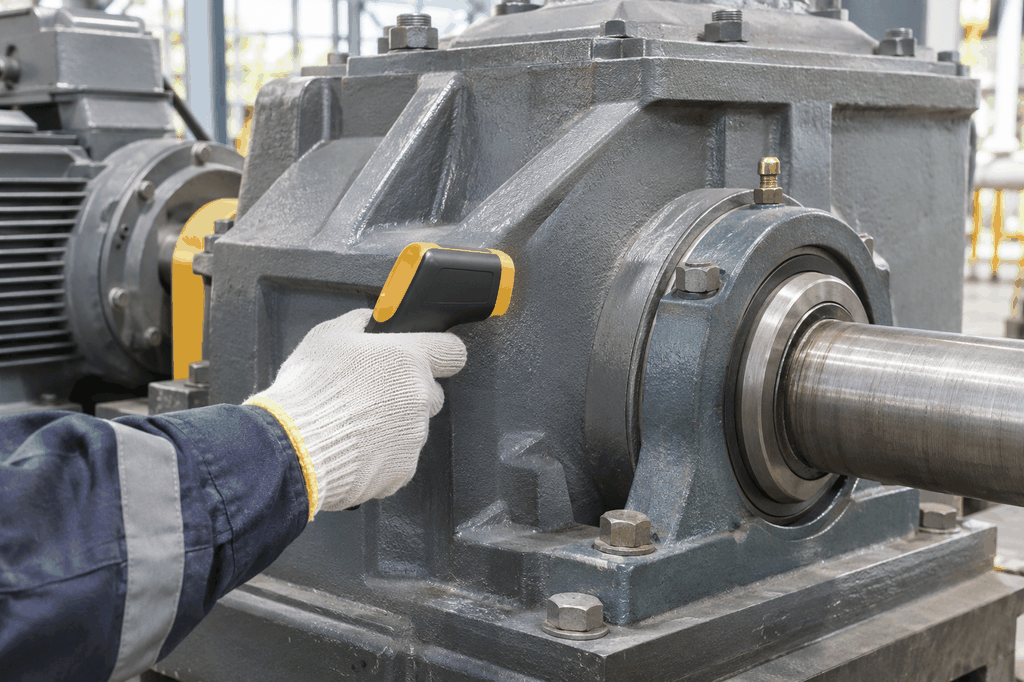
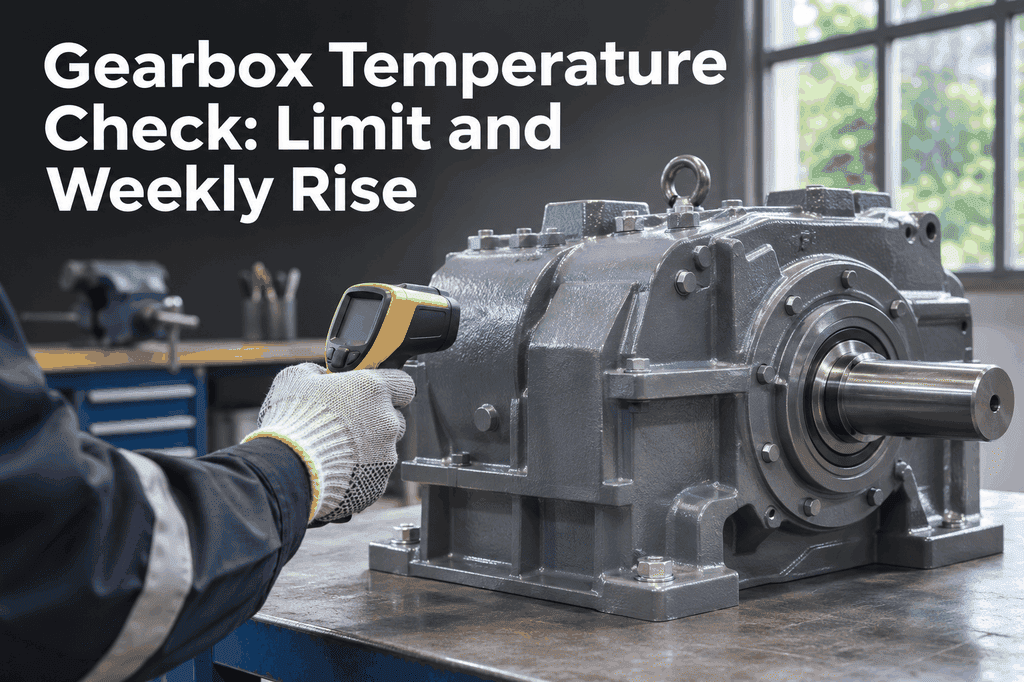
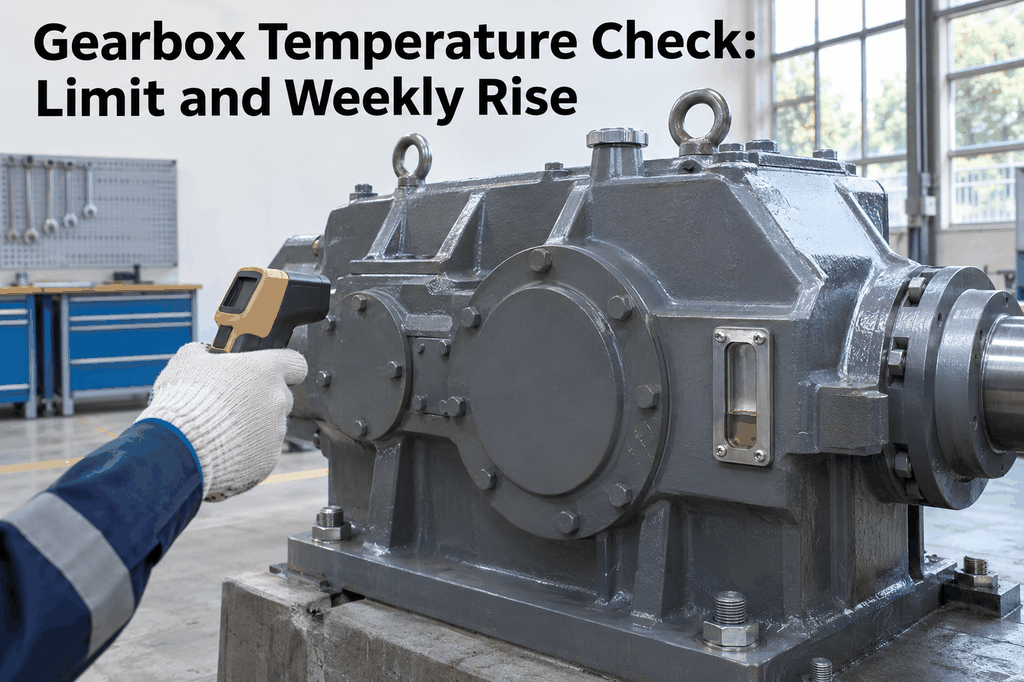
An IR gun on the case near each bearing.
Two ways to pass
Both conditions have to be true for the item to pass. A gearbox under the limit can still fail if it has risen too far since last week.
The limit
IR gun on the case near each bearing, after 1 hour running
Below 80 °C
The rise
Last week's reading
Not more than 10 °C above
Two tests on one reading
One reading answers two questions: how hot is the case, and how much hotter is it than last week. The technician needs both answers to decide.
Why the rise matters
A gearbox that is getting worse often shows it in the change before the number reaches the limit. The rise condition is there to catch that early.
Weekly rise
Compare this week's reading with last week's, at the same spot and at a similar load, so that the difference means something.
A rise of more than 10 °C is flagged even when the case is well under 80 °C, which gives maintenance time to look at the oil and the cooling before damage is done.
Last week's figure
Keep it where the round is done
The app stores the answer, not the figure, so last week's temperature has to come from somewhere else. A note or a tag at the gearbox is the simplest place.
Failure note
Write the readings
The app will not save a failed item without a note, so the technician has to write the figures that caused the failure.
Usual causes of a hot gearbox
These items are on the same weekly round and explain most hot gearboxes. Reading them in the same visit tells maintenance where to look first.
- Oil levelRead the oil level at the sight glass or the dipstick. A gearbox that is low on oil has less to carry heat away from the gears and bearings.The level should sit between the min and max marks. Too much oil is also a problem, because the gears churn it and it heats up.
- Oil conditionTake a small sample from the drain and look at it in a clear jar. Oil that has been running hot for a while darkens and starts to smell burnt.The oil should not be milky or dark and burnt-smelling. Milky oil means water in it, and burnt oil means it has been overheated.
- BreatherLook at the breather. A blocked or exhausted breather can stop the gearbox from letting out hot air, which makes the case hotter.The breather is on the same weekly round, so it is checked on the visit when the temperature is read.
- Oil cooler or fanIf a cooler or fan is fitted, check it too. It is one of the few parts of a gearbox that is designed to keep the temperature down.The fan should be running and the fins should be clean. A dirty cooler loses much of its effect and the temperature rises slowly.
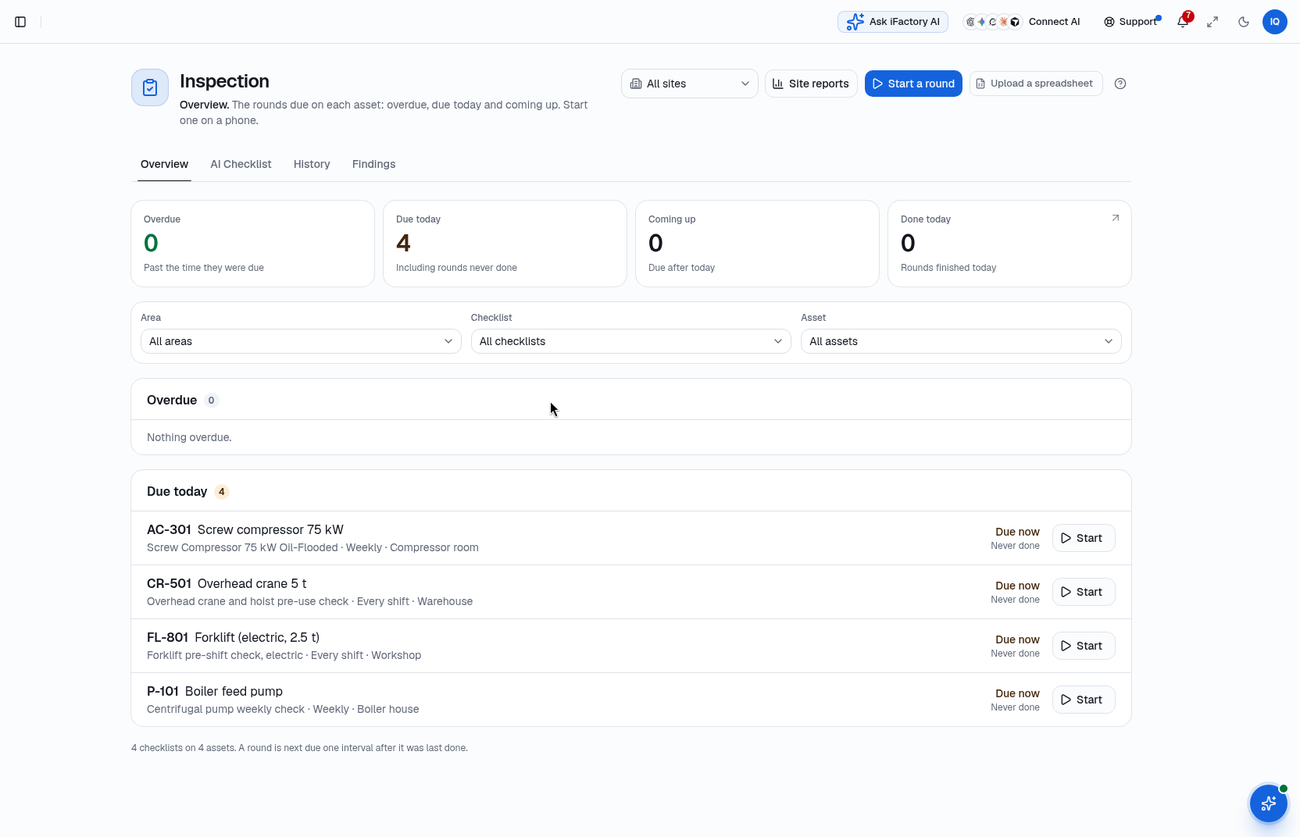
The gearbox check on the overview
The gearbox round appears in the rounds due on the overview, like any other checklist, so the technician can start it from there.
Cautions
These points are worth settling before the first round, because the app only asks the question and keeps the record. It cannot cool the gearbox.
Maker's figure
If the gearbox maker gives a different limit, use it and edit the item before you save the checklist.
OEM manual
The 80 °C and 10 °C figures are general. Compare them with the maker's manual before the first round.
A record
The app asks the question, keeps the record and raises the work order. Finding the cause of the heat stays with maintenance.
Where and how to read
The gearbox temperature item is read at the gearbox case with an infrared thermometer or a contact probe. The limit is below 80 °C, and no more than 10 °C above last week's reading. Read it at the same spot, as the case is hottest nearest the bearings and oil sump.
Take the reading while the gearbox is at working load. A lightly loaded gearbox will read low.
Why the change matters as much as the value
A gearbox that has always run at 70 °C and now runs at 79 °C is still within the limit but has moved by 9 °C. The second part of the item, no more than 10 above last week, catches changes the absolute number would miss. A rise of more than 10 fails even if the case is under 80.
That means someone needs last week's figure. Write the temperature in the round's note each time, or write the normal value on a tag at the gearbox.
Likely causes of a high reading
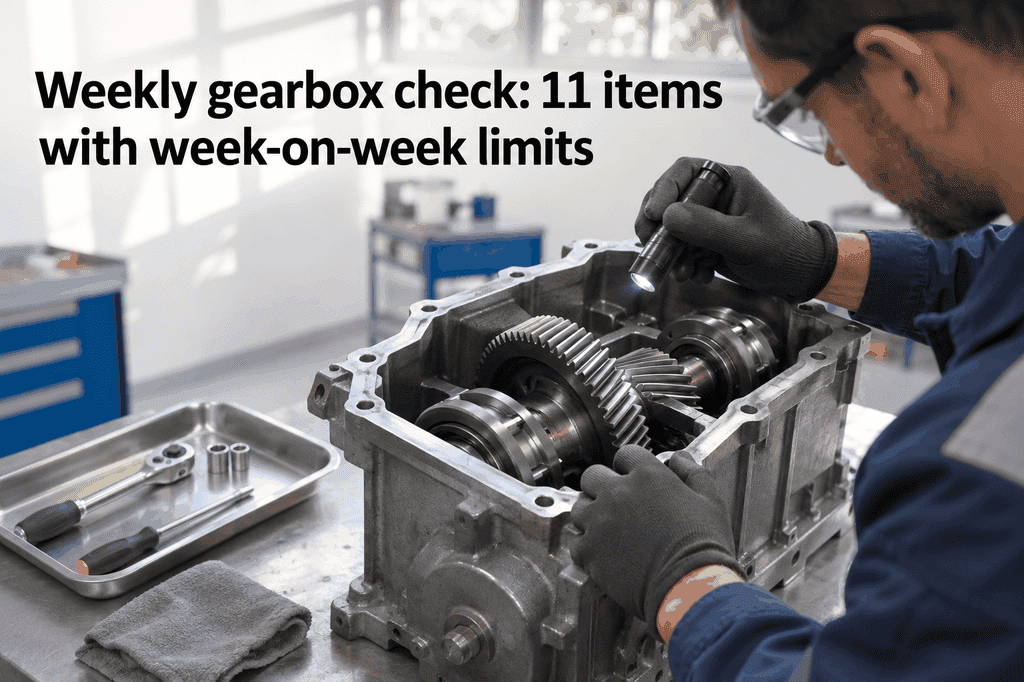
Low or degraded oil, a blocked breather, overload, a failing bearing or poor cooling all raise case temperature. The other items on the gearbox round: oil level, oil condition, leaks, breather, noise and vibration, give the technician a way to narrow it down.
Check the oil level and look for leaks on the same visit. A gearbox that is low on oil and hot has an obvious first step.
After a failure
The item is High priority, so the work order is due in 24 hours. Put the reading, the position and the load in the note.
The app stores OK or Failed with notes and photos, not a number, so the trend is in your notes.
Using the neighbouring items
The temperature reading is one of several items in the gearbox round, and the others help explain it. Oil level is read after the gearbox has been stopped for five minutes, between the minimum and maximum marks. Oil condition is checked by drawing a small sample from the drain into a clear jar: it should be clear, not milky, not dark and burnt-smelling, with no metal glitter.
If the case is hot and the oil smells burnt, the oil has been overheated and the gearbox has probably been running hot for some time. If the case is hot and the oil is low, top-up and leak-finding come first.
The weekly gearbox round takes about 15 minutes, so reading temperature, oil and vibration together costs little extra time.
Frequently asked questions
What is the gearbox temperature check?
It is a High priority item in the ready Gearbox weekly check in iFactory Inspection. The technician reads the case with an IR gun near each bearing after the gearbox has been running for an hour. It passes if the case is below 80 °C and not more than 10 °C above last week's reading.
Why does the weekly rise matter?
A gearbox that is getting worse often shows it as a rise before it shows it as a high number. A case that is 8 °C hotter than last week is worth a look even when it is under the limit. The rise condition catches a problem while the figure is still fine and gives maintenance time to act.
How is the gearbox temperature read?
With an IR gun on the case near each bearing, after the gearbox has been running for an hour at working load. A lightly loaded gearbox reads low and can hide a problem. Write the figure in the round's note, because the app does not store it.
What priority does a failure have, and how fast is it due?
The item is High priority, so a failure raises a work order due in 24 hours. The technician should put the reading, the position and the load in the note. A photo is optional. If the case is too hot to hold a hand near, tell the supervisor at once rather than waiting for the work order.
What else should I check if the gearbox is hot?
The oil level, which should be between min and max; the oil condition, which should not be milky or dark and burnt-smelling; the breather, which should be open and clean; and the oil cooler or fan, if fitted. A gearbox that is low on oil and hot gives maintenance an obvious first step.
Does the app keep last week's temperature?
No. The app stores OK or Failed with notes and photos, not the number, so the trend lives in your notes. Write the temperature in the round's note each time, or write the normal value on a tag at the gearbox. That way the person doing the next round can compare this week with last week.
Watch the gearbox temperature
Add the gearbox check and catch the rise before the limit.
- High priority item
- Work order due in 24 hours
- Readings in the failure note
14-day free trial · no card needed