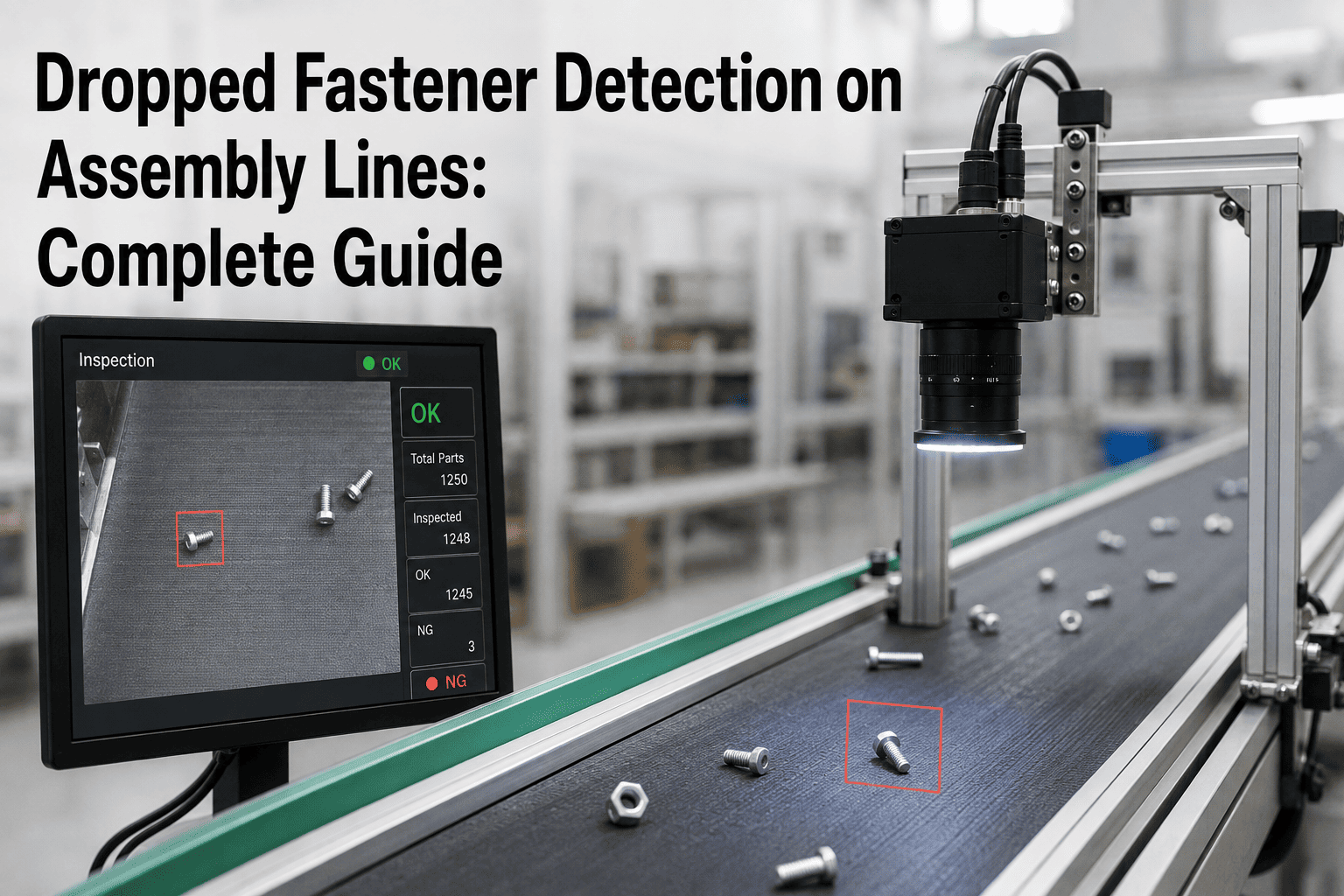
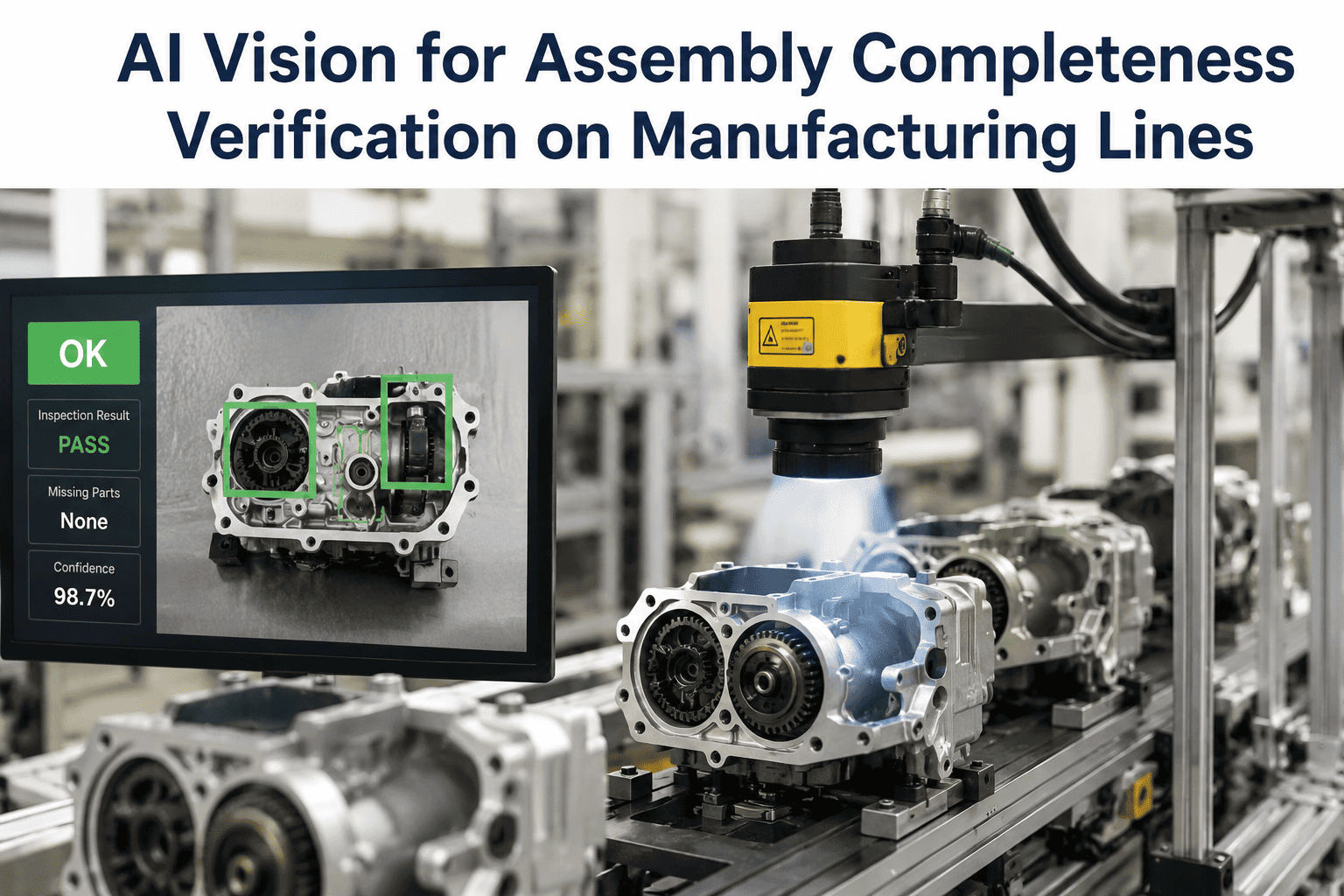
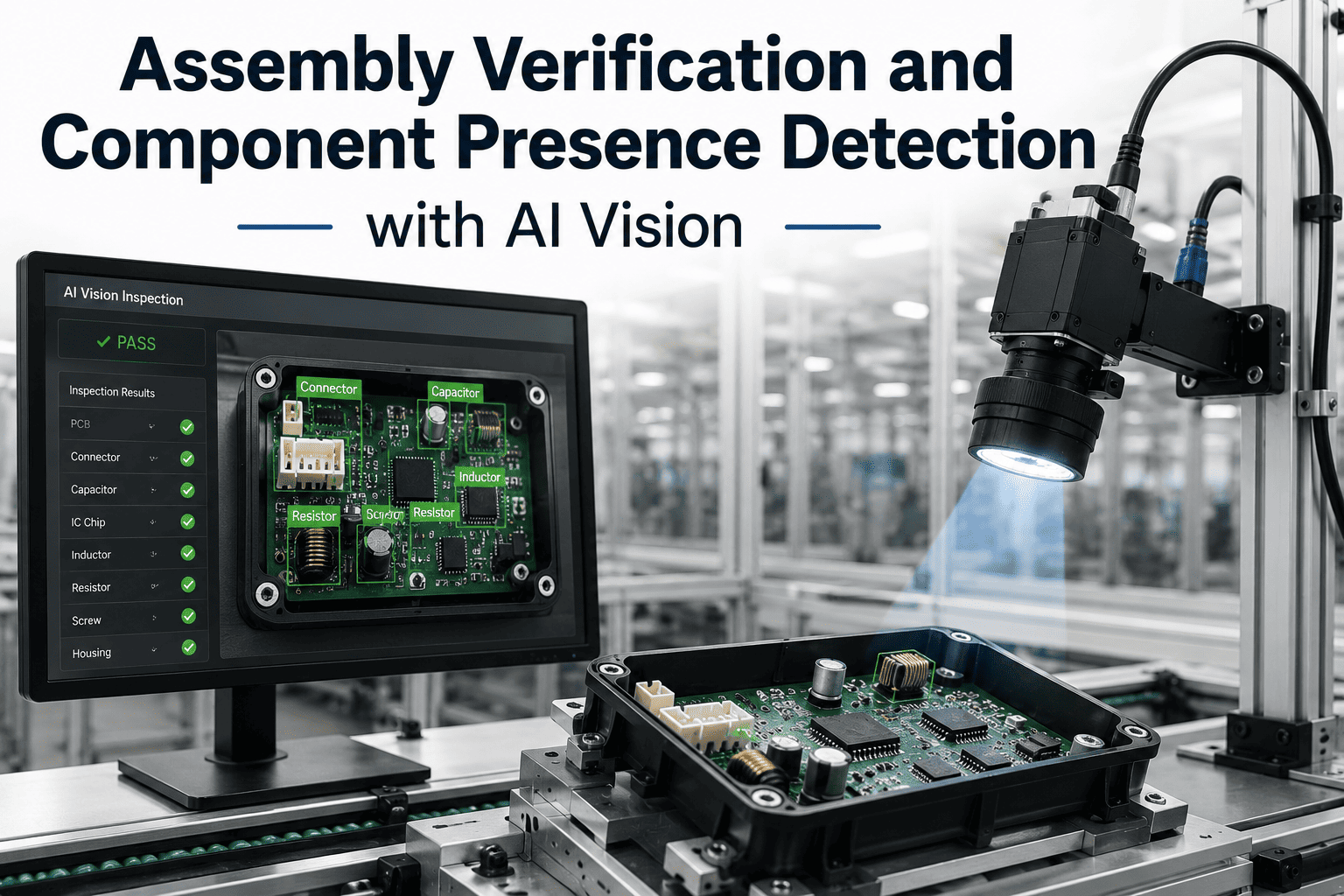
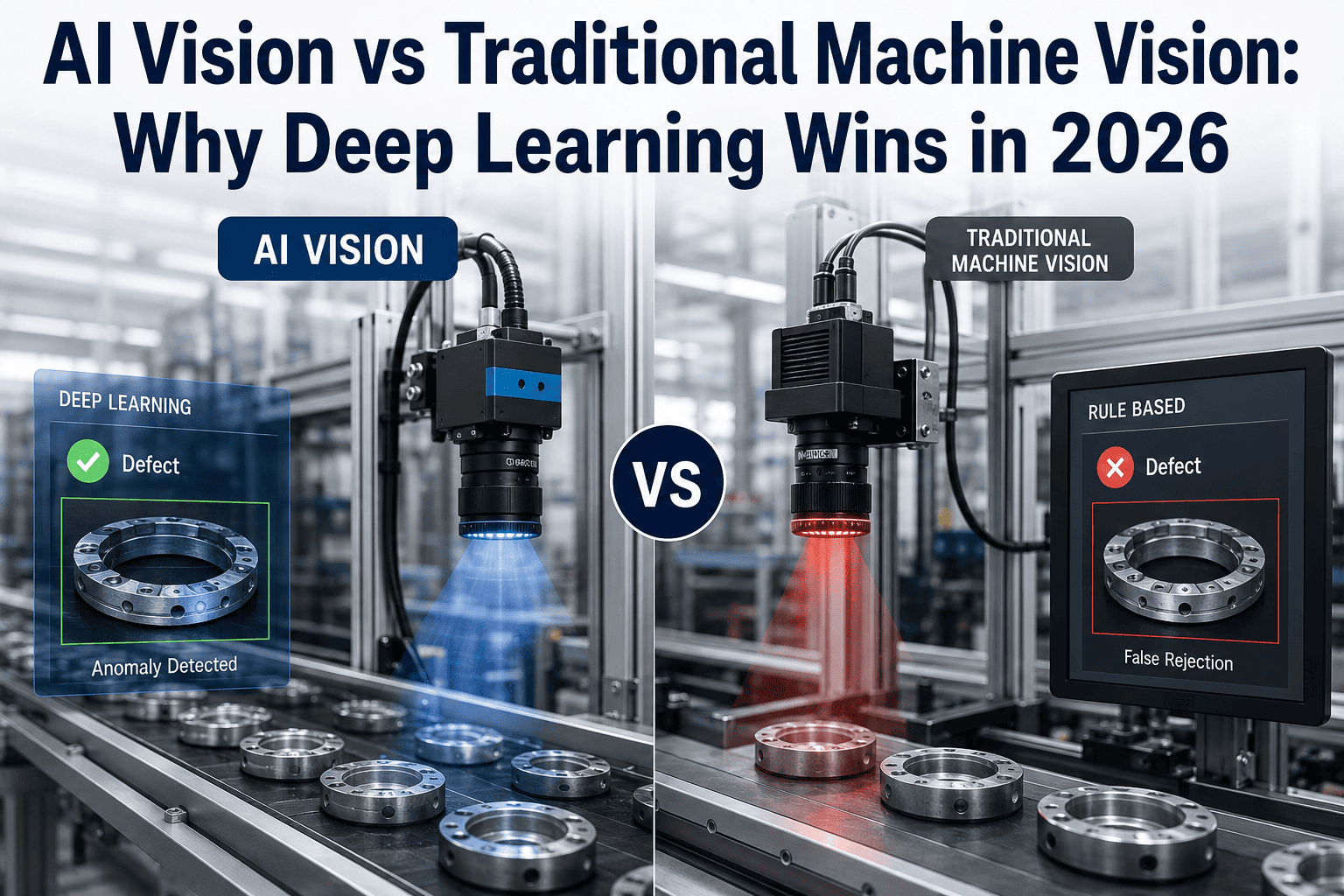
Automotive assembly lines operate at high velocity, where a single missing component, unseated connector, or improperly torqued fastener can produce defects that escape detection until end-of-line testing — or worse, until the vehicle reaches the customer. Traditional machine vision systems require fixed lighting, precise part positioning, and extensive programming for each variant, making them brittle against the model mix complexity that defines modern automotive production. AI vision for automotive assembly verification changes this paradigm entirely. iFactory's Vision Object Detection platform uses deep learning models trained on your specific assembly operations to verify part presence, detect fastener torque marks, confirm connector seating, and validate correct component installation at each station — all with a single camera and edge inference. Unlike rule-based systems that fail when part appearance or lighting shifts, iFactory's AI vision adapts to natural production variation while maintaining 99+ percent detection accuracy. Maintenance and quality teams implementing assembly verification AI report immediate reductions in defect escapes, rework costs, and end-of-line repair delays. For automotive OEMs and Tier 1 suppliers in 2026, AI-powered assembly verification represents the most effective digital poka-yoke available — and the fastest path to zero-defect production. Reliability and quality teams evaluating vision AI for assembly lines are encouraged to Book a Demo with iFactory to assess how a six-week pilot can eliminate defect escapes on your highest-volume lines.
Verify Every Component, Fastener, and Connector on Your Assembly Line
iFactory AI Vision detects missing parts, unseated connectors, missing torque marks, and wrong components at each station — preventing escapes before they reach end-of-line testing.
Why Automotive Assembly Verification Requires AI Vision
Automotive manufacturers face increasing pressure to eliminate defect escapes as vehicle complexity grows and production volumes rise. Traditional machine vision and manual inspection cannot keep pace with the variant diversity, line speed, and quality standards required in modern automotive assembly. AI vision for assembly verification replaces brittle rule-based systems with deep learning models that detect part presence, fastener torque marks, connector seating, and component correctness at every station — adapting to natural variation in lighting, part position, and surface finish. The result is a poka-yoke system that catches defects at the point of origin rather than at end-of-line rework stations. Quality and reliability engineers evaluating deep learning assembly verification can Book a Demo with iFactory to review pilot deployments on their highest-defect assembly stations.
Eliminate Missing Components
AI models trained on your assembly operations detect missing brackets, clips, fasteners, and subcomponents at each station — preventing partially assembled vehicles from progressing down the line.
Confirm Every Fastener
Vision-based torque mark detection verifies that every threaded fastener has been properly torqued and marked, catching missed fasteners and cross-threaded connections immediately.
Ensure Proper Connections
Deep learning models verify that electrical connectors, fluid lines, and harness clips are fully seated and locked — detecting partially seated connectors that lead to intermittent failures.
Verify Correct Parts
AI vision confirms the correct variant, revision level, and orientation of installed components — preventing mix-ups between similar-looking parts across different vehicle models.
Key Capabilities of iFactory AI Vision for Assembly Verification
iFactory's Vision Object Detection platform delivers a comprehensive set of capabilities purpose-built for automotive assembly verification. Each capability is deployed as an edge-inference model on a single camera per station, eliminating the need for PLC integration or centralized processing. The platform trains on as few as 200 labeled images per operation and achieves production-ready accuracy within two weeks. Organizations looking to launch a pilot program on their most critical assembly station can evaluate iFactory's platform through a structured deployment engagement.
| Capability | Description | Station Application | Defect Prevention |
|---|---|---|---|
| Object Detection & Classification | Identifies and classifies every component, fastener, and connector within the camera field of view | Any assembly station with known component types | Prevents missing or incorrect parts from advancing |
| Torque Mark Presence Analysis | Detects the presence and orientation of torque marks on threaded fasteners | Engine dress, chassis, trim, and final assembly stations | Eliminates untorqued and undertorqued fastener escapes |
| Connector Seating Verification | Confirms electrical and fluid connectors are fully seated with audible-click engagement | Wire harness installation, module mounting, fluid line connection | Prevents intermittent electrical and fluid leak failures |
| Variant & Revision Validation | Verifies correct component variant and revision level against the build manifest | Mixed-model lines handling multiple vehicle platforms | Prevents wrong-part installation across model variants |
| Real-Time Alerting & Reporting | Generates immediate station-level alerts and line-wide defect escape reports | All stations connected to the plant network | Enables immediate containment and root cause analysis |
How iFactory AI Vision Deploys on Automotive Assembly Lines
Deploying AI vision for assembly verification does not require rip-and-replace changes to your existing line controls or PLC infrastructure. iFactory's platform deploys as a single camera and edge computing device installed above or adjacent to the target assembly station. The camera captures images of the completed assembly operation, runs deep learning inference at the edge, and outputs pass-fail results via standard industrial protocols (EtherNet/IP, PROFINET, OPC-UA) or simple HTTP webhook alerts. Model training uses your production parts — not generic datasets — ensuring the AI recognizes exactly what your components look like under real lighting conditions, with real surface finishes, and across real production variation. iFactory offers a structured six-week pilot program: week one covers station selection and camera mounting, weeks two through four focus on model training and validation, week five integrates with line controls, and week six delivers measured defect escape reduction. Maintenance, quality, and manufacturing engineering teams ready to eliminate assembly defects can Book a Demo to scope a six-week pilot deployment on their most defect-prone assembly station.
AI Vision Automotive Assembly Verification — Frequently Asked Questions
What is AI vision for automotive assembly verification?
AI vision for assembly verification uses deep learning models deployed on edge cameras to detect part presence, fastener torque marks, connector seating, and correct component installation at each assembly station — catching defects at the point of origin rather than at end-of-line testing.
How is AI vision different from traditional machine vision for assembly inspection?
Traditional machine vision relies on rule-based algorithms that require fixed lighting, precise part positioning, and extensive programming for each variant. AI vision uses deep learning models that adapt to natural production variation in lighting, part position, and surface finish — achieving higher detection accuracy with lower deployment effort.
Can iFactory AI Vision integrate with existing assembly line controls?
Yes — the platform outputs pass-fail results via EtherNet/IP, PROFINET, OPC-UA, and HTTP webhooks, enabling direct integration with line controllers, andon systems, and MES platforms without modifying existing PLC code.
What is the typical timeline for deploying AI vision on an assembly station?
iFactory's six-week pilot program covers station selection, camera mounting, model training, validation, line control integration, and measured defect escape reduction — delivering production-ready AI vision within a single quarter.
Eliminate Assembly Defect Escapes With AI Vision at Every Station
iFactory Vision Object Detection deploys deep learning models on your assembly lines to verify part presence, torque marks, connector seating, and component correctness — delivering poka-yoke verification at every station without PLC reprogramming.