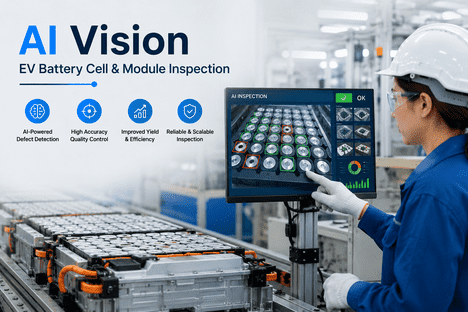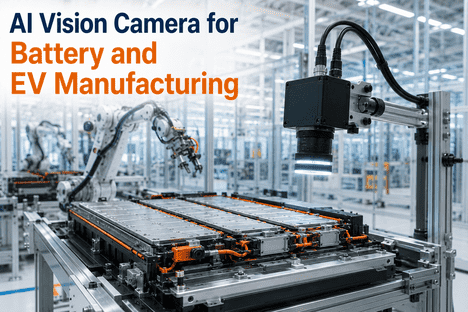
Battery and EV manufacturing has become the most demanding quality control environment in modern industrial production. A single gigafactory produces over one million battery cells per day, and a 20-micron metal particle — invisible to the naked eye — can pierce the separator layer and trigger thermal runaway years after a vehicle is delivered. The defects that cause EV battery recalls and field fire events are not the ones that look dangerous on an assembly line; they are the microscopic electrode coating voids, incomplete tab welds, separator misalignments, and metallic contamination particles that sampling-based inspection is structurally unable to catch at production throughput. Manual inspection misses up to 68% of latent battery defects, and at gigafactory scale, checking one cell in every thousand means 999 potential defects pass uninspected every minute. iFactory's AI Vision Camera platform is purpose-built for battery and EV manufacturing — inspecting every cell for electrode coating defects, separator alignment errors, cell weld anomalies, and pack assembly failures at line speed, with 100% per-cell traceability and thermal runaway precursor detection that prevents the defects driving billion-dollar recalls from ever leaving the production floor. Quality engineers and gigafactory process managers can Book a Demo to see iFactory's battery inspection platform in action across their specific cell format and production line configuration.
100% Cell Inspection at Gigafactory Speed — Catch Electrode Defects, Weld Anomalies, and Contamination Before They Cause Field Failures
iFactory AI Vision Camera inspects every battery cell for coating defects, separator alignment, tab weld quality, and metallic contamination — with thermal runaway precursor detection and full per-cell traceability for EV safety compliance.
Why Sampling Inspection Cannot Protect EV Battery Quality at Gigafactory Scale
Every major EV battery recall in the industry has traced its root cause to manufacturing defects that escaped inspection — contamination particles, electrode damage, or compromised welds that created internal short circuits and thermal runaway conditions that manifested months or years after delivery. At gigafactory scale, the numbers make sampling-based quality control mathematically inadequate: a facility producing one million cells per day that inspects one in every thousand still allows 999,000 uninspected cells per day to advance toward pack assembly and vehicle integration. The thermal runaway risk from a single escaped contamination particle — a 50-micron metal fragment that standard imaging cannot resolve — can compromise an entire battery pack and produce a vehicle fire event with no warning. iFactory's AI Vision Camera closes this gap by inspecting every cell, at every stage, at production speed — applying deep learning detection models trained on battery-specific defect signatures to catch what sampling cannot. The platform processes electrode coating images every 200 milliseconds, detects weld anomalies in real time during tab welding, and flags separator alignment deviations before cells proceed to formation and pack integration.
Electrode Coating Inspection
AI vision detects pinholes, coating voids, uneven coverage, edge deviation, and metallic particle contamination on electrode foil at 200ms per frame — stopping defective material before it advances to calendering, slitting, and cell assembly where rework becomes impossible.
Separator Alignment Detection
Separator misalignment during winding or stacking creates internal short-circuit paths that are invisible at end-of-line testing but catastrophic under charge-discharge cycling in the field. AI Vision verifies separator position against tolerance specifications on every cell before electrolyte fill.
Cell Weld Quality Inspection
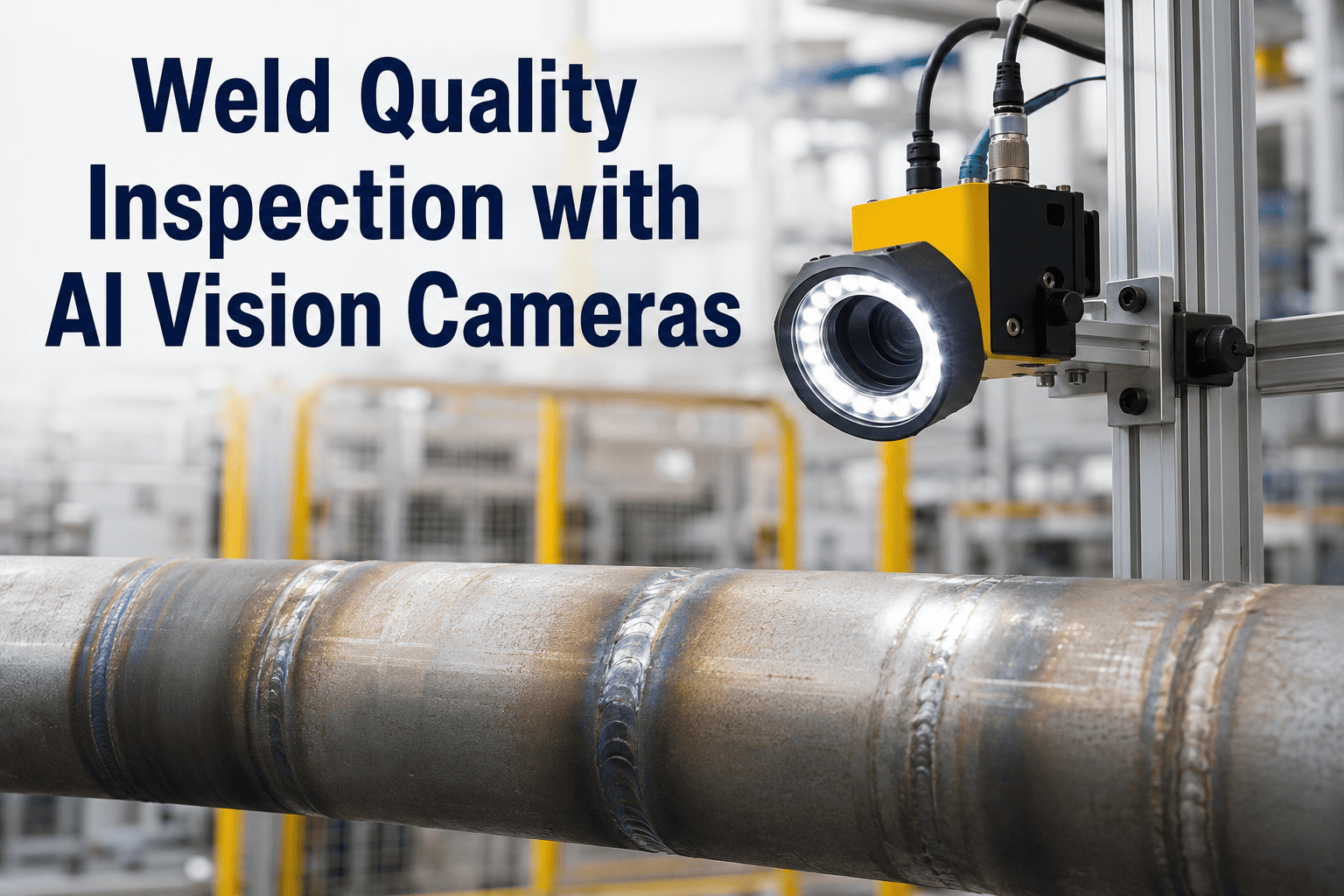
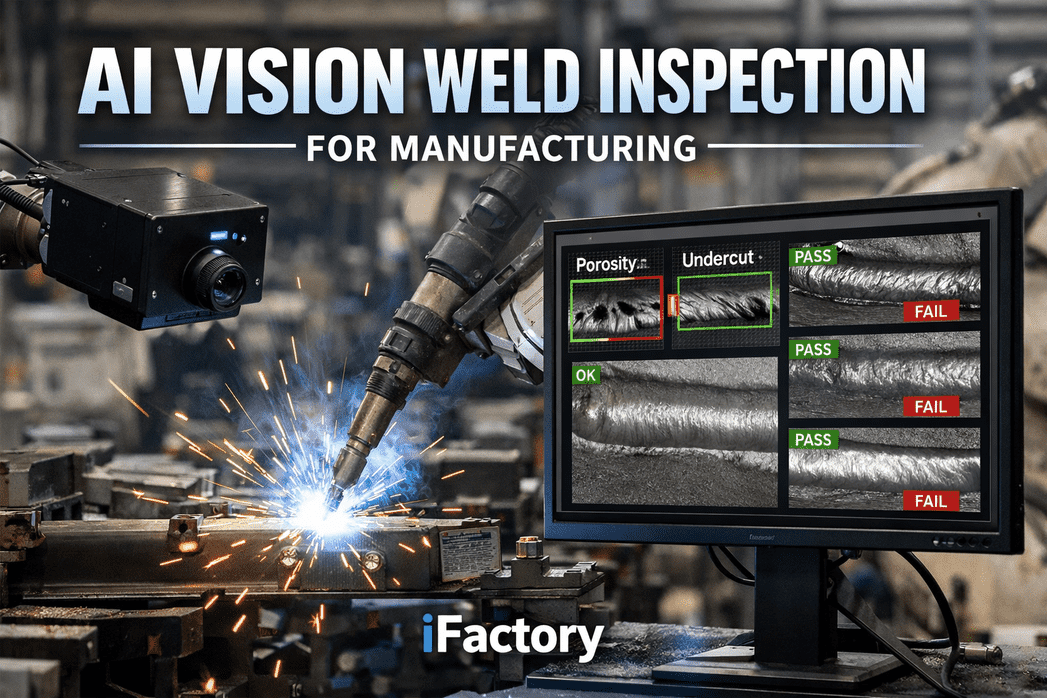
Laser weld joints on current collector tabs and busbar interconnects must achieve complete fusion without spatter, porosity, or positional deviation. AI Vision combined with thermal imaging detects incomplete fusion, weld position errors, and spatter contamination that create high-resistance joints and thermal runaway risk under load.
Pack Assembly Verification
Module and pack assembly requires verification of cell stacking alignment, busbar seating, connector integrity, and seal quality across hundreds of joints per pack. AI Vision detects missing components, misaligned cells, and seal failures before packs are closed — when correction is still possible without destructive disassembly.
Battery Manufacturing Defect Classes iFactory AI Vision Camera Detects at Every Production Stage
Battery cell production involves four critical manufacturing stages — electrode coating, cell assembly, formation, and pack integration — each generating distinct defect modes with distinct safety consequences. iFactory's AI Vision Camera platform deploys inspection models trained for each stage's specific defect signatures, covering the full battery production sequence from raw electrode foil to finished pack. Quality managers can Book a Demo to evaluate detection coverage for their cell chemistry and format.
Electrode Coating Defects — Pinholes, Voids, Streaks, and Particle Contamination
Active material coated onto aluminum or copper foil at 10–50 micrometer thickness requires uniform coverage across the entire foil web. Pinholes in the coating expose bare foil that becomes a lithium plating nucleation site during cycling. Coating streaks and width deviations reduce active material utilization and cell capacity. Metallic particle contamination during coating or calendering creates internal short-circuit paths — a 50-micron particle invisible to standard imaging can pierce the separator and trigger thermal runaway 18 months after vehicle delivery. iFactory's inline vision system analyzes the full electrode web surface at line speed, classifying pinholes, bubbles, streaks, and particle contamination while the material is still traceable to roll position — before drying, calendering, and slitting make rework impossible.
Cell Assembly Defects — Tab Misalignment, Particle Ingress, and Separator Wrinkles
During winding or stacking, electrodes are assembled with separator layers into the jelly roll or stack configuration that forms the cell core. Tab misalignment at this stage creates uneven current distribution that accelerates degradation. Particles between electrode layers — introduced through handling or ambient contamination — create internal short paths. Separator wrinkles disrupt ionic conduction and create mechanical stress points that propagate under thermal cycling. iFactory's AI Vision Camera inspects cell assembly geometry against trained tolerance specifications, detecting separator position deviation, particle presence on electrode surfaces, and tab alignment errors before electrolyte injection seals the defect inside the cell permanently.
Tab and Busbar Weld Defects — Incomplete Fusion, Porosity, Spatter, and Position Deviation
Laser weld joints connecting current collector foils to battery tabs must maintain both electrical conductivity and mechanical integrity through thousands of charge-discharge cycles and years of thermal expansion. Insufficient weld penetration creates high electrical resistance and localized heating under load. Porosity and voids produce weak points that propagate under thermal cycling. Weld spatter contaminating adjacent cell surfaces creates short-circuit risk. Busbar interconnect welds at the module and pack level carry the same failure consequences at higher current levels. iFactory combines AI vision with real-time thermal imaging at weld stations — detecting thermal signature anomalies during welding that indicate incomplete fusion before the weld cools and the joint is sealed inside the module housing.
Formation and Seal Defects — Crimp Quality, Electrolyte Fill, and Thermal Precursors
The final cell seal determines whether electrolyte remains contained for the cell's full 15-year service life. Crimp quality defects and seal integrity failures create electrolyte leakage paths that compromise cell chemistry and create fire risk in the pack environment. During formation cycling, iFactory's AI monitors voltage stability, temperature gradient trends, and impedance signatures in real time — detecting thermal runaway precursor signals 6–12 hours before catastrophic formation chamber events that cause 4–6 hours of production shutdown per incident. Cells showing early-cycle thermal drift or voltage instability are flagged and diverted before they enter pack assembly and vehicle integration. Book a Demo to see thermal runaway precursor detection on live formation data.
AI Vision vs. Sampling Inspection: Battery Manufacturing Quality Control Benchmarks
The operational gap between gigafactories running on sampling-based inspection and those deploying 100% inline AI vision is measurable across every quality and production metric — from defect escape rate and thermal incident frequency to traceability completeness and downstream assembly yield.
A gigafactory checking 1 in 1,000 cells leaves 999 potential defects uninspected every minute. iFactory AI Vision inspects every cell at production speed — at 43 milliseconds per cell for high-volume 4680 format lines — with no throughput penalty and no sampling blind spots.
Manual and sampling-based inspection misses up to 68% of latent battery defects. Deep learning detection models trained on battery-specific defect signatures achieve 95%+ recall on critical defect classes including electrode coating voids, separator misalignment, and weld anomalies.
iFactory AI detects thermal runaway precursor signals during formation cycling 6–12 hours before catastrophic chamber events — enabling preventive maintenance that stops formation line shutdowns that cost $1.2M per incident in lost production.
A gigafactory deploying iFactory AI on formation lines reduced thermal incidents by 70% and cut unplanned formation downtime from 180 hours per month to 45 hours — delivering $2.1M in annual downtime cost savings from formation operations alone.
AI-powered weld inspection combined with real-time thermal monitoring achieves detection rates above 99% on critical weld defects — porosity, incomplete fusion, spatter, and position deviation — with greater consistency than manual inspection across all production shifts.
Every inspected cell generates a digital record linked to production timestamp, line, formation chamber, and inspection results — satisfying automotive OEM traceability requirements and enabling surgical recall precision when field investigations require production batch identification.
Deploy 100% Inline AI Inspection Across Every Stage of Your Battery Production Line
iFactory's AI Vision Camera inspects electrode coatings, separator alignment, cell welds, and pack assembly — catching the defects that sampling misses, at gigafactory speed, with full per-cell traceability for EV safety compliance and OEM audit readiness.
AI Vision Camera for Battery and EV Manufacturing — Common Questions
Can iFactory AI Vision Camera inspect electrode coatings at gigafactory line speeds?
Yes — iFactory's inline vision system processes electrode foil images at 200 milliseconds per frame at coating line speed, analyzing the full web surface for pinholes, coating voids, streaks, edge deviation, and metallic particle contamination in real time. Results are linked to roll position while material is still traceable and correctable, before drying and calendering make rework impossible.
How does AI vision detect weld defects on battery tabs and busbars?
iFactory combines high-resolution AI vision with real-time thermal imaging at weld stations. Thermal signatures captured during welding reveal incomplete fusion, porosity, and positional deviation before the weld cools — detecting defects at the moment of formation when intervention is still possible, rather than discovering them in post-process sampling that misses subsurface defects invisible to standard imaging.
What is thermal runaway precursor detection and how does iFactory implement it?
Thermal runaway precursor detection monitors voltage stability curves, temperature gradient trends, and impedance signatures during formation cycling in real time. iFactory's AI identifies sustained temperature drift, voltage oscillation anomalies, and resistance increases that indicate cells at risk 6–12 hours before catastrophic formation chamber events — enabling preventive maintenance that stops the incident entirely rather than responding after it has caused a shutdown.
Does the platform provide the traceability data that automotive OEMs require?
Yes. Every inspected cell generates a timestamped digital inspection record including defect classification results, image evidence, production line, formation chamber, and material batch identifiers. This per-cell traceability satisfies IATF 16949 quality system requirements, supports OEM supplier audit documentation, and enables surgical recall precision when field investigations require identification of specific production batches.
Can iFactory AI Vision Camera inspect both cylindrical and prismatic battery formats?
iFactory's AI Vision Camera is configured for the specific cell format, chemistry, and production line layout of each deployment — supporting cylindrical formats including 18650, 21700, and 4680 cells as well as prismatic and pouch cell configurations. Detection models are trained on cell-format-specific defect signatures rather than generic anomaly detection, ensuring accurate classification across different surface geometries and material properties.
How does iFactory address the optical challenge of inspecting reflective copper and aluminum foils?
Copper and aluminum electrode foils create specular reflections that defeat rule-based vision systems relying on fixed intensity thresholds. iFactory's deep learning models are trained on real electrode foil image data that includes lighting variation and surface reflectance behavior — enabling the system to distinguish genuine coating defects from lighting artifacts and glare effects that confuse conventional machine vision on highly reflective battery materials.