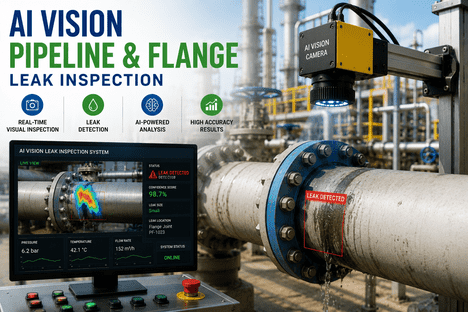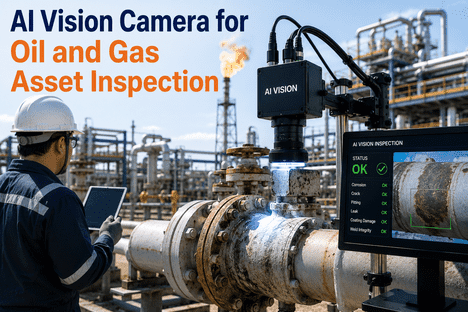
Oil and gas infrastructure — pipelines, pressure vessels, storage tanks, structural steel, and offshore topsides — operates under conditions that accelerate degradation faster than any periodic inspection programme can reliably detect. Corrosion accounts for more than 25% of all infrastructure failures in the oil and gas sector globally, driving an estimated $2.5 trillion in annual costs across emergency repair, production loss, environmental remediation, and regulatory penalties. Manual inspection under API 510, API 570, and API 653 standards remains the compliance baseline, but the detection window between scheduled inspection intervals is where failures initiate and compound. iFactory's AI Vision Camera closes this gap by monitoring pipelines, pressure vessels, storage tanks, and structural steel continuously — detecting corrosion, coating disbondment, surface cracking, and structural deformation at the pixel level in real time, deployable on fixed cameras, drones, or robotic crawlers without requiring personnel to enter hazardous inspection zones. For asset integrity engineers, inspection managers, and operations leaders in oil and gas, this is not a future capability — it is an operational reality reducing customer inspection costs and safety incidents across upstream, midstream, and downstream facilities today.
Is Your Oil and Gas Inspection Programme Detecting Defects Between Scheduled Intervals?
iFactory's AI Vision Camera monitors pipelines, pressure vessels, and structural steel continuously — detecting corrosion, cracks, and deformation in real time on fixed cameras, drones, or robotic crawlers without personnel entering hazardous zones.
Why Periodic Inspection Alone Cannot Protect Oil and Gas Assets
API 510, API 570, and API 653 establish the inspection frequency and documentation requirements for pressure vessels, piping systems, and aboveground storage tanks respectively — and compliance with these standards is a regulatory obligation across refining, midstream, and upstream operations. But the standards define minimum inspection intervals, not continuous monitoring. A pressure vessel inspected under API 510 today may not receive its next external visual inspection for three to five years, depending on corrosion rate history and risk-based inspection (RBI) assessment. In that interval, external coating can fail, cathodic protection systems can degrade, and active corrosion can advance to wall-loss thresholds that require emergency repair or unplanned shutdown. iFactory's AI Vision Camera does not replace API-standard inspection — it provides the continuous visual intelligence that converts the blind window between inspections into a monitored, documented, and defensible asset integrity record. Degradation detected early enough to address during planned turnaround is a fraction of the cost of emergency repair or regulatory incident response.
Corrosion Progresses Between Inspections
External corrosion on pipelines, vessels, and structural steel advances continuously. A coating disbondment detected at year one of a five-year inspection interval can be addressed at the next planned turnaround. The same disbondment missed until year four triggers emergency intervention, scaffold access, and production deferral orders of magnitude more expensive.
Hazardous Zone Access Creates Personnel Risk
Manual inspection of elevated structures, confined spaces, offshore platforms, and live process piping requires work permits, scaffolding, and controlled entry procedures. AI vision deployed on fixed cameras, drones, or robotic crawlers eliminates personnel exposure entirely for routine monitoring tasks — reserving human entry for confirmed anomalies requiring hands-on assessment.
Manual Detection Misses Sub-Millimetre Defects
AI computer vision models achieve 95%+ detection accuracy for the defect types that precede catastrophic failures — micro-cracking, coating disbondment, early-stage pitting corrosion, and weld toe fatigue — all visible at sub-millimetre scales in high-resolution imagery but consistently missed by visual inspection under field conditions and fatigue.
Inspection Records Are Incomplete and Retrospective
Manual inspection reports record conditions at a single point in time, without georeferenced defect mapping or degradation rate trending. AI vision generates a continuous, timestamped, per-asset defect record that tracks corrosion progression, documents coating condition history, and provides the evidence base that API RBI programmes and regulatory inspectors require.
What iFactory AI Vision Camera Detects Across Oil and Gas Assets
iFactory's AI Vision Camera is trained on oil and gas-specific defect imagery spanning upstream, midstream, and downstream environments. The detection model covers the full range of surface and structural degradation modes that drive asset integrity risk in hydrocarbon processing and transportation infrastructure — from early-stage coating blistering to active corrosion at weld seams, from hairline fatigue cracks on structural steel to deformation indicators on pressure-bearing components.
Corrosion and Coating Disbondment on Pipelines
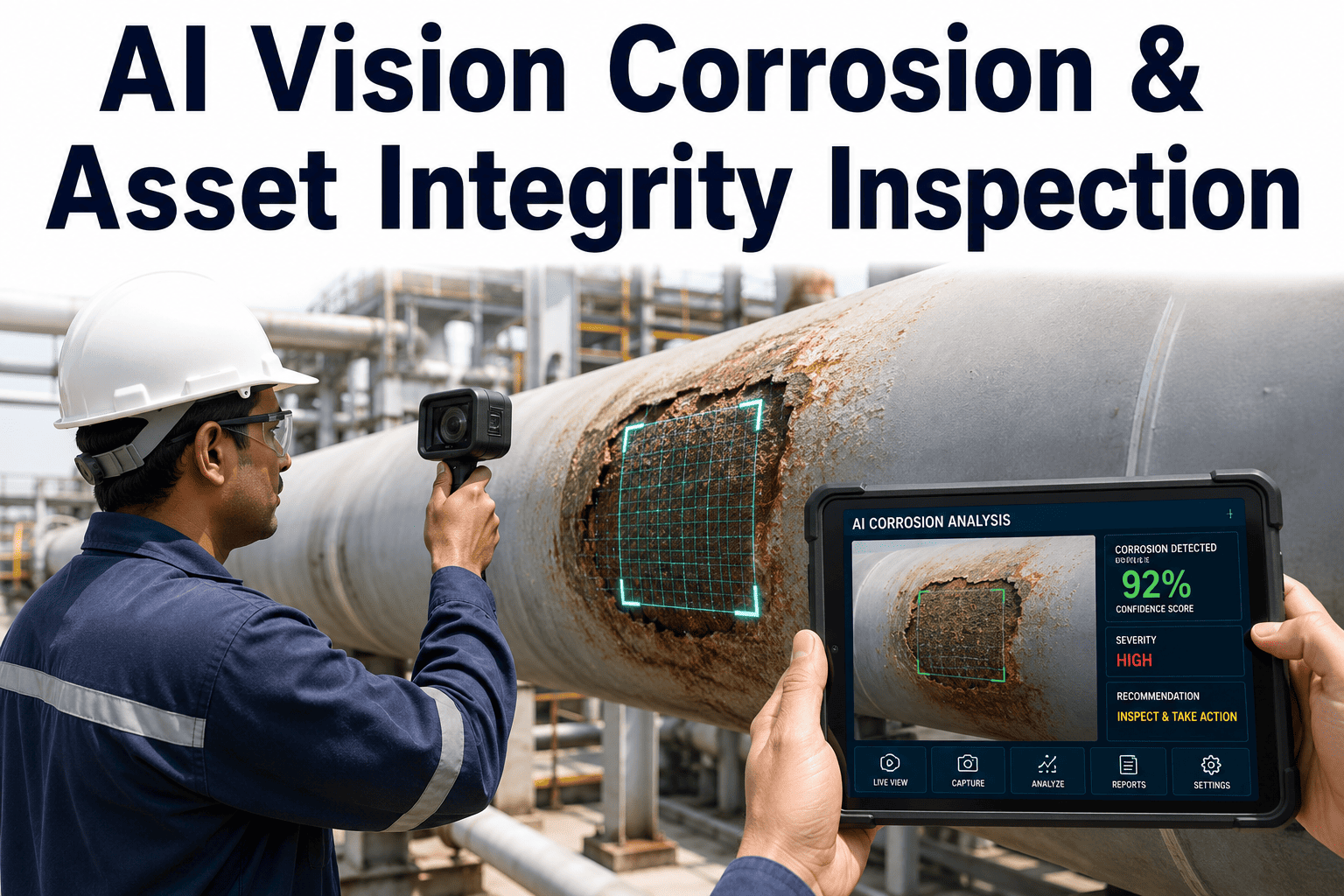
External corrosion on above-ground pipeline segments, riser supports, and clamp interfaces is monitored continuously by fixed cameras covering high-risk spans. iFactory detects coating disbondment, cathodic protection failure indicators, and active corrosion at weld seams and mechanical joints — the locations where external pipeline corrosion initiates most frequently. Degradation rate tracking provides the data input for remaining wall thickness estimation that previously required dedicated ultrasonic inspection crews and access scaffolding. For pipeline operators under API 570 compliance obligations, this continuous visual record directly supports the RBI documentation that justifies extended inspection intervals for well-monitored segments.
Pressure Vessel Shell and Nozzle Degradation
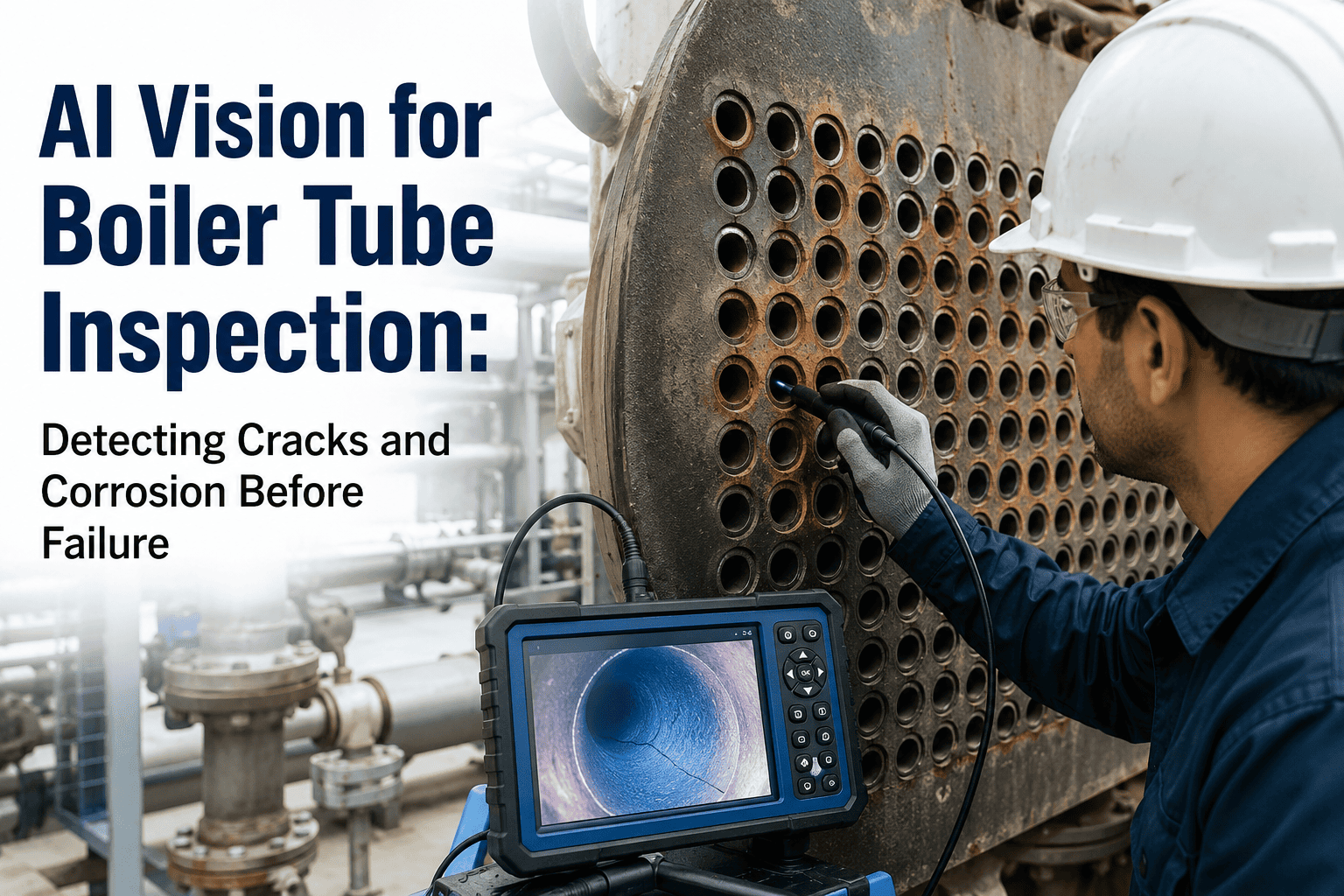
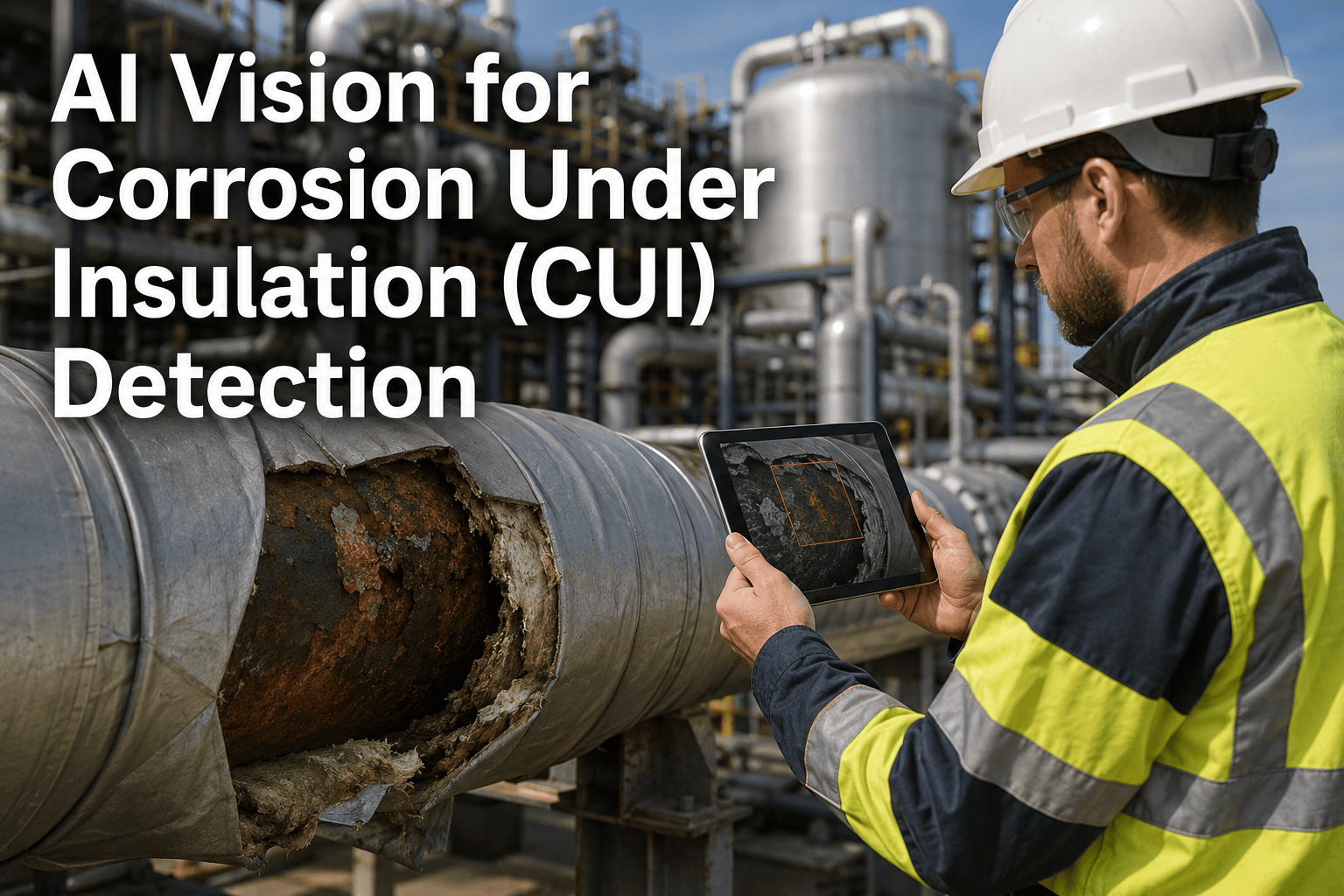
Pressure vessels operating under API 510 — separators, knock-out drums, reactors, heat exchanger shells, and distillation columns — are monitored for external shell corrosion, nozzle neck deterioration, support skirt cracking, and insulation cladding failure that allows moisture ingress and accelerated under-insulation corrosion (UIC). iFactory's AI model identifies blistering and rust bleed-through that indicate active coating failure, generating alerts for targeted maintenance intervention before the degradation advances to wall-loss thresholds requiring emergency fitness-for-service assessment. The visual inspection record generated satisfies API 510 external inspection documentation requirements as a continuous supplement to periodic authorized inspector visits.
Storage Tank Shell, Roof, and Nozzle Monitoring
Aboveground storage tanks regulated under API 653 receive continuous external surface monitoring across tank shell courses, roof panels, nozzle interfaces, and foundation seal zones. iFactory identifies early blistering and rust bleed-through indicating coating failure, settlement-induced distortion at the tank base, and weld seam degradation at course junctions — enabling recoating to be scheduled at planned intervals rather than triggered by discovered advanced corrosion during in-service inspection. For tank farms with large numbers of assets, AI vision provides 100% external coverage continuously, replacing the selective manual rounds that leave significant surface area unmonitored between inspection cycles. Book a Demo to see how iFactory maps corrosion progression across your storage tank fleet in real time.
Structural Steel Cracking and Deformation
Platform structural members, jacket legs, conductor supports, and process module support frames are monitored for fatigue crack initiation, weld toe cracking, section loss from corrosion, and visible deformation under loading. On offshore installations where wave and current-induced fatigue is continuous, early-stage crack detection at structural connections — before cracks reach critical depth — is the difference between a planned weld repair and a structural integrity emergency requiring asset shutdown. iFactory's 3D texture analysis distinguishes genuine fatigue cracks from surface scratches and mill marks, minimising false positive alerts that reduce trust in automated inspection systems.
Flare Stack, Fired Heater, and Elevated Structure Inspection
Elevated structures — flare stacks, fired heater stacks, distillation column shells at height, and overhead process piping — are monitored by drone-deployed or mast-mounted AI vision cameras that provide high-resolution imagery of surfaces inaccessible without scaffolding or rope access. AI-equipped drones can complete a large offshore platform inspection survey in 8–16 hours that would require a manual inspection team 2–4 weeks to perform at equivalent coverage. The resulting defect maps are georeferenced to structure coordinates, enabling direct comparison between inspection cycles to quantify degradation rates on specific elevation bands and structural members.
Fixed Camera, Drone, or Robotic Crawler: Deployment Options for Every Asset Type
Oil and gas infrastructure spans environments ranging from refinery process units to remote pipeline rights-of-way to offshore topsides — each with distinct access constraints, hazardous area classifications, and inspection frequency requirements. iFactory's AI Vision Camera is designed for deployment across all three primary inspection modalities, with a consistent AI detection engine and unified data platform regardless of the camera carrier used.
Three Deployment Modalities for Complete Asset Coverage
Permanently mounted IP67-rated cameras on pipeline sections, vessel shells, tank farms, and structural nodes provide 24/7 visual monitoring of high-consequence or high-corrosion-rate assets. ATEX-certified housing options for classified hazardous area zones. Sub-50ms edge inference on NVIDIA GPU hardware — no cloud round-trip required for real-time defect alerts.
AI vision cameras integrated with industrial drone platforms enable rapid coverage of elevated structures, remote pipeline spans, offshore platform topsides, and large tank farm perimeters. A single drone survey replaces multi-week scaffold-access inspection programmes. AI processes imagery in real time during flight, generating georeferenced defect maps within hours of survey completion rather than weeks of manual photo review.
Magnetic crawler and ROV-mounted AI vision cameras provide inspection coverage for confined spaces, tank internal surfaces, subsea pipelines, and jacket structural members where human entry is prohibited or impractical. The AI detection model operates on crawler-embedded edge hardware, classifying defects in real time and generating inspection reports without requiring surface data transmission during the survey.
Defect data from fixed cameras, drone surveys, and robotic crawler runs feeds into a single iFactory platform — providing a unified per-asset inspection history regardless of which modality captured a given observation. API 510, API 570, and API 653 compliance documentation is generated automatically from the combined dataset, with defect maps, severity classifications, and trend analysis available for each asset in the fleet.
How iFactory AI Vision Supports API 510, API 570, and API 653 Compliance
API inspection standards establish the inspection frequency, documentation requirements, and fitness-for-service assessment obligations for pressure vessels, process piping, and aboveground storage tanks in oil and gas operations. iFactory AI Vision Camera does not replace the authorized inspector's role in API-governed inspection — it provides the continuous visual monitoring and automated documentation that strengthens the RBI data foundation underpinning inspection interval justifications and that closes the monitoring gap between formal inspection cycles.
Continuous external monitoring of vessel shells, nozzles, support skirts, and insulation cladding. Automated visual inspection records supplement authorized inspector visits and support RBI corrosion rate updates. Defect progression documentation provides the degradation history required for fitness-for-service assessments under API 579.
Above-ground piping circuit monitoring for external corrosion, coating failure, support degradation, and mechanical joint condition. Visual corrosion rate data supplements ultrasonic thickness measurement programmes. Continuous inspection record supports RBI-based inspection interval extension justification for well-monitored circuits in lower-risk classifications.
Continuous external tank shell, roof, and nozzle monitoring across full tank farm assets. Settlement and deformation indicators tracked alongside corrosion progression. Automated inspection documentation supports API 653 external inspection intervals and provides the asset condition history required for out-of-service inspection planning and remaining life estimation.
Continuous, timestamped inspection records across pressure-containing equipment support OSHA 29 CFR 1910.119 mechanical integrity documentation requirements. Automated defect detection and alert generation provides the evidence trail that process safety audits and incident investigations require — replacing selective manual records with complete, auditable visual inspection histories.
For offshore installations and upstream assets governed by IOGP guidelines and DNV offshore standards, iFactory's drone and fixed-camera modalities provide the structural inspection coverage and documentation format required for asset integrity management plan compliance — including georeferenced defect maps, severity classification, and multi-period degradation rate trending.
AI vision-generated corrosion rate data and defect progression records feed directly into RBI assessment programmes, providing the continuous condition data that replaces point-in-time inspection snapshots. Higher-quality degradation rate inputs produce more accurate remaining life predictions and defensible inspection interval determinations across the asset fleet.
The Operational and Financial Case for AI Vision in Oil and Gas Inspection
The business case for AI vision inspection in oil and gas is grounded in the cost differential between detection timelines. Coating disbondment detected continuously and addressed at planned turnaround costs a fraction of the emergency intervention required when active corrosion is discovered at API inspection — with associated scaffolding, hot work permits, production deferral, and accelerated regulatory reporting. AI-equipped drone inspection of a large offshore platform completes the same coverage as a 2–4 week manual inspection team engagement in 8–16 hours — reducing scaffold hire, personnel mobilisation, and production interference by orders of magnitude. For pipeline operators, AI vision monitoring of above-ground segments continuously between the periodic pig run and ultrasonic survey programme catches external degradation that ILI tools do not detect, closing the coverage gap that drives the majority of above-ground pipeline failure incidents. Book a Demo with an iFactory specialist to receive a site-specific ROI estimate based on your asset base, API inspection obligations, and current inspection programme costs.
Deploy AI Vision That Monitors Your Oil and Gas Assets Continuously Between API Inspection Intervals
iFactory's AI Vision Camera integrates with fixed cameras, drones, and robotic crawlers — delivering corrosion detection, crack identification, and structural deformation monitoring with automated API compliance documentation for every asset in your fleet.
AI Vision Is Now the Standard for Continuous Oil and Gas Asset Integrity Monitoring
The oil and gas industry's API inspection framework was designed for periodic human-executed surveys — and it remains the regulatory standard. But the detection gap between those surveys is where failures originate, where costs compound, and where the incidents that trigger regulatory scrutiny develop invisibly. iFactory's AI Vision Camera eliminates that gap: continuous monitoring of pipelines, pressure vessels, storage tanks, and structural steel on fixed cameras, drones, or robotic crawlers — detecting corrosion, cracking, coating failure, and structural deformation at sub-millimetre resolution without personnel entering hazardous zones. The result is an asset integrity programme that satisfies API 510, API 570, and API 653 compliance obligations while providing the continuous, georeferenced, automatically documented inspection record that RBI programmes, OSHA PSM audits, and asset lifecycle management require. For oil and gas operators serious about closing the inspection gap, extending the operational life of critical assets, and building the inspection documentation record that regulators and insurers increasingly expect, iFactory's AI Vision Camera is the deployment to make this operational year. Book a Demo and receive a site-specific inspection coverage assessment benchmarked against your API compliance obligations and current asset integrity programme.
AI Vision Camera for Oil and Gas Inspection — Common Questions Answered
Can iFactory AI Vision Camera operate in ATEX-classified hazardous areas?
Yes. iFactory's fixed camera systems are available in ATEX Zone 1 and Zone 2 certified housing configurations for deployment in classified hazardous areas on process units, offshore platforms, and storage tank farms. Edge inference hardware is located in non-classified areas connected via intrinsically safe cabling or fibre optic runs, with no AI processing hardware required within the hazardous zone itself. Drone-based inspection operations in classified areas follow site-specific hot work and drone operation permit procedures.
How does iFactory AI vision relate to API 510, 570, and 653 inspection requirements?
iFactory AI Vision Camera provides continuous external visual monitoring that supplements — not replaces — the periodic inspection obligations under API 510, 570, and 653 conducted by authorised inspectors. The continuous inspection record generated by iFactory strengthens the RBI data foundation supporting inspection interval justifications, provides the degradation rate trending required for fitness-for-service assessments, and closes the monitoring gap between formal API inspection cycles where most failures initiate.
What defect types does the AI model detect on oil and gas assets?
iFactory detects and classifies corrosion and rust formation, coating disbondment and blistering, weld seam degradation, under-insulation corrosion indicators, surface cracking and fatigue crack initiation, structural deformation and section loss, nozzle and mechanical joint deterioration, and settlement-induced distortion on storage tanks. The model is pre-trained on oil and gas-specific defect imagery and adapts via active learning to site-specific surface conditions and defect morphologies during the first weeks of deployment.
Can the system detect internal pipeline defects, or only external surface conditions?
iFactory AI Vision Camera is an optical inspection system that detects external surface defects visible to high-resolution camera imaging — corrosion, coating failure, cracking, and structural deformation on the external pipeline surface. Internal pipeline integrity — wall thickness, internal corrosion, weld defects — requires inline inspection tools (ILI) or ultrasonic testing. iFactory can integrate external visual inspection data with ILI and UT datasets into a unified per-asset integrity record, providing the combined internal and external condition picture that comprehensive pipeline integrity management requires.
How does drone-based AI inspection compare to traditional scaffold-access inspection in cost and coverage?
An AI-equipped drone inspection of a large offshore platform or elevated structure completes equivalent coverage to a 2–4 week manual scaffold-access inspection team in 8–16 hours. Direct cost savings come from eliminating scaffold erection and dismantling, reducing specialist inspector mobilisation time, and removing the production interference associated with access preparation. Survey data is available as georeferenced defect maps within hours of flight completion rather than weeks of manual report compilation from field notes and photographs.
How quickly can iFactory AI Vision Camera be deployed on an operating facility?
Fixed camera installation on priority assets — high-consequence pipeline spans, critical pressure vessels, and storage tanks — is typically completed within one to two weeks using standard planned maintenance windows without process shutdown. Drone-based and robotic crawler deployments can be operational on the same day as mobilisation. The AI detection model is pre-trained on oil and gas defect imagery and begins generating classifications from the first inspection run, with site-specific calibration and active learning improving accuracy continuously over the first 30 days of operation.
Ready to Close the Inspection Gap Across Your Oil and Gas Asset Fleet?
Connect with an iFactory specialist to receive a site-specific inspection coverage assessment, an API compliance documentation review, and a deployment roadmap for your pipelines, pressure vessels, and structural assets — no obligation.