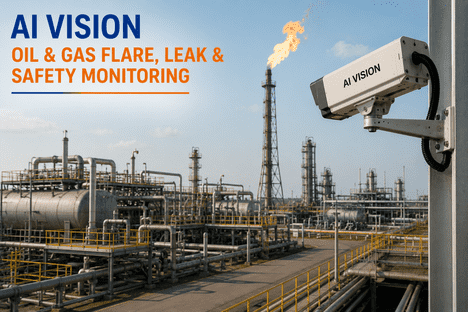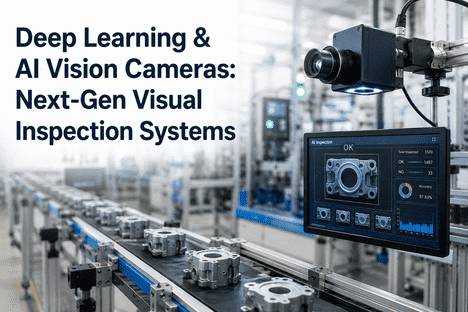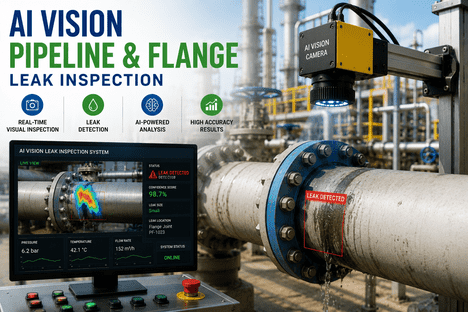
Pipeline and flange integrity failures represent the most consequential category of loss of containment events in chemical manufacturing — carrying simultaneous exposure to process safety incidents, environmental release liability, regulatory citation, and production curtailment costs that no inspection program can afford to miss. In chemical facilities, refineries, and petrochemical complexes, flanged connections, welded joints, valve packing, and pipeline segments operate under combined mechanical, thermal, and chemical stress that degrades integrity continuously — but often invisibly, between scheduled inspection rounds. AI vision inspection changes this dynamic fundamentally by deploying continuous, automated visual monitoring across pipeline infrastructure and flange connections, detecting the earliest indicators of integrity degradation — corrosion staining, crystalline salt deposits at seal faces, wet surface discoloration from micro-seepage, joint displacement, insulation damage, and visible coating breakdown — long before a detectable release occurs. iFactory's AI vision camera platform applies deep learning anomaly detection models trained on pipeline-specific degradation signatures to provide around-the-clock visual intelligence across monitored infrastructure, generating timestamped anomaly records, severity-classified alerts, and automated CMMS work orders that convert every detected condition into a structured inspection and maintenance response — without requiring an operator to be physically present at each pipeline segment or flange location during every monitoring cycle.
Why AI Vision Is the Missing Layer in Pipeline and Flange Integrity Programs
The Gap Between Scheduled Inspection Intervals and Continuous Integrity Assurance
Conventional pipeline and flange inspection programs — API 570 piping inspection, OSHA PSM mechanical integrity rounds, and EPA LDAR monitoring — are built around scheduled inspection cycles that leave assets unobserved for weeks or months between visits. In chemical environments where process fluid chemistry, thermal cycling, and vibration act continuously on flange connections and pipeline segments, integrity degradation does not follow a calendar. A flange gasket that passed a quarterly inspection can begin micro-seeping within days of a thermal shock event or a pressure surge that exceeds design margin. A corroding pipeline segment can progress from surface staining to pitting perforation in the interval between two annual inspection visits. Drone and camera-based AI vision inspection provides the continuous monitoring layer that scheduled inspections structurally cannot — observing every monitored asset at every hour, detecting degradation at the earliest visual stage, and generating the documented evidence chain that regulators, insurers, and process safety programs require to demonstrate proactive integrity management. iFactory's AI vision camera platform deploys fixed and drone-integrated camera systems across pipeline corridors and process area infrastructure, with deep learning anomaly detection models trained on the specific visual signatures of corrosion, leak onset, flange displacement, and coating degradation in chemical production environments.
AI Vision Detection Capabilities Across Pipeline and Flange Inspection Applications
What iFactory's Deep Learning Models Detect — and When They Detect It
| Inspection Application | Visual Signatures Detected | AI Detection Method | Response Output |
|---|---|---|---|
| Flange Leak Detection | Crystalline deposits at seal face, wet discoloration, fluid tracking on bolt surfaces | Anomaly detection trained on clean flange baseline images with deposit and staining classification | Immediate alert + CMMS work order with flange image and location ID |
| Pipeline Corrosion Detection | Surface staining, rust formation, pitting patterns, coating breakdown, mill scale loss | Corrosion severity classification model with progressive degradation trending | Severity-graded alert with corrosion location map and trend history |
| Insulation Damage Monitoring | Jacket puncture, wet insulation staining, insulation displacement, CUI indicator patterns | Surface integrity model detecting insulation jacket anomalies associated with CUI onset | CUI risk alert with image evidence and priority inspection work order |
| Valve Packing and Stem Leak Detection | Packing gland staining, stem surface deposit, drip trace on valve body | Component-level anomaly detection trained on valve assembly geometry and clean baselines | Valve integrity alert with LDAR event log entry and repair work order |
| Joint and Connection Integrity | Mechanical displacement, gap formation, bolt condition, support settlement | Geometric deviation detection measuring joint alignment against baseline configuration | Structural alert with displacement measurement and engineering review trigger |
| Coating and Lining Inspection | Coating blistering, disbondment, holiday formation, UV degradation patterns | Surface condition classification model tracking coating integrity over time | Coating condition score with recoating priority recommendation and trend report |
Flange Leak Detection: Catching Micro-Seepage Before Loss of Containment
The Visual Signature of Flange Failure — and Why Continuous Vision AI Detects It First
Flanged connections are the most common source of process fluid releases in chemical plant environments — accounting for a significant proportion of unplanned hydrocarbon releases and toxic chemical releases recorded annually across the chemical and refining industries. The failure mechanism is almost always gradual: gasket creep, bolt relaxation from thermal cycling, or seal face contamination produces micro-seepage that deposits crystalline residue at the flange face, stains bolt surfaces with fluid tracking lines, and creates subtle surface discoloration patterns that an experienced piping inspector recognizes immediately — but that a manual inspection program sees only intermittently, during scheduled rounds. iFactory's AI vision system monitors flanged connections continuously, comparing current flange surface images against clean baseline reference images using deep learning anomaly detection models that have been trained to recognize the earliest visual indicators of seal degradation: the first trace of crystalline deposit at the bolt-face interface, the initial discoloration pattern on the lower bolt indicating downward fluid tracking, the change in surface reflectivity at the gasket seam that precedes visible weeping. Detected anomalies are classified by severity, triggering either a monitoring escalation for early-stage indicators or an immediate work order for conditions indicating active seepage — with the detection image, flange identification, and timestamp all attached to the CMMS record for investigation and regulatory documentation. Chemical process engineers evaluating AI vision flange monitoring for their facility can Book a Demo with iFactory's pipeline inspection engineering team to see detection capabilities demonstrated on flange configurations representative of their process area.
Pipeline Corrosion Detection and Corrosion Under Insulation (CUI) Monitoring
Visual AI for the Integrity Threats That Conventional Inspection Misses Until It Is Too Late
External corrosion and corrosion under insulation are consistently ranked among the leading causes of piping failure in chemical processing facilities — and both are challenges where the interval-based nature of conventional inspection programs creates the greatest vulnerability. External corrosion progresses from initial coating degradation to through-wall pitting in timeframes that can fall entirely within the gap between two API 570 inspection visits. CUI, concealed beneath insulation jacketing, is invisible to any inspection method that does not remove insulation — meaning it is often discovered only when it has advanced to a condition requiring pipe replacement rather than rehabilitation. iFactory's AI vision system addresses both challenges through different detection mechanisms. For external corrosion on exposed piping, the AI models monitor surface condition continuously — detecting the progression from initial coating blistering through disbondment, rust staining, and pitting pattern formation, generating a visual corrosion severity trend that allows maintenance teams to prioritize intervention based on actual degradation rate rather than fixed inspection schedules. For CUI risk on insulated piping, the AI vision system detects the external indicators that precede or accompany active CUI: insulation jacket damage, wet staining patterns on jacket surfaces, corrosion product seepage at insulation terminations, and the characteristic discoloration patterns that indicate water ingress into the insulation system. These CUI indicator detections trigger priority inspection work orders that direct ultrasonic thickness measurement or insulation removal to the specific locations where the AI has identified the highest risk — dramatically improving the efficiency and effectiveness of CUI survey programs compared to systematic removal-and-inspect approaches. Learn how iFactory's AI vision platform is configured for pipeline corrosion and CUI monitoring programs in chemical processing environments.
Drone-Integrated AI Vision for Pipeline Corridor and Elevated Infrastructure Inspection
Extending AI Vision Coverage to Inaccessible Pipeline Assets Without Scaffolding or Confined Space Entry
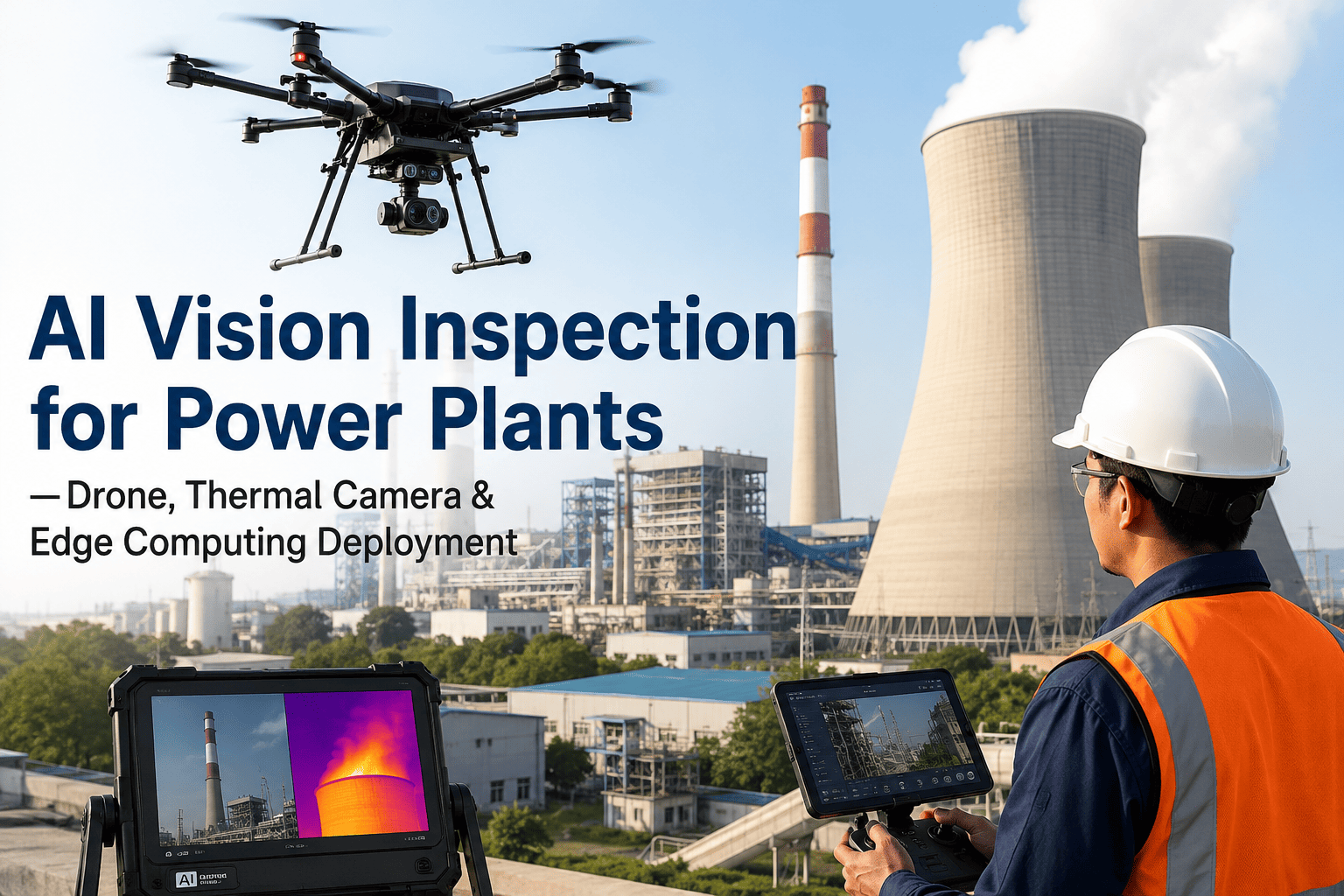
Chemical facilities include extensive pipeline infrastructure that is physically inaccessible to ground-level inspection without scaffolding, rope access, or confined space entry — elevated pipe racks, overhead transfer lines, underground trench sections, and pipeline corridors spanning significant distances between process units. iFactory's AI vision platform integrates with drone inspection systems to extend automated anomaly detection coverage to this inaccessible infrastructure, combining drone-captured imagery with the same deep learning models used for fixed-camera monitoring to detect corrosion, coating degradation, flange anomalies, and structural condition issues across the full pipeline network. Drone-captured images are processed through iFactory's edge AI inference engine either in real time during the drone flight or through post-flight batch processing, with anomaly detections generating the same severity-classified alerts and CMMS work orders as fixed-camera detections. This drone-AI vision integration enables inspection teams to survey elevated and remote pipeline assets at significantly higher frequency than rope access or scaffolding-based inspection allows — reducing inspection costs, eliminating fall-at-height risk for inspection personnel, and providing the continuous improvement in coverage frequency that risk-based inspection programs require to reduce pipeline failure rates in elevated and inaccessible infrastructure. Facilities evaluating drone-integrated AI vision inspection for their pipeline corridor and pipe rack infrastructure can Book a Demo with iFactory's inspection engineering team to see the drone integration architecture demonstrated and discuss deployment options for their specific facility layout.
Regulatory Compliance: LDAR, OSHA PSM, and API 570 Documentation Support
How AI Vision Inspection Evidence Satisfies Pipeline Integrity Regulatory Requirements
Implementation: Deploying AI Vision Pipeline Inspection in Chemical Facilities
From Site Survey to Live Monitoring — Without Process Disruption
Deploying AI vision monitoring in chemical pipeline and flange inspection environments requires hardware specification, installation design, and AI model training approaches that address the specific demands of chemical facility infrastructure: classified area requirements, corrosive atmosphere exposure for camera hardware, variability in pipeline surface conditions across different process services, and the need for camera positioning that captures the critical inspection areas of flanged connections and pipeline segments from stable, maintainable mounting positions. iFactory's implementation process begins with a pipeline and flange inventory survey that identifies monitoring priorities based on fluid service criticality, historical inspection findings, LDAR program component classifications, and PSM covered process membership. Camera hardware is specified for the hazardous area classification of each installation zone — with ATEX and IECEx certified equipment selected for Zone 1 and Zone 2 areas, and stainless steel or corrosion-resistant enclosures specified for corrosive atmosphere exposure. AI model training for each asset type uses image datasets collected during the commissioning period, annotated by the facility's inspection team against their own anomaly classification and severity standards. The trained models are validated against the facility's inspection acceptance criteria before live monitoring commences, ensuring that alert sensitivity is calibrated to the specific conditions of the chemical facility environment rather than a generic pipeline inspection baseline. Implementation timelines typically range from eight to sixteen weeks from site survey to live monitoring, depending on the scale of the pipeline network being monitored and CMMS integration requirements. Facilities ready to evaluate AI vision pipeline inspection for their integrity program can Book a Demo with iFactory's chemical facility inspection engineering team.
Frequently Asked Questions: AI Vision Pipeline and Flange Inspection
How early can AI vision detect a developing flange leak compared to conventional LDAR monitoring?
AI vision detects the visual precursors of flange leakage — crystalline deposit formation at the seal face, initial surface discoloration from fluid tracking, subtle changes in surface reflectivity at the gasket interface — typically hours to days before the release rate would be detectable by Method 21 survey instruments or optical gas imaging cameras at the next scheduled LDAR monitoring visit. This early detection window is the critical advantage: intervention at the micro-seepage stage requires only bolt retorquing or gasket replacement, while intervention after a reportable release has occurred requires regulatory notification, incident investigation, and potentially process shutdown. The exact detection lead time depends on the specific fluid chemistry, flange geometry, and ambient conditions — but AI vision consistently identifies anomaly indicators before conventional monitoring methods in comparative field evaluations.
Can iFactory's AI vision system operate in ATEX Zone 1 classified chemical plant environments?
Yes. iFactory's deployment architecture supports ATEX Zone 1 and Zone 2 classified areas using certified camera hardware rated for the specific area classification of each installation location. For installations where Zone 0 conditions or process fluid exposure preclude direct camera mounting, the system can be configured with remote viewing through existing sight glasses or process-area windows, with the camera hardware positioned outside the classified zone boundary. All camera enclosures are specified for the corrosive atmosphere conditions of the specific installation location — with materials selection and ingress protection ratings matched to the process area environment. Each installation is documented to support the facility's ATEX compliance records for the installed monitoring equipment.
How does drone-integrated AI vision inspection work for elevated pipe racks and inaccessible pipeline infrastructure?
iFactory's platform integrates with drone inspection systems to capture imagery of elevated and inaccessible pipeline infrastructure that fixed-camera systems cannot reach without scaffolding or rope access. Drone flights are conducted on a scheduled or triggered basis, with the captured imagery processed through iFactory's deep learning anomaly detection models to identify corrosion, coating degradation, flange anomalies, and structural condition issues. Detected anomalies generate the same severity-classified alerts and CMMS work orders as fixed-camera detections, with the drone flight path and image capture location recorded as part of the inspection evidence. For facilities with extensive elevated pipe rack infrastructure, drone-AI integration reduces inspection costs significantly compared to scaffolding-based access while improving inspection frequency and eliminating fall-at-height risk for inspection personnel.
Does the AI vision system generate documentation that satisfies OSHA PSM and EPA LDAR audit requirements?
Yes. iFactory's platform generates a complete electronic inspection record for every monitored pipeline segment, flange, and connection — including continuous condition logs, anomaly detection event records with image evidence and timestamp, severity classifications, and CMMS work order records documenting corrective response to each detected condition. These records are structured to meet OSHA PSM mechanical integrity documentation requirements — providing the timestamped inspection evidence and corrective action audit trail that PSM auditors require. For EPA LDAR compliance, the platform generates LDAR component monitoring records with detection event logs and response documentation that supplement required Method 21 and OGI monitoring records with continuous visual monitoring evidence.
How does iFactory's AI vision platform integrate with existing pipeline inspection and CMMS systems?
The platform connects to existing CMMS systems via OPC-UA and REST APIs, automatically generating work orders from anomaly detection events with image evidence, location data, and severity classification attached. Integration with pipeline inspection data management systems and RBI platforms allows AI vision condition data to be incorporated into risk-based inspection workflows — using continuous monitoring evidence to refine probability-of-failure assessments and inspection interval decisions. The system outputs inspection data in standard formats compatible with major pipeline integrity management and asset management platforms, with integration configuration completed during implementation to match the existing technology environment of the chemical facility.