Pharmaceutical manufacturing operates under the most demanding quality and regulatory framework of any production environment — where a single defective tablet, contaminated vial, or mislabeled package can trigger an FDA warning letter, a Class II recall, or a patient safety event with direct liability consequences. FDA Current Good Manufacturing Practice regulations require pharmaceutical manufacturers to implement systematic quality controls that verify product quality at every stage of production, maintain validated inspection records, and demonstrate process control through documented evidence. Manual visual inspection, which remained the industry standard for decades, cannot meet these requirements at modern production speeds — trained inspectors miss between 20% and 40% of defects under production-line conditions, particularly after extended inspection periods where fatigue compounds error rates. AI vision cameras are now the fastest-growing inspection technology in pharmaceutical manufacturing globally — driven by FDA GMP requirements, the escalating cost of recalls, and the proven ability of AI-powered systems to detect cracks, chips, discoloration, coating defects, particulate contamination, and packaging failures at sub-millimeter precision without the performance degradation that makes human inspection unreliable at scale. iFactory's AI Vision Camera platform delivers GMP-aligned inspection for tablets, capsules, vials, ampoules, blister packs, labels, and cartons — running on NVIDIA edge hardware within the facility for on-premise inference that satisfies pharmaceutical data integrity requirements under FDA 21 CFR Part 11. Quality assurance directors, manufacturing operations managers, and validation teams evaluating AI vision for their solid dose, sterile, or packaging lines are encouraged to Book a Demo to assess how iFactory maps to their specific product format, defect classification requirements, and GMP validation expectations.
Deploy GMP-Aligned AI Vision Inspection for Tablets, Vials, Labels, and Packaging
iFactory's AI Vision Camera detects cracks, chips, discoloration, particulate contamination, and packaging defects at production speed — with on-premise edge inference that satisfies FDA 21 CFR Part 11 data integrity requirements.
What iFactory AI Vision Camera Detects Across Pharmaceutical Production
Pharmaceutical quality inspection requirements span the full production and packaging workflow — from solid dose form defects at the tablet press through sterile container integrity at the fill-finish line to label accuracy and carton configuration at secondary packaging. iFactory's AI Vision Camera addresses each inspection category from a unified platform, eliminating the fragmented point-solution architecture that creates data silos and multiplies validation burdens. Quality teams can Book a Demo to review iFactory's detection performance benchmarks against their current product formats and defect classification requirements.
Tablet and Capsule Inspection
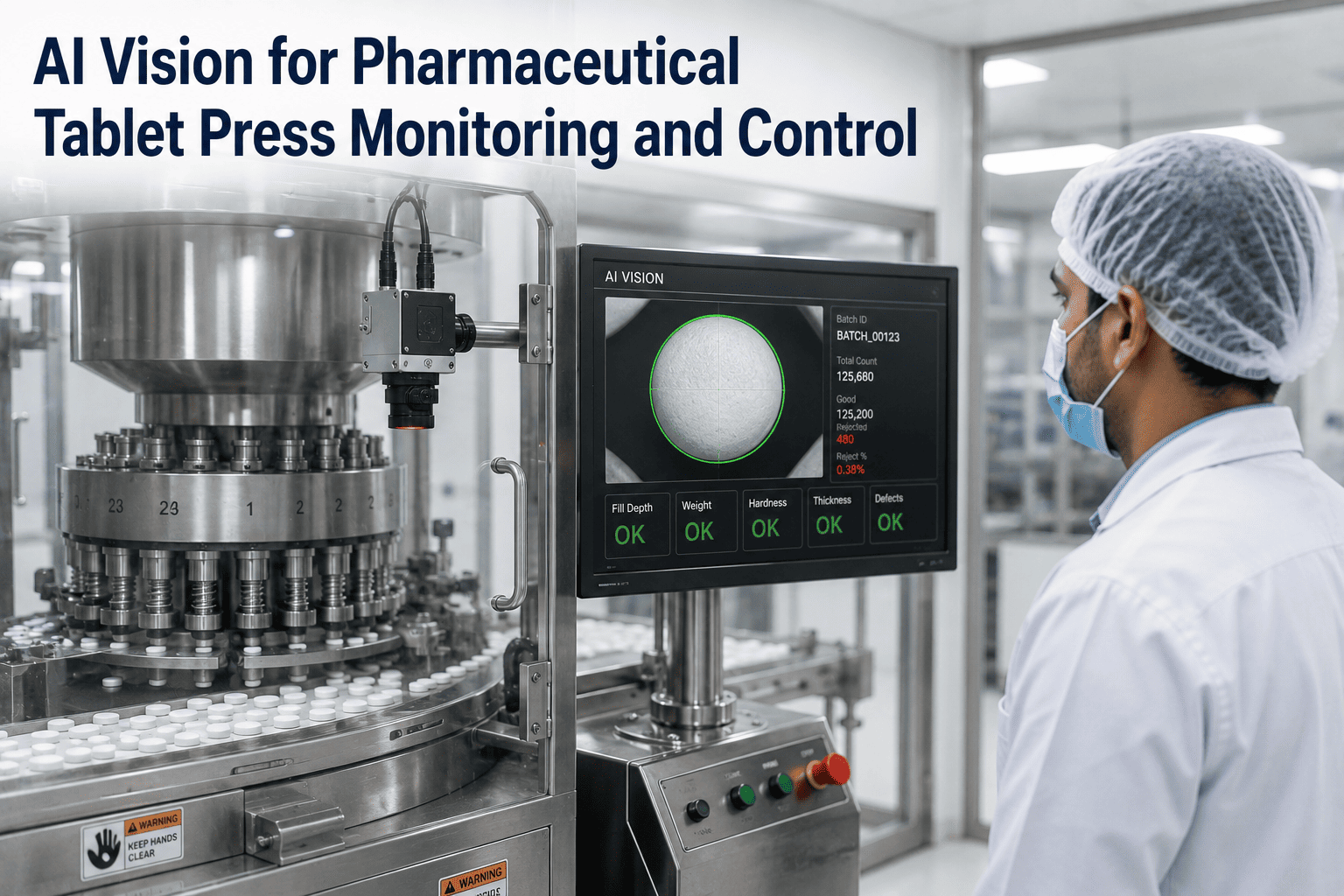
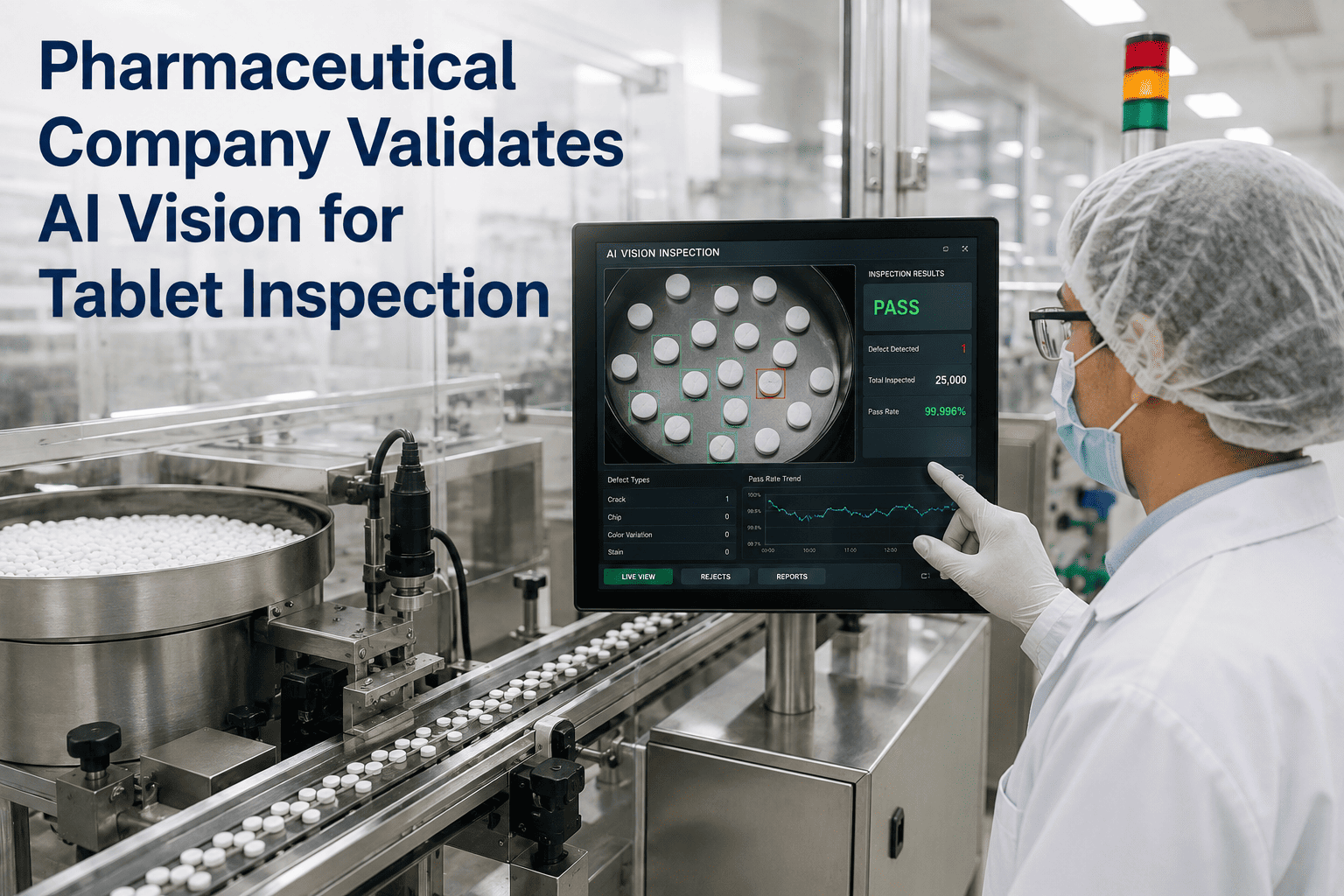
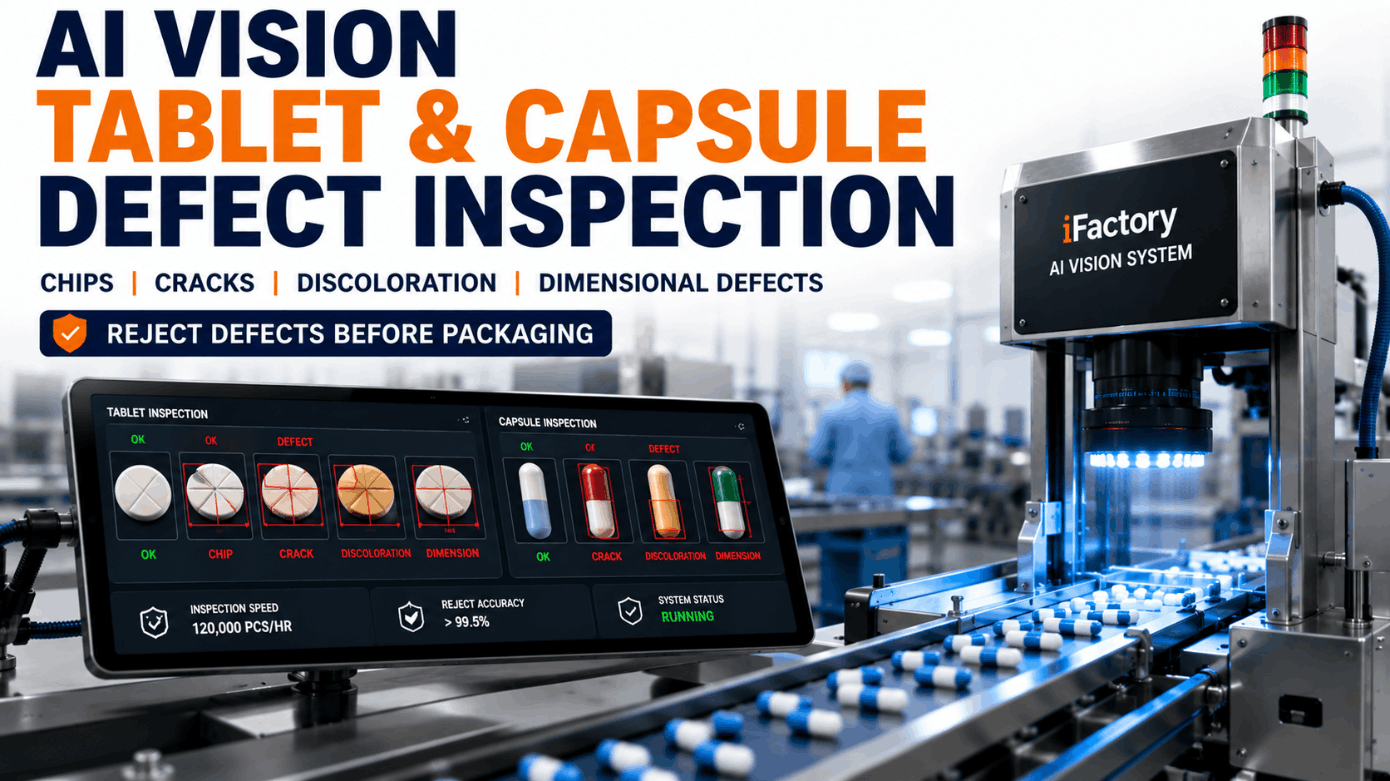
AI vision detects cracks, chips, surface pitting, coating defects, discoloration, double-compressed lamination, and incorrect embossing or debossing on tablets — and cap-body separation, denting, and fill level anomalies on capsules — at full press and coating pan output speeds.
Vial and Ampoule Inspection
The system inspects glass vials and ampoules for particulate contamination, glass delamination, container cracks, stopper seating accuracy, crimp integrity, and fill level compliance — meeting the inspection requirements of USP <790> and EU GMP Annex 1 for parenteral product visual inspection.
Blister Pack and Foil Seal Inspection
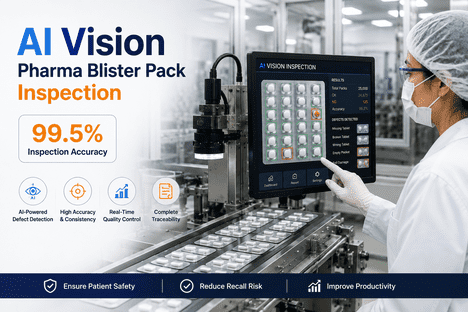
AI vision verifies tablet or capsule presence in every blister cavity, detects broken or missing product, identifies foil seal defects and incomplete heat-seal boundaries, and flags deformed cavity geometry — preventing incomplete blister packs from reaching secondary packaging and distribution.
Label Accuracy and Serialization
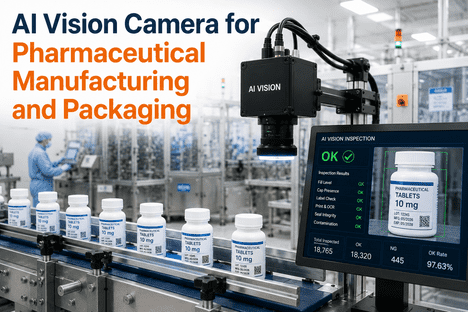
Label inspection verifies correct label identity, readability, expiration date format and presence, lot number accuracy, serialization code quality, and 2D DataMatrix readability — satisfying FDA Drug Supply Chain Security Act serialization requirements and preventing the label mix-up events that drive a significant proportion of pharmaceutical recalls.
How iFactory AI Vision Meets FDA GMP and Data Integrity Requirements
Pharmaceutical AI vision deployment is not simply a quality improvement initiative — it is a regulatory compliance function that must satisfy FDA GMP requirements for validated inspection systems, electronic records, and audit traceability. iFactory's platform is designed from the ground up for pharmaceutical regulatory environments, addressing the GMP requirements that quality assurance and regulatory affairs teams must satisfy before deploying any automated inspection system in a GMP-licensed facility.
FDA 21 CFR Part 11 Electronic Records Compliance
All inspection records generated by iFactory's AI Vision Camera satisfy FDA 21 CFR Part 11 requirements for electronic records — including audit trail generation, timestamped entries with operator authentication, record integrity controls, and secure storage that prevents modification without documented authorization. Every inspection event produces a tamper-evident record linking the inspection result, AI model version, camera configuration, operator acknowledgment, and production batch number.
GMP Process Validation and IQ/OQ/PQ Support
iFactory provides full documentation support for Installation Qualification, Operational Qualification, and Performance Qualification activities required under FDA 21 CFR Part 211 and EU GMP Annex 15. The system generates the validation documentation packages — including hardware specifications, software version control records, test protocols, and acceptance criteria evidence — that pharmaceutical validation teams require to demonstrate that the inspection system performs as intended within the GMP environment.
Batch Release Documentation and Quality Record Integration
iFactory integrates with existing pharmaceutical QMS and ERP systems to append inspection results to batch production records automatically. Every batch closed on iFactory's inspection platform includes a complete inspection summary — total units inspected, units rejected by defect category, inspection system status at batch start and end, and AI model version — providing the inspection evidence required for batch release review under GMP.
On-Premise Edge Inference — No Patient Data Risk
All AI inference runs on NVIDIA edge hardware located within the manufacturing facility. Product imagery, batch data, and inspection records never leave the facility network — satisfying both FDA data integrity guidance and the information security requirements that pharmaceutical manufacturers face when protecting proprietary formulation and process data. This architecture also ensures continuous inspection operation during internet outages, with no dependency on external cloud availability for GMP-critical inspection functions. Book a Demo to review how iFactory's data architecture maps to your facility's GMP and information security requirements.
AI Vision vs. Manual Inspection: Performance Comparison in Pharmaceutical Production
The performance gap between manual visual inspection and AI vision inspection in pharmaceutical manufacturing is not marginal — it is structural. Manual inspection performance degrades predictably with shift duration, inspector fatigue, and product monotony. AI vision maintains consistent detection thresholds across every unit, every shift, every production campaign.
Human inspectors miss between 20% and 40% of defective units under production-line conditions — a gap that widens significantly after the first two hours of a shift. iFactory's AI Vision Camera maintains 99.4% detection accuracy across an entire production campaign without performance degradation.
Manual and traditional automated inspection systems inspect representative samples — accepting that a percentage of uninspected units reaching release may contain defects. AI vision inspects every unit, eliminating the statistical risk that sample-based inspection programs carry into batch release decisions.
Manual inspection records are summary entries — they document that inspection occurred, not what was observed on each unit. iFactory generates a per-unit electronic record with timestamped image evidence for every inspection event, satisfying FDA's expectation for contemporaneous GMP documentation.
Human inspectors apply subjective judgment to borderline defect cases, creating inter-inspector variability that affects batch release consistency and complicates investigations. AI vision applies identical classification criteria to every unit, eliminating subjectivity from the inspection decision.
Label mix-up, mislabeled allergen or dosage strength, and contaminated product are the leading causes of pharmaceutical recalls. AI vision catches each of these failure modes at the production stage — before product reaches distribution and before recall costs accumulate.
iFactory's platform comes with structured IQ/OQ/PQ validation documentation packages designed for pharmaceutical GMP environments — reducing the validation effort that delays deployment and providing FDA-ready evidence that the system performs to specification.
Deploy AI Vision Inspection Across Your Pharmaceutical Line — With Full GMP Validation Support
iFactory's AI Vision Camera delivers 99.4% defect detection accuracy across solid dose, sterile, and packaging operations — with on-premise NVIDIA edge inference, 21 CFR Part 11 electronic records, and IQ/OQ/PQ documentation packages included.
The Case for AI Vision in Pharmaceutical Inspection Is No Longer Theoretical
The pharmaceutical industry's shift to AI vision inspection is being driven by three converging forces: FDA's increasing expectation that manufacturers demonstrate robust, validated quality systems with documented inspection evidence; the direct financial cost of recalls that sample-based inspection programs fail to prevent; and the fundamental performance ceiling of human visual inspection in high-volume, precision-tolerance production environments. iFactory's AI Vision Camera addresses all three simultaneously — delivering detection accuracy that manual inspection cannot match, electronic records that satisfy 21 CFR Part 11, and validation documentation that meets GMP requirements for computerized system qualification. For pharmaceutical manufacturers that have been evaluating AI vision deployment but waiting for a platform that meets their GMP and data integrity requirements without requiring cloud connectivity or lengthy custom development, iFactory provides a deployable solution with a proven path from installation to validated operation. Pharmaceutical quality and operations teams ready to eliminate the detection gap between manual inspection and GMP expectation should Book a Demo to see iFactory's inspection capabilities on their specific product formats.
AI Vision Camera for Pharmaceutical Manufacturing — Common Questions Answered
Does iFactory's AI Vision Camera satisfy FDA 21 CFR Part 11 requirements for electronic records?
Yes — iFactory's platform generates tamper-evident electronic inspection records with audit trails, timestamped entries, operator authentication, and AI model version tracking that satisfy the 21 CFR Part 11 requirements applicable to automated inspection systems in pharmaceutical GMP environments. Records are stored on-premise and cannot be modified without documented authorization.
What defect types can AI vision detect on pharmaceutical tablets?
iFactory's tablet inspection module detects surface cracks, chipping, coating defects, color variation, lamination failures, double compression, incorrect embossing depth, surface pitting, and contamination — covering the full range of solid dose cosmetic and structural defect categories specified in USP standards and typical product specifications. Detection operates at full tablet press and coating pan output speeds without requiring line slowdown.
Can the system detect particulate contamination in vials and ampoules?
Yes — iFactory's sterile product inspection module detects particulate contamination in transparent and semi-transparent containers, including glass particles, fiber contamination, and visible precipitate, to approximately 50 microns under standard illumination conditions. Container integrity inspection covers cracks, stopper seating, crimp defects, and fill level compliance in line with USP <790> and EU GMP Annex 1 visual inspection expectations.
What validation documentation does iFactory provide for GMP qualification?
iFactory provides structured documentation packages supporting Installation Qualification, Operational Qualification, and Performance Qualification under FDA 21 CFR Part 211 and EU GMP Annex 15. Packages include hardware and software specifications, configuration records, test protocols with acceptance criteria, and executed test evidence — reducing the internal validation effort required to qualify the system for GMP use in a licensed pharmaceutical facility.
Does product imagery leave the facility for cloud processing?
No — all AI inference runs on NVIDIA edge hardware located within the manufacturing facility. Product imagery, inspection records, and batch data are processed and retained entirely on-premise. This architecture satisfies pharmaceutical data integrity guidance, protects proprietary formulation and process information, and ensures that GMP-critical inspection functions continue during internet outages without cloud dependency.
How does iFactory handle label mix-up and serialization verification?
iFactory's label inspection module verifies label identity against the correct label specification for the active production order, confirms 2D DataMatrix and barcode readability, validates expiration date format and lot number accuracy, and flags any label that does not match the expected product identity — preventing the label mix-up events that are among the most common causes of pharmaceutical recalls. Serialization verification supports FDA Drug Supply Chain Security Act compliance for prescription drug packaging.