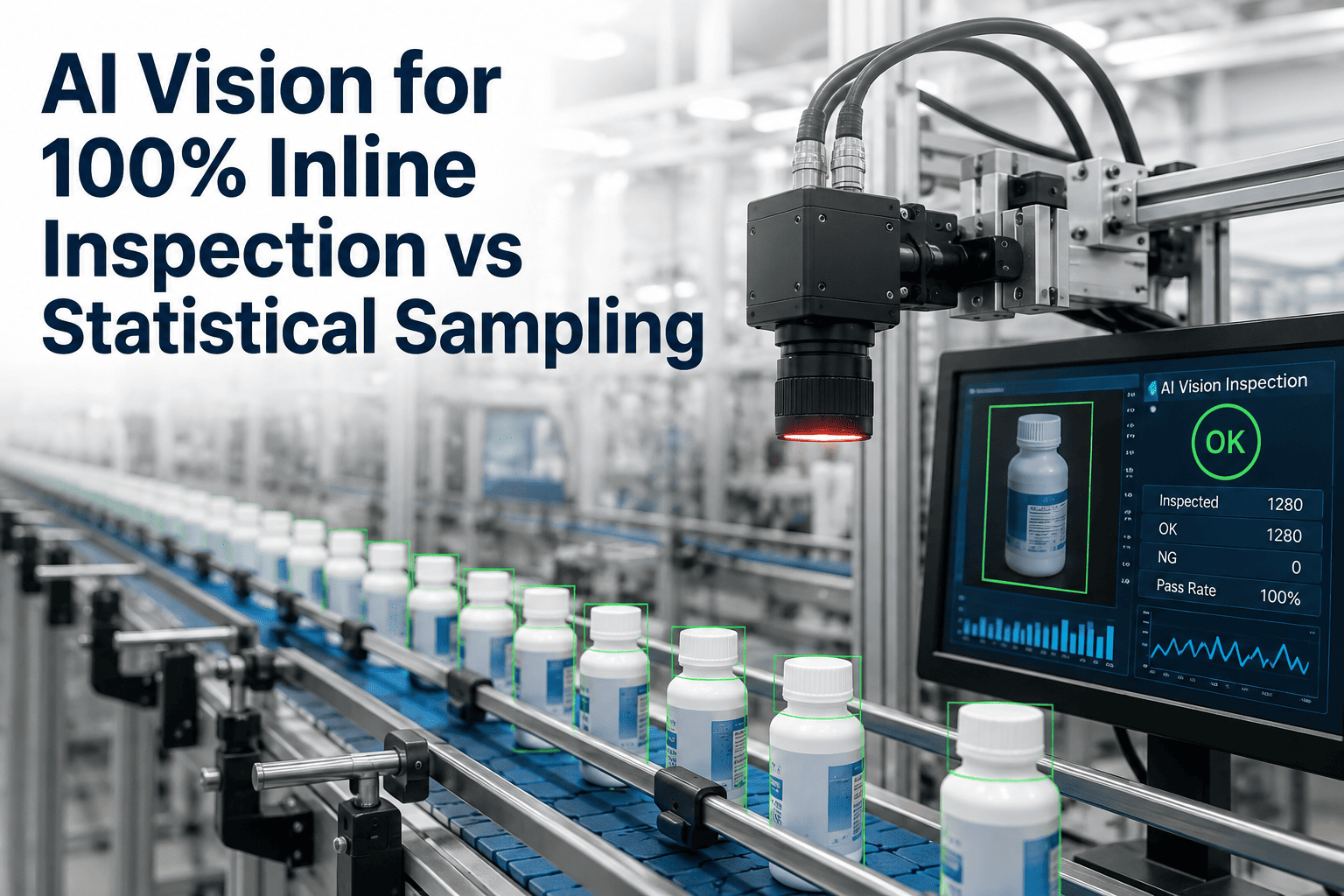
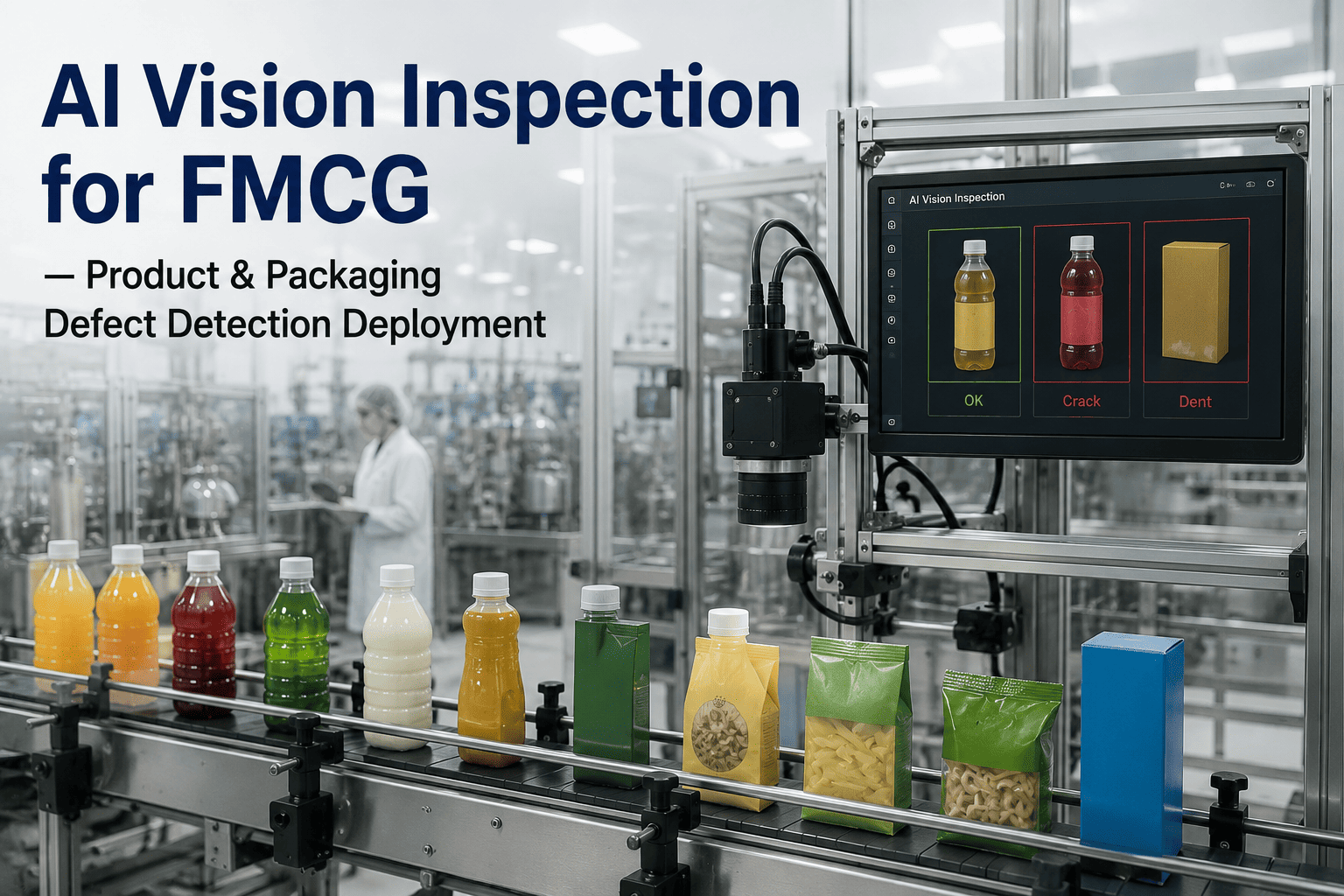
- Cement packing lines run at speeds of 1,200 to 3,600 bags per hour — a throughput rate that places every quality decision far beyond what human inspection can reliably sustain. At these speeds, a single tear in a polypropylene bag, a misaligned print that renders the batch number unreadable, a fill weight variance of 400 grams below the declared 50kg, or a spillage event that contaminates conveyor surfaces and adjacent bags represents a compounding quality failure that manual inspectors simply cannot intercept at line rate. The downstream consequences are not minor: underweight bags trigger regulatory penalties under weights and measures legislation in every market where cement is sold, torn bags generate customer complaints and construction site wastage that erode distributor trust over years, and print defects cause batch traceability failures that become compliance liabilities when product recalls are required. Yet the typical cement packing line quality program in 2026 still relies on a combination of operator visual checks, periodic spot-weight sampling at 1 in every 100 to 200 bags, and end-of-shift paper records that cannot identify when in the production run the defect pattern began or which upstream parameter change caused it. iFactory's AI vision camera platform replaces this sampling-based, fatigue-limited quality program with 100 percent inline inspection at full line speed — detecting torn bags, underweight packs, print defects, label misplacements, seam failures, and spillage events in real time, with automated reject signals and structured digital records that connect every defect event to the production batch, line speed, and packer head responsible.
Detect Every Torn Bag, Underweight Pack, and Print Defect at Full Packing Line Speed
iFactory's AI vision camera platform delivers 100% inline inspection on cement packing lines — catching torn bags, weight anomalies, misprints, seam failures, and spillage events in real time, with automated reject signals and digital batch records that satisfy weights and measures compliance requirements.
Why Cement Packing Line Quality Cannot Be Solved by Sampling — and How AI Vision Changes the Equation
Spot-weight sampling at 1 in 100 bags provides statistical confidence across a population — but it cannot protect the 99 bags between samples from a packer head calibration drift that began three minutes ago. AI vision inspection at 100% coverage closes this detection gap permanently, catching every defect at the moment it is produced. Book a Demo to see iFactory's cement packing line inspection platform in a live production configuration.
Six Packing Line Defects That AI Vision Catches — and Manual Inspection Misses at Line Speed
At 2,400 bags per hour, a human inspector has 1.5 seconds to observe, evaluate, and act on each bag passing the inspection point — while simultaneously monitoring the conveyor, communicating with packer operators, and maintaining alertness through a four to eight hour shift. The physics of this task make consistent 100% defect detection impossible. iFactory's AI Vision Camera platform processes every bag in under 20 milliseconds — faster than a human blink — with consistent classification accuracy that does not degrade between the first bag of the shift and the last. You can Book a Demo to see detection accuracy data across all six defect classes on your specific bag format and line speed.
Torn and Punctured Bags
Bag tears from filling spout contact, conveyor snags, or polypropylene material defects release cement dust that contaminates adjacent bags, creates housekeeping and health hazards, and generates immediate customer complaints. AI vision detects tears as small as 2mm on bag surfaces and seams at full conveyor speed — triggering automatic divert before the bag reaches palletisation.
Underweight and Overweight Packs
Packer head wear, pneumatic system pressure drift, and material flow irregularities create fill weight variances that exceed declared weight tolerances — exposing the manufacturer to regulatory enforcement under weights and measures legislation. AI vision correlates bag geometry and surface profile analysis with integrated checkweigher data to flag weight anomalies and identify which packer head is drifting before the violation becomes systematic.
Print Defects and Misprints
Ink starvation, printhead fouling, misregistration, and smearing produce batch numbers, expiry dates, and brand text that are illegible or absent — creating batch traceability failures that become serious compliance liabilities when product withdrawal is required. AI vision reads and verifies every printed field on every bag against the expected template, flagging any deviation in character clarity, position, or content before the bag leaves the line.
Seam and Valve Closure Failures
Inadequate valve folding, incomplete top seam heat sealing, or misaligned pinch seals create bag closure failures that allow moisture ingress during storage and transport — compromising cement quality before the product reaches the end user. AI vision inspects seam geometry and closure integrity on every bag, detecting the incomplete fold patterns and misaligned closures that cause field complaints weeks after the product left the plant.
Label Misplacement and Missing Labels
Label applicator malfunctions, adhesive failures, and registration drift produce bags with displaced, skewed, or absent labels — creating brand presentation failures and regulatory compliance gaps in markets where label placement is specified by packaging regulation. AI vision verifies label presence, position, and orientation on every bag, triggering reject and applicator alert signals at the first occurrence of misplacement rather than after a run of non-conforming product.
Spillage and Line Contamination Events
Burst bags, overfill events, and valve spill accumulation deposit loose cement on conveyor surfaces, adjacent bags, and palletising equipment — creating product cross-contamination, housekeeping costs, and conveyor damage that accelerates belt wear. AI vision monitors the full conveyor surface for spillage accumulation in real time, generating housekeeping alerts before contamination spreads to adjacent bags and triggering maintenance notifications when spill frequency indicates a packer head mechanical problem.
Sampling-Based vs. AI Vision 100% Inspection: Packing Line Quality Performance Benchmark
The following benchmark compares packing line quality performance for cement plants operating manual spot-check inspection programmes against facilities with iFactory AI vision 100% inline inspection deployed. Performance data reflects operational outcomes across cement packing line deployments at single and multi-line production sites. Book a Demo to see where your facility sits against these benchmarks.
| Quality Metric | Manual / Spot-Check Inspection | iFactory AI Vision — 100% Inspection | Improvement |
|---|---|---|---|
| Bag Defect Detection Rate | 60–70% (fatigue-dependent) | 95–99% consistent | 38% detection gap closed |
| Inspection Coverage Per Shift | 0.5–1% sampled units | 100% of all bags produced | Full inline coverage |
| Underweight Bag Escape Rate | 3–8 bags per 1,000 to customer | <0.1 bags per 1,000 | ~97% reduction |
| Print Defect Detection | Manual visual check — intermittent | 100% character-level OCR verification | Zero batch traceability gaps |
| Customer Complaint Rate | Industry average 0.8–1.4% | 0.06–0.12% post-deployment | ~90% complaint reduction |
| Packing Waste (Defective Bags) | 0.4–0.8% of production rejected downstream | 0.05–0.1% inline rejection only | ~85% waste reduction |
| Batch Record Assembly Time | 2–4 hours manual compilation | Automatic — under 3 minutes | 96% time reduction |
iFactory AI Vision Camera: Four Detection Layers That Cover Every Packing Line Defect Class
iFactory's cement packing line inspection platform does not require line slowdowns, additional operators, or infrastructure replacement. The AI vision cameras mount above and alongside the existing conveyor, connect to your packing line control system via standard digital I/O or API, and begin generating inspection records from the first bag of the first production shift. Facilities that Book a Demo typically see defect escape rates measured and quantified for the first time within 48 hours of shadow mode activation.
High-Speed Bag Surface and Integrity Inspection
Line scan cameras mounted above the conveyor image every bag surface — top, sides, and seams — at full line speed, producing high-resolution images that iFactory's deep learning models analyse for tear patterns, punctures, seam failures, valve closure defects, and surface contamination from cement spillage. Detection events trigger reject signals to the automatic divert mechanism within 20 milliseconds — before the bag reaches the next conveyor section. Every detection event is logged with a bag image, defect classification, timestamp, and production batch reference.
Print and Label Verification — OCR and Barcode Reading
A dedicated camera station positioned after the print and label application point captures every bag's printed content and label placement for OCR verification against the expected batch template. Batch number, production date, grade specification text, and regulatory declarations are verified character by character. Barcode and QR code readability are confirmed at line speed. Any bag with a print defect, missing field, misregistered label, or barcode read failure is flagged and diverted automatically — eliminating batch traceability gaps from the production record before they become compliance liabilities.
Weight Anomaly Detection — Vision-Correlated Checkweigher Integration
iFactory's AI vision system integrates with existing inline checkweigher data via API, correlating weight measurements with bag geometry and surface profile observations to identify packer head performance drift in real time. When a packer head begins producing systematically underweight fills — a pattern that develops gradually as head wear progresses — the AI identifies the drift from the weight trend signature across consecutive bags on that head and generates a maintenance alert before the variance exceeds the declared weight tolerance. This predictive weight drift detection prevents regulatory exposure and reduces the rework cost of discovering the problem after a complete pallet of underweight bags has been produced.
Spillage Monitoring and Conveyor Contamination Alerting
A wide-angle camera monitoring the full conveyor surface detects loose cement accumulation from burst bags, valve overfill events, and seam failures in real time — generating housekeeping alerts before spillage reaches adjacent bags or palletising equipment. Spillage frequency trend data identifies which packer head or conveyor section generates the most contamination events, giving maintenance teams the targeted information needed to address root causes rather than reacting to accumulated spillage after the shift. All spillage events are logged in the digital batch record, creating the documentation trail that quality managers need for continuous improvement analysis.
Deploy 100% Bag Inspection on Your Cement Packing Line — Without Slowing Production
iFactory's AI vision cameras mount on existing conveyor infrastructure and connect to your packing line control system via standard I/O — delivering full bag inspection coverage from day one without production line downtime during installation.
From Camera Installation to Full 100% Bag Inspection Coverage: iFactory's 4-Week Deployment
iFactory's cement packing line inspection deployment follows a structured four-week programme designed to validate detection accuracy before activating reject authority — building production team confidence in the system's decisions before any bag is automatically diverted without human review. Facilities completing the programme report defect escape rates measured and quantified for the first time, with average customer complaint reduction of 87% within the first three months of full operation.
Camera Installation and Line Integration
AI vision cameras are installed at the bag integrity inspection point, print verification station, and conveyor spillage monitoring position without requiring line shutdown. Camera positions are optimised for bag travel speed and conveyor geometry. Digital I/O connections to the existing reject mechanism and packing line PLC are completed. Checkweigher data integration is activated via the packing line SCADA API.
Model Training and Shadow Mode Activation
AI detection models are fine-tuned on your specific bag format, print template, and label placement specifications. The system enters shadow mode — running 100% inspection and logging all detection events without activating the reject mechanism. Shadow mode outputs are reviewed daily against the bags that quality inspectors flag manually, establishing the detection accuracy baseline for each defect class before reject authority is granted.
Live Inspection with Supervised Reject Activation
Automatic reject signals are activated for the defect classes validated in shadow mode — typically torn bags and print defects first, with weight anomaly alerting following. The first week of live rejection includes operator review of every diverted bag to confirm classification accuracy. Override events are logged and reviewed as part of continuous model improvement. Batch records begin accumulating in the quality database, generating the first production quality trend data the facility has had from 100% inspection coverage.
Full Autonomous Operation and Reporting Active
All defect classes are operating under full autonomous reject authority. Automated production quality reports are generated per shift, per packer head, and per batch — providing quality managers with the defect frequency, root cause attribution, and trend data needed for continuous improvement prioritisation. Packer head performance dashboards show weight drift trends per head, maintenance alerts are integrated with the plant CMMS, and customer-facing batch certificates are generated automatically from inspection records.
"Before iFactory, we were relying on two inspectors per shift doing spot checks at roughly 1 in every 150 bags. Our customer complaint rate was sitting at 1.1% — mostly torn bags and underweight packs that we had no visibility on until the distributor called. Within six weeks of deploying iFactory's AI cameras, our complaint rate dropped to 0.09%. We caught 847 defective bags in the first month that would have shipped under our old programme. The ROI was clear before we even finished the first quarter."
Sampling Cannot Protect Every Bag — Only 100% AI Vision Inspection Can
The structural problem with spot-check inspection on cement packing lines is not operator incompetence or management indifference — it is the physics of the task. At 2,400 bags per hour, sampling-based quality control will always miss the torn bag that runs for 40 seconds between samples, the packer head that drifted underweight on the 73 bags between checkweigher readings, and the printhead that fouled on 120 consecutive bags before an inspector walked past the station. These are not edge cases — they are the normal defect patterns of high-speed packing operations, and they generate the customer complaints, regulatory exposure, and production waste that erode cement manufacturers' margins and distributor relationships year after year. iFactory's AI vision platform eliminates this structural gap by making 100% inspection at full line speed the standard operating condition of the packing line — not an aspiration that requires additional headcount to pursue. Every bag that leaves the line has been inspected. Every defect that crossed the detection threshold has been rejected. Every production event is documented. Facilities ready to replace their spot-check quality programme with AI-driven 100% inspection should Book a Demo to see how iFactory integrates with their specific bag format, print specification, and line speed configuration.
Frequently Asked Questions
Q: What types of cement bag defects can iFactory's AI vision system detect?
iFactory's packing line inspection platform detects torn bags and punctures at defect sizes from 2mm upward, seam and valve closure failures, underweight and overweight bags through checkweigher data integration, print defects and missing printed fields via OCR verification, label misplacement and absence, and conveyor spillage accumulation from burst bags and overfill events. All six defect classes are covered simultaneously on the same camera infrastructure — no separate system or additional station is required for each defect type.
Q: At what line speed can iFactory's AI vision system maintain 100% bag inspection accuracy?
iFactory's cement packing line configurations maintain 95 to 99 percent detection accuracy at line speeds from 600 to 4,000 bags per hour — covering the full range of rotary packer and open mouth packer throughput rates deployed in cement production. The specific camera frame rate and trigger configuration is determined during the site assessment to match the exact bag travel speed and conveyor geometry of each installation, ensuring that no bag passes the inspection point faster than the imaging system's capture capability.
Q: How does iFactory detect underweight bags if AI cameras cannot physically weigh a bag?
iFactory integrates with the existing inline checkweigher system on the packing line via API or data bus connection, receiving real-time weight measurements that are combined with the AI vision inspection record for each bag. This integration enables two complementary capabilities: automatic reject confirmation for bags flagged as underweight by the checkweigher, and packer head weight drift trend analysis that identifies which head is drifting before the variance exceeds the regulatory tolerance — giving maintenance teams advance warning to calibrate the head before a systematic underweight event generates a regulatory compliance issue.
Q: Can iFactory's AI vision system operate in the dusty environment of a cement packing line?
Yes — iFactory's camera housings for cement packing line applications use positive-pressure purge air systems that prevent cement dust ingress into the optical path, maintaining imaging clarity in the high-dust environment typical of bag filling and conveyor operations. The AI detection models are trained on image data collected in cement plant conditions — including dust-degraded visibility, variable ambient lighting, and the surface texture variation of polypropylene and paper cement bags — so detection accuracy is validated for real operating conditions rather than clean laboratory environments.
Q: What documentation does iFactory generate for weights and measures compliance and customer batch records?
iFactory automatically generates a per-batch inspection certificate for every production run, containing the total bag count inspected, the number of bags rejected by defect category, the weight distribution statistics from checkweigher integration, print verification pass rate, and the timestamp range of the batch. These certificates are exportable in standard formats compatible with quality management system submission, weights and measures authority record-keeping requirements, and customer portal upload specifications. Every individual bag rejection event is also stored with the bag image, defect classification, and production reference — enabling forensic investigation of any customer complaint within minutes rather than days.
Q: What ROI timeline should cement manufacturers expect from AI vision packing line inspection deployment?
Cement manufacturers typically achieve measurable payback from AI vision packing line inspection within three to six months of full deployment through the combination of reduced customer complaint handling costs, avoided regulatory penalties from underweight bag escapes, reduced production waste from earlier defect detection, and inspection labour reallocation from manual spot-checking to higher-value quality activities. A single avoided regulatory penalty from systematic underweight bag distribution frequently covers a significant fraction of system deployment cost. Facilities with high complaint rates from torn bags or print defects in premium distribution channels often achieve payback within the first two months of live operation from complaint reduction alone.
Replace Spot-Check Sampling with 100% AI Vision Inspection on Your Cement Packing Line
Speak with an iFactory cement inspection specialist today. Get a site-specific assessment of your packing line defect exposure and a clear deployment plan — no obligation, no production line disruption.