Foreign object contamination in food processing carries consequences that reach far beyond the production line where the event occurs. A single fragment of plastic, rubber, glass, or bone that passes uninspected through a packaging line and reaches a consumer can trigger a regulatory recall, initiate an FDA investigation, generate class-action litigation, and permanently damage a brand that took decades to build. The financial exposure from a major food contamination recall ranges from $10 million to over $100 million when production stoppage, product destruction, regulatory fines, legal costs, and brand recovery expenses are combined — and the reputational damage to retail shelf position and food service contracts frequently extends the economic impact well beyond the immediate event. Manual inspection at conveyor speeds of 100–400 items per minute is physiologically incapable of detecting contamination reliably — human visual detection rates for small foreign objects on fast-moving food lines are documented at below 60% even under controlled conditions, and drop significantly with fatigue, lighting variation, and product appearance complexity. iFactory's AI vision camera platform applies deep learning anomaly detection models to food line inspection — identifying foreign objects by shape, surface texture, colour signature, and material profile in real time, at full line speed, with detection accuracy that exceeds human inspection under all operating conditions. Food processors and contract manufacturers evaluating their current contamination control architecture regularly choose to Book a Demo to see how iFactory's vision anomaly detection maps to their specific product lines and contamination risk profile.
Why Foreign Object Detection in Food Processing Demands AI Vision
The regulatory and commercial pressure on food processors to eliminate foreign object contamination has intensified substantially since the implementation of the FDA Food Safety Modernization Act and the parallel strengthening of GFSI scheme requirements under BRC Global Standard Issue 9, SQF Edition 9, and IFS Food Version 8. These frameworks now require food manufacturers to implement preventive controls based on hazard analysis — not simply reactive inspection protocols — and to document the performance validation of every critical control point at which physical contamination hazards are addressed. Traditional metal detection systems, X-ray inspection, and manual visual inspection each address specific contamination categories with specific detection limitations: metal detectors miss non-metallic contaminants entirely; X-ray systems are effective for dense foreign objects but struggle with low-density plastics, rubber gasket fragments, and soft-tissue bone fragments in products with variable density profiles; manual inspection is inconsistent, unvalidated, and produces no digital evidence trail. AI vision anomaly detection fills the detection gaps that these legacy methods leave open — identifying foreign object categories that metal detection and X-ray consistently miss, providing 100% inspection coverage at line speed, and generating a timestamped detection record for every product unit inspected that satisfies the FSMA preventive controls documentation requirement. iFactory's AI vision camera platform is designed to complement rather than replace existing detection infrastructure, adding the high-sensitivity surface and anomaly detection layer that closes the residual risk profile that metal detection and X-ray alone cannot address.
Foreign Object Categories Detected by AI Vision on Food Processing Lines
| Foreign Object Category | Detection Mechanism | Products Most at Risk | Legacy Method Gap |
|---|---|---|---|
| Hard & Soft Plastics | Surface colour, geometry, and reflectance anomaly detection | Meat, poultry, produce, ready meals, dairy | Invisible to metal detection; low-density plastics missed by X-ray |
| Rubber & Gasket Fragments | Colour signature and texture profile classification | Meat processing, beverage lines, dairy | Undetectable by metal detection; X-ray limited at product interface |
| Glass Fragments | Surface reflectance anomaly and geometric edge detection | Sauce, condiment, canned, jarred products | X-ray detects dense glass; thin fragments and clear glass often missed |
| Bone & Cartilage Fragments | Texture and density contrast against product background | Poultry, red meat, fish, pâté, processed meats | Soft bone and cartilage below X-ray detection threshold in dense products |
| Wood Splinters & Pallet Debris | Linear geometry and wood texture pattern recognition | Fresh produce, grains, dried fruit, nuts | Non-metallic; low density for X-ray; not detectable by metal systems |
| Insect Fragments & Extraneous Biological Material | Shape anomaly and colour contrast classification | Grains, flour, dried ingredients, cereals | Too small for X-ray; no electromagnetic signature for metal detection |
iFactory's AI vision models are trained on contamination libraries built from real food processing line imagery — covering the full range of product appearances, line speeds, lighting conditions, and foreign object presentations found in operating food manufacturing environments. Detection thresholds are configurable per product SKU and contamination category, enabling separate sensitivity levels for high-consequence objects such as glass in baby food versus low-density plastic in ambient bakery products.
The Detection Gap That Metal Detection and X-Ray Leave Open
Metal detection and X-ray inspection are established food safety technologies with well-documented performance profiles — and well-documented limitations that AI vision is specifically positioned to address. Metal detection reliably identifies ferrous and non-ferrous metallic contaminants above a minimum detectable size that varies with product effect and aperture geometry, but provides zero detection capability for any non-metallic foreign object category. X-ray inspection detects dense foreign objects based on differential X-ray attenuation — effective for glass, stone, dense bone, and metal — but its performance degrades significantly for low-density contaminants including soft plastics (polyethylene, polypropylene), rubber, wood, cartilage, and biological fragments whose density is close to the product background. When these low-density contaminants are present inside high-density products — a rubber gasket fragment inside a ground meat product, a polypropylene cap shard inside a ready meal component — X-ray detection probability drops below reliable thresholds for contaminants under approximately 5 mm in their minimum dimension. AI vision anomaly detection works on a fundamentally different detection principle — surface appearance, shape, and material signature — that is orthogonal to the density-based mechanism of X-ray and the electromagnetic mechanism of metal detection. This means AI vision detects the foreign object categories that legacy systems miss, creating a complementary detection layer that closes the residual contamination risk without replacing infrastructure that is already performing its intended function. Book a Demo with iFactory's food industry engineering team to map the specific detection gap in your current CCP layout against iFactory's vision anomaly detection capabilities.
How iFactory's AI Vision Anomaly Detection Works on Food Lines
High-Speed Image Capture at Full Line Speed
iFactory's camera systems capture high-resolution imagery of product surfaces at conveyor speeds up to 400 items per minute, with frame synchronisation tied to the conveyor encoder to ensure consistent pixel resolution per product regardless of speed variation. Camera enclosures are IP69K-rated for the high-pressure washdown environments of food processing facilities, with food-grade materials throughout the inspection zone and hygienic design that satisfies EHEDG and 3-A Sanitary Standards for equipment in product contact zones.
Deep Learning Anomaly Classification in Real Time
Each captured image is processed through iFactory's deep learning anomaly detection model — trained on product-specific imagery from the same production environment to establish the normal appearance envelope for each SKU. Foreign objects create appearance deviations that the model classifies by type and severity against the normal product baseline, distinguishing genuine contamination events from natural product variation, sauce splatter, packaging reflection artefacts, and other non-contamination anomaly sources that cause false positives in simpler threshold-based systems.
Automated Reject Actuation Below 200 ms
When a contamination event is confirmed above the configured confidence threshold, the platform sends a digital output signal to the reject mechanism — air blast, pusher, or divert gate — within 200 milliseconds of detection, removing the contaminated product from the line before it reaches the downstream packing or sealing station. The reject timing is precisely synchronised to the conveyor position of the detected product using the encoder signal, ensuring that only the affected product is rejected without disturbing adjacent conforming items.
FSMA-Compliant Detection Records and Audit Trail
Every product unit inspected generates a log entry with inspection status, timestamp, and conveyor position. Every contamination detection event generates a full record — detection class, confidence score, annotated product image, reject action confirmation, and SKU reference — stored in an immutable, timestamped audit log that satisfies FSMA 21 CFR Part 117 preventive controls documentation requirements and provides the CCP performance evidence that GFSI scheme auditors require at every scheduled and unannounced audit.
Under FSMA 21 CFR Part 117, food manufacturers must establish, implement, and document preventive controls for every identified hazard that requires a preventive control — including physical hazards from foreign object contamination. The documentation requirement is not simply that a CCP exists; it is that the CCP's performance is monitored, its records are maintained, and corrective actions for out-of-control events are documented and verifiable. iFactory's platform generates this evidence automatically for every production run — inspection logs, detection event records, reject confirmation records, and line speed performance data — in a format that can be retrieved for any date range within seconds during a regulatory inspection or GFSI audit. For food manufacturers under BRC, SQF, IFS, or FSSC 22000 certification, iFactory's detection records satisfy the physical hazard monitoring documentation requirements of each scheme without additional manual recording. Teams building their FSMA compliance documentation architecture can Book a Demo to see how iFactory's audit trail output maps to their specific certification scheme requirements.
The Cost of a Food Recall: Why Prevention ROI Is Unambiguous
The financial case for AI vision foreign object detection is built on the asymmetry between prevention cost and recall cost. A food recall triggered by a consumer complaint about a foreign object contamination event initiates a sequence of costs that is difficult to bound at the outset: voluntary or mandatory product withdrawal from all distribution channels, production line shutdown pending investigation, product destruction and disposal costs, regulatory notification and cooperation costs, customer and retailer claims for inventory losses and operational disruption, legal costs from consumer injury claims, brand recovery advertising spend, and the often-permanent loss of shelf position at key retail accounts that switch to alternative suppliers during the disruption. The average direct cost of a food contamination recall in the United States is estimated at $10 million for a moderate-scale event, with major recalls involving injury claims, multi-state distribution, and high-profile retail accounts reaching $50–100 million in total economic exposure. Against this cost profile, the investment in AI vision detection — including camera hardware, edge compute, installation, and annual support — typically represents less than 2% of the avoided cost of a single significant recall event. The return on a detection investment that prevents one recall over a five-year deployment period is unambiguous regardless of facility size, product category, or production volume. Beyond the single-event financial case, AI vision detection generates continuous operational value through reduced waste from false-positive manual rejections, reduced labour cost in manual inspection roles, and the GFSI certification maintenance benefits that reduce the cost and time of third-party food safety audits.
Deployment Across Food Processing Environments and Product Categories
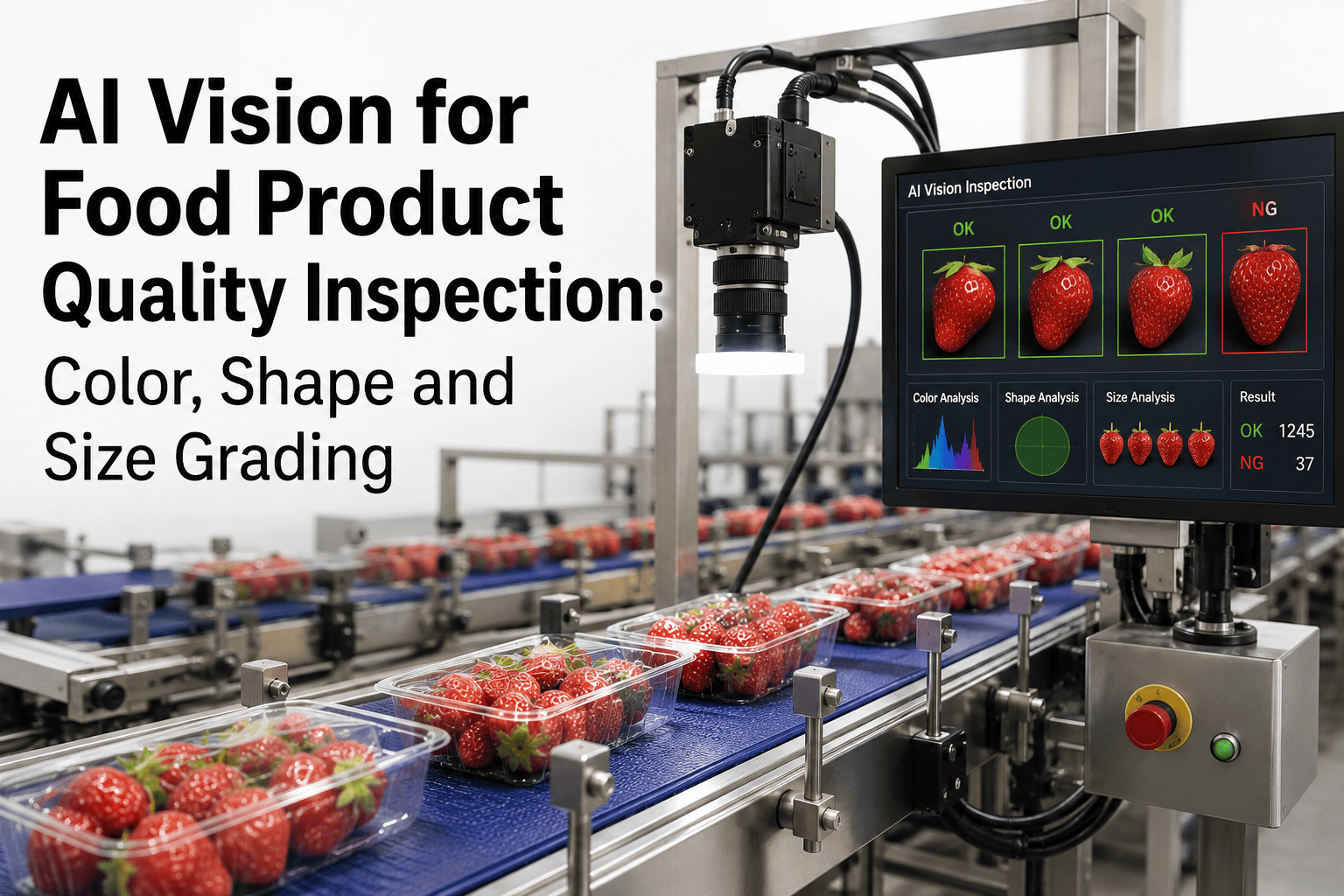
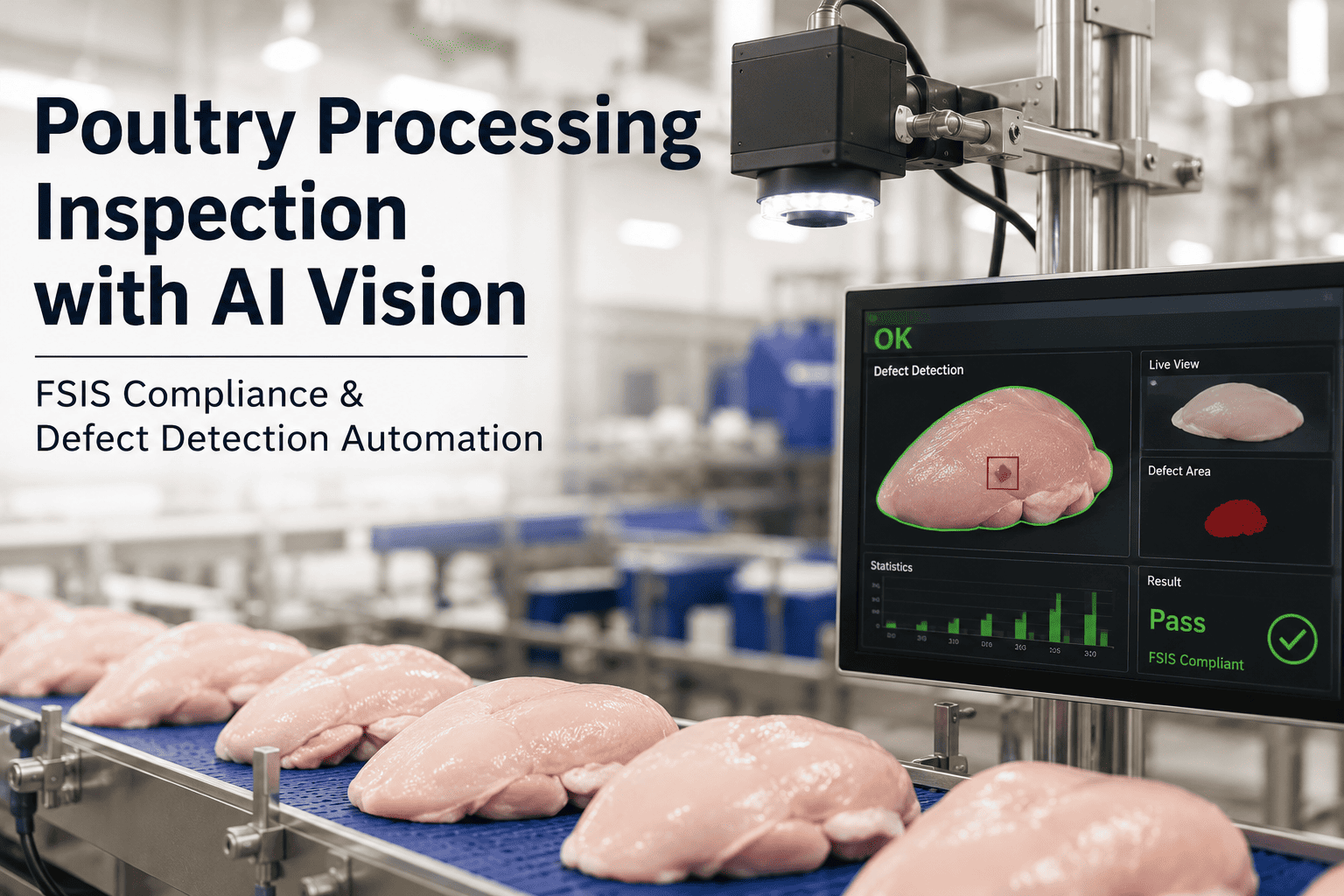
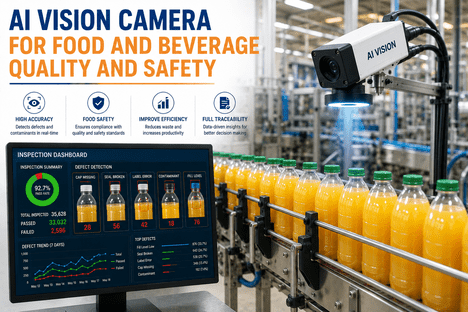
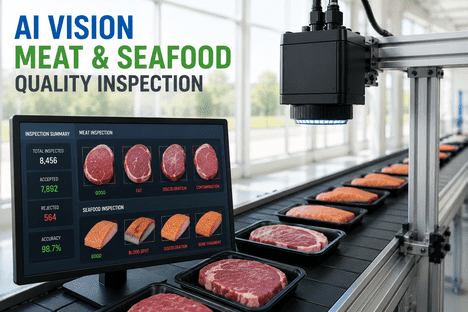
Foreign object detection requirements vary significantly across food product categories — in ways that affect both the inspection hardware configuration and the AI model calibration approach. For fresh and processed meat and poultry, the primary contamination risks are bone and cartilage fragments from the deboning process, rubber gasket fragments from processing equipment, and plastic film from packaging materials — each presenting a different appearance challenge against the variable colour and texture of raw protein products. For produce and fresh-cut products, wood splinter contamination from harvest equipment and pallet handling is a primary risk, alongside field debris and packaging material fragments. For bakery, snack, and ambient products, plastic and cardboard packaging material fragments are the most common contamination source, with the added challenge that product surfaces are often textured and variable in appearance in ways that require careful model calibration to avoid false positives on natural product variation. For beverages and liquid products, glass fragment detection during container filling and capping operations requires imaging solutions optimised for transparent and translucent product environments. iFactory's platform is configurable for each of these product categories with category-specific camera configurations, illumination geometries, and model variants that reflect the specific foreign object risk profile and product appearance characteristics of each production environment. Deployment begins with a site-specific risk assessment and product characterisation that ensures the detection architecture matches the actual contamination hazard profile — not a generic food inspection configuration that may under-perform on the specific product and contamination categories present at each facility.
Frequently Asked Questions: AI Vision for Food Foreign Object Detection
AI vision is primarily a complementary technology that closes the detection gap left by metal detection and X-ray for non-metallic, low-density foreign objects. Metal detection reliably identifies metallic contaminants but provides no capability for plastic, rubber, glass, wood, or biological fragments. X-ray detects dense foreign objects effectively but misses low-density plastics, soft rubber, cartilage, and thin glass. AI vision detects by surface appearance and shape — a completely different mechanism — that addresses precisely the categories these systems miss. For food manufacturers requiring a single inspection technology for a specific application, iFactory's team can assess whether vision alone covers the hazard profile, but in most HACCP/HARPC plans, the combination of complementary detection technologies provides the most defensible preventive control architecture for physical hazard categories.
Controlling false positive rates in food vision inspection is the primary calibration challenge, and it is where deep learning outperforms threshold-based vision systems decisively. iFactory's models learn the full appearance envelope of each SKU from product-specific training images captured on the actual production line — including the natural colour variation, surface texture range, shape variation, and sauce or glaze distribution patterns that characterise normal product. Foreign objects deviate from this learned normal envelope in ways that the model distinguishes from natural product variation with specificity that improves as the training dataset grows. During calibration, false positive rates are measured against the product appearance range and adjusted to the facility's acceptable threshold — typically below 1% for high-throughput lines where false positives carry significant waste cost.
AI vision cameras detect surface-visible foreign objects and objects that create a detectable surface signature — a shape protrusion, a colour contrast at the product surface, or a texture anomaly caused by an object beneath a thin product layer. Objects fully enclosed within opaque products with no surface expression are not detectable by visible-spectrum vision and require X-ray, metal detection, or acoustic inspection methods depending on the foreign object type. For products where internal contamination is the primary risk — whole muscle meat, solid block products — iFactory's engineering team assesses the inspection architecture against the specific hazard profile and recommends the combination of detection technologies that addresses both surface and internal contamination risks.
iFactory's platform generates four categories of compliance documentation automatically: production run inspection logs showing 100% product coverage with timestamps and line speed data; detection event records with foreign object class, confidence score, annotated image evidence, and reject action confirmation; system performance validation reports showing detection rate against reference test objects for each production run; and corrective action logs for out-of-control events where the detection system exceeds its configured alert thresholds. These records satisfy the monitoring, verification, and corrective action documentation requirements of FSMA 21 CFR Part 117, BRC Issue 9 Clause 4.10, SQF Edition 9 Module 11, IFS Food Version 8 Section 4.14, and FSSC 22000 Version 6 physical hazard control requirements. All records are timestamped, immutable, and retrievable by date range for any audit period.
Physical installation of the camera system, IP69K enclosures, lighting, and edge compute hardware is completed in 1–3 days depending on line configuration and integration scope. Model calibration — training the detection model on the specific product appearance and contamination risk profile at the site — runs over 2–4 weeks of production operation, during which the system collects product imagery under the full range of normal appearance variation. Validation testing against reference test objects embedded in representative product samples is conducted at the end of the calibration period to confirm detection rates meet the performance specification before the system is activated for CCP monitoring. Full validated deployment for FSMA preventive controls documentation is typically achieved within 4–6 weeks of installation.