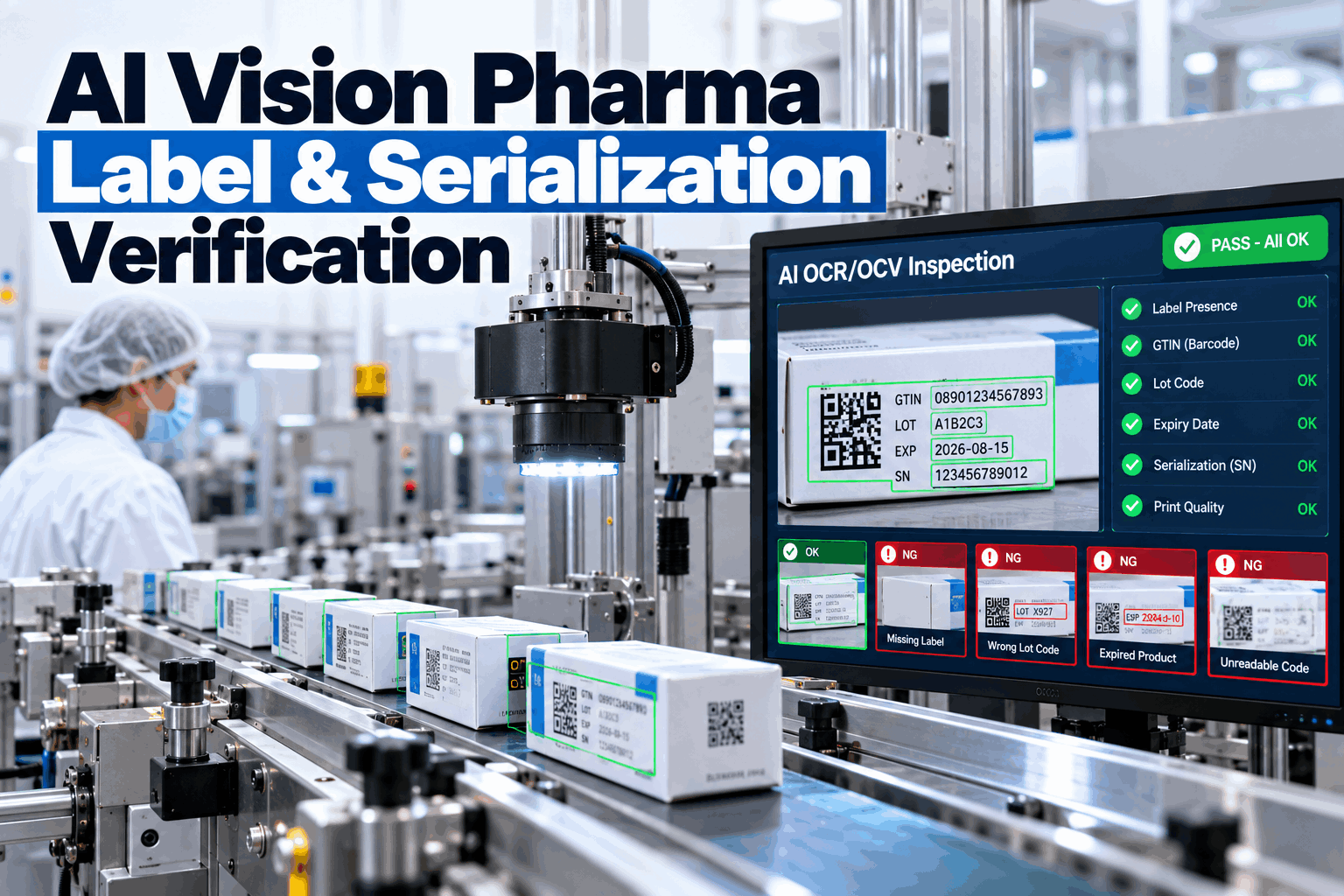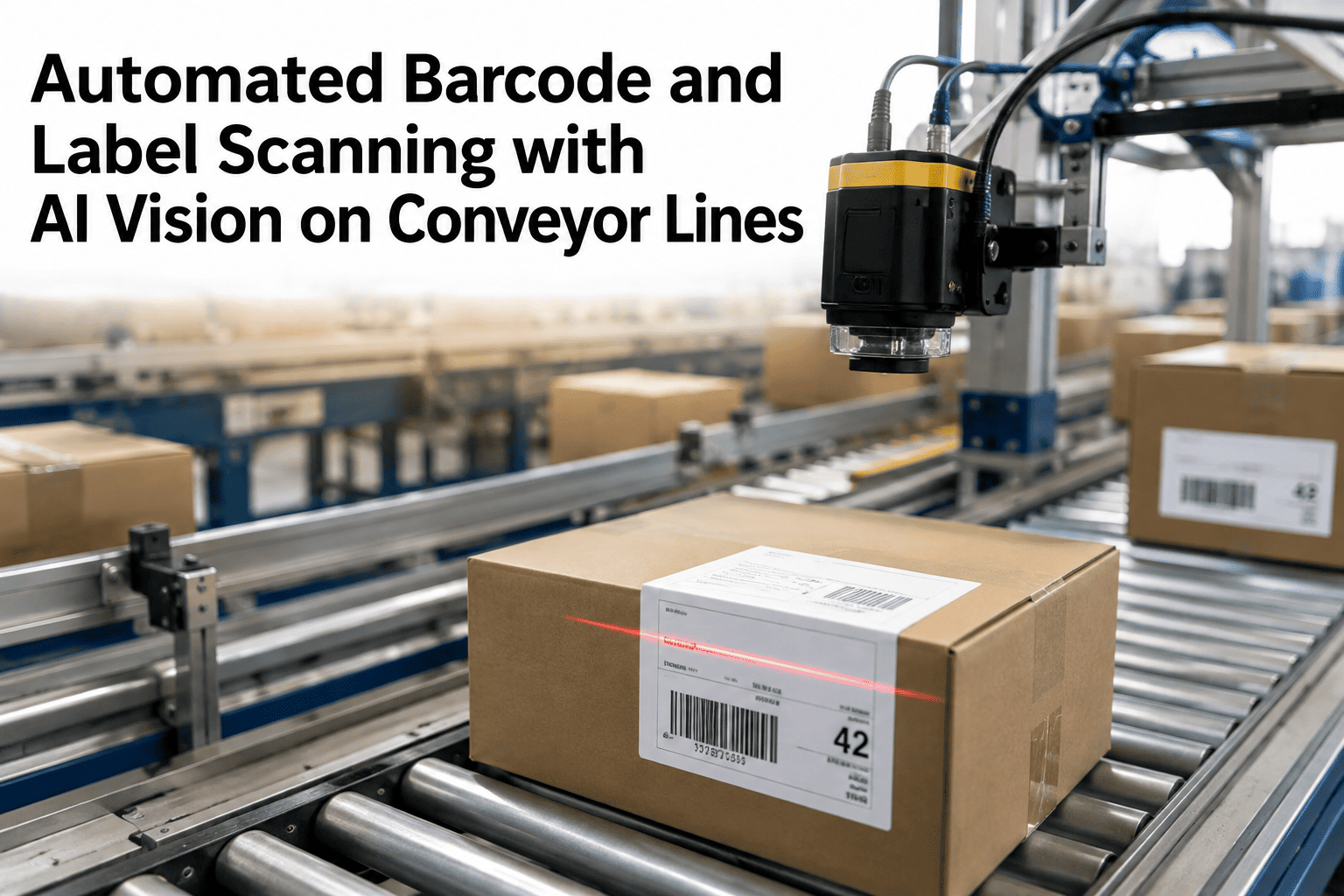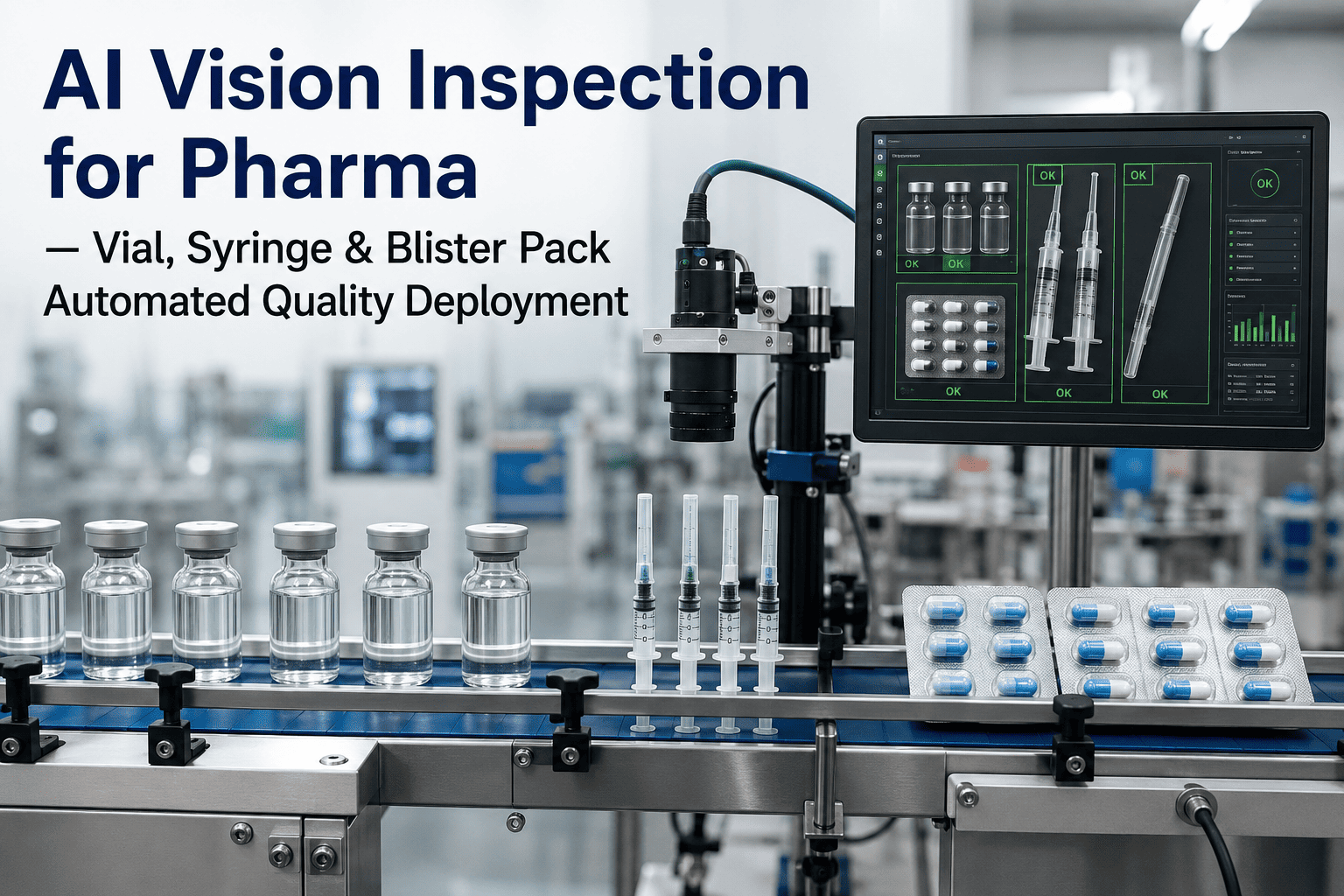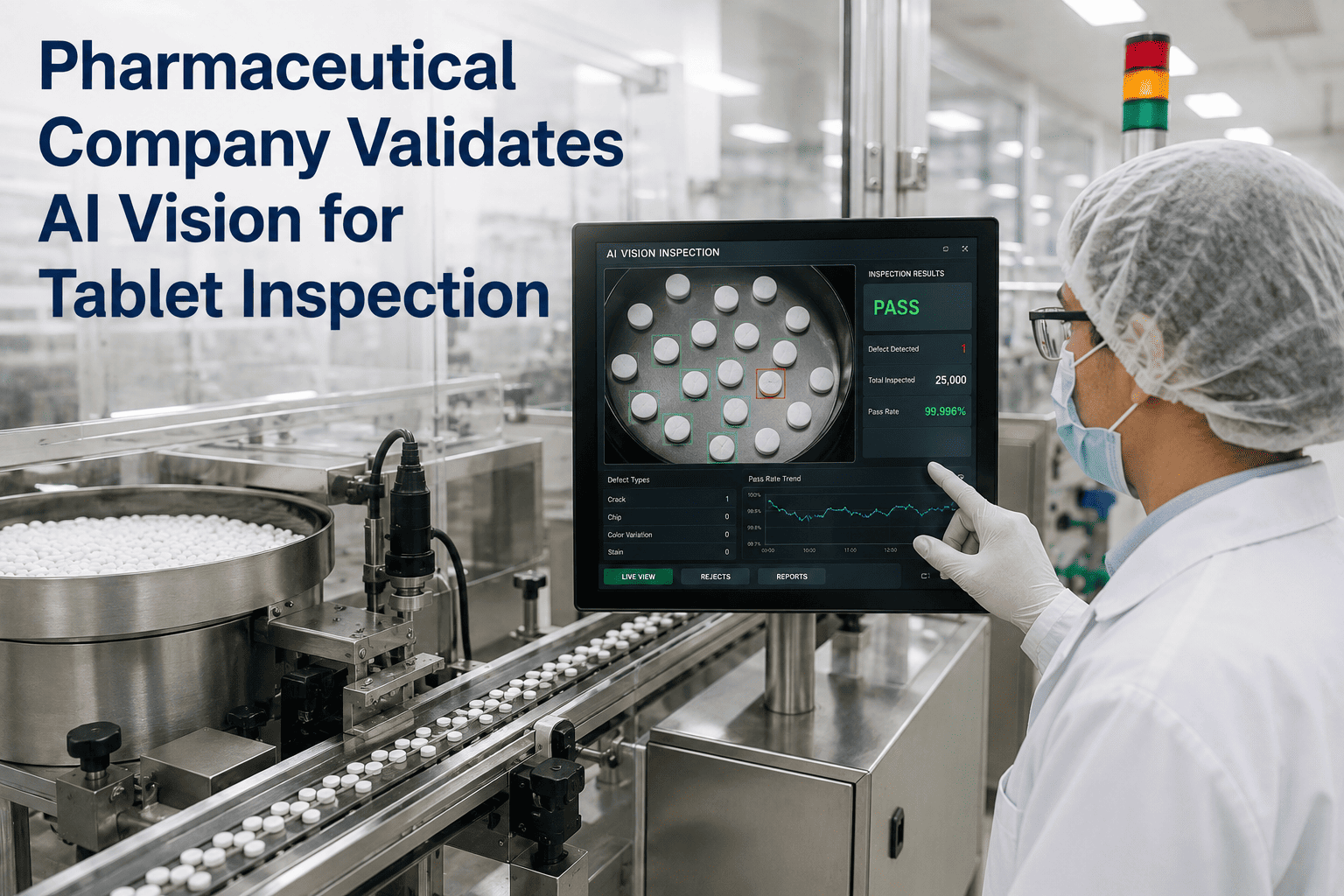
Pharmaceutical packaging lines operate under some of the most demanding labelling and serialization requirements in any regulated industry. A single misread lot code, an expired date printed incorrectly, or a missing serialized barcode can trigger a product recall, regulatory action, or supply chain disruption that costs manufacturers millions. Manual inspection cannot sustain the accuracy or throughput modern pharma lines demand. iFactory's AI vision system delivers automated label inspection, OCR-based text verification, and serialization checking directly at the packaging line — giving quality teams the real-time compliance confidence that manual checks and rule-based cameras have consistently failed to provide.
See iFactory's Pharma Label Inspection AI in Action
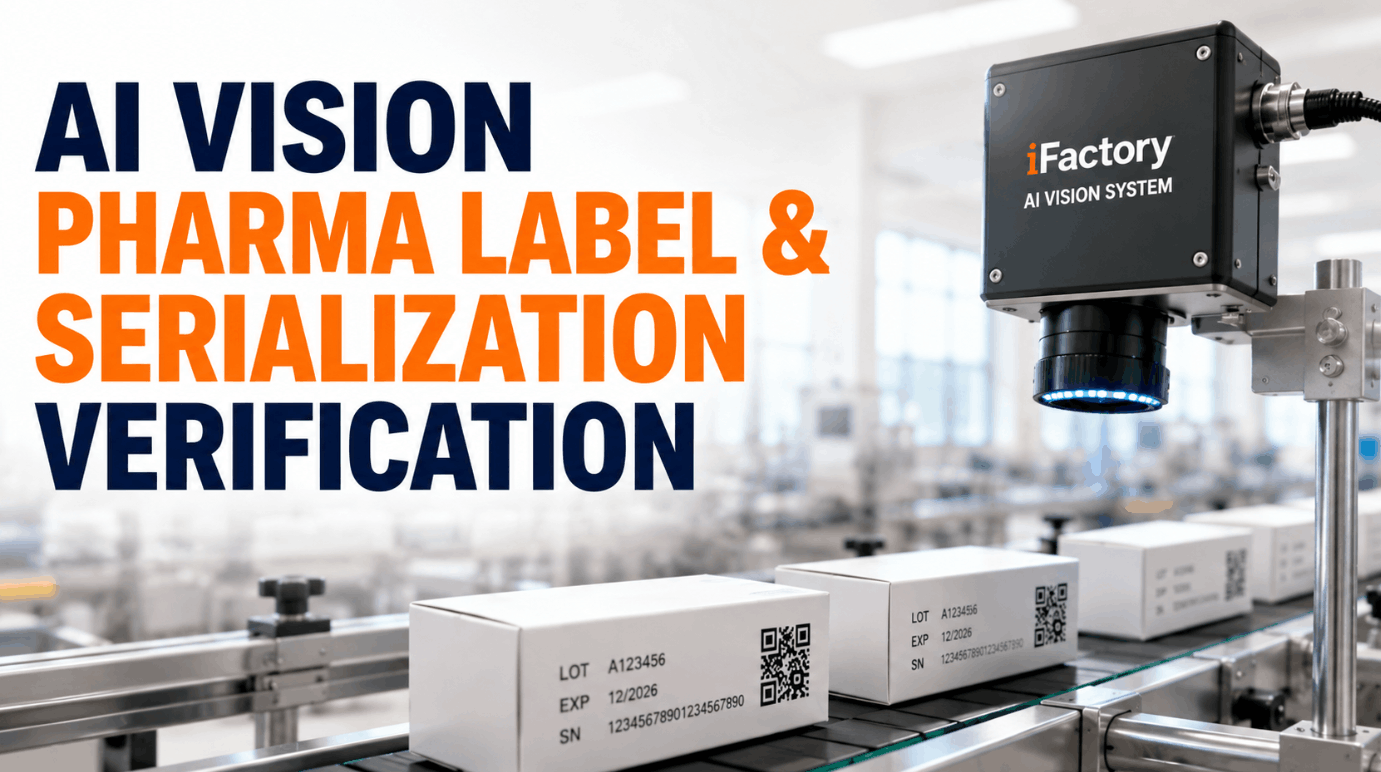
iFactory's edge-deployed AI vision system verifies labels, lot codes, expiry dates, and serialization barcodes in real time — directly integrated with your packaging line and CMMS workflows to close the loop between defect detection and corrective action.
Why Pharma Label and Serialization Verification Demands AI Vision
Regulatory frameworks including DSCSA in the United States, EU Falsified Medicines Directive serialization mandates, and country-specific track-and-trace requirements impose strict obligations on pharmaceutical manufacturers to verify every unit-level identifier at the point of packaging. Traditional inspection approaches — human checkers, static vision systems with fixed rule templates, and sample-based AQL inspection — introduce unacceptable error rates when operating at line speeds of hundreds of units per minute across multiple SKUs with variable label formats. AI vision systems trained on deep learning models resolve the core limitation of rule-based inspection: the inability to adapt to label variation, print quality inconsistency, and substrate differences without manual reprogramming. iFactory's Vision OCR Inspection applies production-optimised deep learning to read, verify, and classify label content and serialization data at full line speed with the accuracy and auditability pharmaceutical quality systems require.
Fixed OCR templates require separate programming per label variant. Font changes, print registration shifts, or substrate gloss differences cause frequent false rejects and missed real defects. Change management for new SKUs takes hours of engineering time.
iFactory's deep learning OCR reads product name, strength, dosage form, and regulatory text across label variants without reprogramming. The model learns from real production samples to handle font variation, angle, lighting, and substrate differences. New SKU onboarding requires training images, not engineering rework.
Conventional systems verify lot and expiry fields only at preconfigured coordinates. Label registration variance, multi-language label formats, and ink-jet print quality drops on high-speed lines cause consistent verification failures that operators learn to override.
iFactory's Vision OCR locates and reads lot codes and expiry dates regardless of label registration variance, verifies date format correctness and logical validity (no expired dates passing at time of packaging), and raises alerts when field content does not match production order parameters loaded from your ERP or CMMS.
Standard 1D/2D barcode grade readers verify symbol quality scores but do not validate serialized number content against track-and-trace databases, cannot detect duplicate serial numbers within a production run, and do not correlate barcode data with human-readable label text on the same unit.
iFactory's AI vision system decodes DataMatrix and GS1-128 barcodes, validates serial number format and uniqueness within the production run, cross-references with lot and expiry data on the same label surface, and outputs structured serialization records for DSCSA and EU FMD aggregation systems. Duplicate or malformed serial numbers are rejected at the unit before case aggregation.
Ready to replace rule-based label inspection with AI that adapts to your packaging reality? Book a Demo to see iFactory's Vision OCR Inspection running on pharmaceutical label and serialization verification.
6 Core Capabilities of iFactory's Vision OCR Inspection for Pharma Labels
OCR Label Text Verification
Core OCR FunctioniFactory's Vision OCR engine reads and verifies all human-readable text fields on pharmaceutical labels — product name, active ingredient, strength, dosage form, route of administration, manufacturer details, and regulatory warnings. Verification is performed against a master label template or production order data, with any deviation classified by type and severity and recorded with a timestamped image of the non-conforming unit. The system operates at full line speed without slowing packaging throughput.
Lot Code and Expiry Date Validation
Date & Batch IntegrityEvery unit passing through the iFactory inspection point has its lot number and expiry date extracted, parsed, and validated against production order parameters. The system checks that expiry dates fall within the permitted shelf-life range for the batch, that lot codes conform to the manufacturer's format specification, and that there is no mismatch between the lot printed on the label and the production run currently active. Units with out-of-range, malformed, or missing date or lot data are flagged and rejected before downstream packaging.
Serialization Barcode Decoding and Verification
Track-and-Trace ComplianceiFactory decodes GS1 DataMatrix, GS1-128, and 2D barcodes carrying GTIN, serial number, lot, and expiry date Application Identifiers at line speed. The decoded data is validated for format compliance, checked for duplicate serial numbers within the production run, and cross-referenced with the human-readable label content on the same unit surface to detect label-serialization mismatches. Structured output records are formatted for direct ingestion by DSCSA-compliant track-and-trace aggregation platforms and EU FMD verification systems.
OCV Print Quality Inspection
Print Defect DetectionBeyond content verification, iFactory's Optical Character Verification layer inspects the print quality of labels and direct-print serialization codes. Ink-jet missing character drops, smearing, low-contrast print, and partial characters are detected and classified even when the overall label appearance passes cursory visual inspection. OCV is particularly critical for ink-jet lot and expiry printing, where nozzle degradation progressively degrades readability before it becomes visible to line operators or fails standard barcode grade thresholds.
Label Presence, Placement and Orientation
Packaging CompletenessiFactory's vision system simultaneously verifies that labels are present on the correct face of the packaging unit, that placement is within tolerance for the container type, and that label orientation is correct for both primary and secondary packaging. Missing labels, skewed application, label lift or bubble formation, and wrong-label-on-wrong-container events are detected and rejected before cartonisation. Multi-label packaging (primary container plus outer carton insert) is supported with independent verification zones for each label surface.
Audit Trail and Compliance Reporting
GMP Data IntegrityEvery unit inspected by iFactory's Vision OCR system generates a structured inspection record containing the decoded label data, verification result, defect classification if applicable, timestamp, camera ID, and production order reference. These records are stored with complete audit trail integrity in compliance with 21 CFR Part 11 and EU GMP Annex 11 data integrity requirements. Batch summary reports and serialization manifests are available for regulatory submission, internal QA review, and customer-facing certificate of conformance generation without manual compilation.
Want to see how iFactory's OCV and OCR inspection integrates with your pharmaceutical packaging line? Book a Demo and our team will walk through your label complexity, line speed, and compliance requirements.
Compliance Standards iFactory's Pharma Label Inspection Supports
iFactory's serialization verification outputs structured EPCIS-compatible data for DSCSA unit-level traceability requirements, enabling pharmaceutical manufacturers and contract packagers to meet November 2023 and subsequent enforcement milestones without manual data transcription from line inspection records.
The EU Falsified Medicines Directive requires 2D DataMatrix barcodes carrying GTIN, serial number, batch number, and expiry date on all prescription medicines. iFactory verifies all four mandatory data elements in a single inspection pass and generates compliant verification records for submission to EU Hub-connected national repositories.
FDA GMP regulations require manufacturers to maintain effective controls to prevent label mix-ups and to verify that correct labels are applied to the correct products. iFactory's automated label verification system provides the documented, electronic verification records that satisfy 21 CFR 211.122 label control requirements with full data integrity and audit trail.
ICH Q10 emphasises continual improvement through systematic data collection and analysis. iFactory's structured inspection data — defect classification, frequency trends, lot-level quality summaries — provides the manufacturing intelligence needed to identify labelling process root causes and demonstrate sustained quality system performance to regulatory auditors across ICH member markets.
What Pharma Quality Leaders Say About AI Vision Label Inspection
"Label and serialization errors remain among the leading causes of pharmaceutical recalls globally, yet many manufacturers still rely on manual checks or static rule-based vision systems that were designed before deep learning changed what automated inspection could achieve. The shift to AI vision OCR systems — systems that read, interpret, and validate label content as a human quality reviewer would, but at machine speed and with full electronic traceability — is no longer an innovation investment. It is the baseline that regulators, customers, and internal quality assurance functions now expect to see in place on any high-throughput pharmaceutical packaging line. Manufacturers who have deployed production-grade AI vision inspection for label verification report consistent reductions in label-related deviations, faster batch release through reduced manual verification workload, and significantly stronger audit confidence when inspectors request evidence of label control effectiveness."
5 Steps to Deploying AI Vision Label Inspection on Your Pharma Packaging Line
Line Speed and Label Complexity Assessment
The first step is mapping your packaging line speed in units per minute, the number of active label variants in your current SKU portfolio, and the compliance requirements applicable to each market you supply. iFactory's deployment team uses this assessment to specify the correct camera configuration, resolution, and inspection zone layout for your line geometry. Lines running variable label formats across multiple packaging formats require a different camera and model configuration than dedicated single-SKU operations.
Label Image Dataset Collection and Model Training
iFactory's deep learning models are trained on labelled image datasets captured from your actual production samples — not generic pharmaceutical label images. This training phase teaches the model the specific fonts, layouts, colours, and print characteristics of your label portfolio, resulting in inspection accuracy that generic OCR engines cannot match. Training datasets for each label variant are built from good samples and representative defect examples, with the model validated against a holdout test set before production deployment.
Edge Deployment and PLC Integration
iFactory's AI vision system runs on edge hardware deployed directly at the inspection point, eliminating cloud latency for real-time rejection decisions. The system integrates with your packaging line PLC to trigger rejection mechanisms, communicate with your SCADA or MES for production order data, and push inspection results to your CMMS or quality management system. Edge deployment also ensures that serialization data never leaves your facility boundary, satisfying data residency requirements in markets with strict pharmaceutical data sovereignty regulations.
Validation and IQ/OQ/PQ Documentation
Pharmaceutical manufacturing environments require formal validation of new inspection systems against GMP requirements. iFactory supports the IQ/OQ/PQ validation lifecycle with documented installation qualification records, operational qualification test protocols covering detection sensitivity and specificity against defined defect categories, and performance qualification data from production runs demonstrating sustained inspection accuracy. Validation documentation is formatted to meet FDA and EU GMP audit expectations.
Continuous Model Improvement and SKU Expansion
Pharmaceutical packaging lines are not static. New SKUs, label redesigns, and supplier changes require inspection systems that can adapt without extended downtime. iFactory's model management platform allows quality engineers to add new label variants, update verification parameters when master labels change, and monitor model performance metrics over time. Continuous improvement is supported through structured review of inspection records, defect trend analysis, and periodic model retraining on new production samples to maintain accuracy as your label portfolio evolves.
Frequently Asked Questions
Deploy AI Vision Label and Serialization Inspection on Your Pharma Packaging Line
iFactory's Vision OCR Inspection system combines deep learning OCR, serialization barcode verification, print quality inspection, and GMP-compliant audit trail generation in a single edge-deployed platform. Meet DSCSA, EU FMD, and FDA label control requirements with real-time automated inspection that scales across your entire pharmaceutical packaging portfolio.