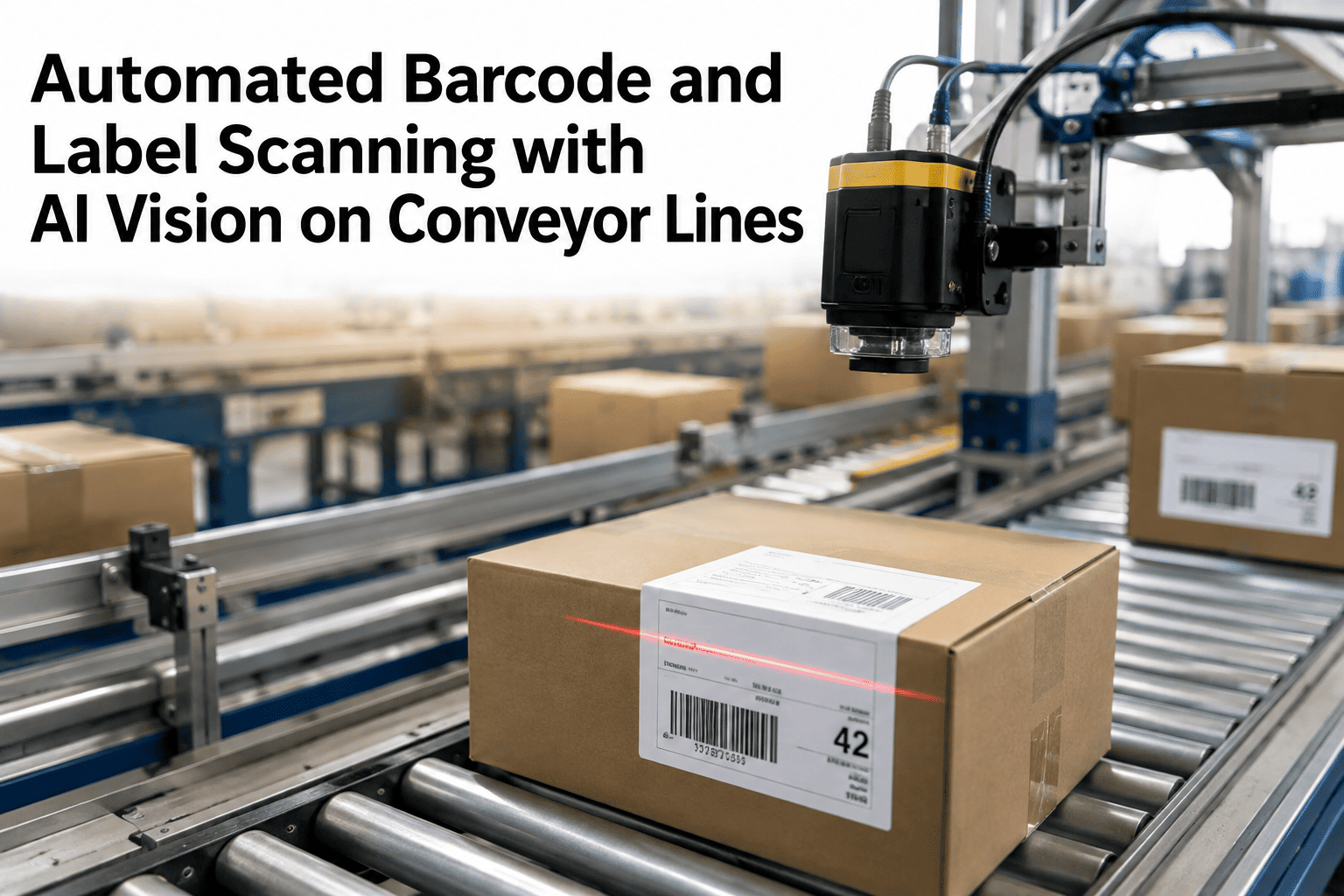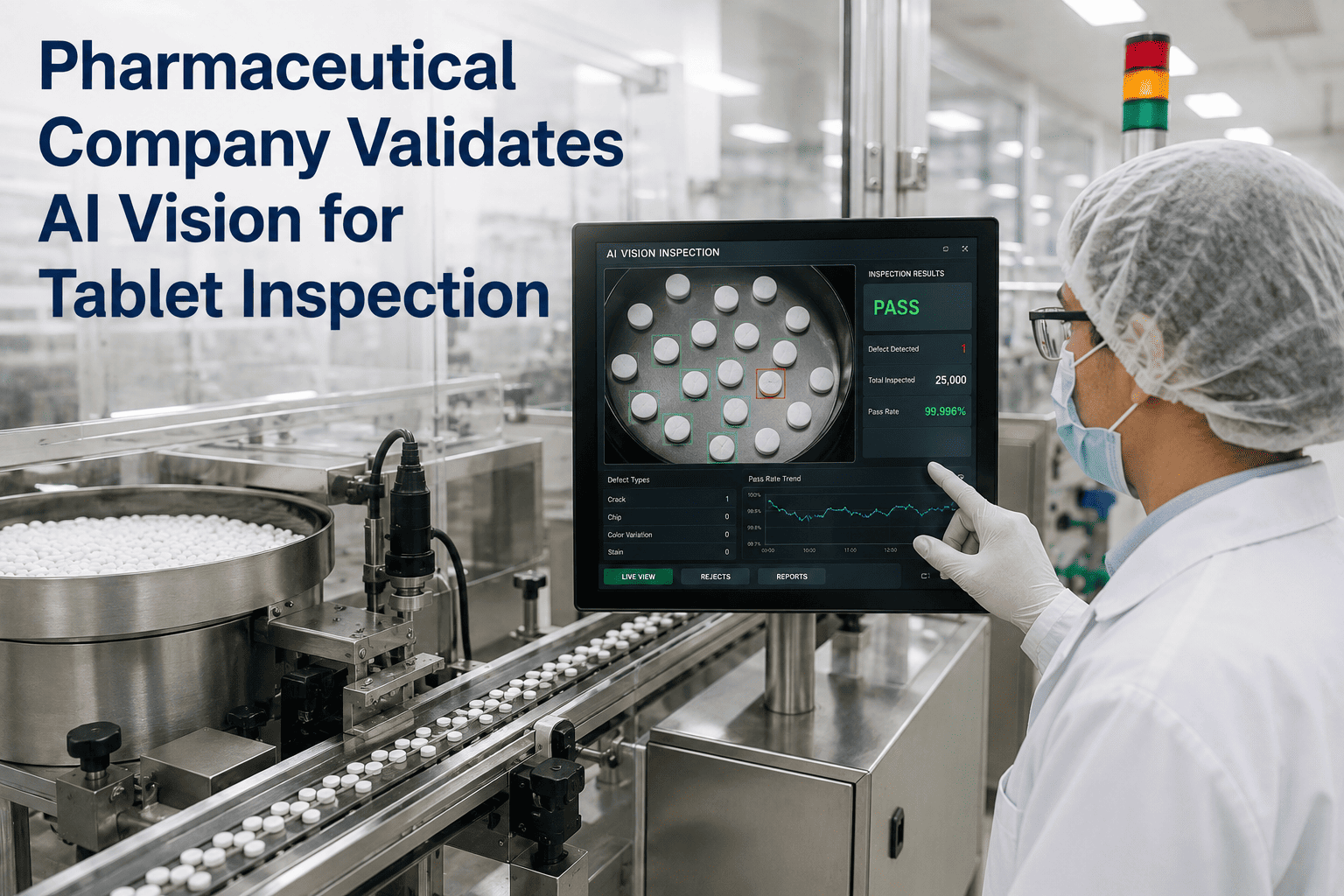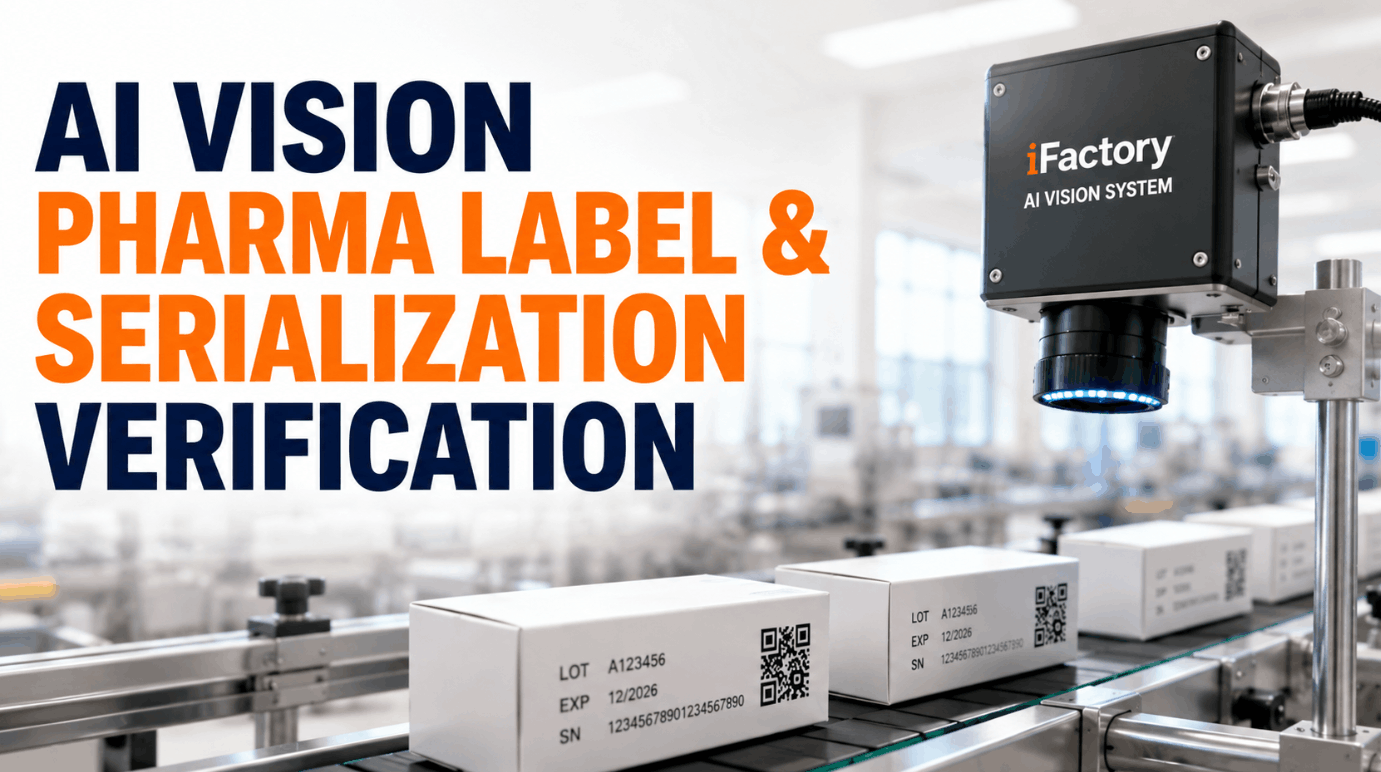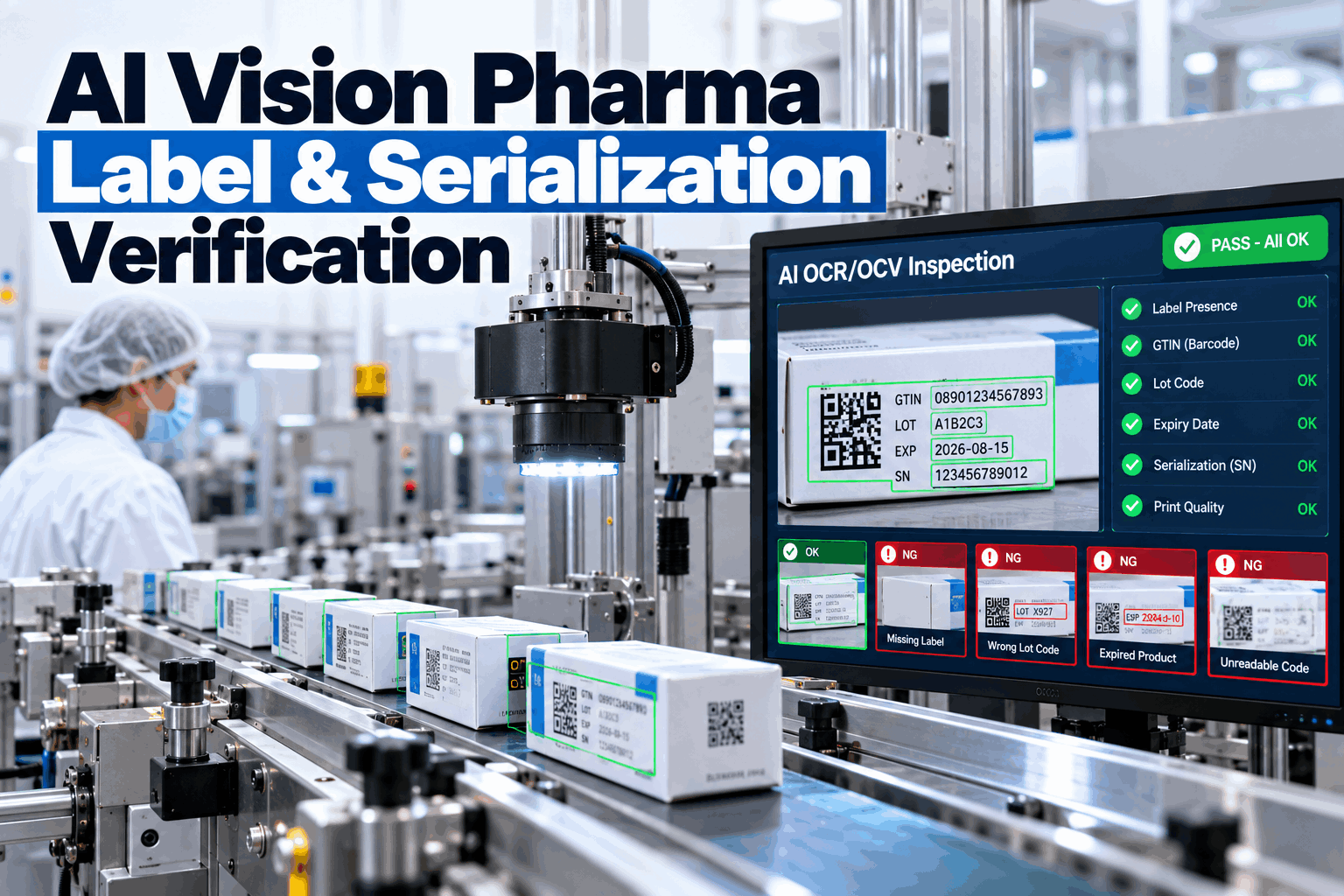
Every pharmaceutical pack has to carry the correct product code, a unique serial number, the right lot and expiry, and approved label text, and the 2D code has to scan cleanly wherever the pack goes next. A single wrong lot, duplicate serial or unreadable code can mean a rejected shipment, a recall or a gap in track-and-trace. AI vision checks every pack at line speed, which you can see in a short live demo.
Verify Every Label, Lot, Expiry and Serial Before the Pack Leaves the Line
iFactory Vision OCR Inspection reads and verifies printed text and 2D codes on every carton, bottle and blister. It grades code quality, rejects mismatches automatically and logs evidence for track-and-trace and batch release.
Four Data Elements, Two Forms, One Pack
Under the US DSCSA, each saleable unit carries a product identifier made up of the NDC, a serial number, the lot number and the expiration date. In the EU, the Falsified Medicines Directive's delegated regulation requires a product code, a serial number of up to 20 characters, a batch number and an expiry date. Both regimes encode the data in a 2D Data Matrix, usually with GS1 Application Identifiers, and require key elements to be printed in human-readable form as well. Every one of those fields has to be correct, readable and consistent with the others. Our support team can map these fields to your pack formats.
The GTIN, which carries the NDC in the US. It must match the product actually being packed.
Unique to each unit. A duplicate breaks traceability and gets flagged further down the supply chain.
Must match the batch record. A lot carried over after a changeover is a classic mix-up.
Must match the approved shelf life for the batch, in both the 2D code and the printed text.
Three Checks That Each Answer a Different Question
"Label inspection" covers three different jobs, and a packaging line needs all three. Reading the text is not the same as confirming it is correct, and a code that decodes today won't necessarily scan at a distributor's dock. Here is what each check does. If you want to see them run on your own cartons, book a sample test.
Optical character recognition reads printed text without knowing in advance what it should be. It is useful for capturing lot and expiry values into the record.
Optical character verification compares printed text with the expected values from the work order and the 2D code, and fails any character that doesn't match or is badly printed.
Code grading scores the Data Matrix against ISO/IEC 15415 for contrast, modulation, damage and other parameters. The EU rules presume compliance at grade 1.5 or above.
Variable data is printed by thermal transfer, inkjet or laser onto coated board, foil lidding, curved bottles and shrink sleeves. Glare, embossing and low contrast defeat rule-based OCR that has been tuned to one font on one substrate. Deep learning OCR is trained on your real print across these surfaces, so it reads reliably without constant retuning. OCV still makes the final call by comparing the result with the expected string.
The Label Failures That Lead to Rejects and Recalls
Most label errors on pharma lines are mix-ups, changeover mistakes and print-quality drift rather than exotic failures. FDA's packaging and labeling rules exist precisely to keep the right label on the right product with the right lot number. The matrix below shows the common failure modes and how a vision check catches each one at the line. Our validation team can help match it to your packaging lines.
See Serialization Checks Running at Line Speed
iFactory reads, verifies and grades every pack on an edge server beside the line. It rejects mismatches through the line PLC and gives operators a plain-language explanation of what went wrong.
Where Vision Fits in the Serialization Flow
Serialization is only as trustworthy as the check between printing a serial and recording it. A serial that was printed but never verified, or that was rejected but still reported, produces exactly the kind of data mismatch that trading partners and regulators flag. Vision is the gate that decides which serials become real. It also keeps the trace record and the physical packs in agreement, because the only serials ever commissioned are the ones a camera has confirmed on an actual pack. We can show this gate on your line in a working session.
The serialization system issues serials for the batch.
The code and text are printed on the pack.
AI vision reads, grades and matches every field.
Good serials are commissioned, and rejected ones are logged as void.
Packs are linked to cases and pallets and shared as trace events.
What Each Regulation Expects, and the Evidence Vision Provides
Vision inspection doesn't make a site compliant on its own, but it produces the objective, per-unit evidence that labeling controls, serialization rules and electronic record requirements all depend on. Our quality team can help align it with your existing procedures.
NDC, serial, lot and expiry in a 2D code plus human-readable text, with interoperable tracing between trading partners. FDA's remaining exemptions mainly cover small dispensers.
A Data Matrix carrying the product code, serial, batch and expiry, a print quality presumed compliant at ISO/IEC 15415 grade 1.5, and a tamper-evident device on the pack.
Procedures that keep the correct labels on the correct product, a lot number on every unit, and controls against label mix-ups, including electronic examination of labeling.
Inspection results used for batch release must be attributable, time-stamped, secure and auditable, with validated systems behind them.
Hardware, Software, Integration and Validation Support as One Package
iFactory delivers label and serialization vision as a turnkey bundle. A pre-configured NVIDIA AI server ships racked and ready with Vision OCR Inspection pre-loaded. You rack it, plug in power and Ethernet, and the AI is live. For regulated lines, the rollout includes the documentation your validation team needs. To scope your lines, request a turnkey quote.
- Pre-configured NVIDIA AI edge server, racked and ready
- Cameras and lighting for cartons, bottles and blisters
- Vision OCR Inspection software pre-loaded
- Cabling and plant network setup
- PLC/SCADA and serialization system integration
- Operator and quality team training
- 24×7 remote monitoring of models and hardware
Server and cameras installed, line connected, pack images captured across SKUs and substrates.
Models trained and run alongside existing checks, with challenge tests using known-bad packs.
Reject control enabled, validation evidence handed over and operators trained.
Manual Line Checks Compared With AI Vision on Every Pack
Many lines still rely on start-of-batch checks, periodic pulls and a second person signing off the label. Those checks remain important, but they are samples, and on a line running hundreds of packs a minute a wrong roll or a printer that was never reset can run for a long time between them. The comparison below shows what changes when every pack is verified. Our support team can explain how this fits with your existing line clearance.
- Label verified at batch start and at intervals
- Drift in print quality noticed only when a code fails to scan
- Duplicate serials found by downstream systems
- Paper sign-offs collected for batch release
- A mix-up can run until the next check
- Every label, code and text field verified
- Code grade trended so printheads are serviced in time
- Duplicate serials rejected before they are committed
- Audit-trailed results attached to the batch record
- A mix-up is stopped at the first wrong pack
Vision OCR Inspection Built for Regulated Packaging
iFactory's Vision OCR Inspection combines deep learning OCR, OCV, code grading and serial checks in one edge system, connected to your line controls and serialization software. You can see the full flow on sample packs in a short demo.
What Packaging, QA and Serialization Teams Ask
Release Batches With Every Pack Verified
Put AI vision on every carton, bottle and blister, confirm every lot, expiry and serial, grade every code, and attach the evidence to the batch record. The full system is delivered turnkey and goes live in 6 to 12 weeks.