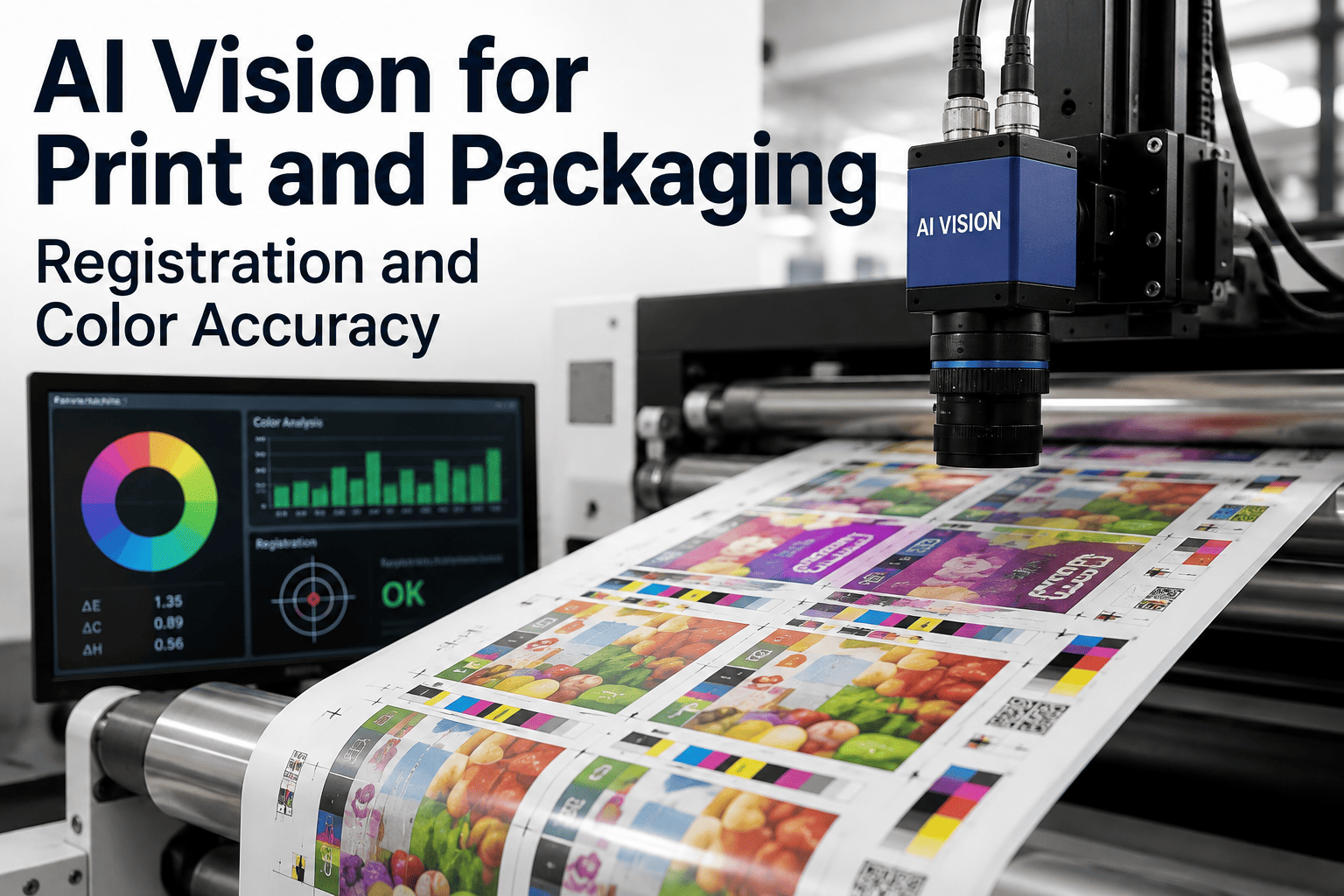
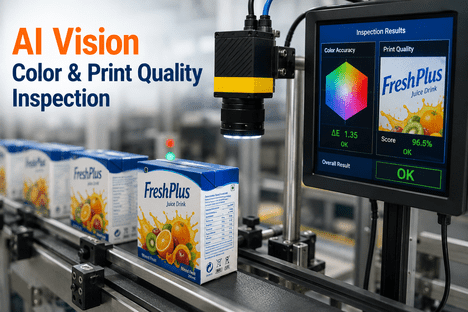
A packaging press does not slow down to let a defect be noticed. Registration drift, a color shift on a brand-critical hue, a barcode printed a fraction outside its safe zone — none of it stops the line, and none of it is visible to a human eye watching a web move at hundreds of feet per minute. By the time a spot check catches the problem, several thousand units have already rolled past the same station with the same flaw. iFactory adds AI vision inspection to print and packaging lines that checks registration, color, and print integrity on every single unit, at full press speed, without slowing the run.
Production QC · Print & Packaging
Catch Registration and Color Errors Before They Become a Pallet of Waste
AI-driven vision inspection reads every unit of printed packaging as it moves through the press, comparing it against the approved master and flagging registration, color, and defect deviations in real time — not after the run is finished.
Why This Costs More Than It Looks Like
The Numbers Behind a Print Defect Nobody Caught in Time
Print and packaging waste is rarely a dramatic failure. It is a slow color drift, a registration shift of a fraction of a millimeter, a barcode nudged out of its scan zone — each one small enough to pass a spot check and large enough to trigger a reject, a recall cost, or a lost shelf listing once it is caught downstream. The figures below, drawn from current packaging quality and defect-cost reporting, show why the cost of catching a defect keeps climbing the further it travels from the press, and why sampling a fraction of a run is no substitute for checking every unit that comes off it.
5–12%
Typical waste rate on packaging runs without a structured inline QC process
ΔE 3–6
Common color drift on brand-critical hues where the target tolerance is ΔE 2–3
80–95%
First-pass yield range on new SKUs across packaging sites, a wide and costly spread
$1.92B
Estimated direct recall expense tied to label and packaging errors across the US food industry in a recent year
6–9%
Waste rate plants commonly reach within 8–12 weeks after adopting inline defect monitoring
99%+
Accuracy achievable by AI-driven inline print inspection systems running at full production speed
Where the Cost Compounds
The Same Defect Gets More Expensive the Further It Travels
An error caught on the press costs a few feet of substrate. The same error caught after converting, palletizing, or shipping costs a rework crew, a delayed shipment, and sometimes a recall. This is the single strongest argument for inspecting every unit at the point of print, rather than sampling after the fact.
Caught at the press, before converting
Caught after converting, before palletizing
Caught after palletizing, before shipment
Caught on shelf or by a retailer
Inspection at the Point of Print
Every Unit Checked, Not Just the Ones Someone Happened to Sample
iFactory's vision inspection runs inline with the press, comparing every unit against the approved master for registration alignment, color accuracy, and print integrity before it ever reaches a converting station.
Three Defect Families
What AI Vision Is Actually Trained to Catch
Print defects on packaging fall into a handful of recurring patterns. Each one has a distinct visual signature, and each one is exactly the kind of subtle, fast-moving deviation that a human eye reliably misses on a run of any real length, especially once fatigue sets in over an eight or twelve hour shift.
Registration Drift
Cyan, magenta, yellow, and black plates shifting out of alignment, producing a shadow or halo effect around text and graphics. Frequently caused by cylinder or plate misalignment during high-speed runs.
Color Drift
Ink density instability that shifts a hue lighter or darker across a batch. Brand-critical colors are typically held to a tight tolerance, so even a small shift is enough to trigger a rejection.
Print Integrity Defects
Streaking, ghosting, dot-missing, and blurred or distorted text from pressure or plate wear. Especially critical where legibility of dosage or safety information is regulated, such as pharmaceutical packaging.
Barcode and Variable Data Errors
GS1 barcodes, date codes, and lot numbers printed outside their scan-safe zone or misaligned with the surrounding artwork, often traced back to inconsistent variable-data mapping upstream of the press.
How It Works on the Line
From Approved Master to Real-Time Flag, in Four Steps
AI print inspection is not a spot-check tool bolted onto the end of a run. It is a continuous comparison running against a known-good reference, synchronized to the actual speed of the press, so nothing rolls past uninspected and every unit carries its own verified pass or flag.
01
Master Reference Loaded
The approved artwork or a verified first-good sample is set as the reference standard the system checks every subsequent unit against.
02
Line-Speed Capture
Cameras mounted inline capture every unit as it passes, synchronized to web or sheet speed so resolution stays consistent regardless of run speed.
03
AI Comparison and Classification
Each captured unit is compared against the master and any deviation is classified by defect type and severity in real time, not after the batch is complete.
04
Alert, Mark, or Stop
Defects above the configured threshold trigger an operator alert, a physical reject mark, or an automatic press stop, with the image and timestamp logged for the QC record.
Why a Human Eye Cannot Catch This Alone
The Defect Was Never Invisible. It Was Just Too Fast.
Operators are not the reason defects slip through. A registration shift of a fraction of a millimeter or a color drift of a few ΔE units is genuinely difficult to see under production lighting, on a moving substrate, at the speed a modern press or converting line runs. A trained eye can catch a shift once it has grown large enough to be obvious — but by then, everything printed since the drift began is already out of spec. Spot checks compound the problem rather than solving it: sampling one unit in every few hundred means the units between samples are a guess, not a verified pass.
This is precisely the gap inline vision inspection closes. It does not replace the operator's judgment on the floor — it gives that operator a running, unit-by-unit verification they could never generate manually, freeing their attention for the setup and process decisions that actually need a human making the call, rather than the repetitive visual scanning that fatigues attention over a long shift.
Where This Delivers the Most Value
Production Environments Where Print Accuracy Is Non-Negotiable
Inline AI print inspection earns its cost fastest in production environments where a defect is expensive to miss — either because the packaging carries regulated information, or because the run volume means even a small waste percentage adds up to a large number of units.
Food and Beverage Packaging
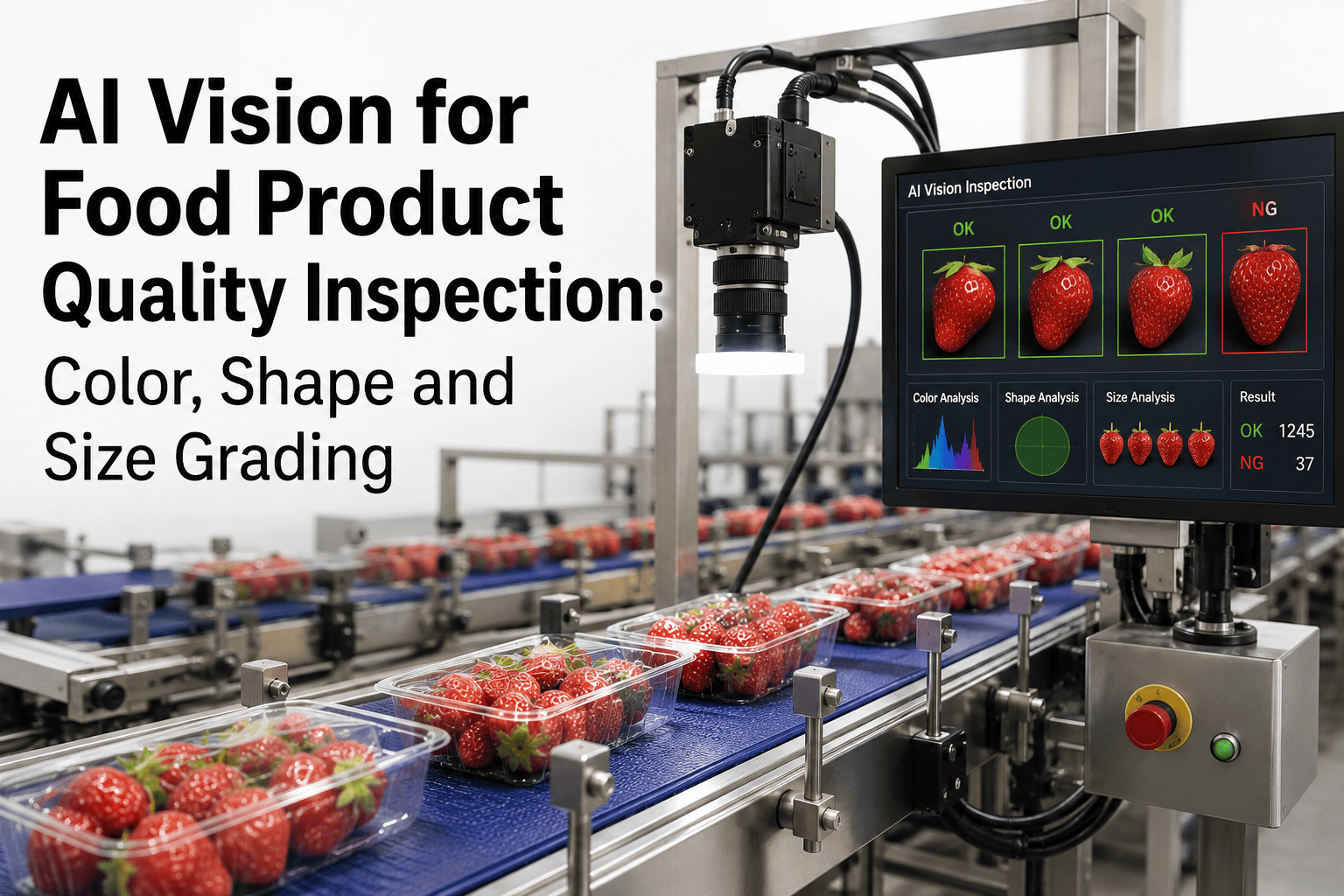
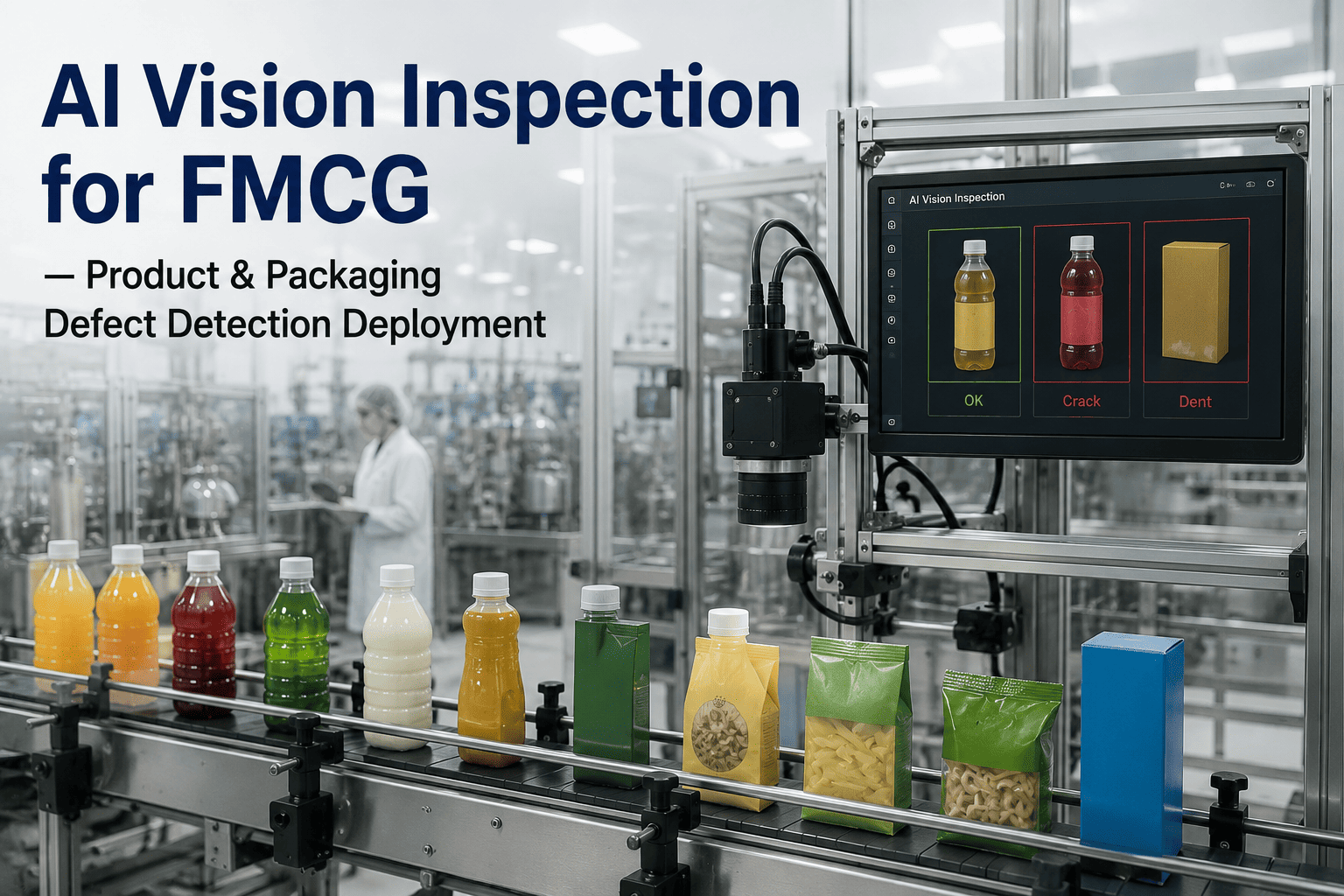
Barcode and date-code accuracy directly affects retailer compliance and recall exposure, making 100% inspection a practical necessity rather than a nice-to-have.
Pharmaceutical Packaging
Dosage and safety text legibility is regulated, and print integrity defects like blurred or distorted text carry compliance consequences beyond simple waste cost.
Cosmetics and Consumer Brands
Color consistency is the product's first impression on a shelf, and even a small ΔE shift on a brand-critical hue is visible enough to affect a purchase decision.
High-Volume Label and Flexible Packaging
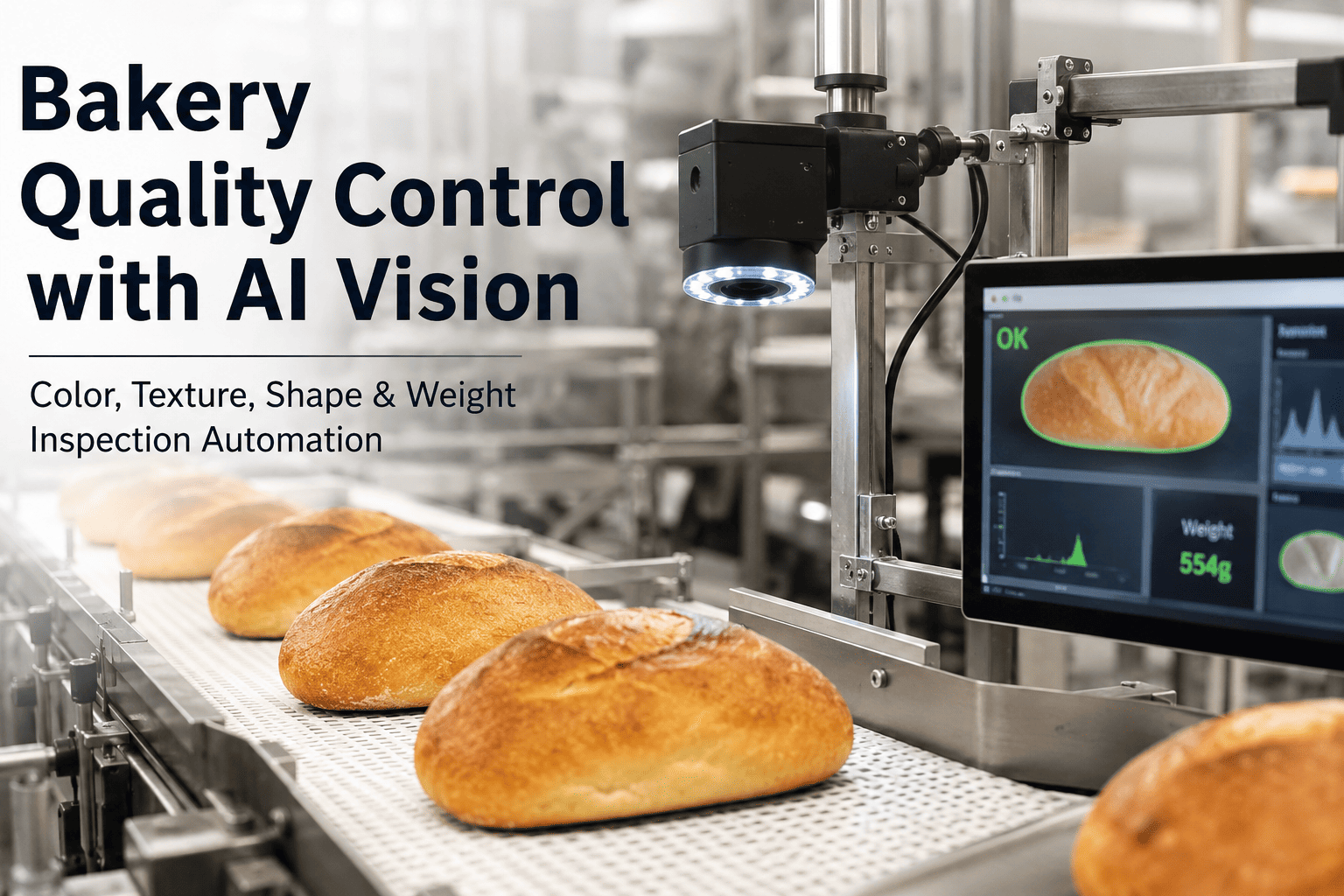
Long, high-speed runs are exactly where a slow drift compounds unnoticed for the longest stretch before a manual spot check would ever catch it.
Where This Fits in the Production Chain
Four Points on the Line Where Inline Inspection Changes the Outcome
Print defects do not all originate in the same place, and catching them requires inspection at more than one point in the production chain. The examples below show how the same core capability applies differently depending on where in the process a unit currently sits.
On-press, during the run
Registration and color are checked continuously as the web or sheet moves, catching a drift within seconds of it starting rather than at the next scheduled spot check.
At the converting station
A second inspection point after die-cutting or folding catches defects introduced by the converting process itself, such as misregistration from web growth or die-cut wander.
Before palletizing
A final check before cases are stacked and shipped is the last practical point to catch a defect before the cost of correction jumps sharply, since a palletized error is far harder to isolate.
Across SKU changeovers
Every changeover resets the master reference, so the system verifies the first units of a new SKU against approved artwork rather than assuming the prior run's settings carried over correctly.
Common Questions
Frequently Asked Questions
Can AI vision inspection run at full press speed without slowing the line down?
Yes — inline inspection systems are built specifically to synchronize with web or sheet speed rather than sample at a slower pace. High-speed line-scan cameras and AI classification are designed to process image data as fast as the press produces it, so the inspection step does not become the bottleneck. This is the core difference between an inline system and a periodic manual spot check, which by definition cannot cover every unit without physically slowing production. In practice, most operators report the inspection step becomes invisible to the run once it is properly synchronized to press speed.
How does the system tell a real defect apart from normal print variation?
The AI model is trained against an approved master reference and a defined tolerance band for registration alignment and color deviation, so it distinguishes acceptable natural variation from a genuine out-of-spec shift rather than flagging every minor pixel difference. This is what keeps false rejection rates manageable, since a system that flags too aggressively becomes as disruptive as one that misses real defects.
Support can walk through tolerance configuration for a specific substrate and brand color set.
Does this replace the color and registration controls we already have on the press?
No — closed-loop press controls that adjust registration and color during the run stay in place and continue doing what they do well. AI vision inspection adds an independent, unit-by-unit verification layer on top of those controls, catching the cases where a drift happens faster than the press-level correction responds, or where a defect source sits upstream of what the press controls can see, such as a variable-data mapping error.
What happens when a defect is detected mid-run?
The response is configurable to the severity and type of defect. Minor deviations near tolerance can trigger an operator alert so the issue is monitored without stopping production. Confirmed out-of-spec defects can trigger a physical reject mark for downstream removal, and defects above a critical threshold can trigger an automatic press stop before further substrate is wasted. Every flagged event is logged with an image and timestamp for the QC record.
How long does it take to get an inline inspection system running on an existing press?
Retrofitting inline vision inspection onto an existing press or converting line is typically a matter of camera and lighting installation plus master-reference calibration for the specific substrates and SKUs being run, rather than a full line rebuild. Most sites are running verified inspection within a few weeks of installation, with the exact timeline depending on press count and SKU variety.
Book a demo to scope a rollout against a specific press and packaging line.
Stop Finding Out After the Pallet Ships
Inspect Every Unit, Not a Sample of It
iFactory's AI vision inspection checks registration, color, and print integrity on every unit at full press speed, catching what a spot check and a human eye reliably miss.