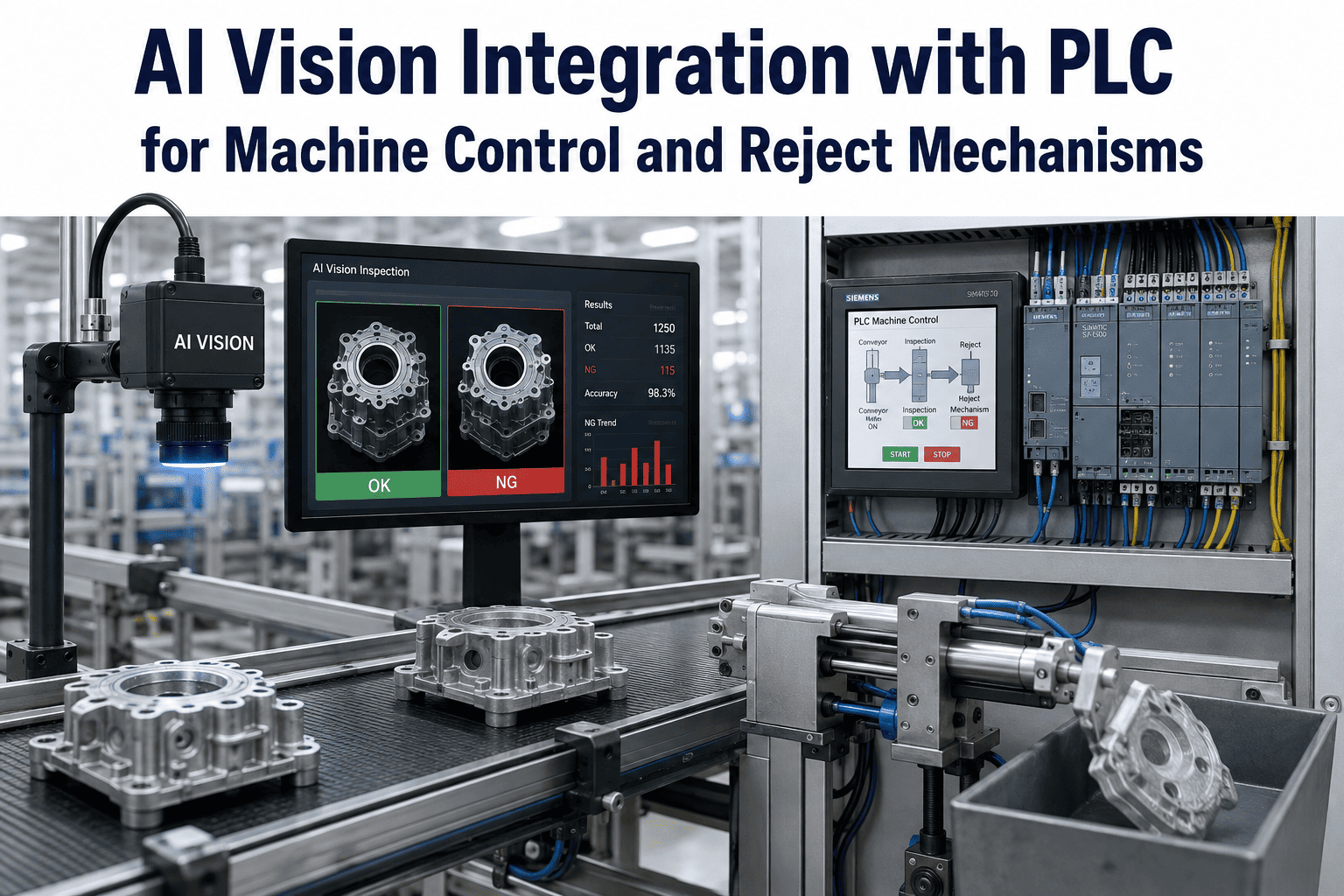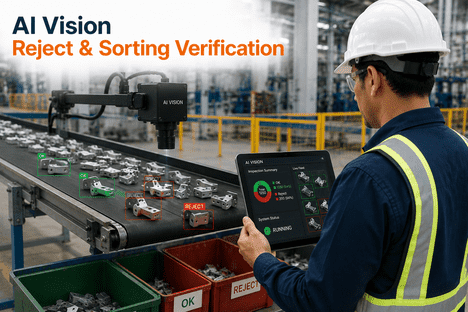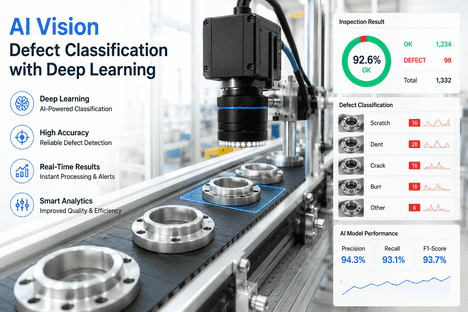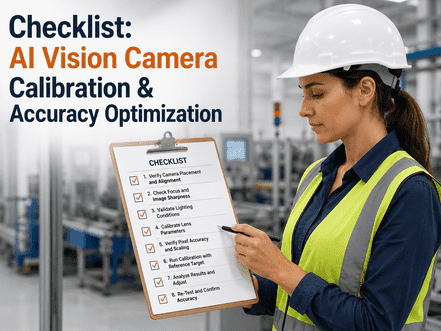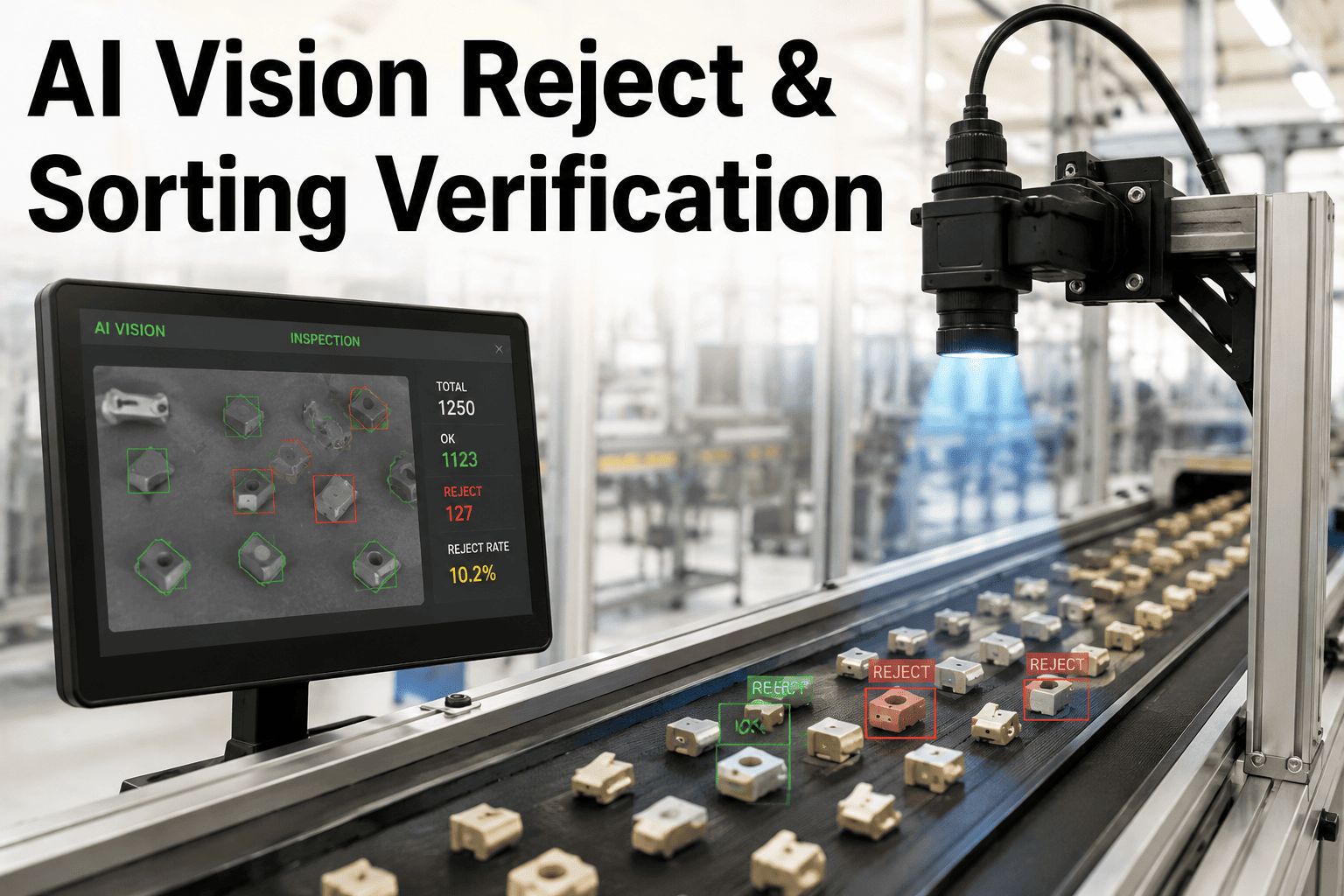
Every quality inspection system on a production line is really making two decisions, not one. The first decision is whether a product passes or fails, and the second is whether the physical reject mechanism actually removed the failed product from the good stream. Most facilities invest heavily in the first decision and almost nothing in verifying the second, which means air blast misfires, sticky diverter gates, and timed pusher failures can silently let defective parts ship to customers while the inspection system reports that everything is working correctly. The gap between detection and ejection is where the majority of customer complaints and warranty claims actually originate, not in the detection logic itself. AI vision reject verification closes that gap by watching the ejection point with the same rigor applied to the inspection point, confirming that every reject was physically removed and that no good product was caught in the crossfire. You can book a demo to see how verification cameras validate your existing reject mechanisms.
Your Inspection System Detects Defects — But Does It Actually Reject Them?
iFactory's AI vision watches the ejection point in real time, confirming that every flagged product is physically removed and that good products are not caught by misfiring reject mechanisms.
The Distance Between Detection and Ejection Is Where Customer Complaints Are Born
Quality engineers typically assume that if the inspection camera calls a defect, the reject mechanism removes it. That assumption holds most of the time, which is exactly why the failures are so dangerous. A reject mechanism that works ninety-eight percent of the time still lets two out of every hundred defective products through, and because nobody is watching the ejection point, those escapes are invisible to every dashboard and report the quality team relies on.
- Defective products reach customers without any internal record that the ejection failed
- False rejects silently destroy good product, inflating scrap costs that get blamed on the process rather than the reject mechanism
- Reject mechanism degradation goes unnoticed because no metric tracks ejection success rate over time
- Customer complaints trigger costly root-cause investigations that trace back to a simple air pressure drop or gate timing drift
- Every ejection event is logged with a confirmation image showing the product leaving the good stream
- False rejects are identified and quantified so the root cause can be corrected at the inspection sensitivity level
- Reject mechanism health is tracked as a measurable metric, flagging degradation before escapes begin
- Customer complaint investigations start with verified ejection records, not assumptions about what should have happened
Escapes Destroy Reputation While False Rejects Destroy Margin — Both Are Preventable
The two failure modes of an unverified reject system have fundamentally different cost profiles, but both drain value from the operation in ways that compound over time. The infographics below break down the cost structure of each failure mode so you can see exactly where the money goes and how verification addresses each path.
Every Reject Mechanism Fails Differently — AI Vision Adapts Its Verification to Each One
The physical method used to remove a defective product determines what the verification camera needs to look for, how fast the confirmation decision must be made, and what the failure signature looks like when the mechanism does not perform as expected.
Find Out How Many Rejects Your Line Is Actually Missing
iFactory's AI vision audits your existing reject mechanisms and shows you the real ejection success rate with a live demo using your line configuration.
Four KPIs That Define Whether Your Sorting System Is Actually Accurate
Most facilities track overall defect rate but do not measure the accuracy of the sorting decision itself, which means they cannot distinguish between a process that produces fewer defects and a reject system that is simply missing more of them. The four metrics below are what AI verification makes visible for the first time.
How AI Vision Determines Whether a Reject Actually Happened
The verification model does not simply look for a missing product on the belt. It performs a multi-step logical check that accounts for product position, trajectory, timing, and the specific mechanical behavior of the reject mechanism in use. This layered approach is what prevents both missed escapes and false confirmation signals.
Receive Reject Signal and Timestamp
The verification system receives the same reject trigger that the actuator receives, establishing an exact time reference for when the ejection should begin. This timestamp is the anchor for every subsequent check in the verification sequence.
Track Flagged Product to Ejection Zone
The AI model locks onto the specific product that triggered the reject signal and tracks its position frame-by-frame as it approaches the ejection point, confirming that the correct product is at the correct position when the mechanism fires.
Confirm Physical Displacement from Good Stream
After the actuator fires, the model verifies that the product's trajectory changed enough to physically remove it from the good product lane. A partial deflection that leaves the product on the belt edge is flagged as a failed ejection, not a confirmation.
Check Adjacent Products for Collateral Displacement
The model scans products adjacent to the rejected item to confirm none were pushed, deflected, or knocked off the belt by the ejection mechanism. Collateral displacement is the primary cause of false rejects in air blast systems and is invisible without dedicated verification.
Log Result and Update Mechanism Health Score
Each ejection event is logged as confirmed, failed, or ambiguous, and the cumulative results feed into a rolling mechanism health score that tracks ejection success rate over time. A declining health score triggers a maintenance alert before the failure rate reaches escape-level thresholds.
Where Unverified Reject Systems Cause the Most Damage by Industry
The consequences of an escape vary dramatically by industry, but the root cause is always the same: nobody was watching the gap between detection and ejection. The table below maps specific escape scenarios to their industry context and the verification approach that addresses each one.
| Industry | Typical Escape Scenario | Consequence of Escape | AI Verification Approach |
|---|---|---|---|
| Food and Beverage | Contaminated package passes through air blast because nozzle partially clogged from product residue | Product recall, FDA audit trigger, retailer delisting | Track package trajectory through blast zone and flag any deflection below confirmed-ejection threshold |
| Pharmaceutical | Incorrect label on bottle passes because diverter gate lagged 80 milliseconds behind line speed | Regulatory non-compliance, batch quarantine, patient safety risk | Confirm gate position at exact moment product arrives and log timing delta against line speed |
| Automotive Components | Dimensional out-of-spec part remains on conveyor because pusher cylinder lost pressure over shift | Downstream assembly failure, warranty claim, line stoppage at customer plant | Measure lateral displacement of each rejected part and flag when displacement falls below clearance threshold |
| Consumer Electronics | Cosmetically defective device housing passes because robot pick missed due to grip calibration drift | Customer return, negative review, brand perception damage | Confirm product absence at pick point and presence at reject bin within robot cycle window |
| Packaging and Printing | Misregistered print passes because inspection-to-eject timing offset accumulated after line speed change | Customer rejection of entire shipment, reprint cost, contractual penalty | Correlate reject signal timing with product position and flag when ejection fires on wrong product in sequence |
| Recycling and Material Recovery | Contaminant material remains in sorted stream because air jet timing was set for previous material type | Downgrade of sorted material grade, revenue loss per ton, customer specification failure | Classify material at ejection point and confirm contaminant type matches rejected category |
From Unverified Reject to Fully Confirmed Ejection in Four Phases
Adding verification cameras to an existing reject system does not require replacing the primary inspection or the reject mechanism. The deployment integrates with whatever is already on the line and layers the confirmation logic on top.
Site Survey and Mechanism Mapping
The reject mechanism type, actuation speed, line speed range, and available camera mounting locations are documented for each verification point. This phase identifies the sight line constraints and lighting conditions that will shape the camera placement for each ejection zone on the line.
Camera Installation and Signal Integration
Verification cameras are mounted at each ejection point and wired to receive the reject trigger signal from the existing inspection system. The edge processing unit is installed and connected to the plant network for alert delivery and dashboard access without modifying the existing inspection controller.
Model Calibration and Baseline Capture
The AI model is calibrated to the specific product geometry, belt speed, and reject mechanism behavior using a set of controlled ejection events. Baseline ejection success rate, response time distribution, and false reject rate are measured and recorded as the reference point for ongoing monitoring.
Live Verification and Continuous Learning
The system transitions to live verification mode, logging every ejection event with confirmation images and updating the mechanism health score in real time. Model accuracy improves as it encounters more edge cases specific to the line, and the maintenance team receives automated alerts when health metrics trend downward.
Results Reported After Adding AI Verification to Existing Reject Systems
The figures below represent tracked outcomes across facilities that added iFactory reject verification cameras to lines that already had primary inspection and reject mechanisms in place, measured over six or more months of operation against each facility's pre-verification baseline.
Questions Quality and Maintenance Teams Ask About Reject Verification
Your Reject System Says It Is Working — AI Vision Proves Whether It Actually Is
Stop relying on assumptions about ejection success. iFactory's AI vision watches every reject event and gives you a verified success rate you can trust. Book a demo and bring your line configuration.