Scrap steel feeding electric arc furnaces and induction furnaces carries a contamination risk that is difficult to quantify and expensive to ignore. Tramp metals — copper wire, tin coatings, zinc-galvanized scrap, sealed hydraulic components, and explosive or sealed gas cylinders — enter the scrap stream at every stage of the collection and processing chain. On the conveyor approaching a crusher, shredder, or EAF charging bay, the difference between a clean scrap bundle and one concealing a copper-wound motor or a sealed propane canister is invisible to the human sorter working under time pressure and poor lighting conditions. The consequences reach from equipment damage costing hundreds of thousands of dollars in a single shredder strike event, to EAF heat quality failures from copper contamination that render entire heats off-specification and require costly remelt or downgrade decisions. iFactory's AI vision camera platform applies deep learning object detection models to scrap conveyor inspection — identifying tramp metal types, classifying scrap grades, and triggering automated divert or stop signals in real time before contaminated material reaches processing equipment or furnace charge. Steelmakers and scrap processors evaluating their current sortation and charge quality controls regularly choose to Book a Demo with iFactory's engineering team to see how vision object detection maps to their specific scrap feed configuration.
Why Manual Scrap Sorting Cannot Reliably Detect Tramp Metal at Conveyor Speed
The Structural Limitations of Human-Dependent Scrap Inspection
Manual scrap sorting on high-volume feed conveyors operates under conditions that systematically underperform against the detection requirements of modern steelmaking. Conveyor belt speeds of 1–3 metres per second, irregular scrap geometry that conceals contaminants beneath larger pieces, and the sheer volume throughput of a functioning scrap yard combine to make consistent human detection of embedded tramp metals operationally unrealistic. Sorters working eight-hour shifts under dust, noise, and variable lighting detect surface-visible items reliably but have no visibility into material beneath the top scrap layer — where sealed cylinders, copper-wound motors, and galvanised bundles most commonly hide. The cost profile of this detection gap is asymmetric: the investment in AI vision detection is fixed and predictable, while the cost of a single tramp metal event — shredder blade replacement, downtime, crane work, and potential structural damage — typically exceeds the entire annual cost of the detection system. Beyond equipment protection, the downstream quality impact of copper and tramp metals reaching the EAF is cumulative and difficult to trace. A heat that tests above the 0.2% copper threshold for structural grades must be downgraded or remelted — but identifying which scrap batch introduced the contamination without detection records is an exercise in guesswork that does not prevent recurrence. iFactory's AI vision camera platform closes this gap by creating a timestamped, object-level detection record for every metre of conveyor feed — making contamination events traceable to their source batch and enabling supplier quality management decisions that reduce contamination at its origin.
Tramp Metal and Scrap Contaminant Classes Detected by AI Vision
What iFactory's Object Detection Models Identify on the Conveyor
| Contaminant / Scrap Class | Detection Mechanism | Risk if Undetected | Response Action |
|---|---|---|---|
| Sealed Gas Cylinders & Pressurised Vessels | Geometric shape and surface signature recognition | Explosive event in shredder or EAF — personnel and equipment hazard | Immediate conveyor stop and manual removal alert |
| Copper-Wound Motors & Transformers | Object classification by component geometry and material signature | Copper contamination above EAF heat specification threshold | Divert to segregated copper-contaminated pile |
| Galvanised & Tin-Coated Scrap | Surface reflectance and coating signature detection | Zinc and tin contamination affecting EAF slag chemistry and fume generation | Divert to designated processing stream or surcharge tracking |
| Stainless Steel & High-Alloy Scrap | Surface finish and geometry classification | Nickel and chromium contamination affecting grade certification | Segregate to alloy scrap processing stream |
| Heavy Machinery Components | Mass-indicative geometry and oversized object detection | Shredder blade damage or crusher overload event | Conveyor stop; manual size reduction before re-feed |
| Non-Ferrous Contamination (Al, Cu, Pb) | Colour signature and object-level material classification | Heat chemistry deviation; downstream product non-conformance | Divert signal and contamination event logging to CMMS |
How iFactory's Vision Object Detection Works on Scrap Conveyor Lines
From Camera to Divert Signal in Under 300 Milliseconds
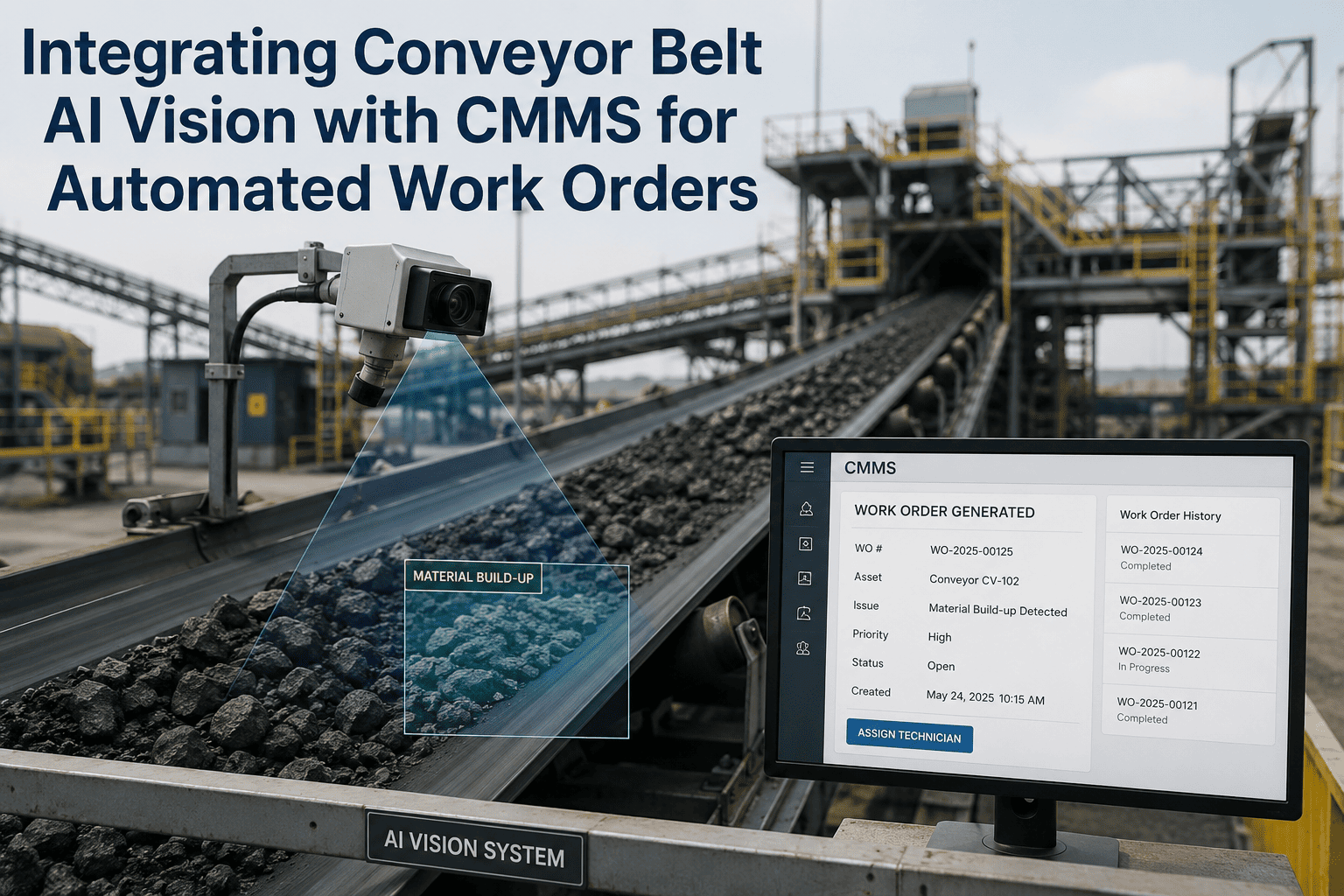
iFactory's AI vision platform deploys high-resolution cameras above the scrap feed conveyor at detection zones positioned upstream of crushers, shredders, and EAF charging bays. The camera array captures full-width conveyor imagery at frame rates matched to belt speed, ensuring every section of scrap flow is inspected at consistent resolution regardless of how the material is loaded. The deep learning inference engine — running on edge compute hardware installed in the adjacent control room environment — processes each image frame through a multi-class object detection model trained on scrap yard imagery across a wide range of material conditions: wet scrap, dry scrap, variable lighting, mixed grade feeds, and the irregular geometry that characterises real-world scrap conveyor content. When a target object class is detected above the configured confidence threshold, the platform generates a digital output signal to the conveyor PLC within 300 milliseconds — fast enough to stop or divert the belt before the detected material reaches the downstream equipment. The detection event is simultaneously logged to the platform's record system with the detection class, confidence level, timestamp, image capture, and conveyor position — creating an immutable event record that feeds into supplier quality tracking, maintenance alert workflows, and EAF charge documentation. Steelmakers who want to see the detection-to-divert workflow demonstrated on a conveyor configuration matching their scrap yard layout can Book a Demo with iFactory's application engineering team.
Protecting EAF Charge Quality: The Copper Contamination Problem
How Vision Detection Reduces the Most Costly Tramp Metal in Electric Steelmaking
Copper is the tramp metal of greatest concern in electric arc furnace steelmaking because it cannot be removed by conventional EAF refining — once copper enters the heat above the specification threshold, the only options are dilution with clean scrap, downgrade to a less-demanding application, or remelt. For flat-rolled products destined for automotive, appliance, or construction applications with strict copper limits, a single contaminated heat generates direct material losses that typically exceed $80,000–$150,000 depending on heat size and product price. Copper enters the scrap stream primarily through copper-wound electric motors, transformers, wiring harnesses embedded in automotive body scrap, and copper alloy components mixed into industrial demolition scrap. These items share a common characteristic: they are often concealed beneath surface scrap, partially oxidised to a colour that blends with ferrous material, or arrive in bundles that pass visual inspection at the yard gate but reveal their content only when processed. iFactory's AI vision detection models are trained specifically to identify the geometric and surface signatures of copper-wound components — the characteristic cylindrical geometry of motor stators, the laminated plate pattern of transformer cores, the braided texture of wiring harness bundles — even when partially obscured by overlying scrap. Detection events trigger divert signals and generate charge contamination risk alerts routed to the EAF process team, allowing real-time charge composition adjustment before the heat begins rather than chemistry correction after the first sample confirms the contamination. Steelmakers managing tight copper specifications and variable scrap supply are among the facilities most consistently choosing to Book a Demo to evaluate iFactory's copper detection performance against their current rejection rate data.
Deployment Configuration for Scrap Yard and Melt Shop Environments
Hardware, Integration, and Calibration for High-Throughput Scrap Processing
Frequently Asked Questions: AI Vision for Scrap Sorting and Tramp Metal Detection
Can AI vision detect tramp metals that are buried beneath the surface layer of scrap on the conveyor?
AI vision detects objects that are visible to the camera — it cannot see through scrap coverage the way an X-ray or electromagnetic system can. The platform is most effective for objects that protrude, are partially visible at the scrap surface, or create a detectable surface geometric signature. For facilities with deep scrap beds where significant burial of tramp materials is common, iFactory's engineering team assesses whether supplemental illumination angles, multiple camera positions, or integration with existing electromagnetic tramp metal detectors provides the most effective combined detection architecture for the specific scrap type and conveyor configuration.
How does the system handle variable lighting conditions in outdoor scrap yard environments?
iFactory's models are trained across a range of lighting conditions — daylight, overcast, dusk, and artificial lighting — to maintain classification accuracy as ambient conditions change through the operating shift. For outdoor conveyor installations, supplemental LED lighting arrays are co-installed with the camera enclosures to provide consistent illumination at the detection zone independent of ambient light, ensuring that detection accuracy does not degrade during early morning or late shift operations. The lighting specification is integrated into the site survey conducted before installation to ensure the right configuration for each facility's operating schedule and conveyor orientation.
What is the false positive rate, and how does it affect conveyor throughput?
False positive rates are controlled through per-class confidence threshold configuration during the calibration phase. A threshold set too low generates unnecessary conveyor stops that reduce throughput; a threshold set too high misses low-confidence detections. iFactory's calibration process establishes the operating threshold for each object class by evaluating detection performance on the site's specific scrap mix — targeting a false positive rate below 2% for high-consequence object classes like sealed cylinders and below 5% for material divert decisions. Facilities with lower tolerance for throughput interruption can operate high-consequence alerts at full stop while routing lower-confidence detections to a visual review queue for human confirmation before divert action.
Can the platform classify scrap grades as well as detect individual contaminant objects?
Yes — iFactory's platform supports both tramp metal object detection and scrap grade classification from the same camera array and inference pipeline. Grade classification assigns a probability distribution across configured scrap grade categories — heavy melting, shredded, busheling, turnings, mixed — for each conveyor section, providing a real-time feed composition estimate. This data is routed to the EAF Level 2 system as a charge composition input alongside the tramp metal detection alerts, giving the process team both contamination risk status and charge chemistry adjustment data from a single integrated vision system.
How does iFactory integrate with existing electromagnetic tramp metal detectors already installed on the conveyor?
AI vision and electromagnetic detection are complementary technologies with different detection strengths. Electromagnetic systems detect ferrous and large metallic objects by mass regardless of visibility; AI vision detects by object recognition and can classify detected objects by type. Integrating both systems on the same conveyor — with iFactory's platform receiving electromagnetic alarm signals alongside its own vision detections — enables a combined detection event record where each alarm source is attributed, reducing false positives from electromagnetic signatures that are not tramp metal and adding classification context to electromagnetic alerts that cannot identify object type independently. iFactory's REST API and PLC I/O integration supports this combined architecture with both systems feeding the same event log and divert control workflow.