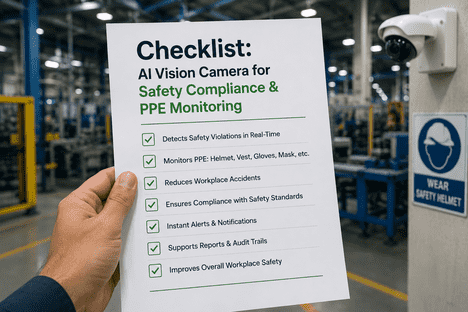
A single wafer lot moving through a modern fab can represent a value well into six figures by the time it reaches final test, and every one of those wafers is exposed to risk the moment an improperly gowned or under-grounded operator steps onto the floor. Electrostatic discharge is invisible, silent, and often does not show up as a failure until the device is powered on weeks later during test, by which point tracing the cause back to a single gowning lapse is close to impossible. Book a demo to see how AI vision verifies every fab entry automatically, every time.
One Missed Wrist Strap Can Cost More Than a Full Shift of Output
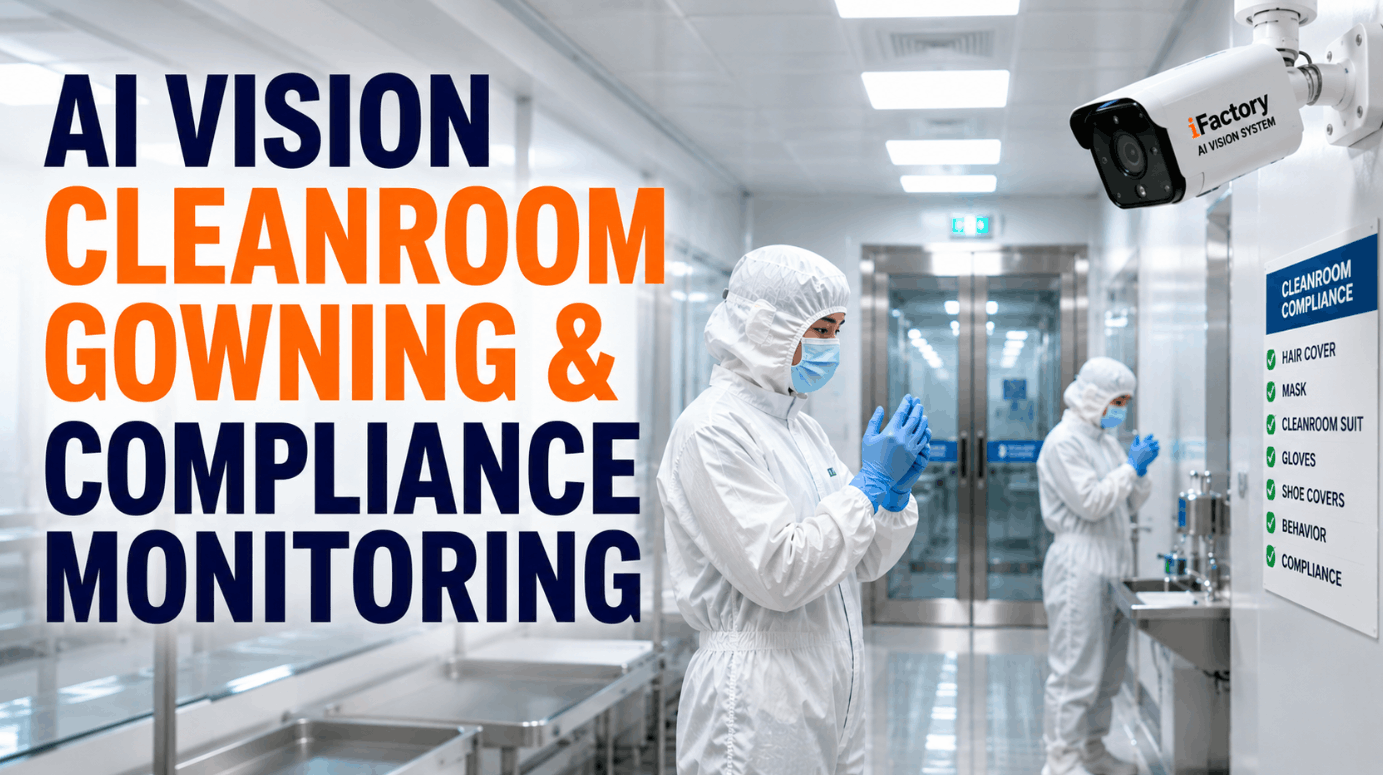
Gowning checklists are only as reliable as the person checking them, and a busy shift change is exactly when a step gets skipped. iFactory verifies smock coverage, wrist strap contact, and bunny suit integrity at every fab entry point before a single wafer is at risk.
What a Fab Entry Point Actually Needs to Verify Before Letting Anyone Through
Semiconductor cleanrooms layer particulate control on top of ESD control, which means an entry checkpoint has to confirm two entirely different categories of protection at once. Missing either one carries a real cost, whether that shows up as particle contamination on a wafer surface or as a latent ESD event that only fails a device much later in test.
| Requirement | Purpose | Common Failure Mode |
|---|---|---|
| Full-coverage bunny suit and hood | Particulate containment | Exposed hair, gaps at neck or wrist seals |
| ESD smock, properly snapped | Static charge dissipation from clothing | Smock worn open or unsnapped at cuffs |
| Grounded wrist strap | Continuous body-to-ground path | Strap worn but not making skin contact |
| ESD-rated footwear or heel straps | Static dissipation through flooring | Regular shoes worn without heel strap |
| Face mask and goggles | Particulate and contact barrier | Mask lowered below the nose during work |
Every row in that table is a point where a rushed operator can shortcut the process without realizing the consequence, which is precisely why entry verification needs to happen automatically rather than relying on self-certification.
The Failures That Do Not Show Up Until It Is Too Late
This is what makes ESD such a difficult risk to manage with after-the-fact quality checks alone. By the time a failure pattern is statistically visible, the root cause event may have happened weeks earlier and across an unknown number of lots, which is why prevention at the point of fab entry matters more than detection after the fact.
Verify Every Gowning Step Before the First Wafer Is Touched
iFactory's AI vision checks smock coverage, wrist strap contact, hood seal, and footwear at the fab entry gate in real time, flagging any operator who has not met every requirement before they reach the floor.
Rolling Out Automated Gowning Verification at a Fab Entry Point
Fab gowning areas are tightly choreographed spaces, and any new verification step has to fit into that flow without adding meaningful time to shift change. The sequence below reflects an approach that adds verification without creating a bottleneck at the gowning gate.
What a Single Undetected Gowning Lapse Can Actually Cost a Fab
It is easy to treat a skipped wrist strap check as a minor procedural miss, until the downstream cost of that miss is put in context against everything riding on a single wafer lot moving through the line.
Where Spot Checks Fall Short of Full Coverage
Most fabs already perform some form of gowning inspection, but the method matters as much as the intent. The comparison below highlights the practical gap between periodic manual spot checks and continuous automated verification at every entry.
| Aspect | Manual Spot Checks | Continuous AI Verification |
|---|---|---|
| Coverage | Sample of operators, sample of shifts | Every operator, every entry, every shift |
| Consistency | Varies by which supervisor is on duty | Same criteria applied every time |
| Record for investigation | Relies on supervisor notes or memory | Timestamped log with image reference |
| Speed at shift change | Slows down as queue builds | Evaluates operators without adding a queue |
The gap is not that manual checks are careless, it is that a checkpoint staffed by people can only ever sample the traffic passing through it, while a checkpoint built on continuous vision covers all of it by default.
Common Questions About AI Gowning and ESD Verification
Can a camera actually verify that a wrist strap is making proper skin contact?
Vision-based verification confirms that the strap is worn correctly, positioned against the skin rather than over a sleeve, and connected to the coil cord, which covers the failure modes most commonly responsible for ineffective grounding. For facilities that want continuous electrical confirmation of the ground path itself, this visual check is typically paired with existing wrist strap monitoring hardware rather than replacing it, giving two independent layers of verification. Book a demo to see how the two data sources are combined in practice.
How does this reduce the time gowning verification adds to shift change?
Manual gowning checks slow down considerably at shift change when dozens of operators are moving through the gowning room at once, and supervisors often end up spot-checking rather than verifying everyone. Automated verification checks every operator at full speed without adding a queue, since the camera evaluates gowning compliance as operators move through the sequence rather than requiring them to stop and be inspected individually. Contact support to see typical throughput at comparable fab entry points.
What happens when the system flags an operator as non-compliant?
The specific escalation path is configurable to match how a given fab wants to handle corrections, but the common pattern is an immediate notification to the operator and a gowning room attendant, redirecting the operator back through the correction step before they proceed to the floor. Every flagged event is logged with a timestamp and image reference, giving quality teams a record they can review without having to rely on anyone's memory of what happened during a busy shift change. Book a demo to walk through configurable escalation options.
Does this system work with the specific gowning garments and gowning room layout our fab already uses?
Detection models are trained on your specific bunny suits, ESD smocks, wrist strap hardware, and gowning room camera angles rather than relying on a generic garment library, since gowning equipment and room layouts vary significantly between fabs. This training step is part of the standard onboarding process and typically uses footage collected from your existing gowning area, so no changes to physical layout are required to get started. Contact support to discuss onboarding for your specific gowning room configuration.
Protect the Wafer Lot Before It Ever Reaches the Floor
iFactory checks every operator against your full gowning and ESD requirements at the fab entry gate, catching the lapse before it becomes a latent defect discovered weeks later at test.