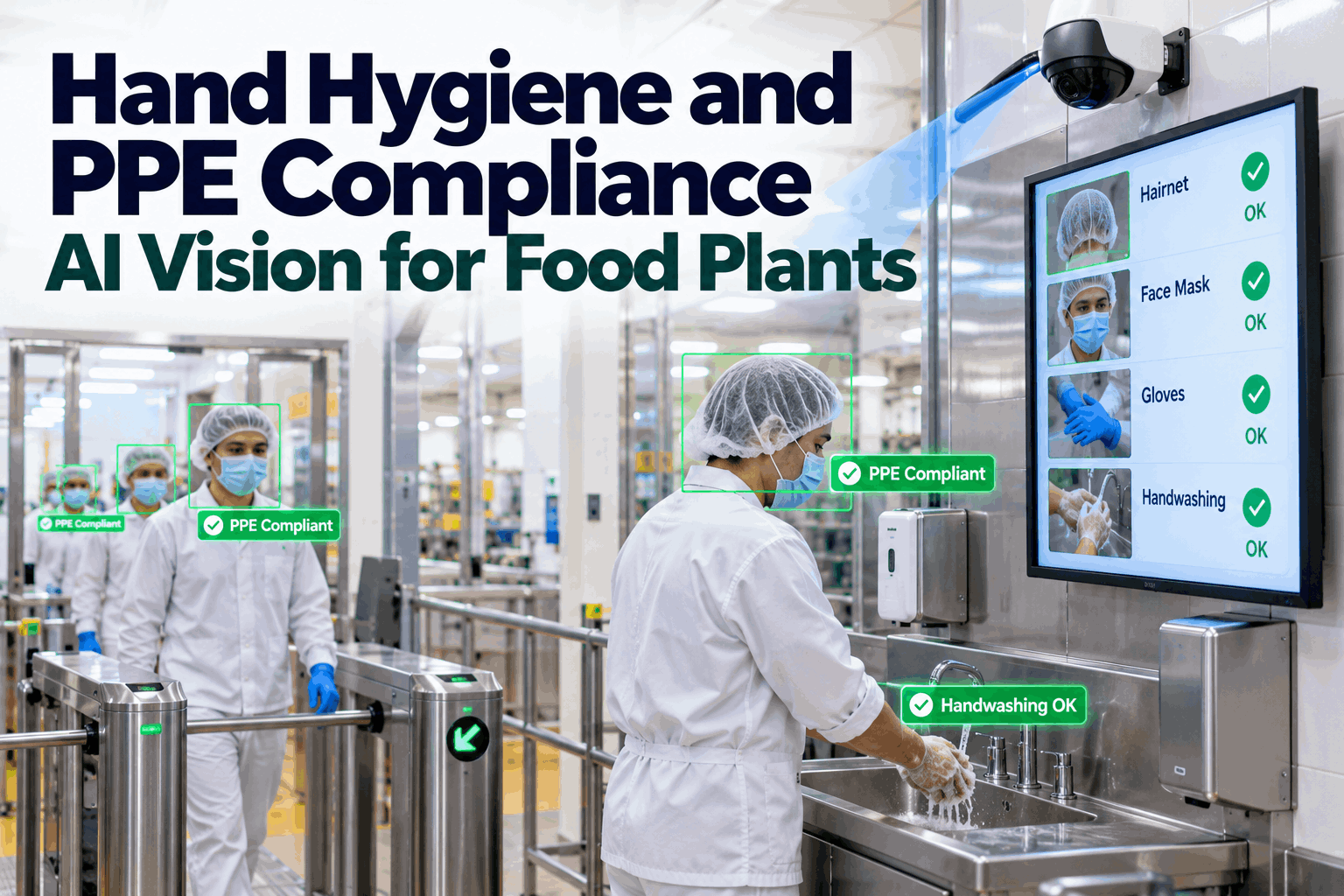
Hand Hygiene and PPE Compliance AI Vision for Food Plants

By Josh Brook on October 16, 2026

hand-hygiene-ppe-compliance-ai-vision-food-plants

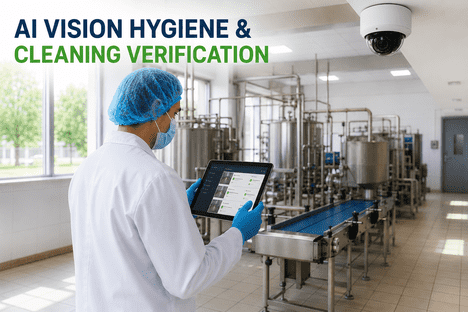
Every food plant has hygiene rules at the door: hairnets on, beard nets where needed, hands washed properly, gloves after the wash. The hard part is knowing whether they are followed on every shift, not just on audit day. AI vision at hygiene stations checks each entry, coaches people by voice when something is missed and reports anonymous compliance rates by shift. See it running at a real entry point in a short GMP vision demo.

AI VISION · GMP COMPLIANCE

Check Every Entry, Coach on the Spot, Report Without Names

iFactory GMP Monitoring uses cameras at hygiene stations to confirm PPE and handwash duration. It gives friendly audio coaching when a step is missed and logs anonymised compliance rates by shift for QA.

Hygiene station · High-care entryShift B
✓HairnetAll hair covered
✓Beard netFitted
!Handwash14 s of 20 s
–GlovesAfter wash
Audio coaching"A few more seconds of scrubbing, please."
Logged anonymously · no faces stored
WHAT GMP REQUIRES

The Personnel Rules a Camera Can Help Verify

In the US, 21 CFR 117.10 sets the hygiene rules for people who work with exposed food, food-contact surfaces or packaging. They must wear suitable outer garments, wash hands thoroughly before starting work, after every absence from the work station and whenever hands may be soiled, keep gloves intact and clean, remove or cover jewellery and wear effective hair restraints such as hairnets and beard covers. Other markets and GFSI schemes set similar rules. Cameras can't check everything on that list, but they can check the visible parts, every time. Ask our support team which rules your stations can cover.

Hair restraintsHairnets, caps and beard covers where appropriateCamera checks
HandwashingBefore work, after each absence and when soiledCamera checks
GlovesIntact, clean and sanitary if usedCamera checks
JewelleryRemoved, or covered if it can't be removedCamera checks visible items
Outer garmentsSuitable clothing for the zoneCamera checks coat colour
Personal cleanlinessHealth, cosmetics and other hidden factorsPeople and policy
WHAT THE CAMERA CHECKS

Station by Station: Checks, Rules and Coaching

A hygiene station is usually a short sequence: PPE on, hands washed and dried, sanitiser, gloves, then the door or turnstile. The camera follows the same sequence. Each check has a rule you set to match your own SOP, and a short coaching line that plays if the step is missed. The matrix shows typical settings. Configure your own in a station setup session.

Check
What the AI looks for
Typical rule
Coaching if missed
Hairnet
Net or cap covering all hair, including ears and fringe
Required in all zones
"Please tuck all hair under the net."
Beard net
Cover over beard or visible facial hair
Where facial hair is visible
"A beard net is needed for this area."
Handwash duration
Hands under water, soap applied, scrubbing motion, rinse
Set by your SOP
"A few more seconds of scrubbing, please."
Drying
Hands dried with paper towel or dryer
After every wash
"Please dry your hands fully."
Sanitiser
Hands under the dispenser after drying
Where the SOP requires it
"Sanitiser next, please."
Gloves
Gloves put on after washing, not before
High-care and RTE zones
"Gloves go on after the wash."
Coat colour
Coat colour matches the zone being entered
Zone-coded plants
"This door needs a white coat."
HANDWASH MONITORING

How the Handwash Timer Works

FDA Food Code guidance for food service, often used as a benchmark, calls for a handwash of at least 20 seconds, with 10 to 15 seconds of vigorous scrubbing. Many manufacturing plants set their own SOP at that level or longer. The camera times the steps that matter, not just the time someone stands at the sink. A person holding hands under running water without soap and scrubbing does not count as a good wash. Set the timer to your SOP with help from our hygiene specialists.

Wet Soap Scrub 10–15 s Rinse Dry
StartAt least 20 seconds in total, or your SOPDone
CountsSoap applied, scrubbing motion visible, rinse under running water
Doesn't countHands under water with no soap, or no scrubbing motion
CoachingPlays once if the wash is short, and again if the person moves on
PRIVACY BY DESIGN

Compliance Data Without Watching People

Workers are right to be wary of cameras. The aim is to check that a hygiene step happened, not who did it. Treat images of people as personal data under privacy law such as the GDPR, and in many European countries agree the system with the works council before it is installed. iFactory is designed around those expectations: it detects PPE and hand actions, not identities, and reports rates by station and shift. Plan the privacy setup with our support team.

No face recognitionThe system detects PPE and actions, never who the person is
Faces blurredAny image kept for training or review is blurred on the AI server
Short retentionEvent images are erased after a set number of days unless flagged
Defined areas onlyCameras cover hygiene stations, never changing rooms or break areas
Coaching, not disciplineData is used to fix stations and training, not to punish individuals
Shared reportsWorkers and their representatives see the same rates as managers

Find the Problem Stations, Not the Problem People

Low compliance usually points to a station issue: a slow soap dispenser, a missing mirror, a queue at shift change. iFactory shows where and when steps are missed, so QA can fix the cause.

High-care entry · QA manager and iFactory
QA managerWhy is night shift handwash compliance lower?
iFactoryMost short washes happen between 21:55 and 22:05 at station 2, when 30 people arrive at once. Station 1 is fine.
QA managerSo it's the queue.
iFactoryThat is the likely cause. A staggered start or a second sink at station 2 would be worth testing.
REAL-TIME COACHING

How Coaching Works at the Station

Coaching is short, polite and immediate. People respond better to a quick reminder at the sink than to a talk from a supervisor a week later. The steps below show what happens when a check is missed. Coaching lines can be set in several languages to match your workforce, and volumes can be tuned to the noise at each station. Hear sample coaching in a live walkthrough.

1Step missedHairnet not covering hair, or wash under the set time
2Audio promptOne short, friendly line in the worker's language
3Second chanceIf corrected, the entry counts as compliant after coaching
4Station signalIf not corrected, an optional light or door hold, per your SOP
5Trend reportQA sees patterns by station and shift, never by name
SHIFT REPORTING

What an Anonymised Compliance Report Shows

The daily report answers three questions: how many entries met every rule first time, which checks are missed most and where and when the misses happen. The figures below are an illustrative example from one high-care entry. They show how the report points to a specific shift, station and check, rather than a general "do better" message. Get a sample report for your own stations from our support team.

High-care entry · last 7 daysFirst-time compliance
Shift A96%
Shift B91%
Shift C84%
Most missed checkHandwash under 20 s
WhereStation 2, Shift C start
After coachingMost short washes corrected
STATION FIXES

Four Station Changes That Often Lift Compliance

When the report shows a low rate at one station or shift, the cause is often physical rather than personal. These four changes are common, low-cost responses, and the camera data shows whether each one worked. Test them one at a time so the effect is clear. Review your station layouts with our hygiene team.

1Add capacity at peak timesA second sink or a staggered shift start removes the rush that shortens washes.
2Put a mirror at the PPE pointPeople fix hairnets and beard nets themselves when they can see them.
3Fix slow dispensersEmpty or sticky soap and towel dispensers lead to skipped steps.
4Show the sequence visuallySimple pictures at each step help new and agency staff follow the order.
HAND HYGIENE PPE COMPLIANCE AI VISION EXAMPLES

Three Plants, Three Different Setups

The same system is configured differently depending on the product and the hygiene zones. These three examples show typical setups. They are illustrations, not case studies, and your own setup should follow your HACCP plan and SOPs. Discuss your zones in a zoning review.

Raw meat and poultry
Wet entry, coat colour, glovesHairnet, beard net, white coat, full handwash, sanitiser and gloves. Boot wash checked at the same point.
Ready-to-eat high care
Strictest station, door interlockEvery check active. The door stays shut until the sequence is complete, with coaching at each step.
Bakery with allergen zone
Coat colour and handwash between zonesHairnets throughout. Coloured coats and a handwash check when moving into the allergen area.
HAND HYGIENE PPE COMPLIANCE AI VISION TEMPLATE

A Station Setup Sheet for Each Entry Point

Fill in one sheet per hygiene station before installation. It turns your SOP into settings the camera can use and makes sure QA, production and worker representatives agree on what is checked. Ask for a blank version from our support team.

StationHigh-care entry, station 2
Zone riskReady-to-eat, high care
Checks activeHairnet, beard net, wash, dry, sanitiser, gloves
Handwash minimumSet by SOP, for example 20 s
Coaching languagesAs spoken by the workforce
If not correctedDoor hold or light only, per SOP
Image retentionBlurred, erased after a set period
Owner and reviewQA manager, reviewed monthly with worker reps
HAND HYGIENE PPE COMPLIANCE AI VISION BEST PRACTICES

What Works, and What to Avoid

Plants that get lasting value from hygiene monitoring treat it as a tool for better stations and better habits. Plants that treat it as surveillance tend to see trust fall and workarounds appear. If you want a second opinion on your rollout plan, talk to our GMP team.

Best practices
  • Agree the scope with workers and their representatives first
  • Fix station layout, sinks and dispensers before blaming people
  • Match every check to a written SOP step
  • Use friendly coaching in the workforce's languages
  • Share the same reports with workers and managers
Things to avoid
  • Identifying or ranking individual workers
  • Adding checks that aren't in the SOP
  • Cameras outside hygiene stations
  • Keeping images longer than needed
  • Stopping manual GMP audits entirely
TURNKEY AI DEPLOYMENT

Cameras, Audio Coaching and AI Server in One Package

iFactory delivers GMP Monitoring as a turnkey bundle. A pre-configured NVIDIA AI server ships racked and ready with the hygiene models, coaching audio and reporting pre-loaded, so images are processed and blurred on site and never leave the plant unless you choose. You rack it, plug in power and Ethernet, and the AI is live. To scope it for your entry points, request a turnkey quote.

What's Included
  • Pre-configured NVIDIA AI edge server, racked and ready
  • Washdown-rated cameras and speakers for each station
  • PPE and handwash models tuned to your stations
  • Coaching lines in the languages you need
  • Optional door, turnstile or light integration
  • Anonymised shift reports for QA and worker reps
  • 24×7 remote monitoring of models and hardware
Live in 6–12 weeks
Wk 1–4
Agree and Install

Scope agreed with QA and worker reps, cameras and server installed at the stations.

Wk 5–8
Tune and Trial

Models tuned to each station and run silently, with results checked against manual audits.

Wk 9–12
Go-Live and Training

Coaching switched on, shift reports live, teams briefed on how data is used.

HOW iFACTORY FITS

GMP Monitoring Built for People, Not Against Them

iFactory checks the steps that keep food safe, coaches in the moment and gives QA the evidence to fix stations and training. Our support team can walk you through a pilot plan.

1
Checks every entry. PPE and handwash steps are confirmed for every person, on every shift.
2
Coaches in real time. Short audio prompts help people correct a step before they enter.
3
Reports without names. Compliance rates by station and shift, with no face recognition.
4
Keeps images on site. Processing and blurring happen on the AI server in your plant.
1000+
Industrial clients running iFactory
99.9%
Platform uptime for production sites
6-12 wks
From racked server to live hygiene checks
FREQUENTLY ASKED QUESTIONS

What Plant Managers Ask About Hygiene and PPE Vision

What does hand hygiene and PPE compliance AI vision check?
Cameras at hygiene stations check hairnets, beard nets, gloves, coat colour and visible jewellery, and time the handwash steps: soap, scrubbing, rinsing and drying. If a step is missed, the person hears a short coaching prompt. QA receives anonymised compliance rates by station and shift.
Does the system identify individual workers?
No. It detects PPE and hand actions, not identities, and does not use face recognition. Any images kept for review or training are blurred on the AI server in your plant. Reports show rates by station and shift, so the focus stays on fixing stations and habits.
How long should a handwash be?
Your SOP decides. FDA Food Code guidance for food service, often used as a benchmark, calls for at least 20 seconds in total with 10 to 15 seconds of vigorous scrubbing. Many manufacturing plants set the same or a longer minimum. The camera times scrubbing with soap, not just time at the sink.
Is camera monitoring allowed in our plant?
That depends on local law and agreements. Images of people are usually personal data, so privacy law such as the GDPR applies in Europe, and many countries expect agreement with a works council first. A data protection assessment, clear scope, short retention and a no-discipline policy are good practice everywhere. Check with your legal and HR teams before installing.
Does it replace manual GMP audits?
No. It checks the visible steps at hygiene stations on every entry, which no manual audit can do. Auditors still check things a camera can't see, such as personal cleanliness, illness reporting and behaviour on the line. Camera data gives auditors a much better picture of day-to-day practice.
How do we start?
Pick one high-risk entry point, agree the checks and privacy rules with QA and worker representatives, and run the system silently for a few weeks to compare it with manual audits. Then switch on coaching and reports. Our support team can plan that pilot with you.

Every Entry Checked, Every Shift Coached

Put cameras at your hygiene stations, coach people in the moment and give QA real compliance data without naming anyone. The full system is delivered turnkey and goes live in 6 to 12 weeks.
Example daily summary · 3 stations
Entries checkedEvery person, every shift
Coaching promptsMost steps corrected on the spot
Most missed checkShown by station and time
Identities storedNone
Anonymised report shared with QA and worker reps

Share This Story, Choose Your Platform!