A shelf goes empty at 10 AM. A customer walks past it at noon, shrugs, and buys the same item from a competitor an hour later. Nobody on your team even knew the gap existed until the evening headcount, by which point the sale, and often the customer, is already gone. This lag between a shelf going empty and someone finding out is not a minor operational detail — it is where most stockout revenue actually disappears. iFactory's AI cameras close that lag to minutes instead of hours, so restocking happens in the same shift the gap opens. Book a demo to see the detection lag in your own stores measured for the first time.
The Sale Isn't Lost When the Shelf Empties — It's Lost While You're Not Looking
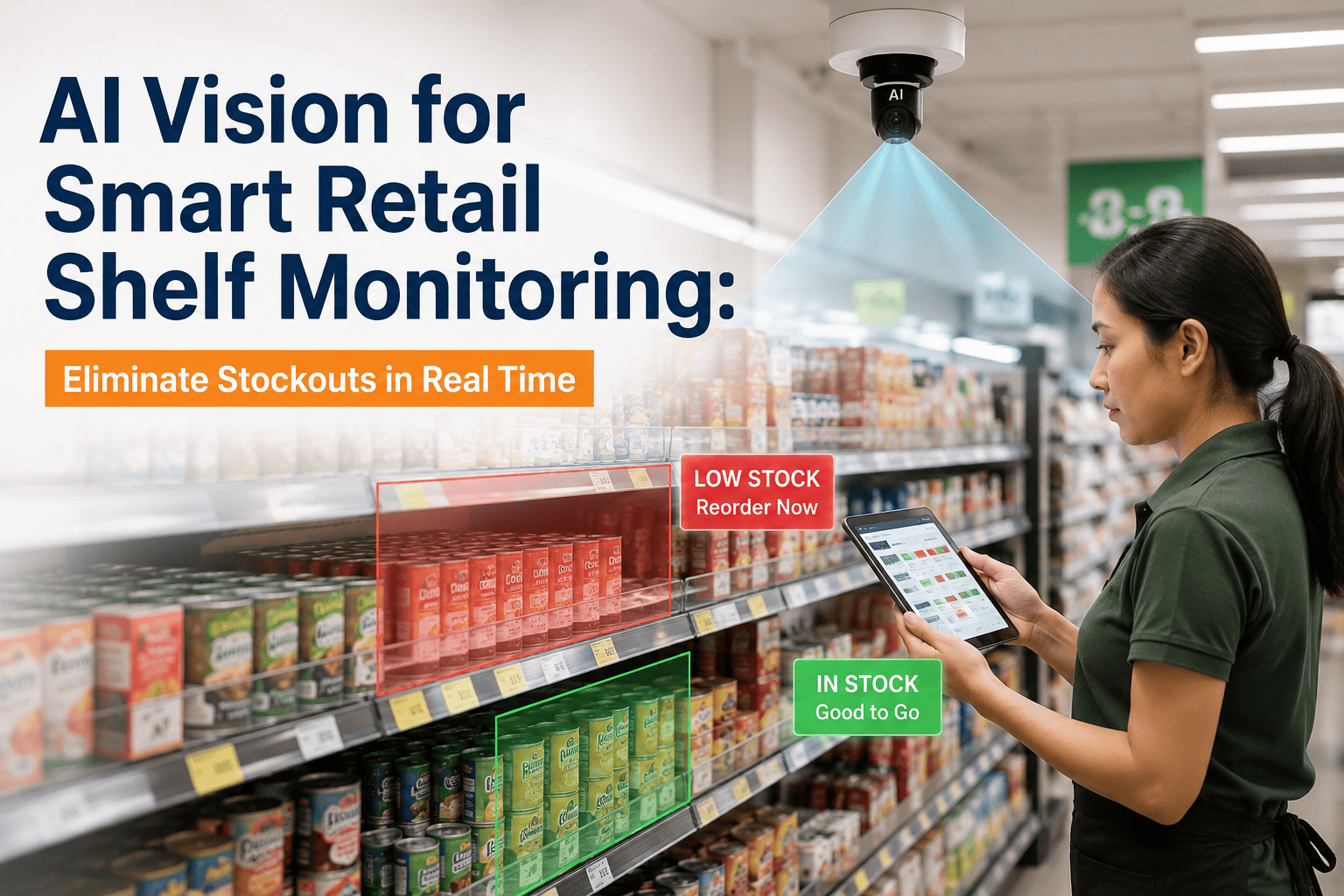
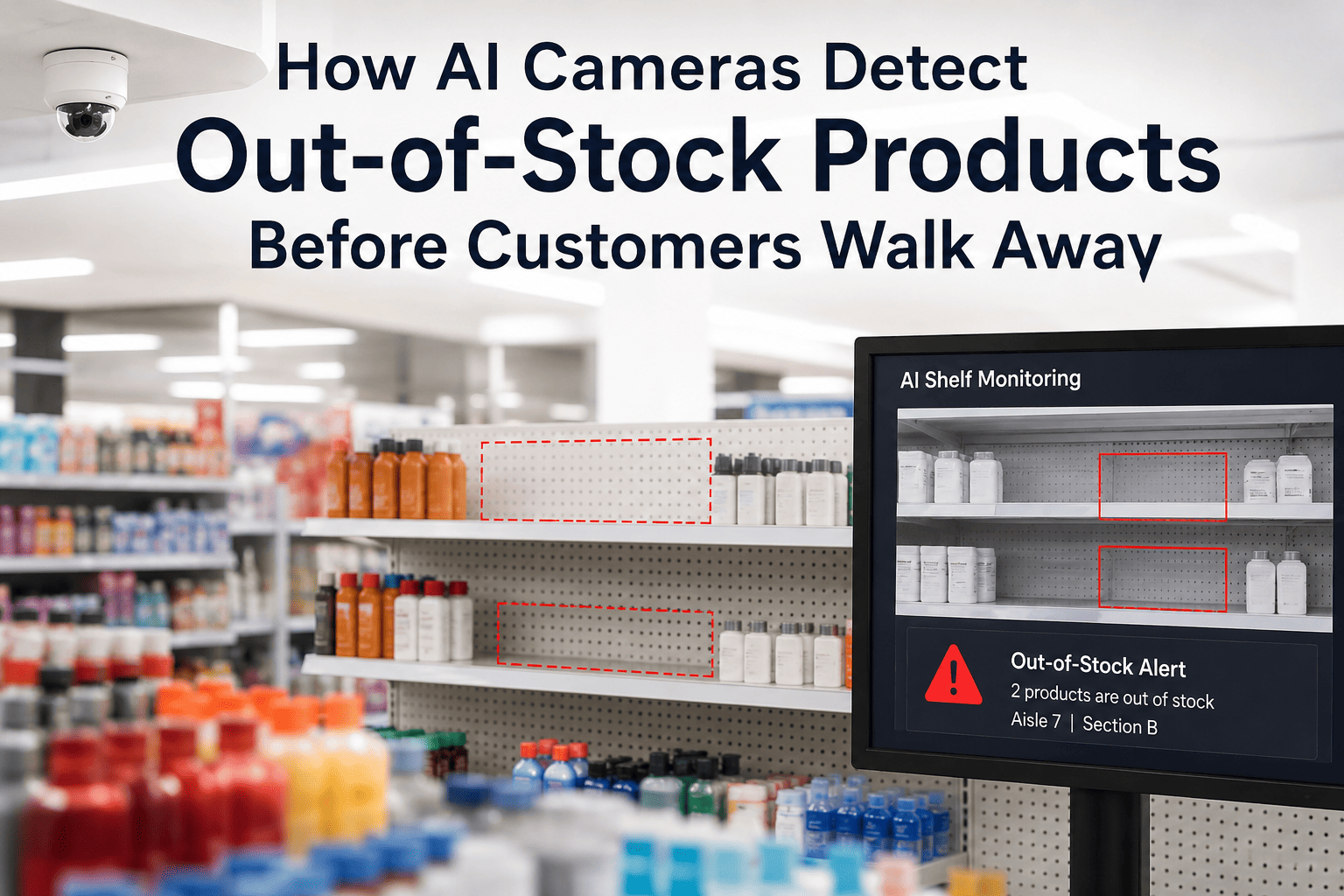
AI cameras catch an empty facing the moment it happens, not on the next scheduled walk, turning hours of blind exposure into a same-shift restock.
Anatomy of a Missed Sale: A Single Stockout, Hour by Hour
Most stockouts are not dramatic supply failures. They are quiet information gaps that widen for hours before anyone notices.
Last unit sells
The facing goes empty during a normal morning rush. The point-of-sale system still shows inventory on hand because the backroom count has not changed.
First shopper turned away
A customer scans the empty section, assumes the store does not carry it, and leaves without asking staff. No system records this moment at all.
Second and third shopper pass by
The gap is now three hours old. Repeat shoppers who trusted the store to stock this item begin quietly reconsidering where they shop next time.
Evening walk-through finds it
An associate finally notices during a routine end-of-shift check, more than seven hours after the shelf went empty, and flags it for restock.
Shelf finally refilled
By the time stock returns, the store has been invisible to every shopper who looked for that item for nearly a full day.
Why the Lag Is the Real Problem, Not the Inventory
The numbers below explain why so many stockouts happen in stores that technically have the product in the building.
of stockouts trace back to store-level execution gaps, not actual upstream supply shortages
of shoppers abandon a retailer entirely, in-store or online, the moment they hit an empty shelf
of annual sales lost to stockouts driven by information lag rather than real inventory shortages
lost globally each year to inventory distortion across the retail industry, per IHL Group research
The "Phantom Stockout" Nobody Catches
The most expensive stockouts are invisible to your own inventory system, because the system is not wrong — it is just blind to the shelf itself.
- Inventory record says 12 units on hand
- Product exists somewhere in the store
- No alert fires, nothing looks wrong
- Replenishment schedule stays untouched
- Facing is completely empty on the floor
- Units are sitting untouched in the backroom
- Every shopper walking past sees zero stock
- The gap can persist for an entire shift
What Closing the Lag Is Actually Worth
Shrinking detection time from hours to minutes is not just an operational nicety — it shows up directly in recovered revenue and protected marketing spend.
Recovered daily sales
Every hour a high-velocity item sits empty is an hour of full-price demand redirected to a competitor. Closing that window to minutes recovers sales that were never actually lost to supply, only to visibility.
Protected promo spend
Marketing dollars driving traffic to a promotional display are wasted the moment that display sits empty. Same-shift restocking keeps the promo window fully stocked for the traffic it was built to capture.
Retained repeat shoppers
Loyalty erodes quietly after two or three stockout experiences on the same staple item. Fixing the gap in the same shift, before a pattern forms, protects the customers most likely to defect permanently.
Lower emergency costs
Stockouts caught early rarely require rush shipping or expedited reorders. Catching gaps within the same shift keeps replenishment on the normal schedule instead of triggering costly emergency procurement.
Find Out How Long Your Own Shelves Sit Empty
Most retailers have never actually measured shelf-to-alert lag time. iFactory can show you that number for your own stores before you commit to anything.
How AI Cameras Actually Catch the Gap in Minutes
The technology is not about replacing the inventory system — it is about giving it eyes on the actual shelf.
Continuous visual scan
Cameras image shelves on a rolling cycle throughout the day, independent of whether an associate happens to walk that aisle.
Planogram comparison
Each image is checked against the expected facing count for that SKU, catching partial depletion before the shelf looks fully bare.
Instant alert routing
A confirmed gap sends an alert directly to the nearest associate's device, with exact aisle, shelf, and SKU already identified.
Automatic close-out
The next scan cycle confirms the shelf has been refilled and closes the alert automatically, with no manual check-off required.
Store Operations Before and After Continuous Detection
The change is not just faster alerts — it is a completely different rhythm for how a store finds and fixes gaps all day.
- Gaps found only during a planned aisle check
- Detection lag measured in hours, sometimes a full shift
- Associates walk aisles that are often already full
- No record of how long a gap actually existed
- Emergency reorders needed when a gap is caught late
- Gaps found the moment a scan cycle catches them
- Detection lag measured in minutes, not hours
- Associates go straight to the exact shelf that needs them
- Full timestamped history of every gap and every fix
- Replenishment stays on its normal, planned schedule
Where Detection Lag Hits Hardest
Not every stockout costs the same. These are the categories where a slow detection loop does the most damage.
Fast-moving grocery and beverage lines
These items can sell out within a single busy hour. A weekly or twice-weekly manual check has almost no chance of catching the gap while it still matters.
Promotional and endcap displays
Marketing spend already committed to drive traffic to that display is wasted the moment it sits empty, and the promo window rarely lasts long enough to absorb a slow detection cycle.
Repeat-purchase essentials
Shoppers who rely on a store for the same staple item every week are the fastest to switch retailers permanently after two or three stockout experiences.
A Store Operations Lead on What Changed
We always assumed our inventory system would tell us when something ran out. It never did, because the backroom count was still accurate — the shelf was just empty. Once we had cameras watching continuously, we realized some of our best-selling items were sitting empty for four or five hours at a stretch, multiple times a week, without a single alert firing anywhere. That was the moment it stopped being a nice-to-have and became something we had to fix immediately.
typical detection time after switching from manual walks to continuous AI scanning
restocking now happens within, instead of the next scheduled visit days later
of the store's own stockouts traced to execution gaps once measured directly
Frequently Asked Questions
If our inventory system already tracks stock levels, why do we still need shelf detection?
An inventory system tracks what is supposed to be in the building, not what is physically visible on the shelf right now. Product sitting in the backroom while the facing is empty is invisible to that system, since the total unit count has not changed. This is exactly what creates a phantom stockout, where every number on the dashboard looks fine while the shelf itself is telling shoppers a completely different story. Shelf-level detection closes that specific blind spot rather than duplicating what inventory software already does.
How fast is same-shift restocking actually achievable?
Once a camera confirms an empty facing, the alert reaches an associate's device within minutes, well within the same shift the gap opened rather than waiting for a scheduled walk-through hours or days later. The speed depends on scan cycle frequency, which can be tuned per aisle based on how fast that category typically sells through, so high-velocity sections get checked more often than slow-moving ones. Book a demo to see realistic detection times for your own store layout.
Does this require replacing our current inventory management software?
No. The AI shelf detection layer is designed to sit alongside your existing inventory and point-of-sale systems, feeding shelf-level visibility into them rather than replacing them. Store teams keep using the same replenishment and ordering workflows they already know, with the addition of real-time alerts that were simply not possible before. Talk to a specialist about connecting your current systems.
Which parts of the store see the biggest improvement first?
High-velocity categories and promotional displays typically show the fastest, most visible improvement, since these are exactly the areas where a slow detection cycle causes the most damage in the shortest amount of time. Most rollouts start with a pilot zone covering these highest-impact aisles before expanding coverage store-wide, which also makes the early results easier to measure and report on internally.
Can this measure how long a stockout has already been happening in our stores?
Yes. One of the most useful early outputs of a pilot is a baseline measurement of actual shelf-to-alert lag time, something most retailers have never had visibility into before. This baseline gives operations teams a concrete number to improve against, rather than relying on assumptions about how quickly staff typically catch a gap during a normal shift.
Measure Your Own Detection Lag Before It Costs You Again
Book a 30-minute walkthrough. iFactory will show you exactly how long shelves in your stores sit empty right now, and what closing that gap to minutes would be worth.