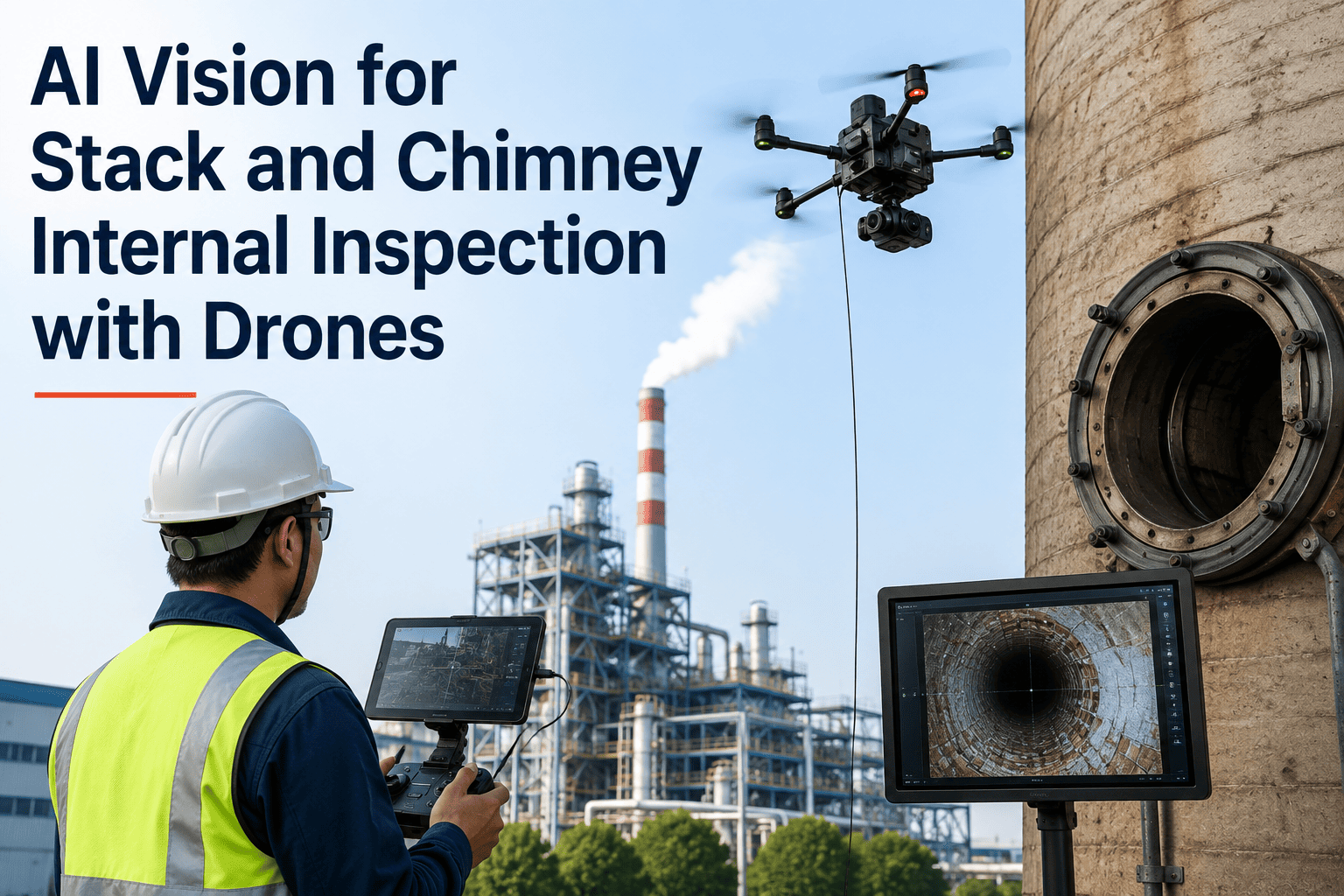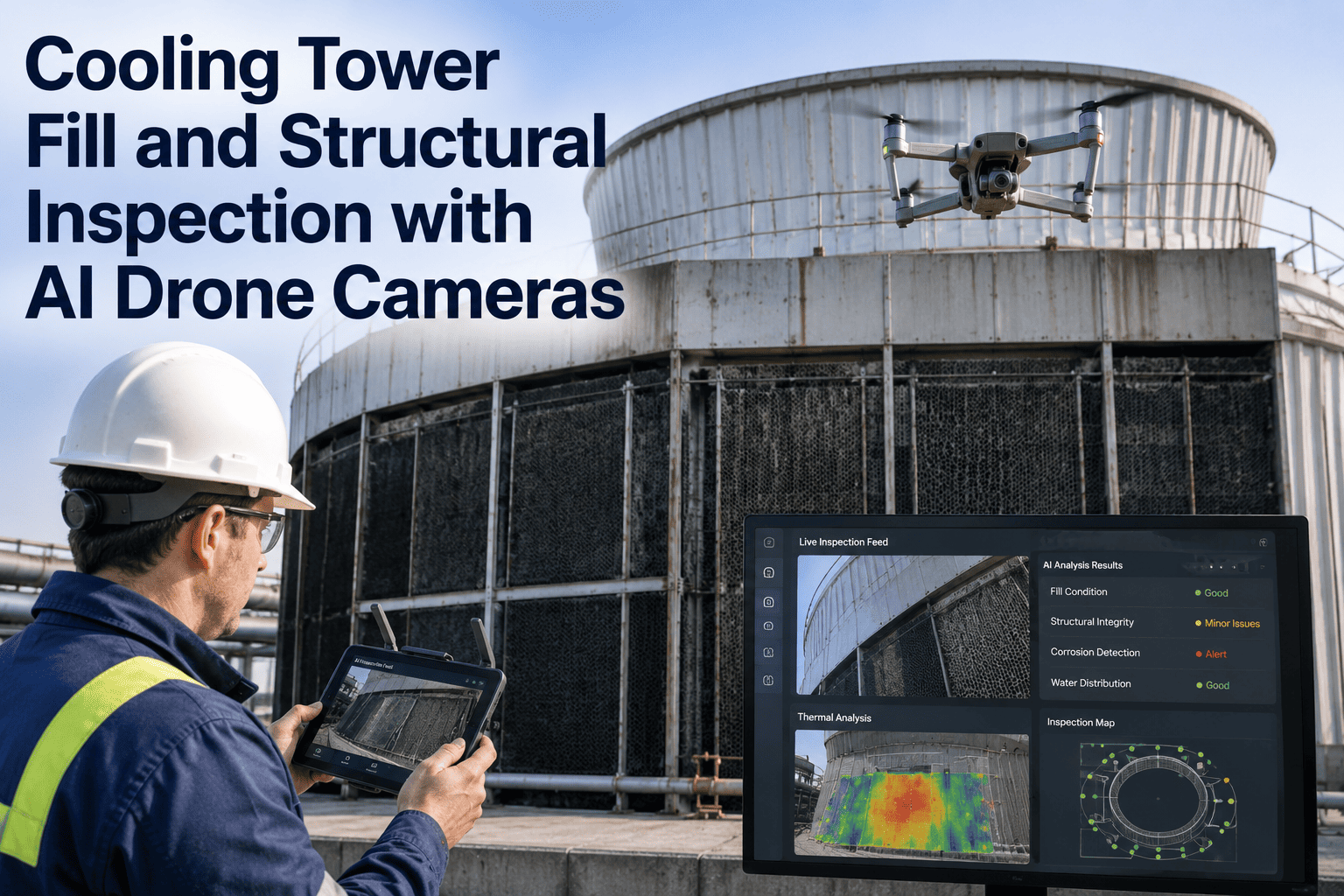
A boiler drum inspection used to mean a two-day shutdown just to get someone inside it: scaffolding crews, confined space permits, atmospheric testing, a standby rescue team, and a technician crawling through a manhole with a flashlight and a clipboard. None of that preparation actually finds the defect faster, it just makes entry survivable. Autonomous indoor drones now fly that same boiler interior in under twenty minutes, navigating entirely without GPS, and hand back a searchable 3D model before the confined space permit would have even finished processing. iFactory pairs that flight data with AI defect detection so every crack, corrosion patch, and hot spot gets logged automatically, and you can book a demo to see how it fits your next internal inspection.
Send the Drone In Before You Send a Person In
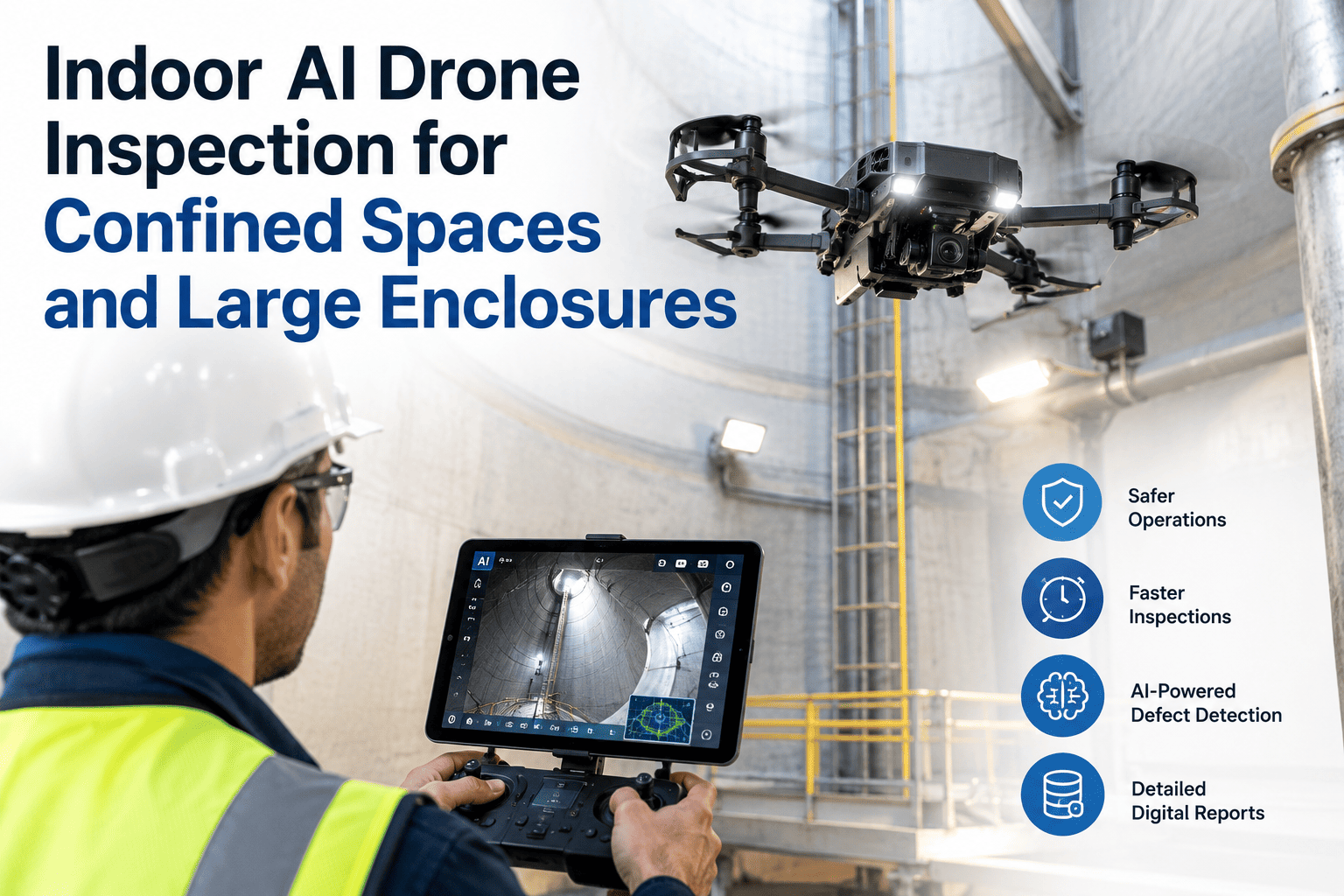
Boiler interiors, tank internals, silos, and large enclosed buildings all share the same problem: no GPS signal, tight clearances, and a real cost every time a human has to enter. iFactory-guided indoor drones use LiDAR and visual-inertial navigation to fly these spaces autonomously, and AI flags defects on the data the moment the flight lands.
Every Confined Space Entry Starts a Cost Clock Before Anyone Finds a Defect
Permit-required confined spaces are not rare in industrial facilities, they are everywhere: boiler drums, condensers, SCR catalyst chambers, coal bunkers, flue gas ducts, storage tanks, silos, and underground vaults all meet OSHA's definition the moment they are large enough to enter and not built for continuous occupancy. Every one of those spaces triggers the same sequence before a single measurement gets taken, atmospheric testing, permit issuance, a standby rescue team, and often scaffolding just to reach the area that actually needs to be inspected. That sequence is necessary when a person truly has to go inside. The problem is that most internal inspections do not need a person inside at all, they need eyes and sensors, and a drone can deliver both without the permit clock ever starting.
The financial weight of this shows up in ways most maintenance budgets never separate out cleanly. Scaffolding rental and erection alone can run into the tens of thousands of dollars for a single large tank, and that cost is paid whether the inspection finds a serious defect or nothing at all. Add the standby rescue crew, the atmospheric monitoring equipment, and the lost production time while the asset sits offline waiting for access to be built, and a routine internal check starts to look less like a maintenance task and more like a small capital project. None of that spend improves the inspection itself, it only makes physical entry possible, which is exactly the part of the process an indoor drone removes entirely.
Inside a Tank, There Is No Satellite Signal to Fly On
Outdoor inspection drones lean on GPS for position, and that works fine above a stack or a solar field. Step inside a steel tank, a boiler drum, or a windowless plant building and that signal disappears completely, which is exactly why most drone crashes in confined spaces trace back to a platform that was never built for GPS-denied flight in the first place. Indoor-rated drones solve this with a different navigation stack entirely, one that builds its own map of the space in real time instead of relying on a signal from orbit.
These systems work together rather than independently. LiDAR builds the geometric skeleton of the space, visual odometry keeps the drone stable when the LiDAR return is sparse, such as against a smooth uncluttered tank wall, and the lighting system makes sure the camera payload is actually capturing usable footage the whole time. The result is a drone that can hold a stable hover a few feet from a surface, in total darkness, with no external reference point, which is a fundamentally different engineering problem than flying an outdoor platform across an open substation yard. Facilities that have tried adapting an outdoor-rated drone for indoor work usually learn this the hard way, either through a lost signal mid-flight or a collision that an indoor-rated frame would have simply absorbed.
See What AI Catches That a Flashlight Inspection Misses
iFactory runs defect detection on every frame a drone captures inside your tanks, boilers, and enclosed structures, flagging corrosion, cracking, and thinning before they become failures. Book a demo and walk through a sample flight from your own facility type.
A Flight Is Just Video Until Something Analyzes It
A drone flying a tank interior solves the access problem, but access alone does not find a defect, someone or something still has to review every frame and recognize what matters. Reviewing forty minutes of raw footage by eye is slow and inconsistent, which is exactly the gap AI-assisted analysis closes. iFactory processes the flight data as it comes in, tagging defects to their exact location inside the 3D model so nothing depends on a reviewer remembering which frame looked concerning.
The model behind this detection is trained specifically on internal industrial surfaces, tank steel, boiler tubing, refractory lining, and coated substrate, rather than a general-purpose vision model repurposed for inspection. That distinction matters in practice, because a generic model tends to either miss subtle early-stage corrosion or flag so many false positives that reviewers stop trusting the output altogether. iFactory's detection layer is tuned against the failure modes that actually show up in these assets, so the defect log a technician receives reflects what a senior inspector would flag, not what a model trained on unrelated imagery happens to notice.
Any Enclosed Asset That Is Expensive or Risky to Enter
Confined spaces show up across almost every heavy industry, and the shape of the space changes what the inspection actually needs. A boiler drum and a wastewater wet well have nothing in common structurally, but both share the same underlying problem, a person has to go somewhere small, dark, and hazardous just to look around. iFactory-guided drones are configured differently depending on the asset, but the outcome is the same across all of them.
What ties these industries together is not the equipment, it is the pattern of risk. Anywhere a facility has an enclosed asset that is expensive to access, hazardous to enter, or both, the calculation tends to favor sending a drone first and reserving human entry for the moments when physical work is genuinely required. Facilities that adopt this pattern broadly, rather than for a single asset class, tend to see the biggest shift in how outages get scheduled, since inspection no longer has to compete with repair work for the same access window.
The Decision Comes Down to What the Inspection Actually Requires
Drone inspection is not a replacement for every confined space entry, some work genuinely requires hands, tools, or physical repair that only a person can do. What it does replace is the entry that exists purely to look, and that is the majority of internal condition checks most facilities run every year.
| Factor | Human Confined Space Entry | iFactory Drone Inspection |
|---|---|---|
| Preparation Required | Permit, atmospheric testing, standby rescue, scaffolding | Launch from the access hatch, no permit trigger for the flight |
| Time to First Data | Hours to days depending on access setup | Minutes from hatch opening to flight completion |
| Risk Exposure | Atmospheric, engulfment, and fall hazards to a person | No person enters the hazardous space at all |
| Data Format | Notes, photos, and memory-dependent observations | Full 3D model with every defect geo-tagged and searchable |
| Repeatability | Depends on which inspector did the walkthrough | Same flight path and AI review every time, comparable over years |
From Launch to Work Order in One Session
The value of an indoor drone inspection is not the flight itself, it is what comes out the other side. iFactory turns each flight into a structured output your maintenance team can act on immediately, not a folder of raw video someone has to review later.
None of these outputs require a specialist to interpret them before a decision gets made. A plant manager reviewing the defect log can see exactly what was found, where it sits inside the asset, and how it compares to the last inspection, all in the same session the flight was completed. That immediacy is what changes an inspection from a documentation exercise into an actual input for scheduling the next maintenance cycle, rather than a report that gets filed away until someone has time to read it.
What Teams Ask Before Their First Indoor Drone Flight
Map Your Next Confined Space Before Anyone Steps Inside
iFactory-guided indoor drones fly boilers, tanks, and enclosed structures without GPS, and AI flags every defect the moment the flight lands. Book a demo and bring your next outage schedule.