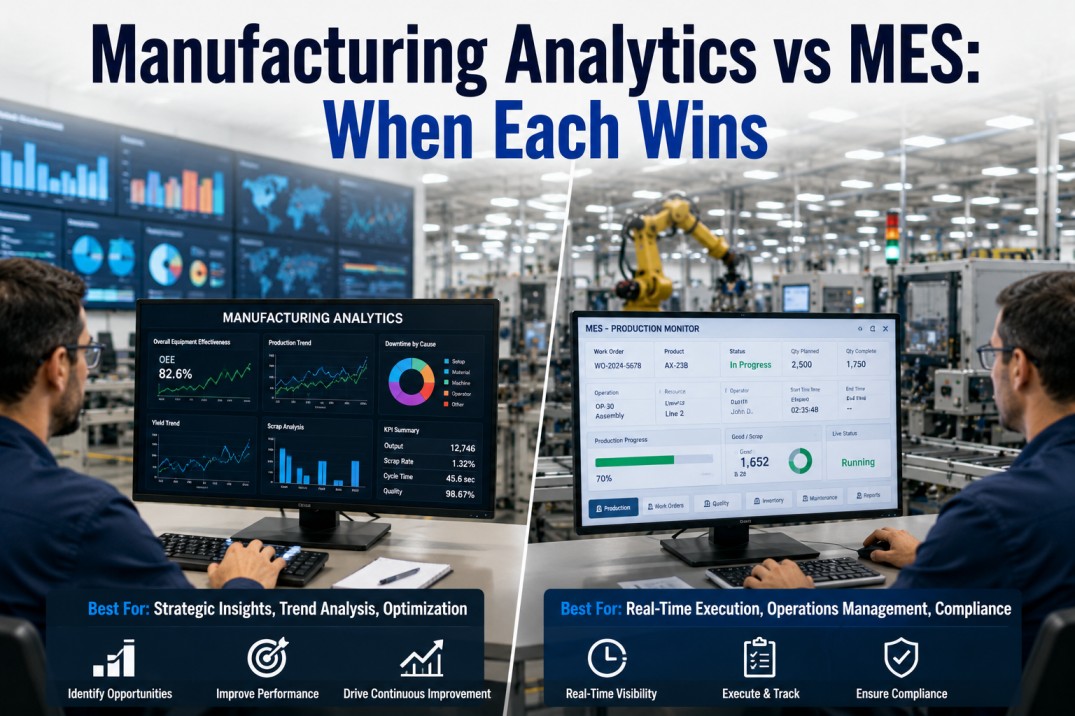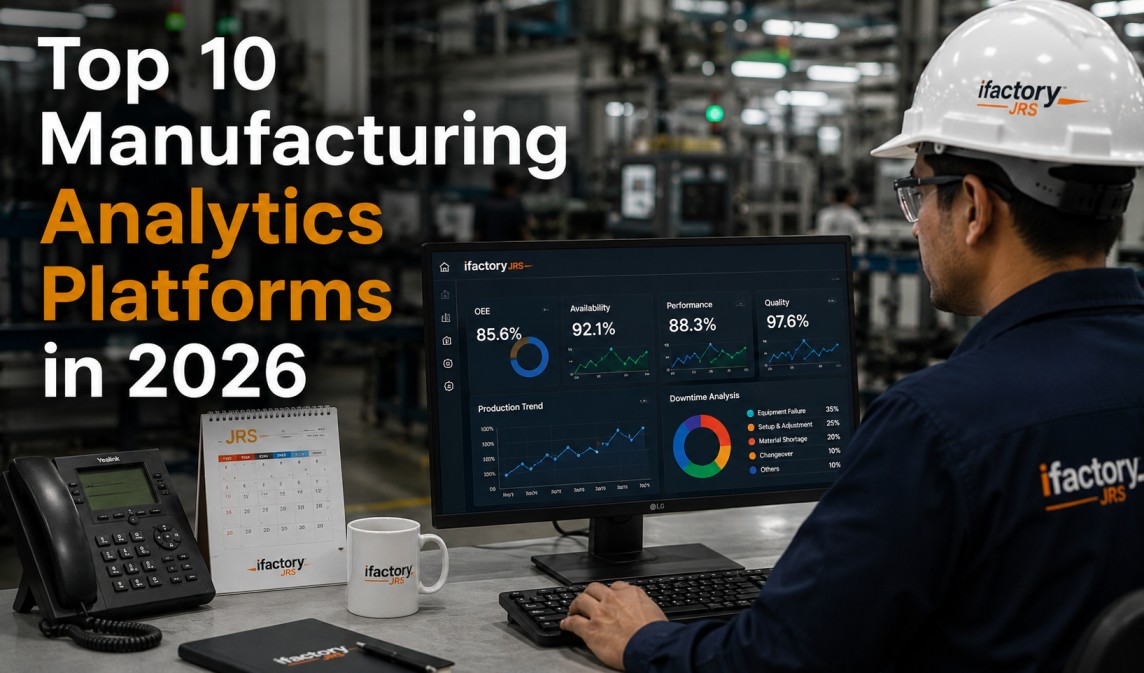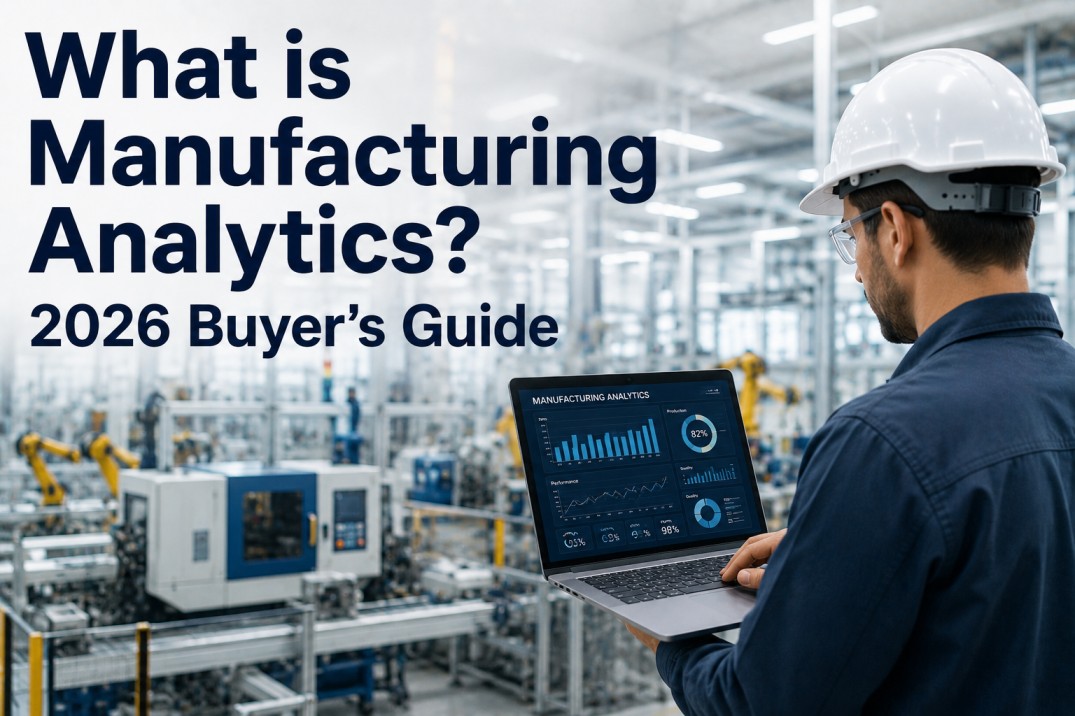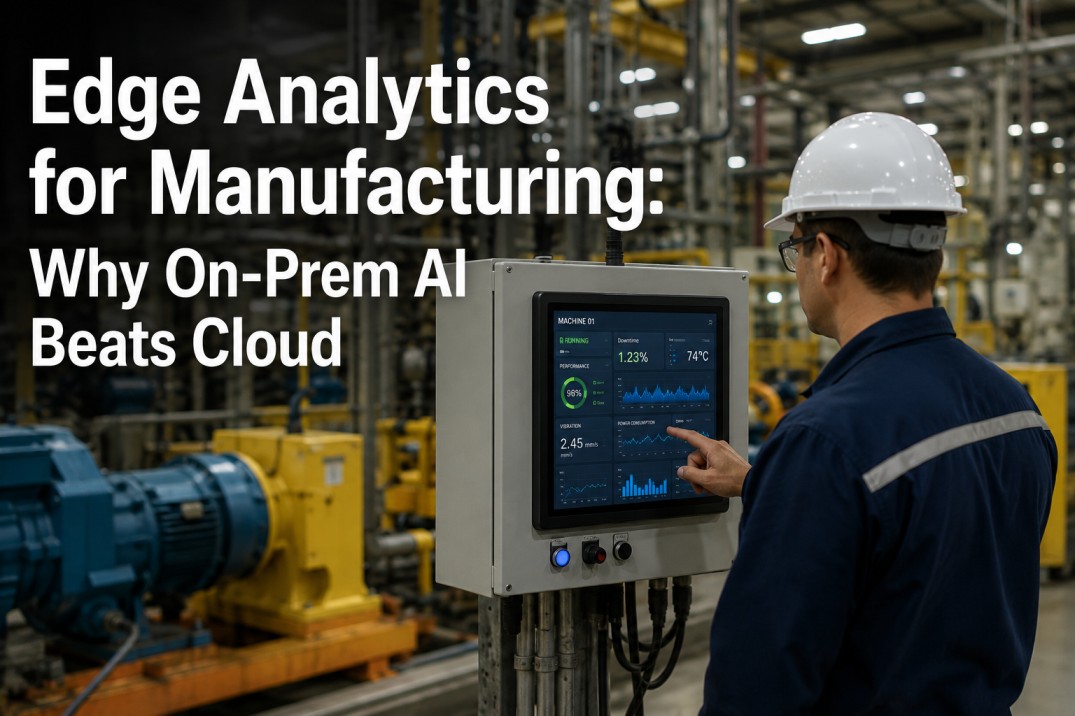
Edge analytics processes data on the plant floor instead of sending it to the cloud. The shift is driven by latency requirements for real-time quality control, bandwidth costs for high-frequency sensor data, and security concerns around production data leaving the plant. iFactory ships a pre-configured NVIDIA edge appliance that connects to existing PLCs and sensors in under two hours.
This guide compares edge and cloud across the dimensions that matter — latency, cost, security, sovereignty, and deployment complexity — with real benchmarks from iFactory deployments across 50-plus plants.
Edge Analytics Pre-Deployed on NVIDIA Hardware
iFactory ships a fully configured edge analytics appliance that connects to your existing PLCs and sensors in under 2 hours. No cloud required, no IT overhaul. See the live dashboard in a 30-minute demo tailored to your plant.
Edge vs Cloud: Five Critical Dimensions
Each dimension scored 1-10 with real deployment data. The winning model is highlighted.
Decision Framework: Which Model Fits Your Plant?
Match your plant profile to the right model. Each scenario is based on real iFactory deployments.
Line runs 60-plus parts per minute. Cloud latency would scrap batches before alerts fire.
CHOOSE EDGE ANALYTICSNVIDIA appliance connects directly to vision system. 4-8ms inference, zero network dependency.
Five plants, reliable internet, need cross-site OEE and yield dashboards.
CHOOSE CLOUD ANALYTICSAggregated metrics pushed to cloud hourly. Real-time loops stay on edge.
Limited internet or strict data localization laws. Plant must run independently.
CHOOSE EDGE ANALYTICSSelf-contained stack with local dashboards, 90-plus days storage, optional periodic sync.
Variable capacity. Analytics must scale during peaks without permanent over-investment.
CHOOSE HYBRID EDGE PLUS CLOUDEdge for real-time baseline. Cloud burst for advanced analytics during peak months.
How Edge Analytics Works: The Three-Step Pipeline
Three stages from sensor to decision. All processing stays local unless cloud sync is enabled.
The edge appliance connects to existing PLCs, sensors, and SCADA through OPC-UA, Modbus, MQTT, or PROFINET. Data is ingested at machine-native frequency — 10-100ms for real-time signals, 1-5s for process parameters. No additional sensors or gateway changes required.
The NVIDIA Jetson Orin NX runs trained AI models locally — anomaly detection, quality prediction, OEE, predictive alerts — in 4-12ms per inference. Up to 90 days of data stored on encrypted local storage. Zero cloud dependency.
Alerts and dashboards served to operator terminals with sub-second latency. Alerts can trigger relay outputs or MQTT commands to control systems. Optional cloud sync for multi-plant reporting is fully configurable and can be disabled for air-gapped setups.
The iFactory Edge Analytics Appliance
Pre-configured NVIDIA Jetson Orin NX appliance with all software and models pre-installed. Ready to connect within two hours of unboxing.
Latency Benchmarks: Edge vs Cloud
95th percentile inference times from iFactory automotive, electronics, and food and beverage deployments. 10,000-plus production cycles per benchmark.
Five-Year Total Cost of Ownership
20-machine single-plant deployment. Edge is upfront hardware; cloud accumulates through storage, compute, and egress. All figures from iFactory pricing and standard cloud provider rates.
| Cost Component | Edge Five-Year Cost | Cloud Five-Year Cost |
|---|---|---|
| Hardware and Infrastructure | $15,000 one-time | $2,500 initial setup |
| Connectivity and Data Transfer | No cloud dependency, no recurring cost | $18,000 at $300 per month for 1TB |
| Cloud Compute and Storage | All local processing, no recurring cost | $36,000 at $600 per month |
| Software Licensing | $18,000 at $3,600 per year | $30,000 at $6,000 per year |
| Maintenance and Support | $7,500 at $1,500 per year | $12,500 at $2,500 per year |
| Total Five-Year Cost | $40,500 | $99,000 |
Edge vs Cloud: When to Choose Each Model
Most plants run both: edge for real-time control, cloud for reporting. Map your use case below.
- Latency under 50ms required for quality or safety
- Data sovereignty restricts cross-border transfer
- Plant network is unreliable or limited bandwidth
- Sensitive data must never leave the facility
- Cross-plant aggregation and benchmarking is the goal
- Large GPU clusters needed for model training
- Seasonal capacity exceeds local hardware limits
- IT prefers centralized management with minimal on-site hardware
- Real-time control and multi-plant reporting both needed
- Production varies seasonally, cloud burst helps
- Models trained in cloud, deployed to edge for inference
- Gradual migration from cloud-only to edge-first
Frequently Asked Questions About Edge Analytics in Manufacturing
Can edge analytics work without any internet connection at all?
Yes. All ingestion, AI inference, dashboards, alerts, and storage run without internet. The appliance connects to operator terminals through a local network switch. Cloud sync is optional, configurable, and can be disabled entirely for air-gapped environments.
How does edge handle model updates without cloud connection?
Updates are delivered through a local update server on the plant network or via USB drive. The appliance supports A-B partition switching: updates are tested on a non-active partition and rolled back instantly if performance degrades, ensuring zero downtime.
What happens if the edge appliance fails?
MTBF exceeds 50,000 hours. For critical lines, active-standby pairs provide automatic failover within seconds. For standard deployments, a replacement can be configured from a backup image and deployed in under 30 minutes.
Can edge work with my existing cloud platform?
Yes. The edge appliance syncs to AWS IoT Core, Azure IoT Hub, Google Cloud IoT, or standard MQTT brokers through a configurable agent that filters, aggregates, and encrypts data. IT teams control exactly which data leaves the plant.
How many machines can one edge appliance support?
Up to 50 machines depending on data frequency and model complexity. A typical 10-20 machine deployment with two models per machine runs at roughly 30 percent CPU utilization. Scale by adding one appliance per production cell, all managed from a single dashboard.
How do edge and cloud differ for model training?
Training happens in the cloud on large GPU clusters. The trained model is deployed to the edge for inference. iFactory manages the training pipeline centrally and pushes model updates to edge appliances. For custom models, local training is available on the same NVIDIA hardware.
Deploy Edge Analytics in Your Plant This Quarter
Pre-configured NVIDIA appliance, pre-installed models, guided setup. Connect to existing PLCs and sensors. Live dashboard within two hours of unboxing. No cloud dependency, no IT project.