If you run a cheese or yogurt line, you know the feeling: the run started fine, everything looked normal, and hours later the lab or the packaging end tells you the fat content walked off-target and half the batch is out of spec. The cause was almost always upstream, in the separator — the high-speed centrifuge spinning milk at up to 10,000 RPM to split cream from skim. When its disc stack wears or it drifts, the separation quietly degrades, and your first-pass yield goes with it — and the drift is invisible from where you stand until it's already cost you a run. AI vision is, put simply, a second set of eyes that never blinks, watching both the separator and the product so drift gets caught in minutes, not hours, while you can still correct it. You can book a demo to see it on your line.
Separator Drift Kills First-Pass Yield — Before You Ever See It Coming
A second set of eyes that never blinks, watching the separator and the product together — so drift on your cheese and yogurt lines gets caught in minutes and corrected before the run is lost, not discovered in the lab hours later.
The Separator Is Where Your Yield Quietly Leaks
Let's keep this plain. The separator's whole job is to spin milk fast enough to split it cleanly into cream and skim, and to hold that split exactly where your recipe needs it. When it's healthy, your fat content lands on target and the product runs right the first time. When it starts to drift, everything downstream inherits the problem — and by the time it shows up as an off-spec batch, the run is already made. These are the ways separator drift shows itself.
When separation efficiency slips, more fat ends up in the skim than should — the clearest early sign the separator isn't splitting as cleanly as it did. Left alone, it walks your fat content off-target across the whole run.
The cream coming off should match what the math says you'll get from the milk going in. When actual yield deviates from that theoretical number, the separator is telling you it's losing performance — quietly, before any alarm sounds.
Disc-stack wear and imbalance show up as rising vibration, creeping motor current, and bearing temperatures running hotter than normal. These are the mechanical tells that separation trouble — and a possible breakdown — is coming.
In cheese and cultured products, the fat-protein ratio has to stay in a tight band for texture and yield. Separator drift nudges it out of that band, and the result is a product that fails on texture or standard — a first-pass-yield hit.
This Isn't About Trying Harder — It's About Biology and Timing
None of this is a knock on operators. The reason drift slips through is that it's genuinely impossible to catch by eye and gut alone, and it has nothing to do with how good you are at your job. Two honest facts about the situation make that clear.
A separator losing a little efficiency doesn't look different from the floor — the milk still flows, the machine still spins. The change is in numbers too small and slow to see, so the first visible sign is an off-spec product that's already been made. You're being asked to catch something that shows no symptom until it's too late.
Sustained perfect attention across an eight-hour shift isn't something people are built for — the gap between what you catch early and late in a shift widens after about hour four, as fatigue naturally compounds. That's not a flaw to fix with discipline; it's why the job needs a tool that doesn't get tired.
Catch the Drift While You Can Still Fix It
iFactory's AI vision watches the separator and the product so drift surfaces 5 to 15 minutes before it crosses spec — turning a lost run into a quick correction you make yourself.
A Second Set of Eyes on the Separator and the Product
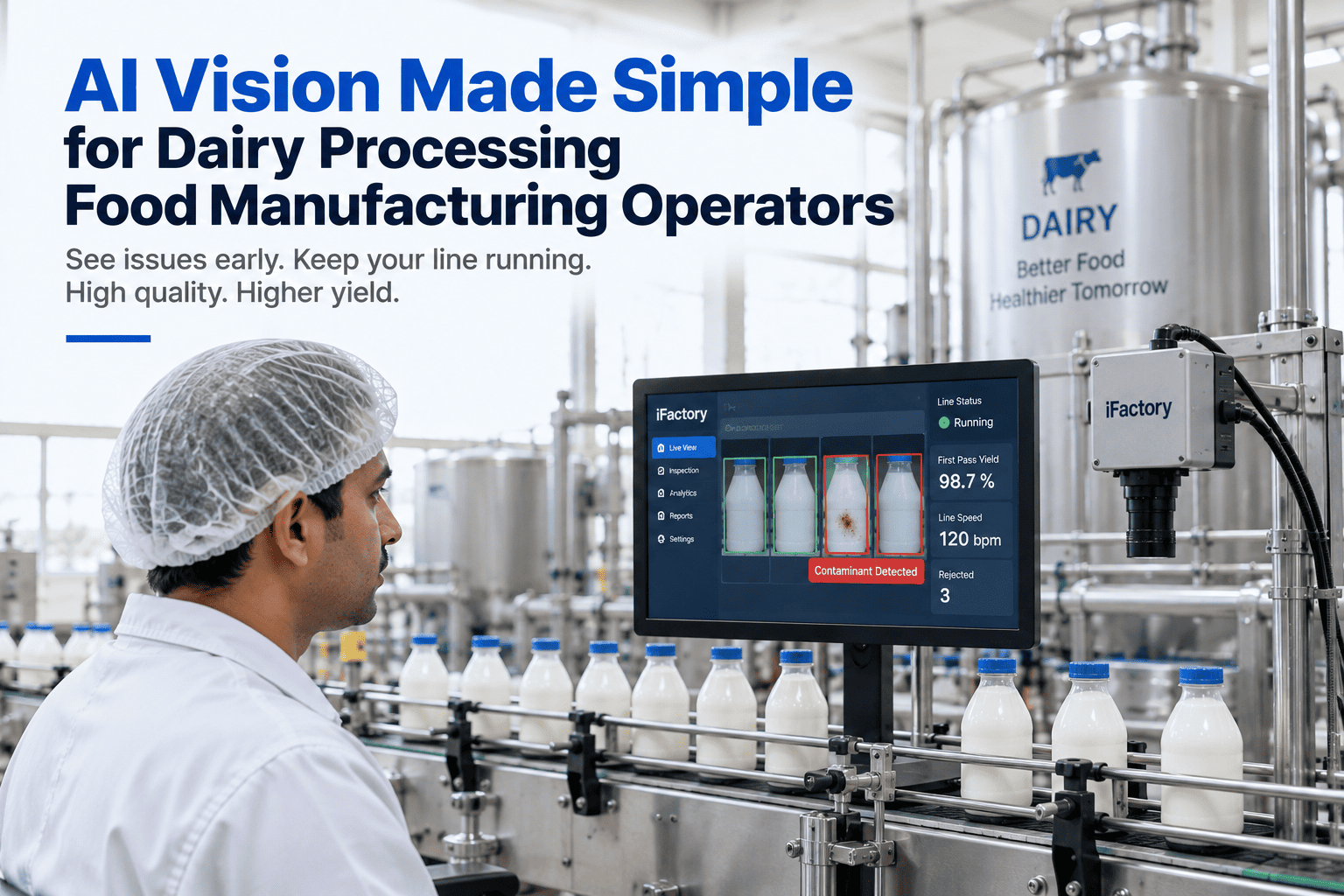
Here's what "AI vision" really means on your line, without the jargon. It's a system watching continuously — the separator's behavior and the product coming off it — that has learned what normal looks like and flags the moment something starts to move. It never blinks, never gets tired, and checks every unit, not a sample. This is what it's actually doing while you run the line.
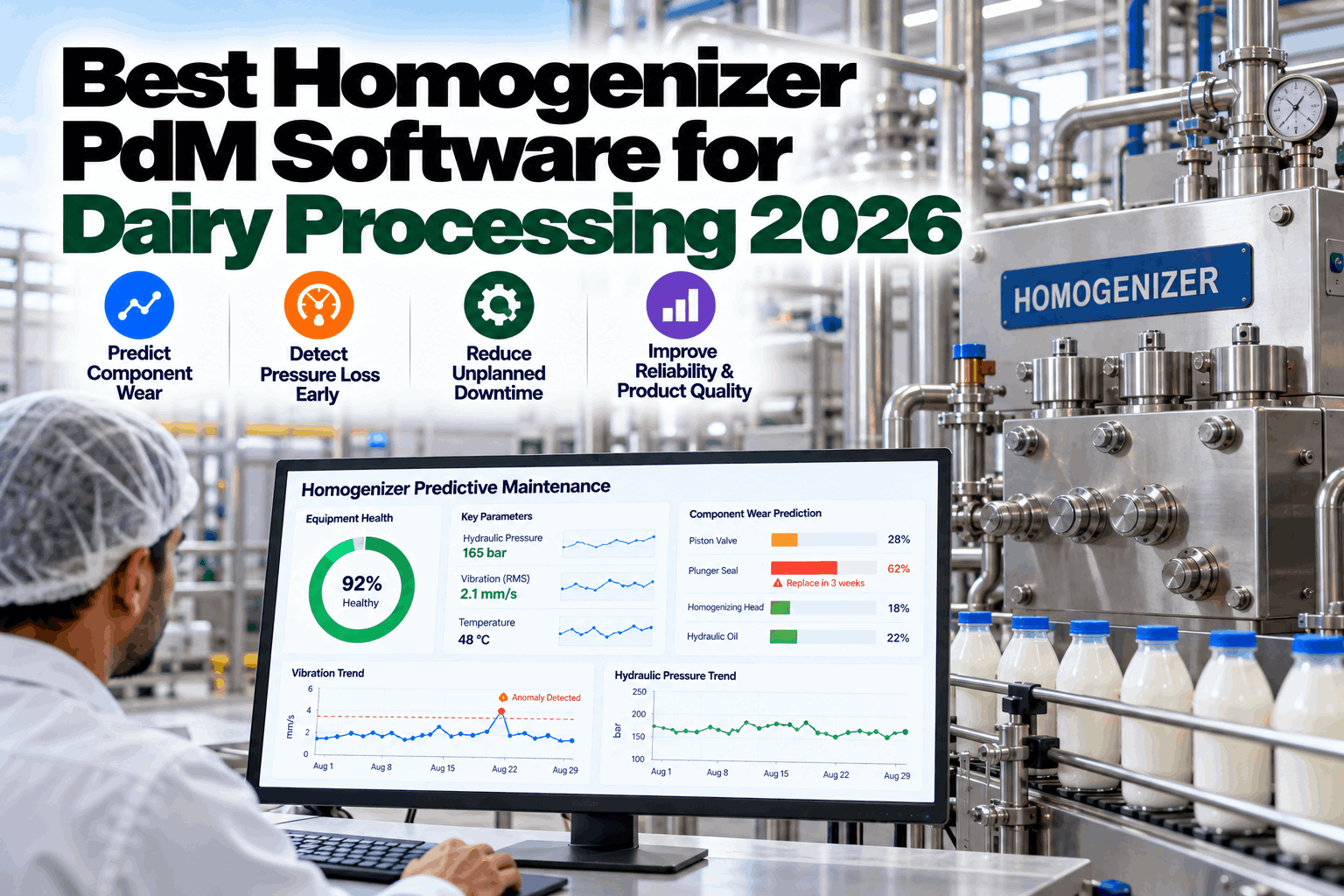
It tracks the separator's vibration, motor current, bearing temperature, and separation performance against their healthy baseline — so a disc stack starting to wear or a split starting to drift shows up as a trend long before it becomes an off-spec run.
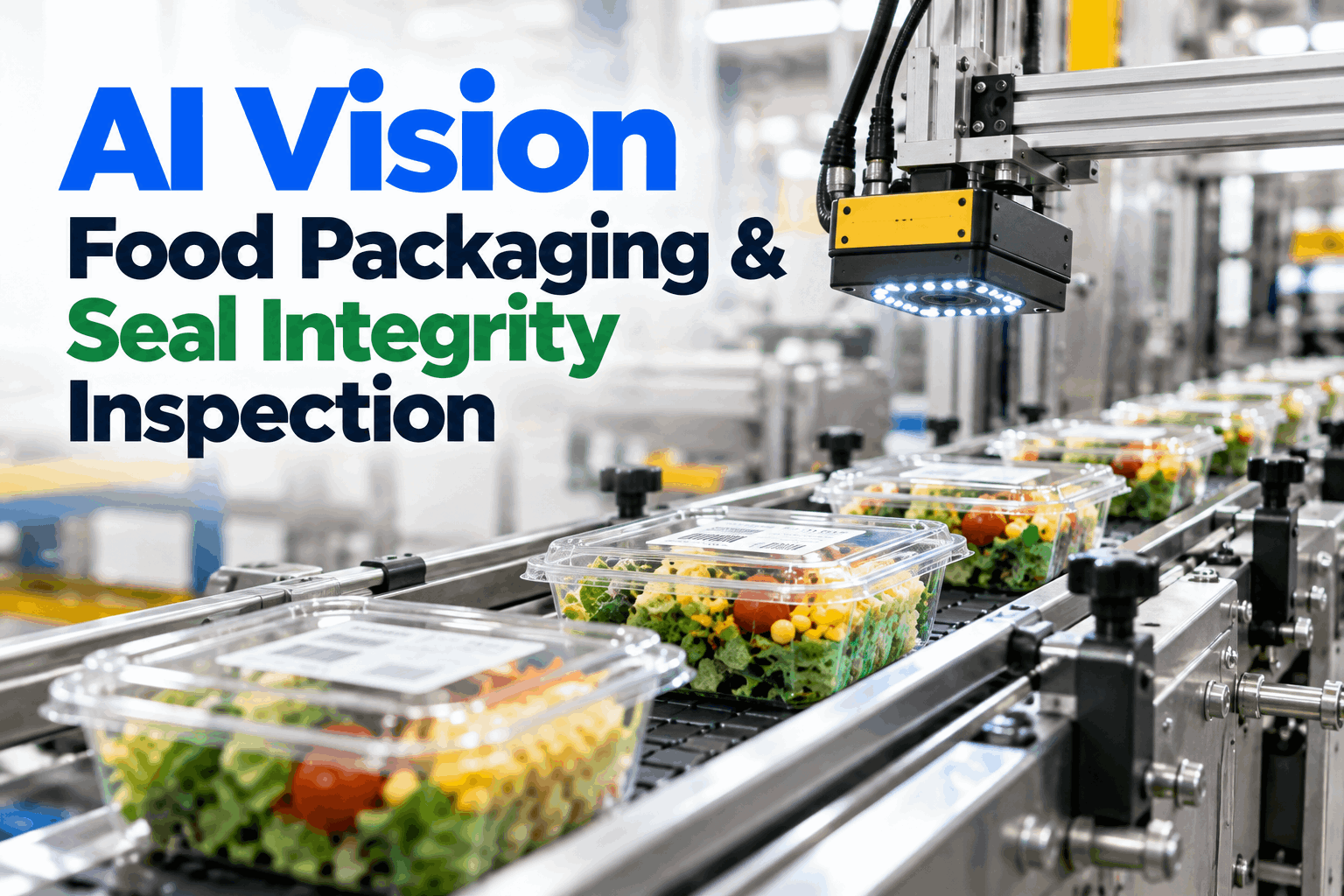
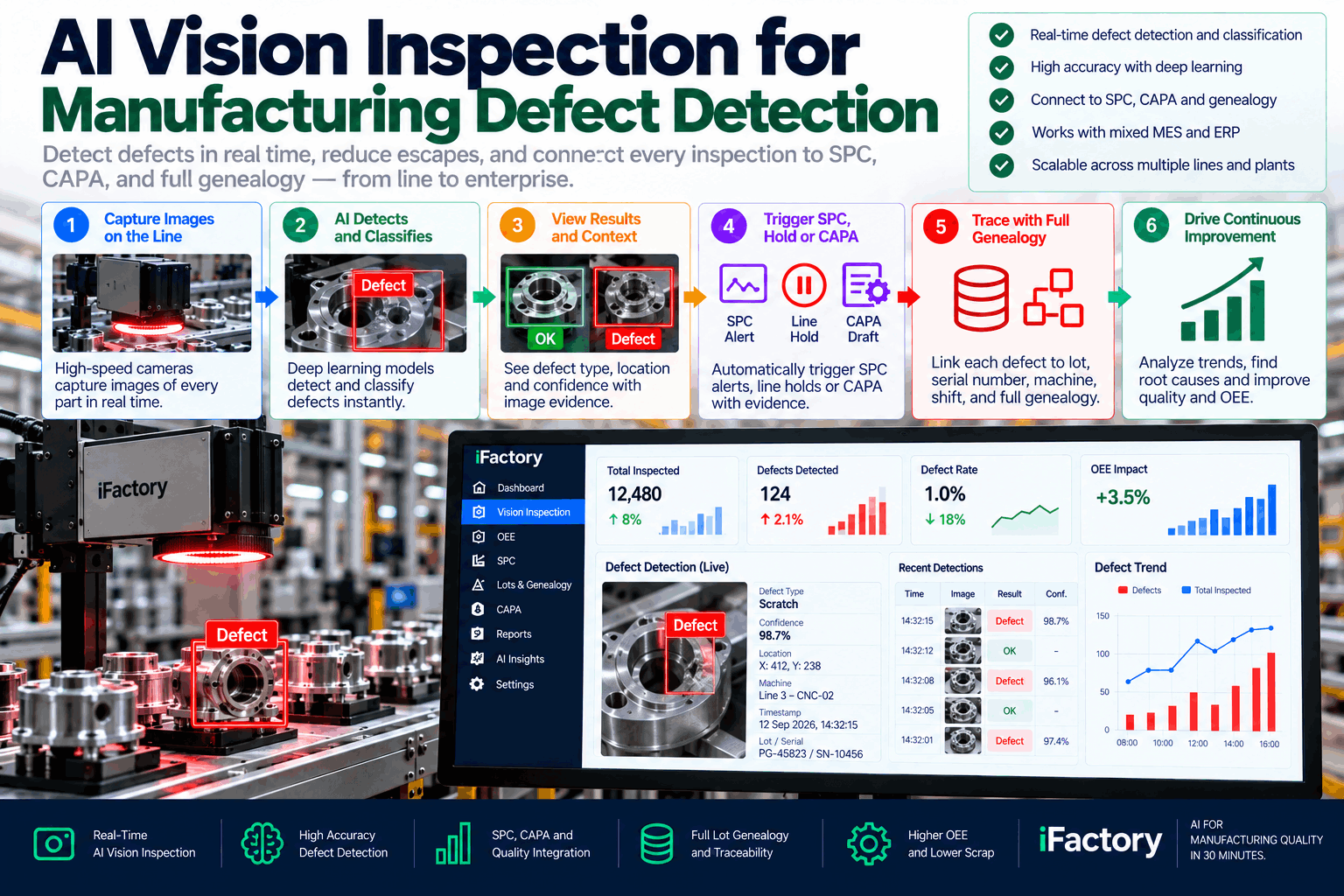
Downstream, it checks every cheese block, wheel, or yogurt cup at full line speed — fill level, seal, label, contamination, defects — catching what the eye misses at four containers a second, so nothing gets past on a tired shift.
Because it sees both ends, it can link a change in the separator to the product problem it's about to cause — so instead of guessing why the batch drifted, you get pointed at the separator that's the actual reason.
The whole point is timing: the alert reaches you 5 to 15 minutes before the drift crosses spec, while the product is still good and a small adjustment saves the run — not in a lab report after it's already scrap.
From Finding Out Too Late to Fixing It in Time
The real difference AI vision makes is in how your shift actually feels and runs. It's the shift from being told about a problem after it's cost you, to being warned about it while you can still do something. This is what changes on the line.
Without early warning, separator drift is typically discovered 30 minutes to two hours after it starts — usually when the lab confirms an off-spec result or the packaging end flags a problem. By then the investigation is forensic, the product is made, and the same drift often comes back next quarter because the root cause was never really pinned down.
With AI vision, the drift surfaces 5 to 15 minutes before it crosses spec, the likely cause is already pointed at the separator, and the fix shows up as a clear next step — so you correct it yourself, keep the run on-spec, and the first-pass yield stays where it should be. The problem becomes a small adjustment instead of a lost batch and a write-up.
Right the First Time Is Where the Money Is
First-pass yield — the share of product that comes out right the first time, with no rework, downgrade, or scrap — is the number that quietly decides a dairy line's profitability. Separator drift is one of its biggest silent enemies, and catching that drift early is how AI vision moves the number. Here's how it adds up.
Every run that stays on-spec because drift was caught early is a batch that doesn't get downgraded, reworked, or dumped — the most direct first-pass-yield gain there is, and it comes from minutes of early warning.
When fat content and fill are held on target instead of run rich to stay safe, you stop giving away product you're not paid for — a steady saving on every unit, not just the ones that would have failed.
The same signatures that flag drift also warn of a bearing or disc-stack heading for failure — so you plan the fix into a stop instead of the separator taking the line down mid-run, which protects yield and uptime together.
On the packaging end, catching a mislabel, a bad seal, or contamination before it leaves the plant protects against the customer complaint and the recall — the rare event that dwarfs every other quality cost when it happens.
Made Simple Means Simple to Run, Too
"Made simple" isn't just about the explanation — it's about what it's like to actually have this on your line. The system is built to help the operator, not add another complicated thing to babysit, and to fit the plant you already run. Here's what that means in practice.
It arrives as a pre-configured AI server, racked and ready — no assembling a system from parts. It plugs into power and network and connects to the line, so the heavy setup is done before it reaches you.
From arrival to running on your line is typically 6 to 12 weeks, including connecting to your equipment, learning your normal, and a pilot — a real timeline, not a multi-year project that never quite lands.
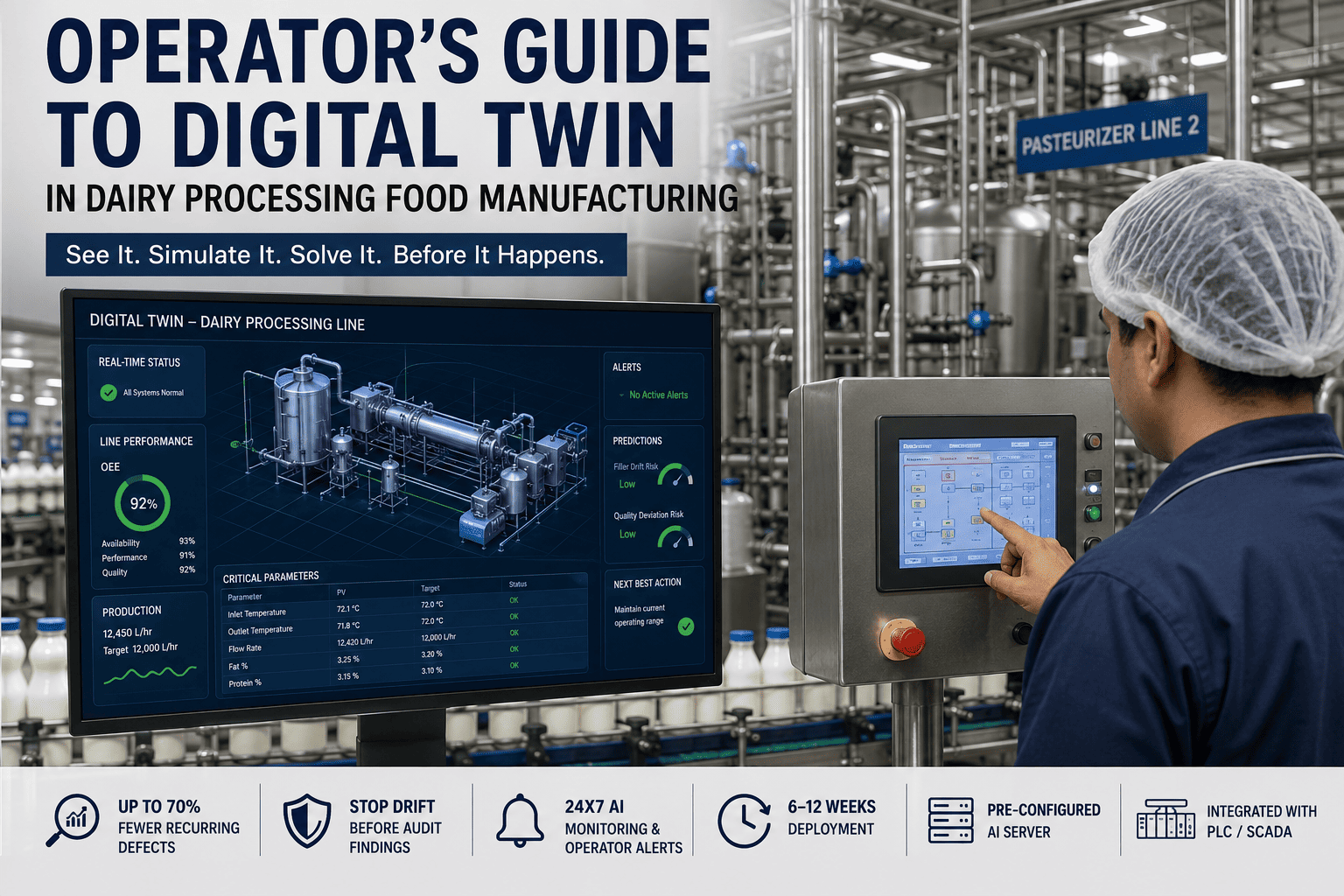
It integrates with the PLC and SCADA systems already running your separator and lines, so it reads real process data and fits your controls rather than asking you to replace them.
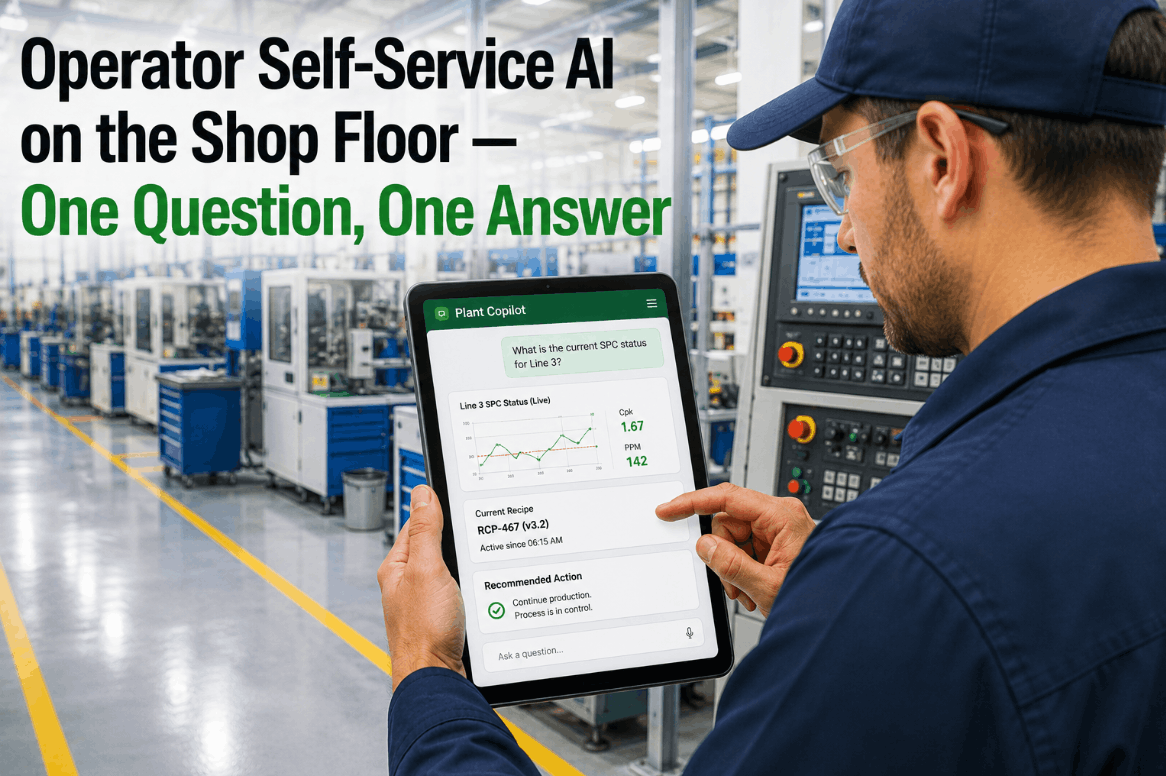
It's monitored 24/7, so if the system itself needs attention that's handled in the background — your job stays running the line, with a second set of eyes quietly backing you up.
The Whole Thing, Put Simply
iFactory delivers AI vision for a dairy line as a turnkey setup built around the operator: a ready-to-run AI server that watches the separator and the product, catches drift early enough to fix, and connects to the systems you already have — so you lift first-pass yield without becoming an AI expert.
What Operators Ask About AI Vision on a Dairy Line
Give Your Line a Second Set of Eyes That Never Blinks
iFactory's AI vision watches your separator and your product together, catches drift 5 to 15 minutes before it crosses spec, and points you at the fix — so your cheese and yogurt runs stay on-spec and first-pass yield climbs, with a turnkey setup that's live in 6 to 12 weeks.