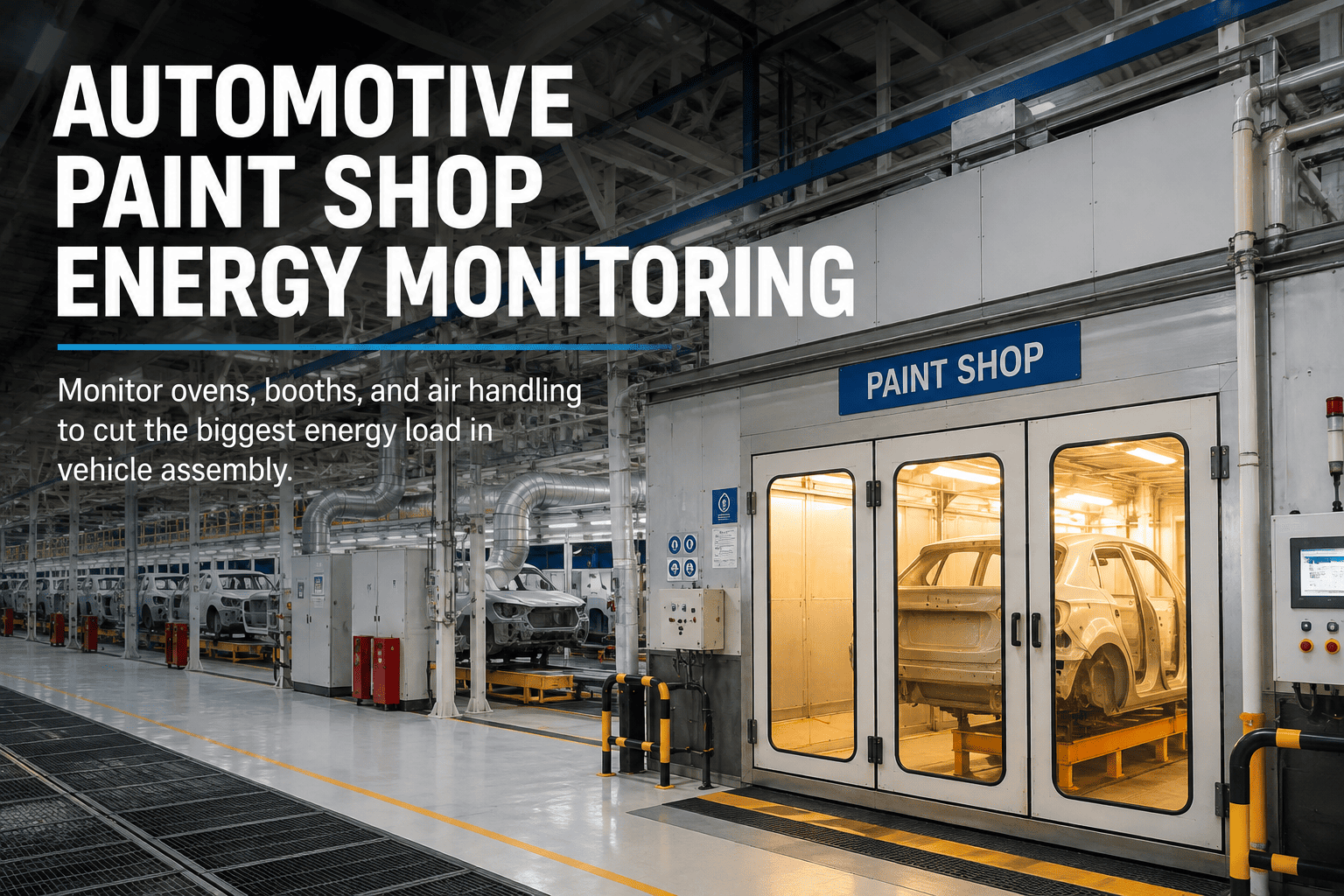
In almost every automotive plant, the paint shop is the slowest line in the building. Body-in-white moves fast. General assembly moves fast. But paint — pretreatment, e-coat, sealer, base, clear, and the long thermal soak through the ovens — sets the pace everything else has to match. That makes the paint shop the plant's true bottleneck, and it makes every asset inside it a single point of failure for daily throughput. When a bell-applicator robot seizes, a recirculation fan trips, or an e-coat pump loses prime, the stoppage doesn't stay in the booth. It backs up body shop, starves final assembly, and turns into lost vehicles by the end of the shift. The plants that protect paint shop uptime don't do it by running assets to failure and reacting. They do it by watching the assets that matter — robots, ovens, pumps, conveyors — for the early drift that shows up weeks before the breakdown. iFactory Predictive Maintenance is built to catch exactly that, asset by asset, across the whole shop.
iFactory Predictive Maintenance
Keep the Paint Shop Running — the Line That Sets the Plant's Pace
Live health monitoring on paint robots, cure ovens, e-coat pumps, and conveyors — so degradation is caught as drift, not discovered as downtime.
#1
bottleneck shop in most plants
30-50%
of plant energy use
25-30%
forced-stop cut with PdM
Weeks
of early warning on drift
Why One Stopped Robot Stops the Whole Plant
The paint shop is a serial process. A body has to move through pretreatment, then e-coat, then the ovens, then each paint layer, in order, with no way to skip a stage. There is very little buffer between them. So when any single asset goes down, the bodies ahead of it finish and clear — and then the shop empties out downstream while it fills up upstream. Within an hour, the effect has spread in both directions.
Body Shop
Feeds paint — backs up when paint stops
to
Paint Shop
Slowest, serial, no buffer — the bottleneck
to
Final Assembly
Starves within minutes of a paint stop
That's why paint shop downtime is measured differently from downtime anywhere else in the plant. It isn't one shop losing an hour — it's the entire vehicle output of that hour, and auto-plant downtime is routinely valued in the range of tens of thousands of dollars per minute. The assets that cause it are few, well understood, and highly monitorable. That's the opportunity.
The Five Assets That Actually Stop a Paint Shop
Paint shop stoppages don't come from everywhere equally. A short list of assets causes most of the unplanned downtime — and each one fails in a way that shows up in vibration, temperature, or motor current long before it shows up as a fault. Here's where to look, and what the early signal is.
Paint Robots & Bell Applicators
Bell-cup bearings spin at extreme speed; wear, imbalance, and drive faults cause seizure and off-quality spray.
Signal: vibration signature, spindle current, bearing temperature
Cure & Bake Ovens
Recirculation fans, burners, and dampers drift — uniformity slips, then a fan bearing or burner takes the oven offline.
Signal: fan vibration, zone temperature spread, motor current
E-Coat & Pretreatment Pumps
Circulation and anolyte pumps cavitate or lose seals; a dropped tank turns into a full coating-line stop.
Signal: pump vibration, flow/pressure drift, motor load
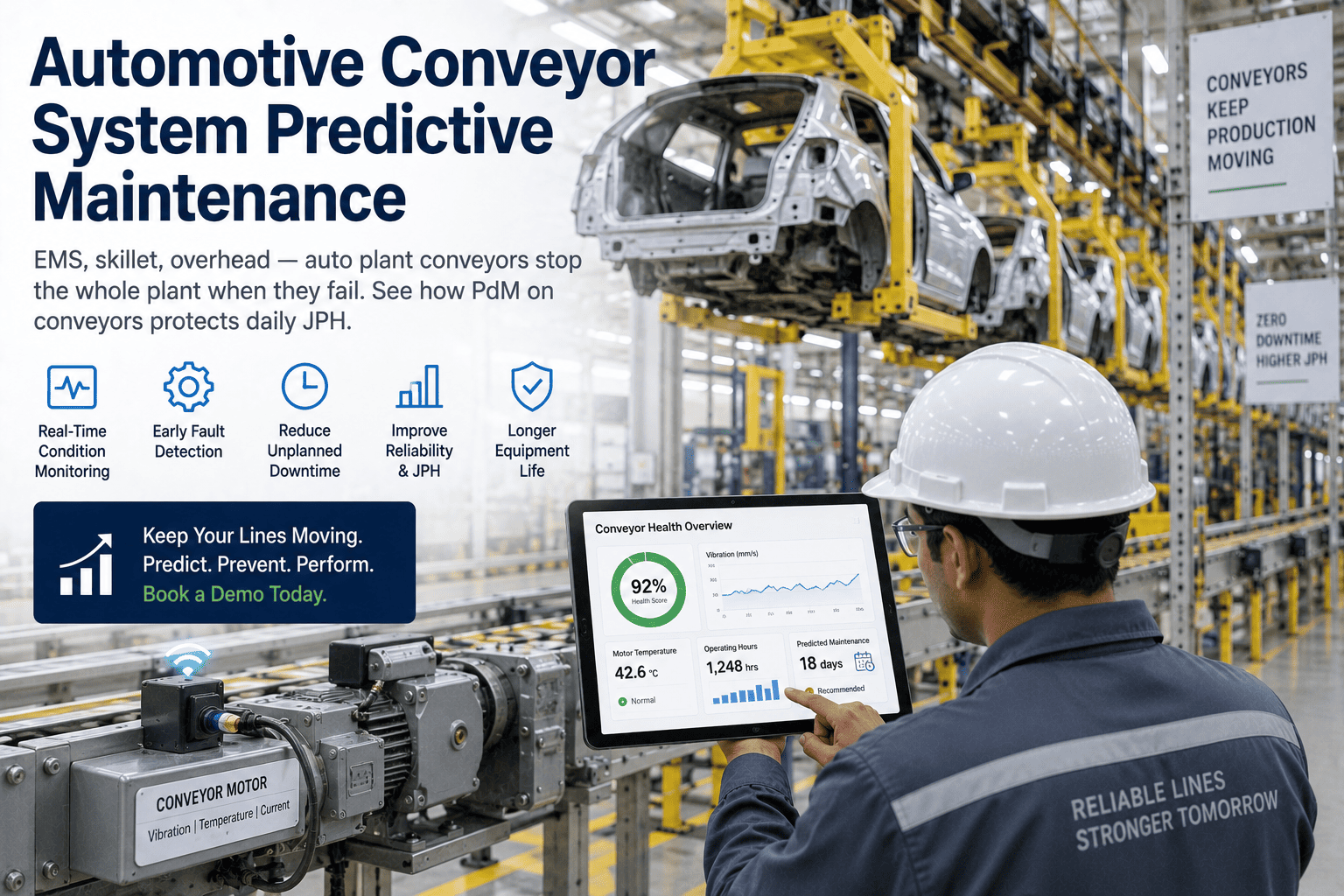
Conveyors & Skillets
Drive chains, gearboxes, and skillet motors wear; a single jam in the carrier loop halts the whole shop.
Signal: drive vibration, gearbox temperature, current spikes
Air Supply Houses
Booth airflow, humidity, and temperature depend on big AHUs — a supply-fan failure shuts every booth it feeds.
Signal: fan vibration, differential pressure, drive current
Failure Is Slow — Reaction Is What's Late
The reason predictive maintenance works in a paint shop is that the failures are almost never instant. A bell-spindle bearing, an oven recirc fan, an e-coat pump — they degrade over days and weeks. The breakdown feels sudden only because nobody was watching the slow part. Here's what the same failure looks like on both timelines.
Healthy
Baseline vibration, normal temperature
Early drift
PdM flags it here — weeks of lead time to plan the fix
Advancing
Noise, heat, quality defects appear — the shift you'd normally notice
Failure
Unplanned stop, emergency repair, lost vehicles — reactive maintenance starts here
The whole game is closing the gap between the drift point and the failure point. That window is where planned beats unplanned.
Reactive vs. Predictive — the Same Bearing, Two Outcomes
Both approaches fix the asset. The difference is when, at what cost, and whether the line was running while you did it.
Run-to-Failure
"Fix it when it breaks."
Failure happens mid-shift, unplanned
Line stops before anyone can respond
Emergency parts, overtime, expedite fees
Lost vehicles across the whole plant
Predictive
"Fix it before the shift it would fail."
Drift flagged weeks ahead by signal change
Repair scheduled into planned downtime
Parts staged, labor planned, no expedite
Line keeps running to the planned window
What the Sensors Actually Hear
Predictive maintenance on paint shop assets isn't exotic. It reads a handful of physical signals that always change before a mechanical failure, learns each asset's normal, and flags the deviation. Same principles, tuned to each asset type.
Vibration
Bearing wear, imbalance, and misalignment on robots, fans, and pumps show as a change in vibration signature well before failure.
Temperature
Rising bearing and gearbox heat, plus oven-zone temperature spread, flag degrading drives and slipping thermal uniformity.
Motor Current
Load creep and current spikes on drive motors reveal friction, jams, and pump strain that mechanical inspection misses.
Flow & Pressure
Drift in e-coat and pretreatment flow or booth differential pressure catches cavitation, seal loss, and airflow faults early.
What Paint Shop PdM Delivers
The payback shows up in the currency the paint shop already spends most heavily — uptime, throughput, and the vehicles that depend on both. These are the outcomes plants typically see after moving from schedule-based service to condition-based monitoring on paint shop assets.
25-30%
Fewer forced stops
on monitored paint shop assets
Weeks
Advance warning
before a failure reaches the line
Planned
Not emergency
repairs moved into scheduled windows
Steady
Throughput
the bottleneck shop stays running
Want to see where your paint shop's real risk sits? Book a demo — we'll start with the robots, ovens, and pumps that stop the line most often.
Frequently Asked Questions
Why start with the paint shop instead of body or assembly?
Because it's the bottleneck. In most plants the paint shop runs slower than every other shop and has almost no buffer, so a single stopped asset there costs the whole plant's output for that period — not just the shop's. That makes each dollar of downtime avoided in paint worth more than the same avoided elsewhere. It's the highest-leverage place to put predictive maintenance first.
Do we have to add new sensors to every robot and pump?
Often less than you'd expect. Many paint shop assets already expose useful data — robot controllers report spindle current and faults, drives report motor load, ovens report zone temperatures. We start with what's already available, then add vibration or temperature sensors only on the specific high-risk assets where the existing signals aren't enough. The goal is coverage of what stops the line, not a sensor on everything.
How is this different from our current PM schedule?
A time-based schedule services an asset whether it needs it or not — and it still misses the failures that happen between intervals. Condition-based monitoring watches the actual health signal, so it catches the bearing that's degrading three weeks early and leaves the healthy one alone. You stop doing unnecessary work and stop being surprised by the failures a calendar can't predict.
Which paint shop assets does it cover?
Bell and applicator paint robots, cure and bake oven fans and burners, e-coat and pretreatment pumps and rectifiers, skillet and power-and-free conveyors, and booth air supply houses. Each asset type has its own baseline logic and its own leading signals, so an alert reflects that specific asset's normal — not a generic threshold.
Can we prove it out before committing?
Yes. Pick a handful of the assets that stop your line most often — usually a few robots, an oven, and an e-coat pump — and we'll build the health baseline for each and run live monitoring. Within a short window you'll see the drift being flagged and the lead time it buys. Book a demo and we'll scope it to your shop.
Stop discovering failures on the line.
See Predictive Maintenance Running on Your Paint Shop
Pick the robots, ovens, and pumps that stop your line most often. We'll build the health baseline for each, run live monitoring, and show you the drift being caught weeks before it would have become downtime.