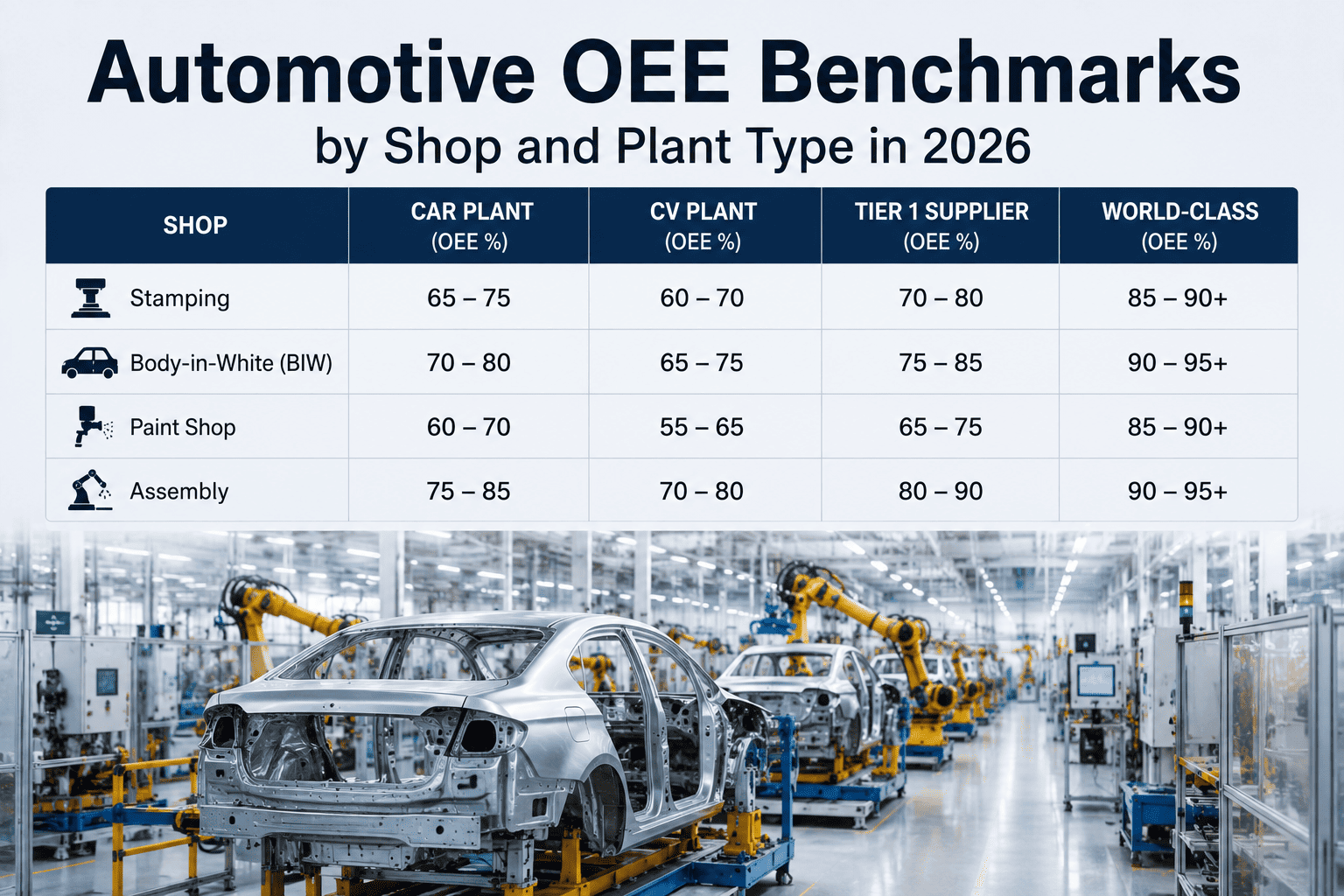
Every OEM plant runs on a promise called the pearl chain: each body moves down the line in a precise, pre-planned predecessor-successor order so that just-in-sequence parts arrive exactly when their car does. Break the chain and the cost is not abstract — seats, bumpers, and wiring harnesses arrive for cars that aren't there, and final assembly grinds. The paint shop is where the chain breaks hardest. Paint defect rework runs 10 to 20%, and every reworked body drops out of sequence, loops back, and re-enters somewhere else entirely. On top of that, paint and assembly want opposite sequences in the first place: the booth wants long runs of the same color to avoid expensive nozzle purges, while assembly wants the original customer order restored for just-in-sequence delivery. The result is a scrambled sequence that someone has to put back together before the body reaches the FA entrance. That reassembly is the resequencing problem — and the difference between a plant that solves it cheaply and one that bleeds throughput comes down to three levers: the right buffer, the right selectivity, and intelligence deciding what moves where. iFactory models all three against your real scramble data so you stop guessing at buffer size and start hitting your sequence service level.
Paint Shop Resequencing · OEM Plants
Recover the Pearl Chain the Paint Shop Keeps Breaking
Rework rates of 10-20% scramble your sequence and starve just-in-sequence parts. iFactory models buffers, ASRS, and selective resequencing against your real scramble data to restore the FA entrance order without overbuilding storage.
Sources: Boysen et al. car resequencing research · Inman ASRS sizing studies · Pearl Chain Concept (Lehmann & Kuhn) · Taube & Minner just-in-sequence · iFactory Deployment Data 2026
The Resequencing Trilemma
Resequencing is hard because three things pull against each other. The paint booth wants one order, final assembly wants a different one, and reality keeps disturbing both. You cannot optimize all three at once — you balance them through a buffer, and the smarter the buffer logic, the closer you get to satisfying all three. This is the tension every paint shop scheduler lives inside.
Paint Wants
Long batches of the same color. Every color change forces a nozzle purge that costs paint, solvent, and a production halt. Batching colors is the booth's cheapest path.
Goal: minimize color changes
Reality Disturbs
Defects, rework loops, parallel stations, material shortages, and breakdowns scramble whatever order you planned — unpredictably, mid-shift, every shift.
Constraint: 10-20% rework scramble
Assembly Wants
The original customer order restored, so just-in-sequence parts — seats, harnesses, bumpers — arrive matched to the right body. The pearl chain must be intact at the FA entrance.
Goal: restore JiS sequence
Two Kinds of Scramble, One Buffer to Fix Both
Sequence disturbance comes from two directions, and a resequencing strategy has to handle both. Intentional scrambling is what the paint shop does on purpose to batch colors. Reactive scrambling is what rework and breakdowns do to you. The buffer between paint and assembly is where both get undone.
Intentional
Color Batching
The booth deliberately groups same-color bodies to cut purges. This optimizes paint cost but deliberately departs from the planned order — a scramble you choose, knowing you'll restore it downstream.
Reactive
Defects & Rework Loops
A body fails inspection, drops out, loops through rework, and re-enters at a different point. Add parallel stations and breakdowns and the build order is scrambled by the time it reaches final assembly.
Not all buffers resequence equally. The three industry-standard options trade cost, footprint, and selectivity — selectivity being how freely the buffer can reach any body to pull it next. The right choice depends on how badly your sequence scrambles and how tightly you must restore it.
ASRS
Automated Storage & Retrieval
Maximum selectivity — any body can be retrieved in any order, so even badly scrambled sequences can be fully reconstructed. The most powerful and the most capital-intensive option.
Selectivity: HighestCost: Highest
Mix-Bank
Multi-Lane Buffer
Several parallel FIFO lanes. Bodies are sorted into lanes by color or attribute, then pulled to rebuild the target order. Strong selectivity at a fraction of ASRS cost when scramble is moderate.
Selectivity: HighCost: Medium
Pull-Off
Pull-Off Tables
A small set of side tracks to temporarily set bodies aside and reinsert them. Low cost and footprint, limited reach — best for light, predictable disturbances rather than heavy scramble.
Selectivity: LimitedCost: Lowest
The Buffer-Sizing Problem Nobody Wants to Get Wrong
Here is the expensive trap: buffer capacity is a direct trade-off against sequence service level. Too small and the scramble overwhelms it — bodies reach the FA entrance out of order and just-in-sequence parts mismatch. Too large and you've sunk capital and floor space into storage you rarely use. The curve below shows why sizing is a modeling problem, not a guess: restoration quality rises sharply with the first units of buffer, then flattens — and the right size sits at the knee, set by your actual scramble severity.
Sequence Restoration vs Buffer Capacity
Target: 95% service levelSized at the knee
iFactory derives the curve from your scramble data, so the buffer is sized to hit your service level at the knee — not over-specced on a vendor rule of thumb.
Static Buffer Rules vs Intelligent Resequencing
A buffer is only as good as the logic deciding what to pull next. Fixed heuristics — empty the longest lane, FIFO by arrival — leave color changes and sequence misses on the table. iFactory's resequencing engine evaluates both objectives at once, in real time, as bodies arrive.
Decision
Static Buffer Rules
iFactory Resequencing
What to pull next
Fixed heuristic, blind to downstream
Balances color batch and JiS order live
Color changes
More purges than necessary
Minimized within sequence constraints
Reacting to a defect drop-out
Sequence degrades, no recovery plan
Re-plans the buffer to reabsorb the gap
Buffer sizing
Vendor default, over or under
Modeled to your scramble and service level
FA entrance order
Best effort, often misses
Restored to the planned pearl chain
From Broken Chain to Restored Sequence
A representative OEM body shop ran 14 colors with heavy color-batching and a paint rework rate that scrambled roughly one body in six. Its pull-off tables couldn't keep up, just-in-sequence parts mismatched at the FA entrance, and the line ran on manual sequence firefighting. Modeling the scramble and switching to intelligent mix-bank resequencing changed both the purge bill and the chain integrity.
Before
Buffer logicStatic pull-off, FIFO
FA sequence matchFrequent misses
Color changesMore purges than needed
JiS partsMismatch & expedite
Sequence held together by manual firefighting.
Modeled resequencing
After
Buffer logicIntelligent mix-bank
FA sequence match95%+ service level
Color changesReduced purges
JiS partsArrive matched
Pearl chain restored at the FA entrance, automatically.
What Modeled Resequencing Returns
95%+
Sequence service level at FA entrance
Fewer
Color-change purges, paint and solvent saved
Right-sized
Buffer capital, no overbuild
JiS
Parts arrive matched, expedites cut
Frequently Asked Questions
Why does the paint shop break the sequence more than other shops?
Two reasons stack up. First, paint defect rework runs 10 to 20%, and every reworked body drops out of order, loops back, and re-enters elsewhere — pure reactive scramble. Second, the booth intentionally batches same-color bodies to avoid costly nozzle purges, which deliberately departs from the planned order. Add parallel stations and breakdowns and the build order is thoroughly scrambled by the time it reaches the FA entrance. Book a demo to see your own scramble broken down.
Which buffer type should we use — ASRS, mix-bank, or pull-off tables?
It depends on how badly your sequence scrambles and how tightly you must restore it. ASRS gives maximum selectivity — any body, any order — and fully reconstructs even heavy scramble, at the highest cost. Multi-lane mix-banks deliver strong selectivity at moderate cost when scramble is medium. Pull-off tables are cheapest but limited, suited to light disturbances. The right answer comes from modeling your actual scramble against a target service level, not from a vendor default. Ask support which fits your line.
How do we size the buffer without overspending?
Buffer capacity trades directly against sequence service level, and the relationship is a curve that rises steeply then flattens. Undersize it and bodies reach assembly out of order; oversize it and you sink capital into storage you rarely use. iFactory derives the restoration-versus-capacity curve from your real scramble data and sizes the buffer at the knee — the point that hits your service level without overbuilding. That turns a multi-crore guess into an evidence-based spec.
What is the pearl chain, and why does just-in-sequence delivery depend on it?
The pearl chain is the precise predecessor-successor order of bodies down the line, established at German OEMs as a lean-production discipline. Just-in-sequence suppliers deliver parts — seats, harnesses, bumpers — matched to the exact body coming next. If the chain breaks, parts arrive for cars that aren't there, forcing expedites, line stops, or rework. Restoring the chain at the FA entrance is precisely what resequencing protects.
Can intelligent resequencing reduce color changes and restore sequence at the same time?
That is the whole point of evaluating both objectives together rather than with a fixed rule. A static buffer that only empties the longest lane will leave purges and sequence misses on the table. iFactory's engine weighs minimizing color changes against restoring the just-in-sequence order in real time as bodies arrive, finding the pull order that serves both — and re-planning instantly when a defect drops a body out of sequence.
Your Sequence Is Scrambling Faster Than Your Buffer Can Fix It
Model Your Scramble, Size the Buffer, Restore the Chain
Book a 30-minute session with a resequencing specialist. We'll analyze a sample of your real scramble data, separate intentional from reactive, model buffer options against your target service level, and show how intelligent resequencing restores the pearl chain at the FA entrance.