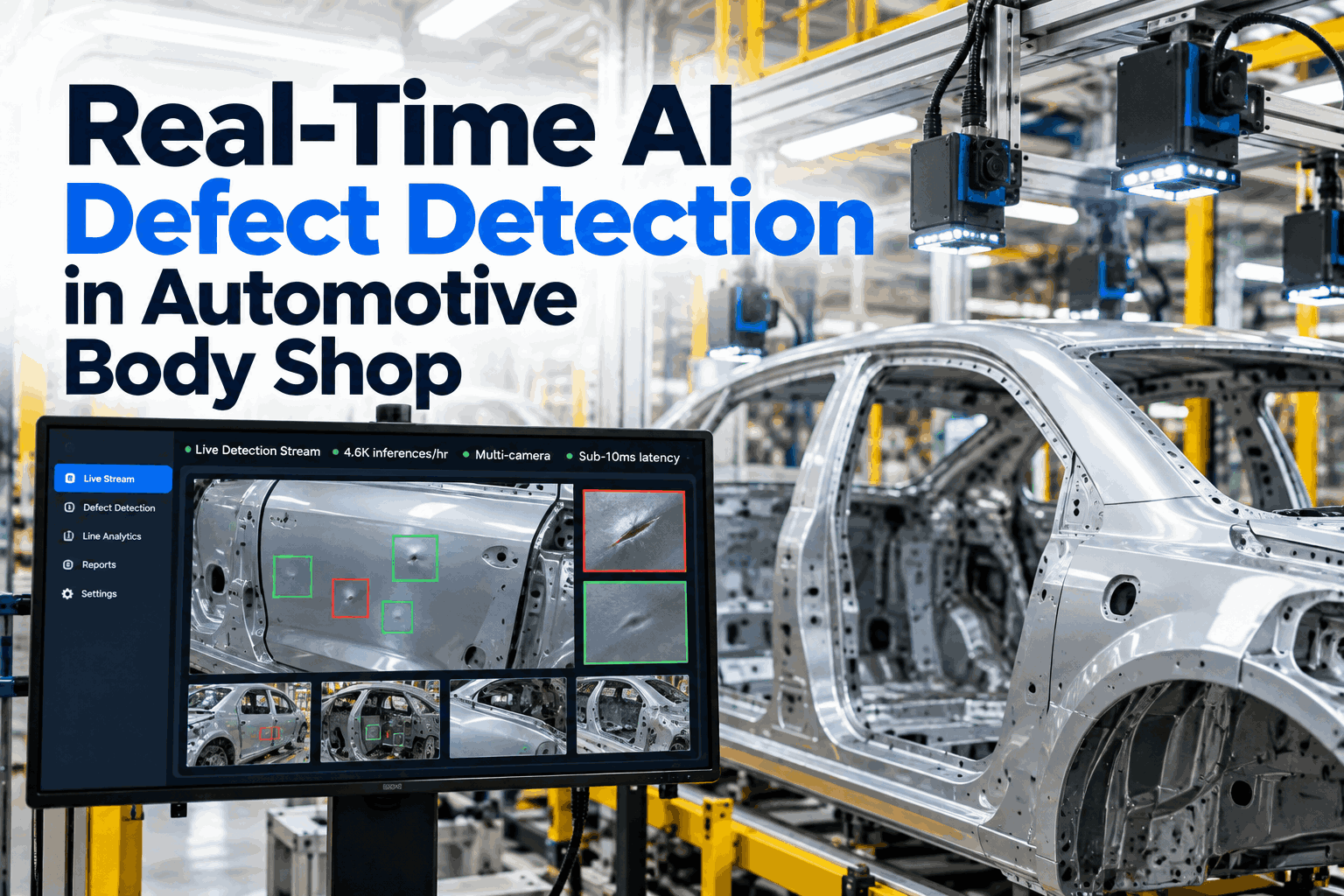
A car body can carry up to 4,000 spot welds, plus studs, sealer and panels that must all be right before paint. Manual checks and weld tear-downs see only a sample, so a missing weld or dented panel often shows up after paint, when it costs far more to fix. Real-time AI checks every body at line speed, in the station that made the defect, and holds it for repair on the spot. To see it on one of your stations, book a body shop vision session.
Real-Time AI Defect Detection in the Automotive Body Shop
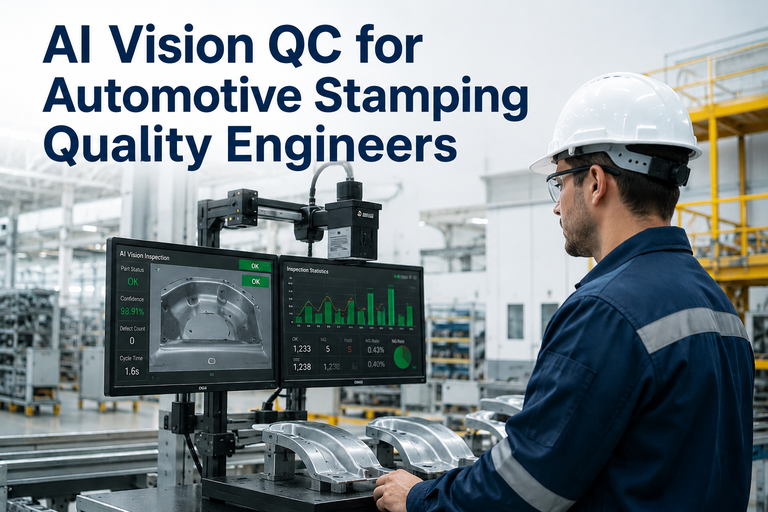
Multi-camera deep learning checks welds, studs, sealer and panel surfaces on every body, at line speed. Defects are classified in milliseconds, on servers inside your plant, so the fix happens before the body reaches paint.
- What AI vision catches in body-in-white, zone by zone
- What "real time" has to mean at 60 jobs per hour
- How it fits a brownfield line, fully on-premise
Underbody
Side frames
Roof and pillars
Closures
Front end
Whole body
Which checks run where depends on your stations. Most plants start with the zones that cause the most repairs after paint, then add zones once the first station has proved itself.
Why Body Shop Defects Escape
Thousands of features per body. A few seconds of human attention.
Body shops are among the most automated areas in any plant, but checking is still largely manual or by sampling. Welds are torn down on a few bodies a shift. Studs and sealer are checked by eye, often by people with many other tasks. Panel dents are often spotted only under the bright lights after paint. Our vision support team can help you find where your escapes start.
Sampling
Destructive weld checks cover a few bodies a shift, not every one, and take hours to complete.
Reflective metal
Bare steel and aluminium glare under light, hiding small dents until paint shows them up.
Robot drift
A worn tip or shifted fixture repeats the same fault on every body that follows.
Late discovery
Many defects show only after paint, when repair is far costlier and slower.
Seconds
Re-weld or fit the stud while the body is still in place and easy to reach.
Minutes
Body pulled to a repair bay. Access may be harder once more parts are on.
Hours
Repair, then repaint or touch-up. Costs and lost capacity climb fast.
Warranty
The most expensive place by far, and the worst for the brand and the customer.
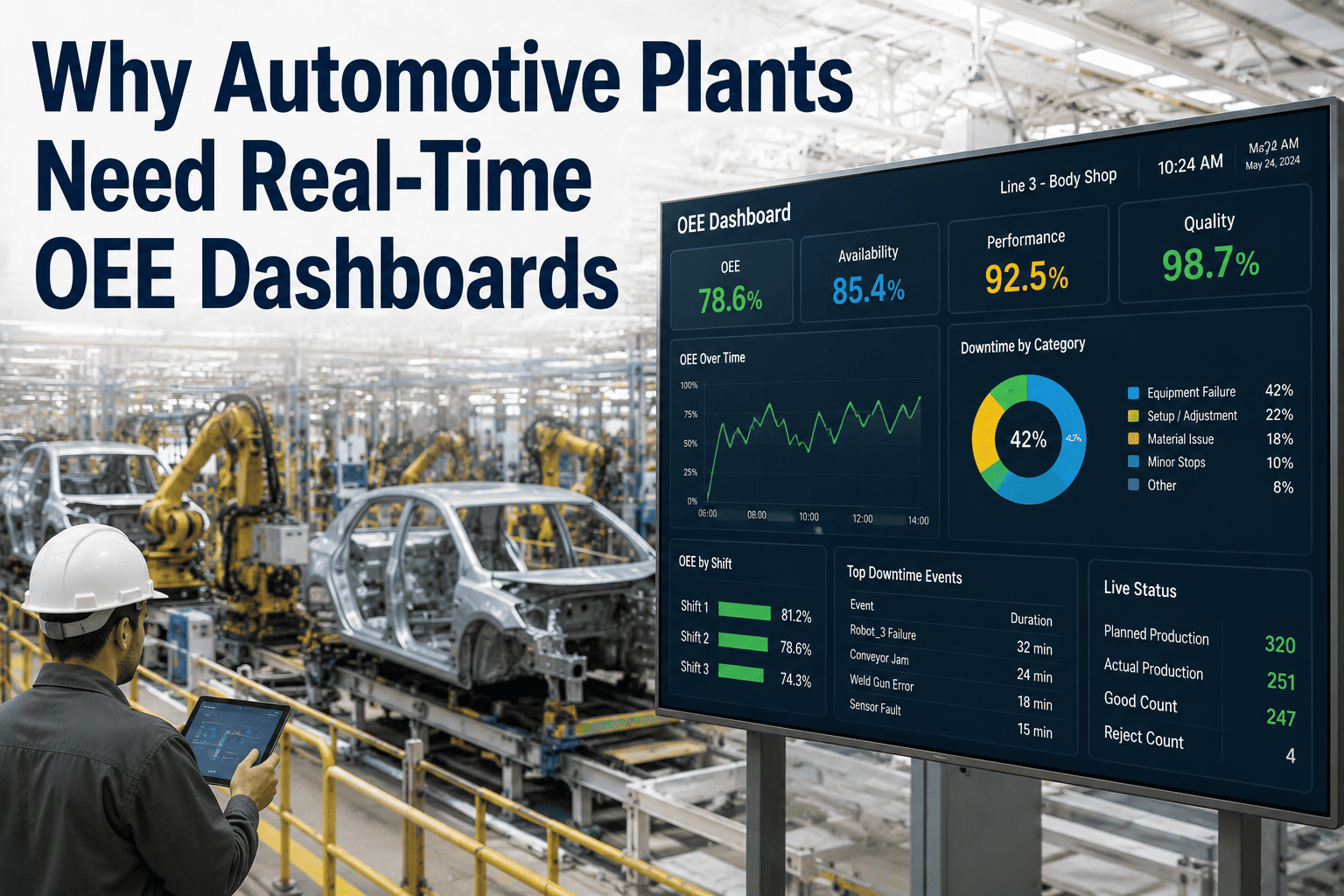
A human error usually affects one body. A robot or fixture fault affects every body until someone notices. That is why real-time detection matters most in the body shop: catching the first bad body stops the next fifty.
What AI Vision Catches in the Body Shop
Some checks are easy wins. Others need care, and some need another tool.
Deep learning handles variation in shape, glare and position far better than fixed rules, and it can be retrained when a model or part changes. It is very good at presence, position and visible quality. It cannot see inside a weld. To match checks to your stations, book a station mapping call.
Bare steel and aluminium reflect light in ways that hide or fake defects. Diffuse, shielded lighting and the right camera angle often do more for accuracy than a bigger model. Plan the light with the camera, not after it.
Usually the first wins
- Missing welds, studs and nuts
- Sealer bead gaps
- Wrong part for the variant
- Obvious spatter on visible faces
Need more set-up
- Small dents on bare reflective panels
- Hem quality on closures
- Weld points hidden by fixtures
- Mixed steel and aluminium bodies
Inside One Takt
At 60 jobs per hour, each body spends about a minute per station. Here is how the vision checks fit inside that minute.
What Real Time Has to Mean
Fast enough to stop the body at the station, not just to report it later.
"Real time" is easy to claim. In a body shop it means a decision before the body moves on, and a signal the line can act on. That needs the cameras, the compute and the line link all planned together, and tested on the real line. If you want help with a station plan, our engineers can help.
Trigger
Body in position. All cameras fire together.
Infer
Each image checked on the edge server in milliseconds.
Classify
Defect type, location and severity named for the operator.
Signal
Pass, or hold sent to the line.
Route
Repair bay gets the image and exact spot.
Trace
Result stored against the body ID for traceability.
A system that holds good bodies will be switched off within a week. Run the models beside current checks first, measure false holds as carefully as misses, and switch the line hold on only when both are at a level the line accepts.
Inside takt
Decision and signal well inside the station's cycle, with margin to spare on the busiest shift.
Every body
All bodies checked, not a sample. Coverage is not the same as catching every defect.
A real hold
A defect that only appears on a report is an audit, not error-proofing.
Brownfield Lines and On-Premise AI
Most body shops are not new. The system has to fit the line you have.
Brownfield lines have fixed robots, tight spaces, older PLCs and little spare downtime. Cameras go where they can see clearly without blocking robots or maintenance access, and the AI runs on servers inside the plant, so no images need to leave the site. To plan a fit for your line, book a brownfield fit check.
Brownfield fit
- Cameras. Mounted clear of robot paths.
- Light. Shielded, steady lighting for bare metal.
- Trigger. From existing body-in-position signals.
- Signals. Standard industrial links to the line PLC.
On-premise by design
- Images and models stay inside your network
- No cloud link needed for detection
- Works through internet outages
- Fits plant IT and security rules
A retrofit in four moves
Survey
Walk the station with your engineers and mark camera and light positions on the layout.
Mount
Fit cameras and lights during a planned stop, clear of robot paths and safety zones.
Shadow
Run detection beside current checks, with no line hold yet, for several weeks.
Switch on
Turn on the hold once catch rate and false holds are agreed with quality.
Questions plant IT will ask, and short answers
- Where do images go? To a server inside your plant network, nowhere else.
- Does it need the internet? Not to detect defects. Remote support is optional and agreed with IT.
- Who can see the data? Named users with their own logins.
- What if the server fails? The line runs as before, with an alert raised.
How iFactory's Live Detection Stream Works
Multi-camera deep learning, at the line, on your own servers.
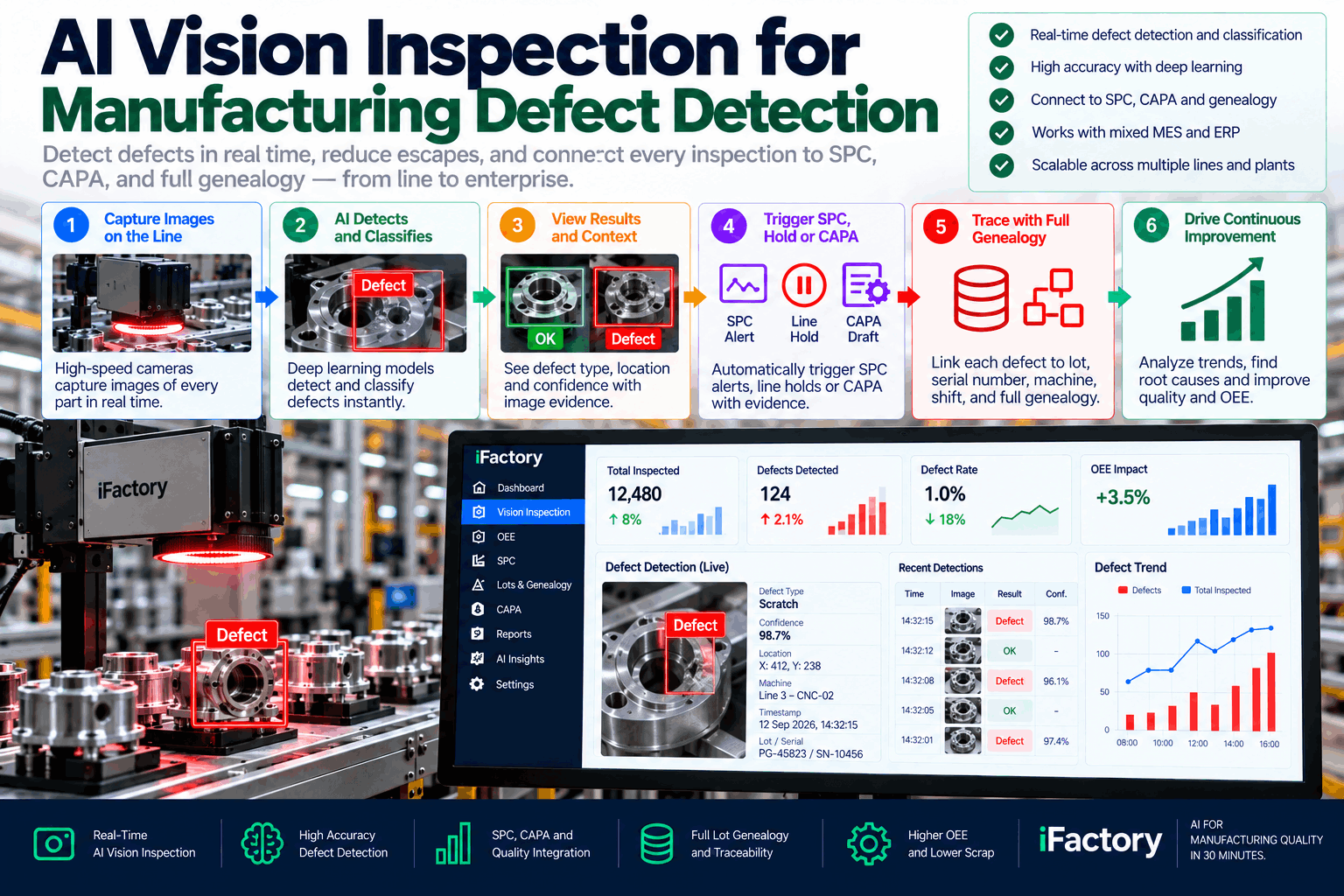
iFactory's Live Detection Stream runs multi-camera deep learning models on edge servers in the plant. iFactory specifies around 4,600 inferences an hour with under 10 ms per inference. Models are trained on images of your own bodies, including real defects, and checked by your quality team before the line hold goes live. Questions on fit go to our support desk.
See
Several cameras per station, triggered together as the body arrives, each covering its own zone.
Detect
Deep learning finds and classifies defects in each image.
Act
Hold, alert or route to repair, through the line PLC.
Learn
Repeat faults traced to robots, tips or fixtures, so the cause is fixed, not just the body.
What the line sees
- Pass or hold for every body
- The image with the defect marked
- Where to send the body for repair
What engineers see
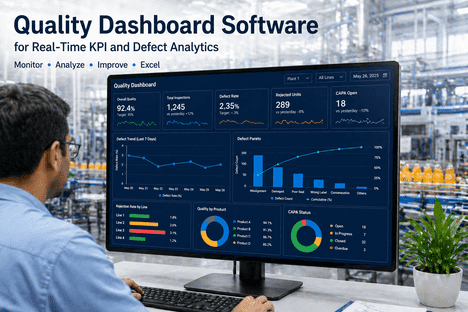
- Defects by robot, station and shift
- Faults that start after tip or tool changes
- Trends before they become escapes
The pilot scorecard
Catch rate
Share of real defects found, by defect type, against your own audit of the same bodies.
False holds
Good bodies flagged by mistake, per shift, and why they were flagged.
Timing
Decision time against takt, on the busiest shift of the week.
Repairs after paint
The number that shows whether the station has paid off.
Detection rates depend on the station, lighting and defect type. We measure them on your own bodies during the pilot, against your own audits, rather than promising a general figure.
Turnkey AI: Delivered, Connected and Live in 6–12 Weeks
You do not build this. It arrives ready.
iFactory ships as a pre-configured NVIDIA AI server, racked and ready, with the software pre-loaded. Rack it, plug in power and Ethernet, and the AI is live on your network.
Our team handles cabling, network setup, PLC and SCADA integration, operator training and 24×7 remote monitoring. The server sits inside your own network, so images and production data stay on site. For a scope matched to your body shop, request a turnkey quote.
Ship, network and data
Server and cameras installed at the pilot station. Body ID and line signals connected and tested.
Model training and pilot
Models trained on your bodies and run beside current checks. Results compared.
Go-live and training
Line hold switched on once results are agreed. Body shop and quality teams trained on the new workflow. 24×7 remote monitoring begins.
Frequently Asked Questions
What is real-time AI defect detection in a body shop?
Cameras and deep learning models check each body as it passes a station, find defects such as missing welds, studs or sealer gaps, and decide in milliseconds, so the body can be held and repaired before it moves on. Each result is stored against the body ID.
Can AI vision check spot weld quality?
It can confirm a weld is present and in the right place, and flag visible problems such as spatter. It cannot see the nugget inside. Weld controller data and ultrasonic or destructive checks still prove strength. Vision adds full coverage of what can be seen.
Will it slow the line down?
It should not. Inference takes milliseconds per image on servers at the line, leaving most of the takt free. Timing is tested in the pilot before the line hold is switched on, on the busiest shifts and with every camera running.
Does it catch every defect?
No system catches every defect. It inspects every body, which is not the same thing. Catch rates are measured during the pilot against your own audits, defect type by defect type, and shared openly with your team.
Does any data go to the cloud?
Not for detection. Models run on servers inside your network, and images stay on site. Any remote support link is agreed with your IT team and can be switched off.
Can it work on an older brownfield line?
Usually, yes. Cameras are placed clear of robots, and the system uses existing body-in-position and line signals. A site survey confirms which stations fit best, and where cameras can see without blocking robots or people.
How do we start?
With one station that causes the most repairs after paint. A 6-week pilot installs cameras, trains models on your bodies and runs them beside your current checks, so results can be compared fairly before anything changes on the line. To plan it, contact our team.
Stop the Next Bad Body at the Station
In thirty minutes we look at your body shop repairs and escapes, pick the station most likely to pay back first, and sketch the cameras and checks it would need. You keep the plan whether or not you go further with iFactory.
- 1Repairs found after paint, by defect type
- 2Weld and stud audit results
- 3Photos of your problem stations
- 4Line rate and station cycle times
- 5How body ID is tracked on the line