Warranty is the bill that arrives long after the part left your dock. Ford alone paid $5.83 billion in warranty claims in a single year — a 22% jump — and across the industry automakers carry roughly $140 billion in warranty reserves against claims they know are coming. For most OEMs and their suppliers, warranty already eats 1.5% to 2.5% of annual revenue, and it is climbing as vehicles pack in more electronics and longer supply chains. The uncomfortable truth is that almost every dollar of it traces back to a defect that reached a customer instead of being caught and killed at the source. Quality analytics exists to turn that field-failure data into early signal — so you trend the failure, run the 8D, close the CAPA, and stop paying for the same defect twice.
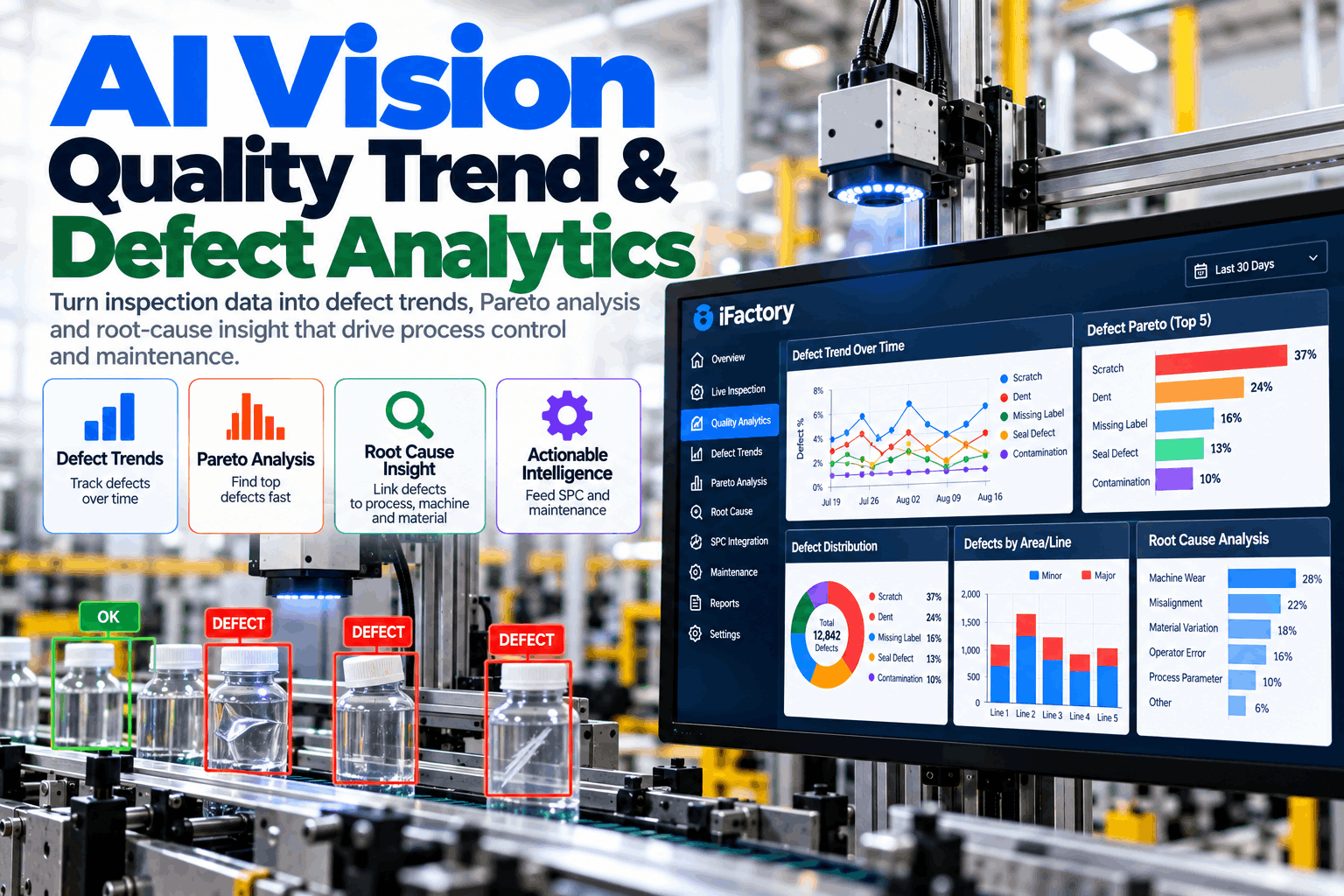
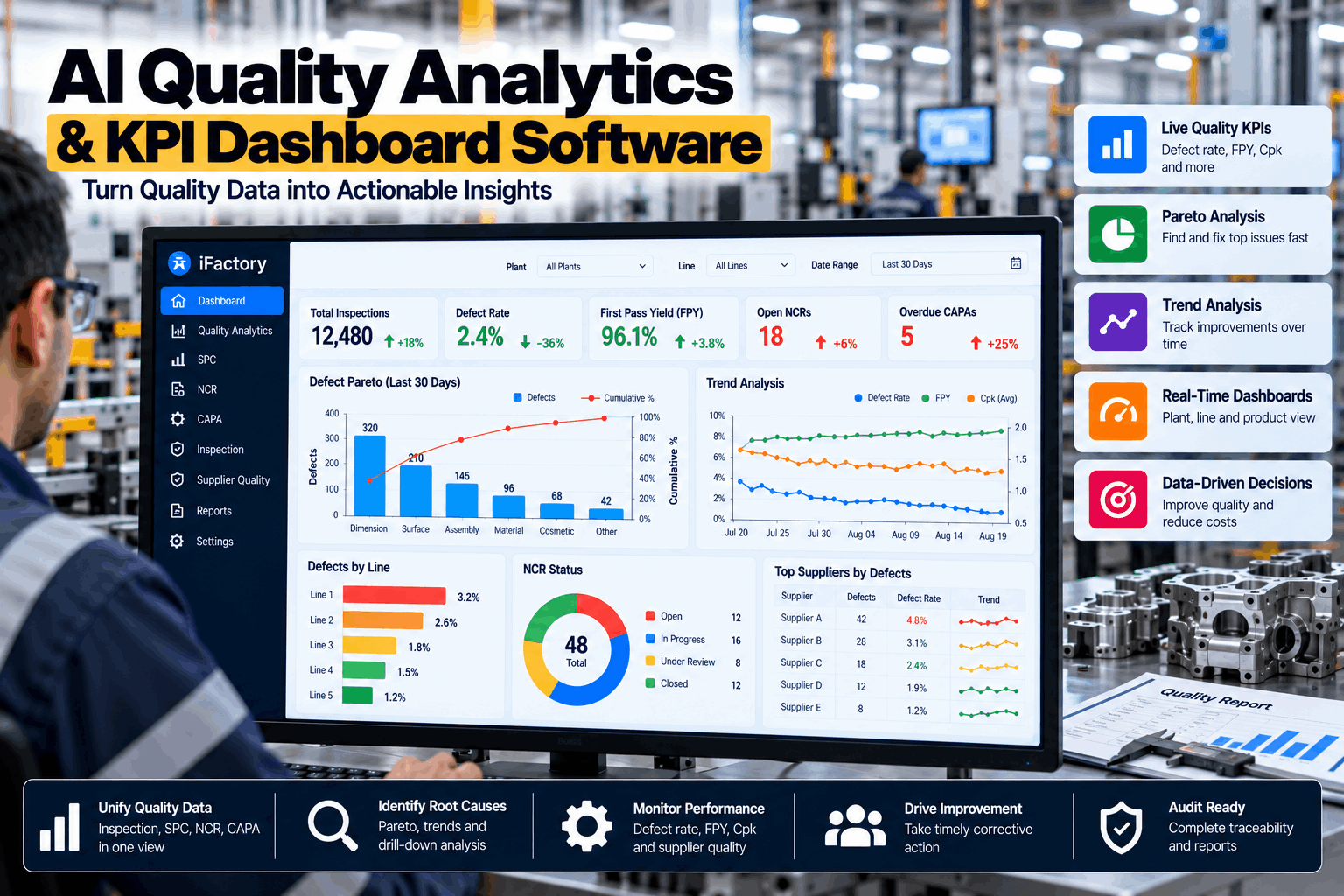
iFactory Quality Analytics
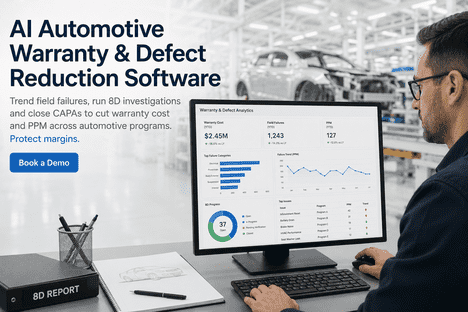
Cut Warranty Cost and PPM Before It Hits the Field
Trend field failures in real time, trigger 8D investigations on the issues that matter, and close CAPAs with verified effectiveness — protecting margin across every automotive program.
$5.83B
Ford warranty payout, +22% YoY
$140B
Industry warranty reserves held
1.5-2.5%
of OEM revenue, and rising
30%
claim cut from data analysis
Where Warranty Money Actually Leaks
Warranty cost is not one big failure — it is thousands of small ones, scattered across programs, plants, and suppliers, each looking minor until the claims roll in months later. The leak hides because the data sits in disconnected systems and nobody is watching the trend until a chronic problem has already shipped tens of thousands of times.
25%
Front-end escapes
A large share of field returns trace to failures that originated upstream but slipped past detection on the way out the door.
50/50
NTF cost split
"No Trouble Found" returns still cost real money — typically shared between supplier and OEM even when no defect is confirmed.
Months
Detection lag
By the time warranty claims surface a pattern, the defective design or process has already produced a long tail of units.
Contract
PPM at risk
A high external PPM to an OEM triggers escalation, line stops, and — at the extreme — the loss of the program entirely.
From Field Failure to Closed Loop
Reducing warranty is not a reporting exercise — it is a loop that has to close. Field data has to become a trend, the trend has to trigger an investigation, the investigation has to reach a verified fix, and the fix has to be proven before the case closes. iFactory runs every field signal through that exact path.
1
Aggregate Field Data
Warranty claims, 0-km returns, and field complaints pulled into one dataset — by part, plant, program, and months-in-service.
2
Trend & Trigger
Analytics surface rising failure rates and PPM spikes early, firing a trigger the moment a pattern crosses your threshold.
3
Run 8D Investigation
Team-based 8D with 5 Whys and Fishbone drives returns — including NTF cases — to a verified, evidence-backed root cause.
4
Close the CAPA
Corrective and preventive actions are owned, dated, and verified for effectiveness before the issue is allowed to close.
5
Confirm PPM Drop
The recurrence scan and PPM trend confirm the fix held in the field — turning a claim source into a closed chapter.
Want to see your own field-failure data trended and triggered? Book a demo and we'll walk one defect from claim to verified PPM drop.
Turn NTF From a Cost Into a Clue
"No Trouble Found" sounds like good news and bills like bad news. A return that tests clean still triggers shipping, analysis, and a shared cost — and worse, it hides a real systemic issue behind a clean bench test. iFactory treats NTF as a signal worth investigating, not a case to close and forget.
NTF Trigger Tracking
Monitor NTF rates against agreed thresholds so a cluster of "clean" returns escalates into a real systemic investigation.
Field Failure Chain of Custody
Quarantine, document, and track every returned part so the analysis is rigorous, traceable, and audit-defensible.
8D & Ishikawa Records
Capture findings in structured 8D reports and Fishbone diagrams the way OEM field-failure standards expect.
Recover Misattributed Cost
Pinpoint when a "failure" is actually an assembly or handling issue elsewhere, so cost lands where it belongs.
Built for OEM and IATF 16949 Expectations
Every automotive OEM uses PPM as the primary supplier-quality metric, and IATF 16949 clause 10.2.5 requires a warranty management process — including how you handle NTF. iFactory gives you the granular, time-stamped quality data and traceability those programs demand, in the format your customers already work in.
Spreadsheet warranty tracking
Reacting After the Bill
Claims data scattered across portals and files
Trends spotted only after months of returns
NTF closed and forgotten, cost absorbed
PPM surprises trigger OEM escalation
iFactory Quality Analytics
Preventing at the Source
One unified dataset by part, plant, and program
Early triggers on rising failure and PPM trends
NTF investigated, systemic causes surfaced
PPM driven down with verified, traceable CAPAs
What Reducing Warranty Delivers
Closing the warranty loop converts directly into lower claims, lower PPM, and protected margin. These reflect outcomes automakers and suppliers report after moving from reactive warranty tracking to trend-driven, closed-loop quality analytics.
30%
Fewer claims
when a design flaw is caught through warranty data analysis
25%
Lower warranty cost
from process fixes driven by field-failure insight
Lower
External PPM
the supplier metric that keeps the contract and the line running
Earlier
Recall prevention
trends caught before a chronic defect becomes a campaign
Curious how much of your warranty spend is preventable? Talk to our quality team and benchmark it against trend-driven analytics.
Frequently Asked Questions
How does quality analytics actually reduce warranty cost?
By moving you from reacting to claims to preventing them. iFactory aggregates field returns and warranty data, trends failure rates by part and program, and triggers an investigation the moment a pattern emerges. Catching a design or process flaw early — before it ships tens of thousands more times — is what produces the 25 to 30% claim and cost reductions seen in warranty data analysis.
Why does "No Trouble Found" still cost us money?
An NTF return still incurs shipping, handling, and analysis, and the cost is typically split between supplier and OEM even though no defect was confirmed. Worse, a cluster of NTF cases can hide a real systemic issue that a single bench test misses. iFactory tracks NTF against trigger thresholds and routes the systemic ones into a full investigation rather than closing them out.
Does this support 8D and field failure analysis the way our OEMs require?
Yes. The platform runs structured 8D investigations with 5 Whys and Fishbone built in, maintains the chain of custody on returned parts, and captures findings in the report formats automotive field-failure standards expect. That aligns with how OEM and VDA field-failure processes drive returns to a verified root cause.
How does it help with PPM and IATF 16949?
PPM is every OEM's primary supplier-quality metric, and IATF 16949 clause 10.2.5 requires a warranty management process including NTF handling. iFactory provides the granular, time-stamped quality data, traceability, and verified CAPA records needed to monitor PPM, demonstrate continuous improvement, and keep external PPM below the level that triggers OEM escalation or line stops.
Can it help prevent recalls?
It is built around catching trends early. A recall is what a chronic defect becomes when it is spotted too late; trending field failures and PPM in real time surfaces the rising pattern while it is still a handful of claims, giving you time to investigate and fix the cause before it grows into a field campaign. The best demo is on your own data — book one and bring a program you're watching.
Stop Paying for the Same Defect Twice.
See Warranty Analytics on Your Own Programs
Bring one program where warranty or PPM is creeping up. We'll show field returns aggregated and trended, a trigger firing on the rising pattern, an 8D investigation reaching root cause, and the CAPA that drives the PPM back down — with the traceability your OEMs already expect.
Trend
field failures early
8D
to verified root cause
Lower
PPM & warranty cost