A BOF converter sets the pace of an integrated steel plant. When it stops, hot metal from the blast furnace has nowhere to go. Yet many converter maintenance plans still rely on fixed intervals and experience: gun the lining every so many heats, change the lance tip when it looks worn, check trunnion bearings at the reline. This guide builds a BOF converter maintenance plan around lining campaigns, trunnion bearings, the oxygen lance and tilt drives, with AI predicting the right gunning and reline windows. Start with a converter review.
BOF Converter Maintenance Plan: Trunnion, Lining and Lance
Heats per campaign, laser lining scans and equipment condition in one plan. Gunning and reline windows predicted from wear, and the outage job list drafted on the shutdown kanban.
- The four asset groups every BOF plan must cover
- Lining campaigns, scans and reline prediction
- Trunnion, lance and tilt drive PM tasks
Why BOF Maintenance Plans Need More Than Intervals
Converter wear follows heats, steel grades and practice, not the calendar.
A BOF converter's lining, lance and drives wear at rates that change with production, steel grades, slag practice and how the vessel is operated. A plan built on fixed intervals either does work too early, wasting refractory and outage time, or too late, risking a breakout, a lance failure or a damaged trunnion bearing. A good plan tracks each asset group by what actually drives its wear. Lining follows heats and practice, trunnion bearings follow load and lubrication, the lance follows blowing hours and cooling, and the tilt drive follows the number and severity of tilts. Our steelmaking specialists can review your current plan.
Lining
Refractory wear by zone, gunning and slag splashing.
Trunnion
Trunnion bearings, ring and supports carrying the vessel.
Oxygen lance
Water-cooled lance, tip, hoist and carriage.
Tilt drive
Motors, gearboxes, brakes and couplings that rotate the vessel.
Lining Campaigns, Scans and Gunning
Measure the lining often, and let the data decide where to gun.
Lining life depends on refractory quality, slag chemistry, slag splashing practice and gunning repairs. Laser scanning of the vessel between heats measures remaining lining thickness across the whole surface, showing the thinnest zones, often around the trunnions, charge pad and slag line. Tracking thickness against heat count gives a wear rate for each zone. Comparing scans before and after gunning also shows how long each repair lasts, which helps refractory teams choose materials and gunning amounts based on results rather than habit. Set up scan analysis with our refractory team.
Gunning every zone on a fixed rhythm wastes material on zones that are holding well and can miss zones that are wearing fast. Let the latest scan and wear rate decide which zones to gun and how much, then check the next scan to see whether the repair held.
Linking Practice Data to Lining Wear
The way the vessel is operated changes how fast the lining wears.
Lining wear rates are not fixed. Slag splashing coverage, end-point temperatures, slag chemistry, scrap mix and the time between heats all affect refractory life. When practice data from the level 2 system is linked with scan results, the model can show which practices are protecting the lining and which are costing heats. Explore practice links with our process team.
Splashing coverage
How well slag splashing coats the worn zones.
End-point temperature
Hotter blows attack refractory faster.
Slag composition
MgO saturation and basicity affect wear.
Time between heats
Thermal cycling from long gaps.
Predicting the Reline Window
A reline planned months ahead is cheaper and safer than one forced on you.
A reline is a major outage. Knowing roughly when it will be needed lets the plant line up refractory, contractors, cranes and the blast furnace plan. It also lets planners bundle trunnion, lance and drive work into the same outage, so the vessel is not stopped again a few weeks later for jobs that could have been done together. The prediction starts with the thinnest zone, its current wear rate and the minimum safe thickness your refractory engineers set. Work through your numbers in a planning session.
Trunnion Bearings and Trunnion Ring
The heaviest, slowest-moving bearings in the plant need special care.
Trunnion bearings carry the full weight of the vessel and its contents while turning slowly, so classic vibration monitoring is harder than on fast machines. Plans usually combine regular lubrication, bearing temperature monitoring, inspection of seals and housings, and checks on the trunnion ring and its cooling. A steady temperature difference between the two sides, at the same load, is often the first sign that one bearing needs attention. Plan trunnion checks with our reliability team.
Routine checks
- Bearing temperature trends by side
- Lubrication quantity and grease condition
- Seal and housing inspection
- Trunnion ring cooling flow and leaks
At outages and relines
- Bearing clearance and condition
- Ring and support inspection for cracks
- Alignment checks
- Bolt and fixing condition
Oxygen Lance Maintenance
A lance water leak inside the vessel is a serious safety hazard.
The oxygen lance is water-cooled and works just above molten steel. Tip wear, skull build-up and cooling problems are part of normal life, but a cooling water leak into the vessel can react violently with molten metal. Lance plans focus on cooling water flow and temperature, tip condition, skull removal and the hoist and carriage that move the lance. Review lance data with our safety and process team.
Water flow and return
Inlet and outlet flow compared every heat to spot leaks.
Tip condition
Nozzle wear and tip changes by heat count.
Build-up
Skull removal before it affects lance movement.
Hoist and carriage
Ropes, brakes and guides inspected on schedule.
A fall in total flow can have many causes. A difference between water going into the lance and water coming back is the more direct sign of a leak. Follow your plant's lance leak procedures, and treat any unexplained flow difference as urgent.
Plan Converter Work Around Real Wear
Heats, scans and condition data in one plan, with gunning and reline windows predicted and outage jobs drafted ahead of time.
Tilt Drive Maintenance
If the vessel cannot tilt, nothing else matters.
The tilt drive rotates a vessel full of molten steel, so its motors, gearboxes, brakes and couplings must be dependable. Many drives have several motors sharing the load, which helps with redundancy but can hide a weak unit. Comparing current draw between motors on every tilt is a simple way to spot one that is working harder than the others. Plans combine vibration and temperature on motors and gearboxes, oil analysis, brake testing and current balance between motors. Discuss drive monitoring with our drives team.
The Outage Job List on the Shutdown Kanban
Every converter stop starts with a list that is already mostly written.
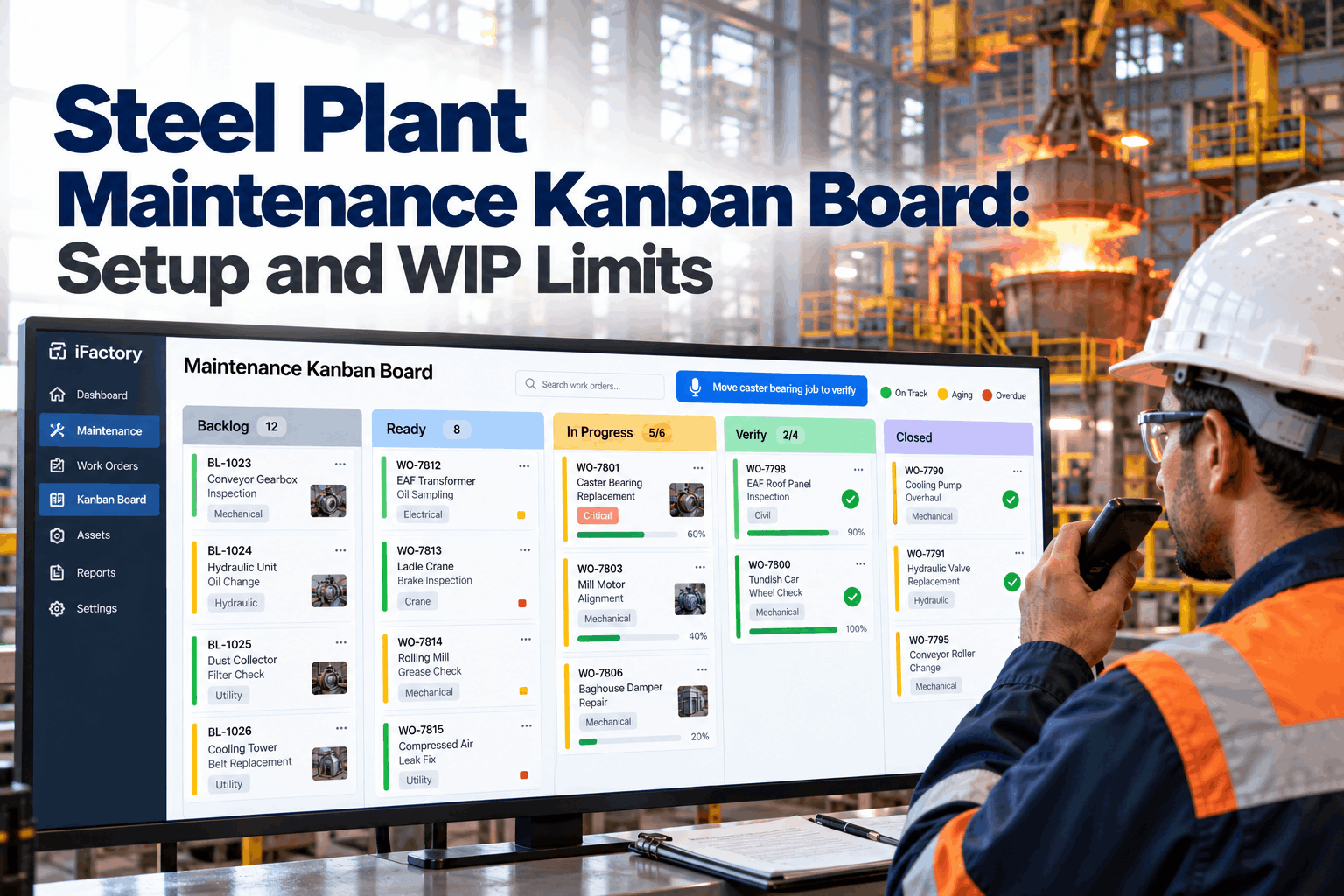
As a planned stop or reline approaches, the PM agent drafts the job list from the lining forecast, open condition findings and due PMs, and places it on the shutdown kanban for planners to review. That gives time to order refractory, book contractors and arrange cranes. Planners can then add, remove or re-sequence jobs, and the final list becomes the record of what the stop was meant to achieve, ready to compare with what was actually done. Plan your shutdown board with our planning team.
BOF Maintenance Plan Mistakes to Avoid
The converter forgives very little.
These are common gaps in converter maintenance plans. A short plan review can find them.
What works
- Intervals in heats, not calendar days
- Gunning targeted from scans
- Reline window forecast and refreshed
- Lance flow balance checked every heat
What fails
- Fixed gunning rhythms for every zone
- Trunnion bearings checked only at relines
- Outage lists written the week before
- Forecasts changed without engineer review
How iFactory Runs BOF Converter Maintenance
Autonomous PM Agent and Refractory Model, on your own network.
iFactory tracks heats per campaign and laser lining scans, predicts gunning and reline windows, watches trunnion, lance and tilt drive condition, and drafts the outage job list on the shutdown kanban. It runs on an on-prem AI server inside your plant. Fit questions go to our solutions team.
Refractory model
Wear rate by zone from laser scans.
Gunning and reline windows
Predicted and refreshed every scan.
Trunnion watch
Bearing temperature and lubrication.
Lance cooling
Flow balance checked every heat.
Shutdown kanban
Outage job lists drafted ahead.
Engineer approval
Forecasts and plans reviewed by people.
Results depend on your converters, refractory practice and data. Minimum lining thickness and safety limits are always set by your refractory and process engineers.
Turnkey AI: Delivered, Connected and Live in 6–12 Weeks
You do not build this. It arrives ready.
iFactory ships as a pre-configured NVIDIA AI server with the software pre-loaded, racked and ready. Rack it, plug in power and Ethernet, and the AI is live on your network. Our team handles cabling, network setup, PLC, SCADA, DCS and CMMS integration, level 2 and scanner links, operator training and 24×7 remote monitoring. Data stays on your network. For a scope matched to your plant, request a turnkey quote.
Ship, network and data
Server installed. Heat data, lining scans, CMMS and condition data connected.
Model training and pilot
Refractory model tuned to your converters. Forecasts reviewed with engineers.
Go-live and training
Converter plan live. Planners and engineers trained. 24×7 monitoring begins.
Frequently Asked Questions
What should a BOF converter maintenance plan cover?
The refractory lining, trunnion bearings and ring, the oxygen lance and its hoist, and the tilt drive, each with tasks based on heats and condition.
How is the reline window predicted?
From the thinnest lining zone, its wear rate per heat from laser scans and the minimum thickness set by refractory engineers. The forecast is refreshed after each scan.
How does it help with gunning?
It shows which zones are wearing fastest, so gunning can target those zones and the next scan can confirm whether the repair held.
How are trunnion bearings monitored?
With bearing temperature trends, lubrication records, grease samples and inspections at outages, since slow rotation limits classic vibration methods.
Why is lance cooling so important?
A cooling water leak into a vessel of molten steel is a serious hazard. Comparing water in and water out every heat helps spot leaks early.
What is the shutdown kanban?
A board of outage jobs drafted from forecasts, condition findings and due PMs, which planners review and schedule before the stop.
Can practice changes extend lining life?
Often, yes. Linking slag splashing, temperatures and slag chemistry with scan results shows which practices protect the lining, so process and refractory teams can adjust together.
Does the AI set lining limits?
No. Minimum thickness and safety limits are set by your refractory and process engineers. The AI forecasts against them.
How do we start?
Start with one converter and its lining scans. A 6-week pilot builds the wear model and drafts the next outage list. To plan it, contact our team.
Know When Your Converter Needs Work
In thirty minutes we review your lining scans, heat counts and current PM plan, and sketch a campaign forecast for one converter. You keep the sketch either way.
- 1Recent laser lining scans
- 2Heat counts for the last campaigns
- 3Your converter PM task list
- 4Trunnion and tilt drive condition data
- 5Findings from the last reline