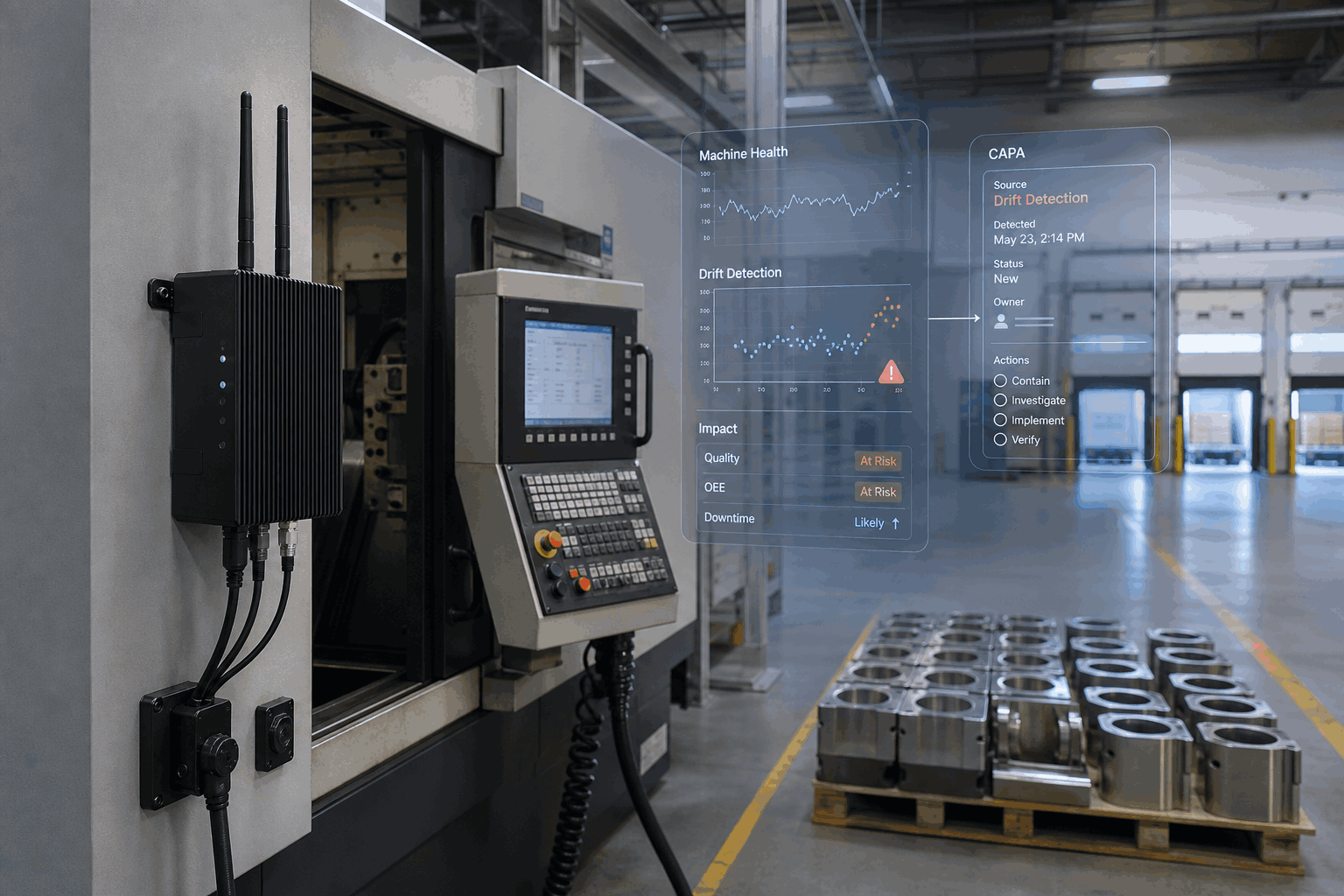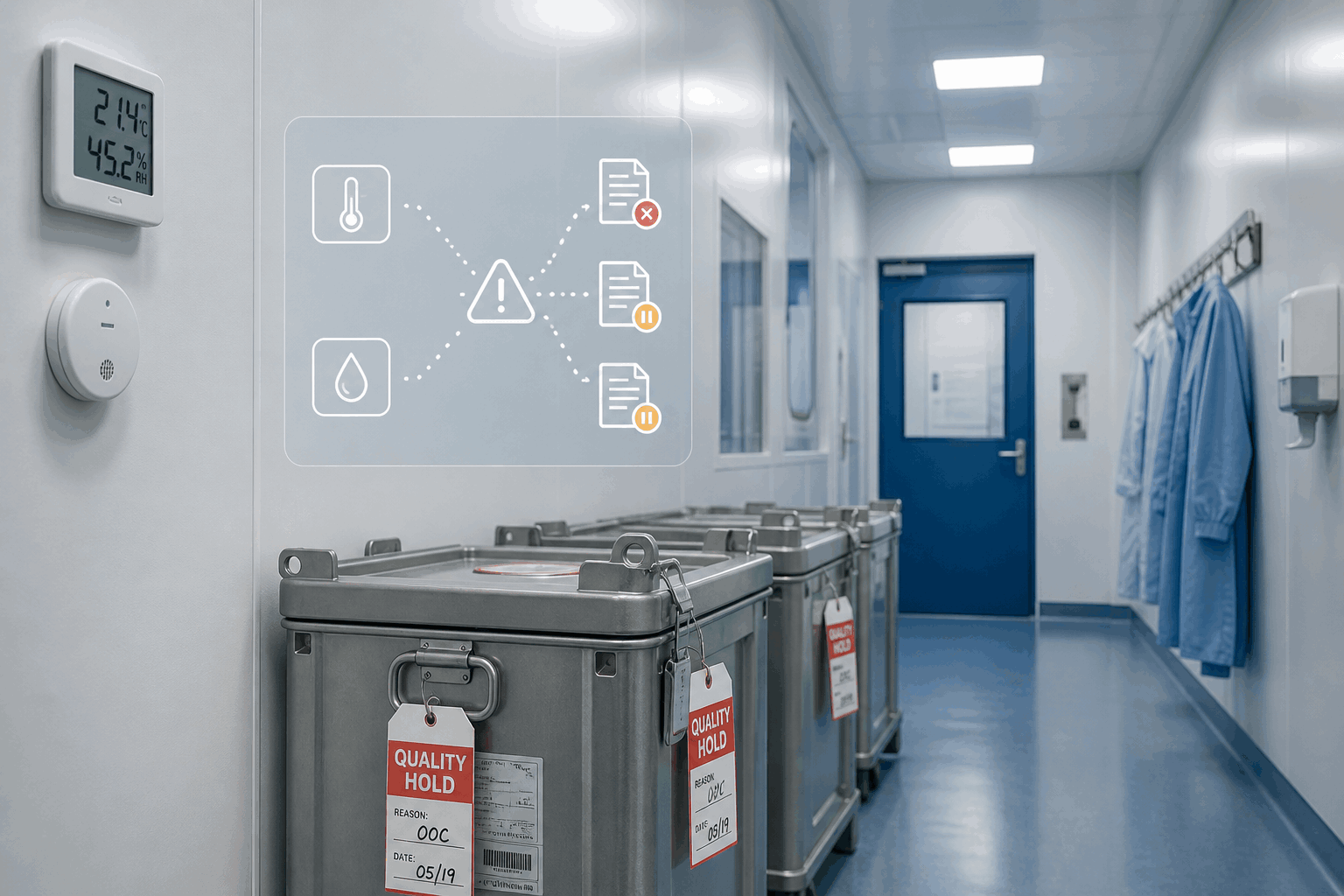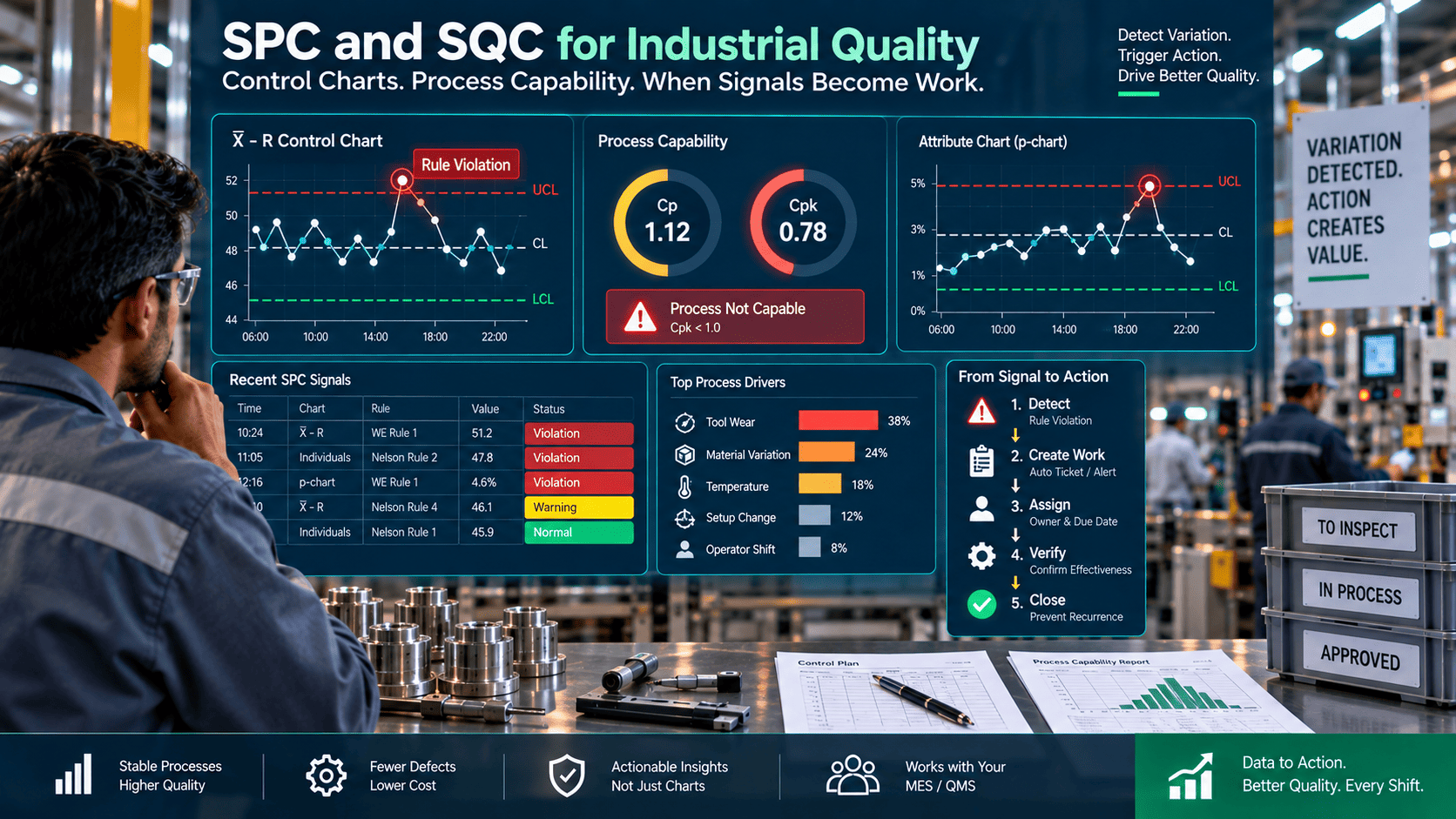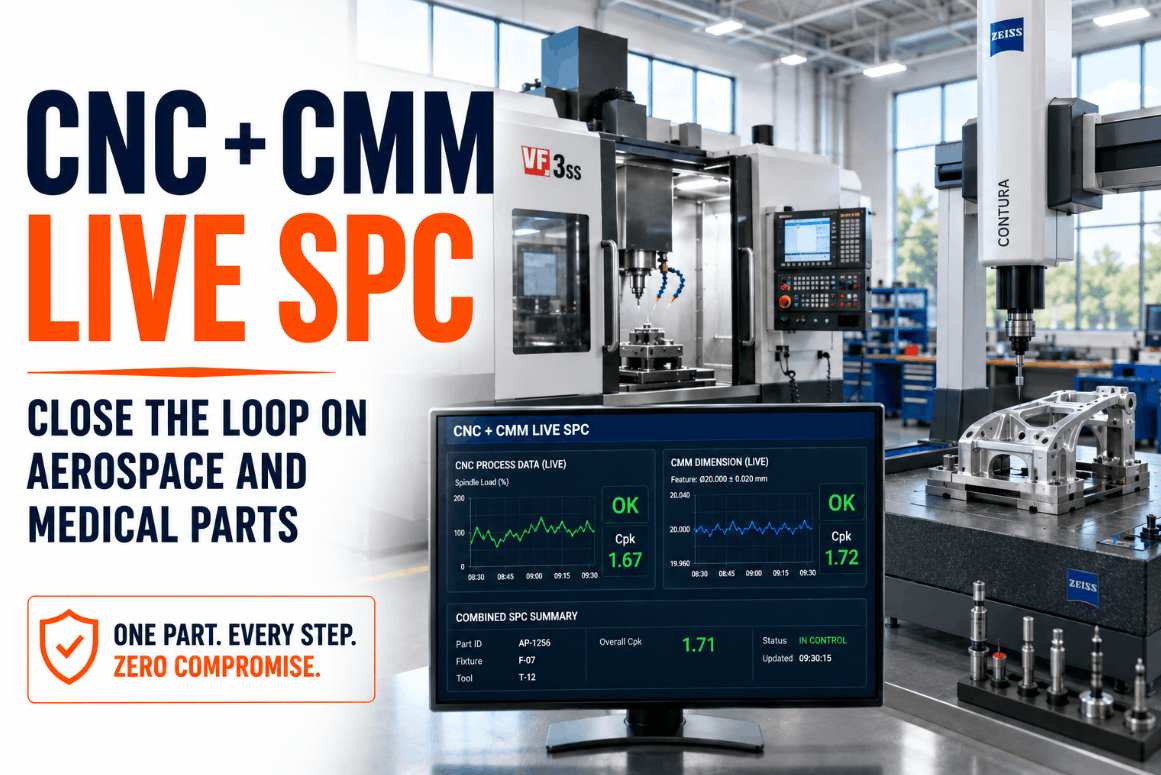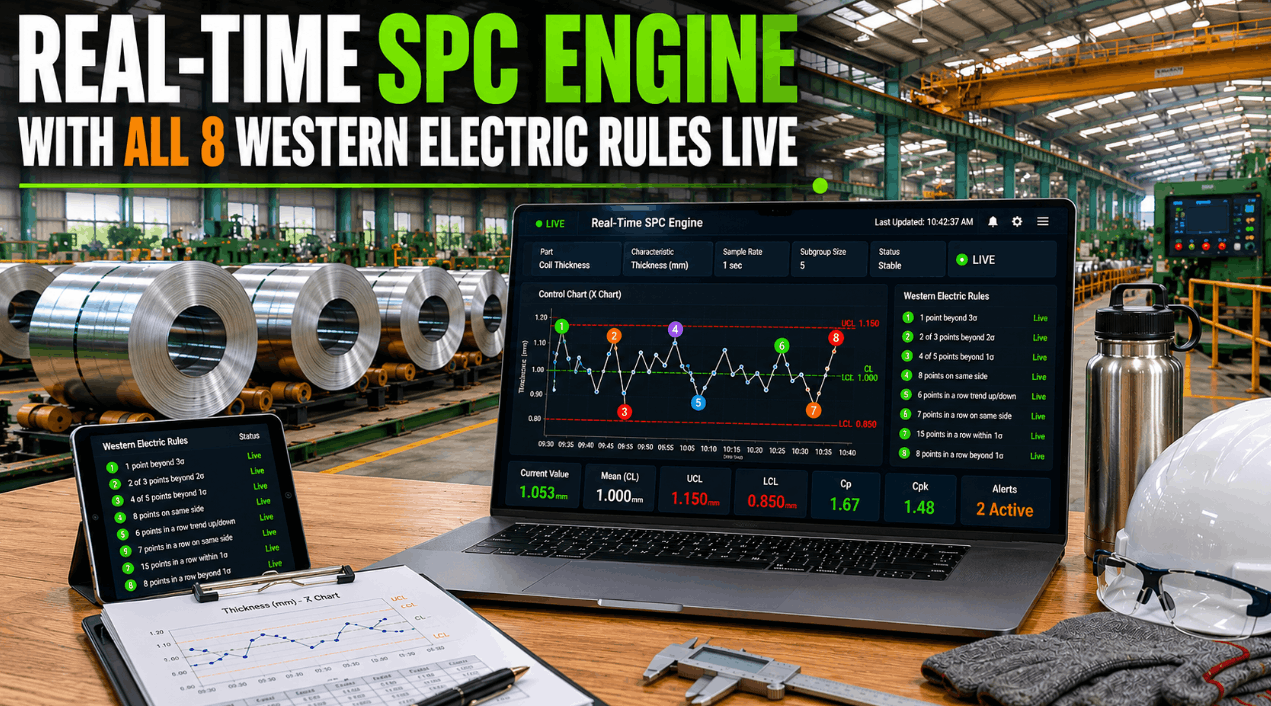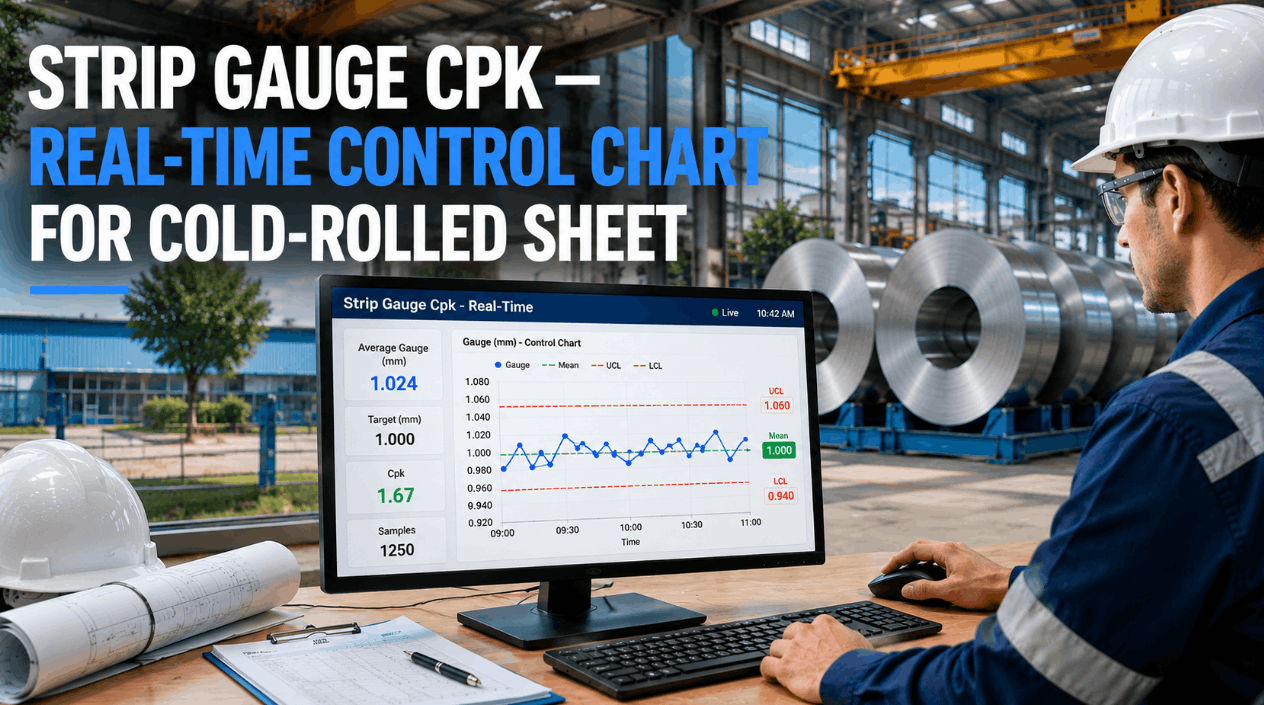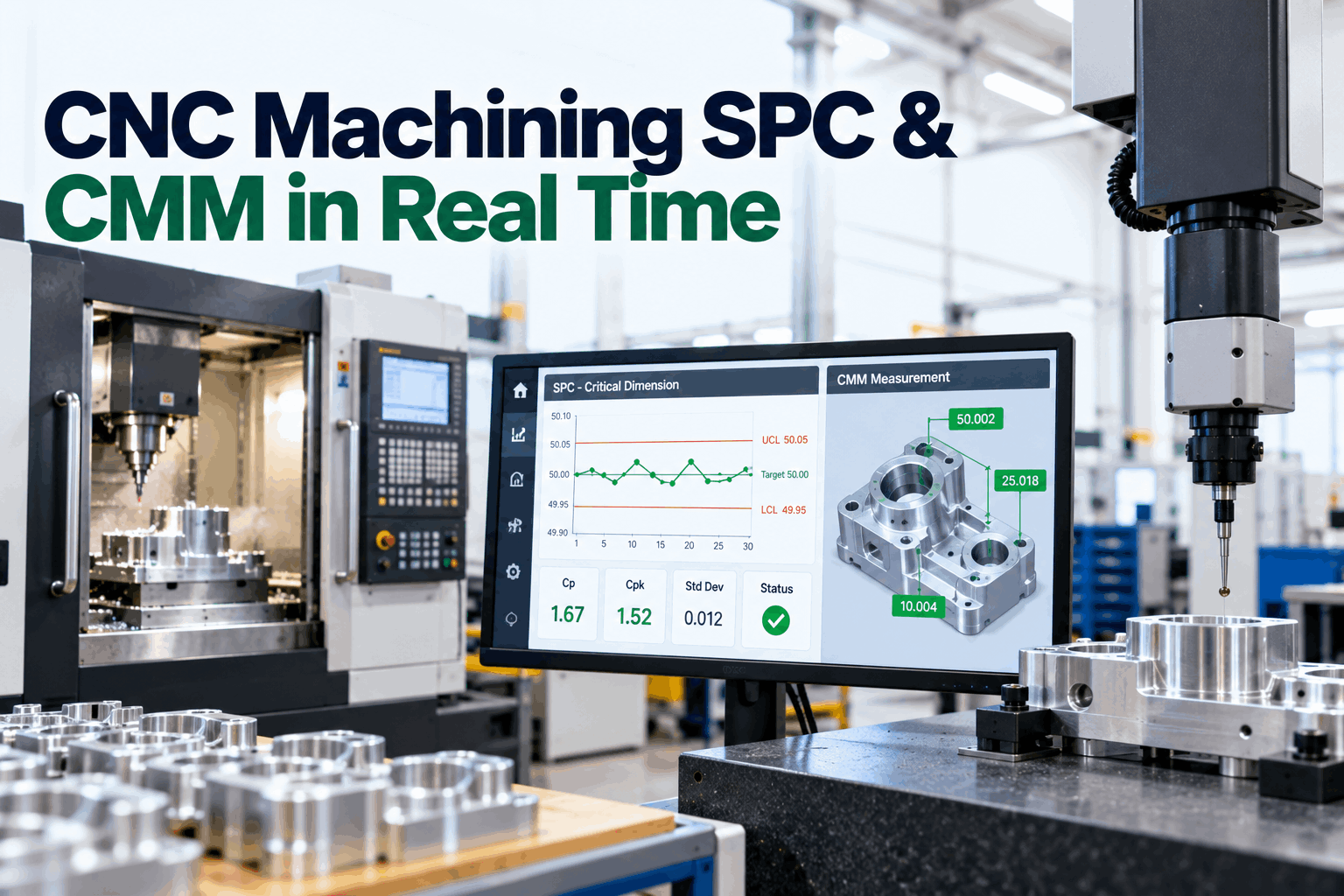
An X-bar chart on a critical bore diameter drifts past the upper control limit at 3:22 a.m., the CMM confirms it 40 minutes later on the next scheduled measurement, and by then eleven parts have already moved to the next station. That is the CNC machining SPC and CMM real-time blind spot — the signal is real, the measurement equipment is capable, and the CAPA and genealogy trail still never gets built. iFactory AI overlays your MES, QMS, historian, SPC tools, and CMM stack so every OOC signal opens a scoped hold, a CAPA draft with the actual measurement data attached, verified recovery, and a genealogy trail that shows every part exposed to the drift. Book a 30-minute walkthrough of OOC signal to CAPA closure.
Detection is real. Measurement is capable. The gap is what happens between the OOC signal and the verified release of the next lot.
At a Glance
Why CNC Quality Signals Stall Before Containment
Precision machining has some of the most mature quality measurement in manufacturing. Shops run SPC on critical characteristics, CMM programs verify first-off and periodic samples, in-process gauges catch drift, and operators know their machines. And yet the same shops still see parts escape because the delay between the OOC signal and the containment action is measured in tens of minutes, not seconds. The chart is right. The measurement is right. The process to act on both is slow.
That delay adds up across shifts. A tool wear pattern shows up on Tuesday, gets partially corrected without a formal CAPA, reappears on Wednesday, and by Friday nobody can reconstruct which parts across the week were affected. The genealogy trail is broken not because the data does not exist but because it lives in different systems and nobody stitched it together in the moment. Governance is what closes that gap.
Signals That Should Open a Governed Workflow
Not every point past a control limit is a special cause and not every special cause needs the same response. But every OOC signal deserves a consistent workflow that captures the evidence, scopes the hold, and drafts the CAPA before the reviewer decides what to do next.
Point past control limit, run of 7, trend, or Nelson rule — signal captured with chart context and affected part range.
Variation widening beyond the R chart control limit — often the earliest sign of tool wear or fixture drift.
Feature measurement outside specification during periodic sampling — triggers hold on the intervening part range.
Systematic drift in dimension or surface finish that correlates with tool insert history and cutting time.
Warm-up drift and steady-state offset patterns visible in early-shift measurements and setup runs.
Post-setup measurements showing offset applied to wrong axis or with wrong sign — caught early through OCV.
The Closed-Loop Path — OOC to Verified Restart
Rule fired, part range identified, chart image captured, tool and setup context attached.
MES holds the affected parts. Downstream stations block the range from moving further.
Tool life, offset changes, coolant events, and adjacent process data pre-populate the CAPA for review.
Corrective action executed, verification samples measured, SPC re-entry rules confirm control before full-rate.
Reviewer approves release. Every affected part traced to a disposition decision with recorded evidence.
Bring one critical characteristic and one machine. We walk through SPC detection, part-range hold, CAPA draft with tool history, and verified restart — all beside your existing systems.
Where iFactory AI Fits in a CNC Quality Stack
- Machine control and NC programs
- SPC software of record
- CMM programs and measurement data
- MES production tracking
- QMS approvals and quality records
- Structured event contracts for OOC signals
- Part-range hold logic tied to SPC and CMM
- CAPA drafting with tool and setup context
- SPC re-entry rules for controlled restart
- Genealogy preservation across shifts and jobs
Frequently Asked Questions
Real-time SPC catches drift before the CMM sample confirms it, and when paired with a governed workflow, that signal becomes a part-range hold and a CAPA draft in the same moment. The delay between detection and containment closes from tens of minutes to seconds.
No. iFactory AI overlays your existing SPC, CMM, MES, and QMS. It orchestrates the workflow around the signal and preserves genealogy without changing your measurement stack.
The overlay identifies the last in-control point and holds every part cut since. That scope matches actual exposure so healthy parts continue to flow while suspect parts stay held for review.
Systematic drift patterns can be identified and correlated with tool history in the CAPA draft. Final root cause and corrective action decisions remain with the process engineer.
Rules that gate the return to full-rate production after CAPA — confirming there are no special-cause signals and that enough in-control data supports the restart, before the line reopens.
Precision machining deserves precision governance. iFactory AI turns every SPC or CMM signal into a scoped hold, a CAPA draft with tool history, a verified restart, and a genealogy trail every reviewer can defend.