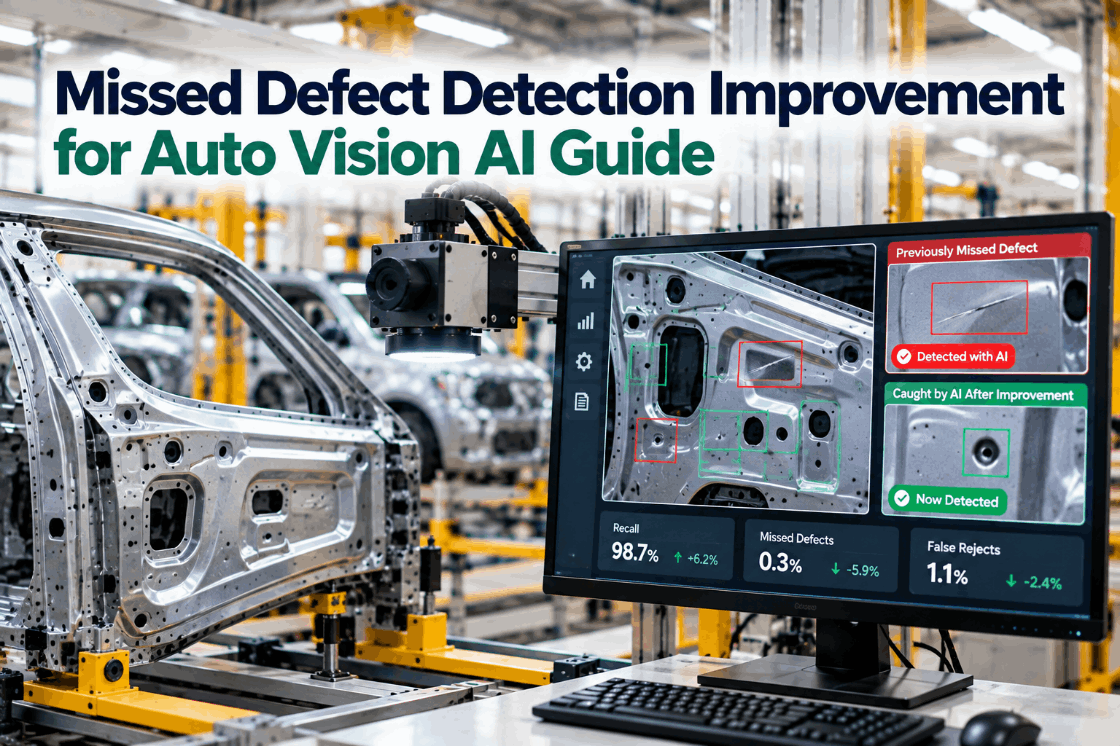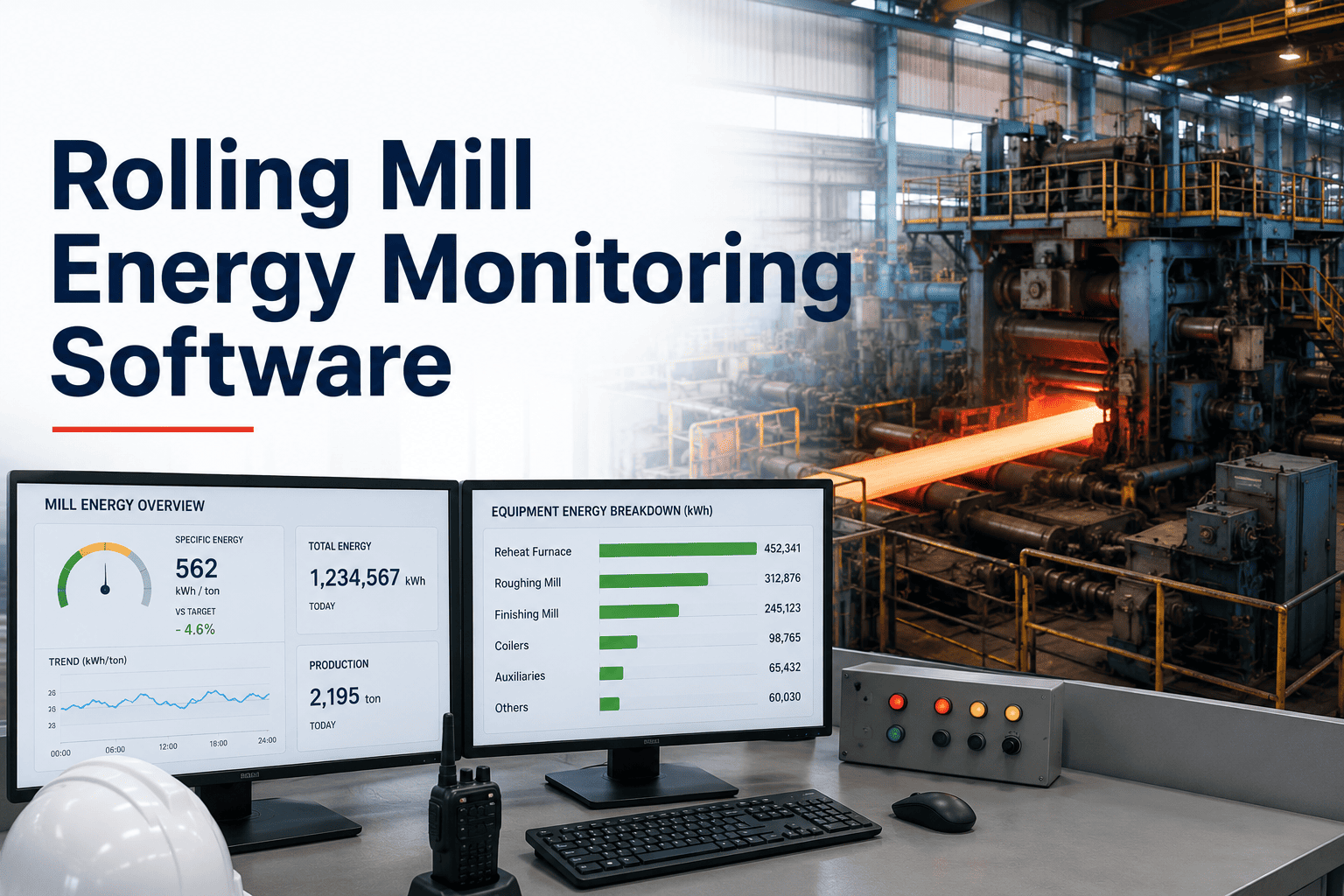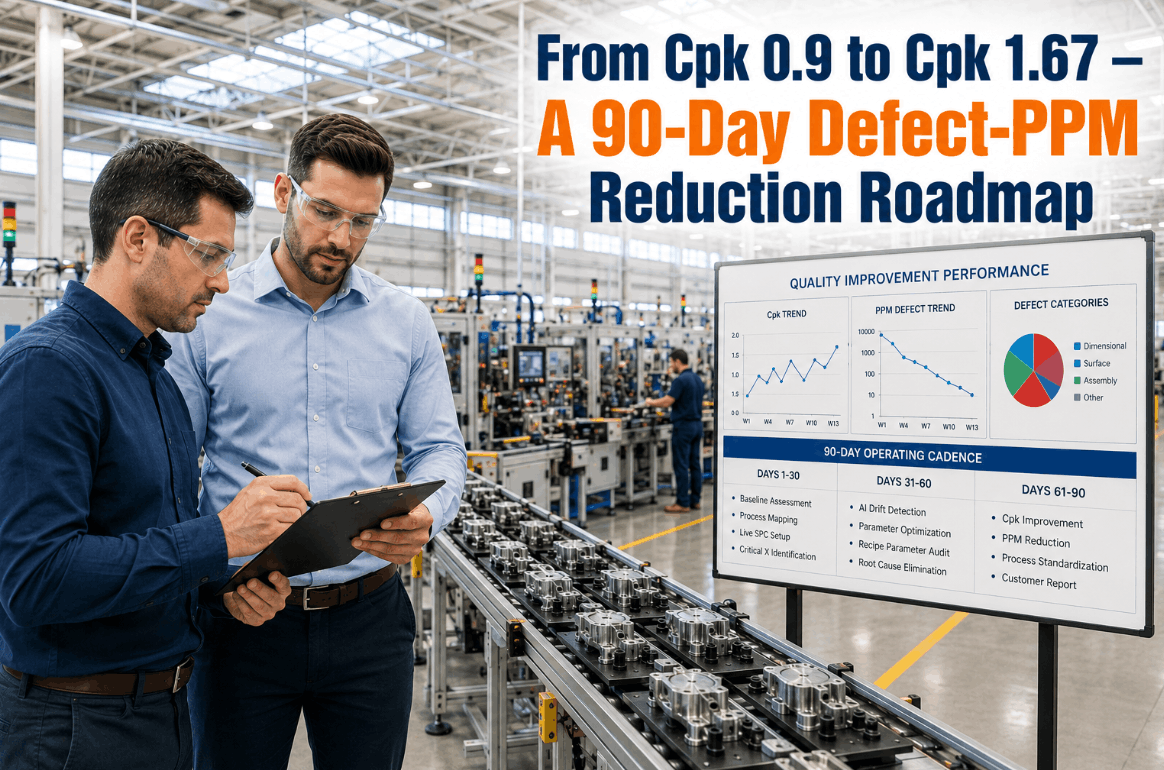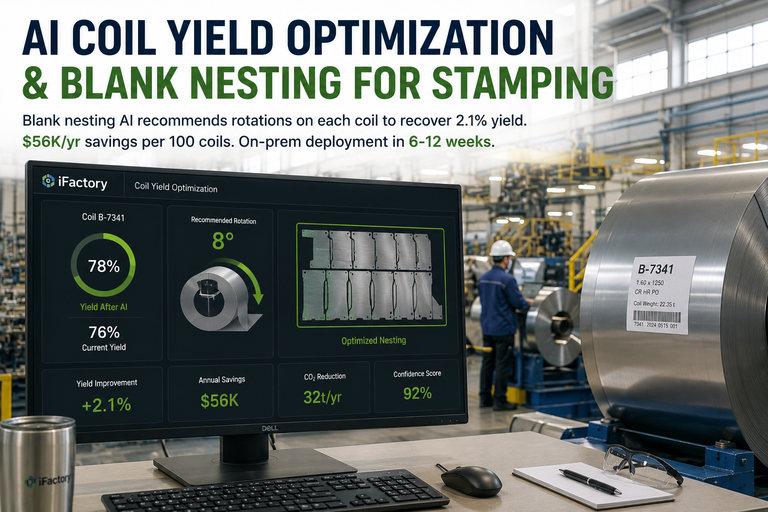
In flat-rolled steel production, yield is the number that quietly defines profitability. A single percentage point of yield improvement across a mill producing 600,000 tons per year translates directly into seven figures of recovered revenue — and yet most yield engineers are still reconciling coil-level losses in spreadsheets, long after the scrap has already been trimmed and downgraded. Edge cracking, flatness defects, and surface marks each have distinct process signatures buried inside PLC telemetry, SPC trends, and historian records. iFactory's Coil Yield Intelligence platform pulls all three signal sources into a unified per-coil yield ledger with AI Vision, giving yield engineers the root-cause attribution they need within the shift — not the following week. Maintenance and quality teams who Book a Demo consistently describe the platform as the first tool that finally connects defect images to the specific process event that caused them.
One Platform. Every Defect Signal. Full Per-Coil Yield Accountability.
iFactory unifies AI Vision, PLC fleet telemetry, SPC engine, and historian backfill into a single coil yield ledger — with root-cause attribution that identifies whether the defect came from a roll, a tension parameter, or an upstream process event.
Why Coil Yield Losses Persist Despite Existing Quality Systems
Most flat-rolled mills already have quality cameras, SPC charts, and process historians. The problem is not a lack of data — it is that the data lives in three separate systems that never talk to each other. The AI Vision system flags a surface mark on coil 4271. The SPC chart shows a tension deviation on the same coil. The historian records a mill speed fluctuation at the same timestamp. But without a unified platform, the yield engineer has to manually correlate those three signals across three interfaces to identify the root cause. By the time the analysis is complete, several more coils have already been rolled under the same conditions.
iFactory eliminates that manual correlation step. By ingesting AI Vision defect images, PLC fleet telemetry, SPC process data, and historian records into a single per-coil yield ledger, the platform performs root-cause attribution automatically — linking each defect classification to the specific process signal that most likely caused it. Yield engineers get actionable findings within the shift, enabling process adjustments before the loss compounds. Teams ready to see this in action typically start by scheduling a session to Book a Demo and map their current defect types against the platform's classification library.
Edge Defect Detection
Edge cracking and trimming losses are correlated in real time with entry tension, edge heater performance, and roll crown data — isolating whether the root cause is thermal, mechanical, or upstream.
Flatness Defect Attribution
Center buckle, edge wave, and quarter buckle patterns are automatically classified and correlated with roll-force profiles, bending settings, and coolant distribution asymmetry from the PLC fleet.
Surface Defect Classification
AI Vision classifies roll marks, scratches, slivers, and inclusion scars by morphology and position. The platform traces each defect type to the specific roll set, stand, or upstream handling event most statistically associated with it.
Per-Coil Yield Ledger
Every coil exits the mill with a complete yield record — defect images, process signals at defect timestamp, SPC Cpk at time of occurrence, and a root-cause probability ranking. No manual reconciliation required.
Four Signal Sources. One Unified Coil Yield Ledger.
iFactory's Coil Yield Intelligence platform is built around the insight that no single data source can reliably explain a yield defect on its own. AI Vision shows what happened on the strip surface. PLC telemetry shows what the process was doing at that moment. The SPC engine shows whether the process was in control. The historian provides the longitudinal context — what happened in the previous campaign, the previous roll set, the previous heat of material. Only when all four signals are synchronized on a coil-by-coil timeline does root-cause attribution become reliable. Teams exploring how to connect these systems for the first time often Book a Demo to review their existing data architecture against the iFactory integration model.
Signal 1 — AI Vision: Defect Detection and Classification
iFactory deploys NVIDIA-accelerated edge cameras at critical inspection points — exit of the finishing stand, entry to the tension reel, and coil surface inspection after slitting. The AI Vision model classifies each detected anomaly by defect type, severity, and position on the strip, and timestamps it against the coil length so it can be precisely correlated with process data.
Signal 2 — PLC Fleet Telemetry: Process State at Defect Timestamp
When AI Vision records a defect at meter 340 of coil 4271, iFactory simultaneously queries the PLC fleet for the process state at that exact moment — roll force, speed, tension, bending, AGC correction magnitude, and coolant flow. This synchronization eliminates the guesswork in root-cause analysis and replaces it with a statistically grounded correlation between the defect and the process signals most deviated from nominal.
Signal 3 — SPC Engine: Was the Process in Control?
A defect occurring while the process was within statistical control limits has a different root-cause probability profile than one occurring during a Western Electric rule violation. iFactory's SPC engine evaluates the control state of all monitored parameters at the defect timestamp and flags any out-of-control conditions that overlap with the defect event — providing yield engineers with a precise process-state snapshot that accelerates root-cause narrowing.
Mapping Coil Defect Types to Process Root Causes
Effective yield management requires knowing not just that a defect occurred, but which process variable most likely caused it. The table below illustrates how iFactory correlates common coil defect classifications with their primary PLC and SPC signal contributors — the foundation of the per-coil yield ledger's root-cause attribution engine. Yield engineering teams exploring how this maps to their own defect taxonomy typically begin with a Book a Demo session to review their top three recurring defect types against the attribution model.
| Defect Type | AI Vision Classification | Primary PLC Signal | SPC Indicator | Yield Impact |
|---|---|---|---|---|
| Edge Cracking | Lateral fracture morphology, strip edge zone | Entry tension deviation, edge heater temperature | Cpk drop on edge-gauge channel | Forced trimming; coil width downgrade |
| Center Buckle | Longitudinal waviness, center strip band | Roll-force asymmetry, positive bending deviation | WE Rule 3 on flatness channel | Flatness rejects; tension leveler scrap |
| Edge Wave | Periodic lateral buckle at strip edge | Coolant flow asymmetry stand 4/5, negative bending | Trend violation on crown channel | Slitting loss; customer flatness rejection |
| Roll Mark | Periodic surface impression, fixed pitch | Roll-force spike at defect timestamp, speed deviation | Single-point violation on force channel | Surface downgrade; off-prime classification |
| Scratch / Score | Linear surface mark, directional | Tension reel contact pressure, guide alignment flag | No SPC trigger — handling event | Surface rejection; exposed to customer claim |
| Inclusion / Sliver | Irregular subsurface disruption, random distribution | Historian: ladle chemistry, slab inspection flag | Upstream Cpk on slab thickness | Full coil downgrade or customer return |
Deploying Coil Yield Intelligence: A Three-Tier Framework
iFactory's yield intelligence deployment follows a phased approach that delivers measurable yield improvement at each stage — allowing mills to capture early wins that fund the deeper implementation tiers. Organizations building this program often start with a Book a Demo to align the deployment sequence with their current data infrastructure and highest-priority defect categories.
AI Vision + Defect Log
For: Quality Engineers
- Edge camera installation at exit gauge point
- AI defect classification by type and severity
- Per-coil defect image archive
- Basic yield loss report per shift
PLC Sync + SPC Attribution
For: Yield & Process Engineers
- PLC fleet telemetry synchronized to defect timestamps
- SPC engine overlay on defect events
- Automated root-cause probability ranking
- Per-coil yield ledger with process context
Historian Backfill + Predictive Yield
For: Plant Yield Engineers / Management
- Historian backfill for longitudinal trend analysis
- Campaign-level yield benchmarking by roll set
- Predictive defect risk flagging per incoming coil
- ERP integration for yield-to-cost reporting
Measurable Yield Gains Across iFactory-Supported Rolling Operations
The following outcomes reflect 90-day post-deployment results across flat-rolled mills using iFactory's unified yield intelligence platform. Results vary by mill configuration, starting defect rate, and deployment tier reached within the measurement window.
"Before iFactory, our yield reconciliation was a Thursday morning meeting where we looked at last week's numbers and argued about whether the edge cracking was a tension problem or a thermal problem. Now the platform gives us the answer within the shift — defect image, the PLC signals at that exact moment, and the SPC state. We stopped arguing and started fixing. In the first quarter we ran on the platform, we recovered 1.1 points of yield on our tightest automotive grades. That's real money and it showed up directly in our cost-per-ton."
Coil Yield Intelligence: From Lagging Reconciliation to In-Process Recovery
Coil yield improvement has historically been a retrospective discipline — analyze last week's scrap, hypothesize a cause, trial a process change, wait for the next data cycle. iFactory converts it into an in-process feedback loop. By unifying AI Vision defect images, PLC fleet telemetry, SPC engine output, and historian context into a single per-coil yield ledger, the platform delivers root-cause attribution within the shift — fast enough to drive process adjustments before the loss compounds across an entire roll campaign. For flat-rolled steel producers competing on tight-tolerance, high-surface-quality orders, that speed of insight is a direct competitive advantage. Every point of yield recovered at a 600,000-ton mill is worth millions in margin — and iFactory makes that recovery systematic, traceable, and repeatable. Plant yield engineers ready to see the platform against their own defect data can Book a Demo and walk through a live attribution session with the iFactory engineering team.
Coil Yield Intelligence — Frequently Asked Questions
Can iFactory connect AI Vision defect data to our existing process historian?
Yes. iFactory ingests historian data via standard connectors and synchronizes it with defect timestamps so the per-coil yield ledger shows process context at the exact moment each defect was detected.
Which defect types does the AI Vision system classify for flat-rolled coil?
The platform classifies edge cracks, center buckle, edge wave, roll marks, scratches, and inclusions — covering the three primary defect families that drive yield loss in cold and hot rolling.
How does the platform determine root-cause probability for a detected defect?
iFactory correlates the defect timestamp with PLC signal deviations and SPC out-of-control events occurring within a configurable time window, then ranks root-cause candidates by statistical co-occurrence frequency across historical coil data.
Does iFactory require us to replace our existing vision inspection system?
No. iFactory can either integrate with your existing inspection hardware via data feed or deploy its own NVIDIA-accelerated edge cameras alongside existing equipment, depending on the site configuration.
How quickly can we expect to see measurable yield improvement after deployment?
Most facilities see quantifiable yield recovery within the first 30–60 days of Tier 2 deployment, as same-shift root-cause attribution enables process corrections that stop recurring defect patterns within the same campaign.
Recover Every Point of Yield Your Process Has Been Leaving Behind
iFactory's Coil Yield Intelligence platform unifies all four defect signal sources into one attribution engine — giving plant yield engineers the root-cause answer within the shift, not next week's meeting.