A rolling mill loses hours every week to roll changes, cobbles, small electrical faults and slow shift handovers. Each stop costs lost tonnes, and the reheat furnace keeps burning gas while the mill waits. Most of the loss is spread across many short stops, so it rarely gets the attention one big breakdown does. This guide shows how to attribute every stop, shorten roll changes and tighten shift changeovers, so throughput comes back week after week. To see where your mill's hours go, book a mill downtime review.
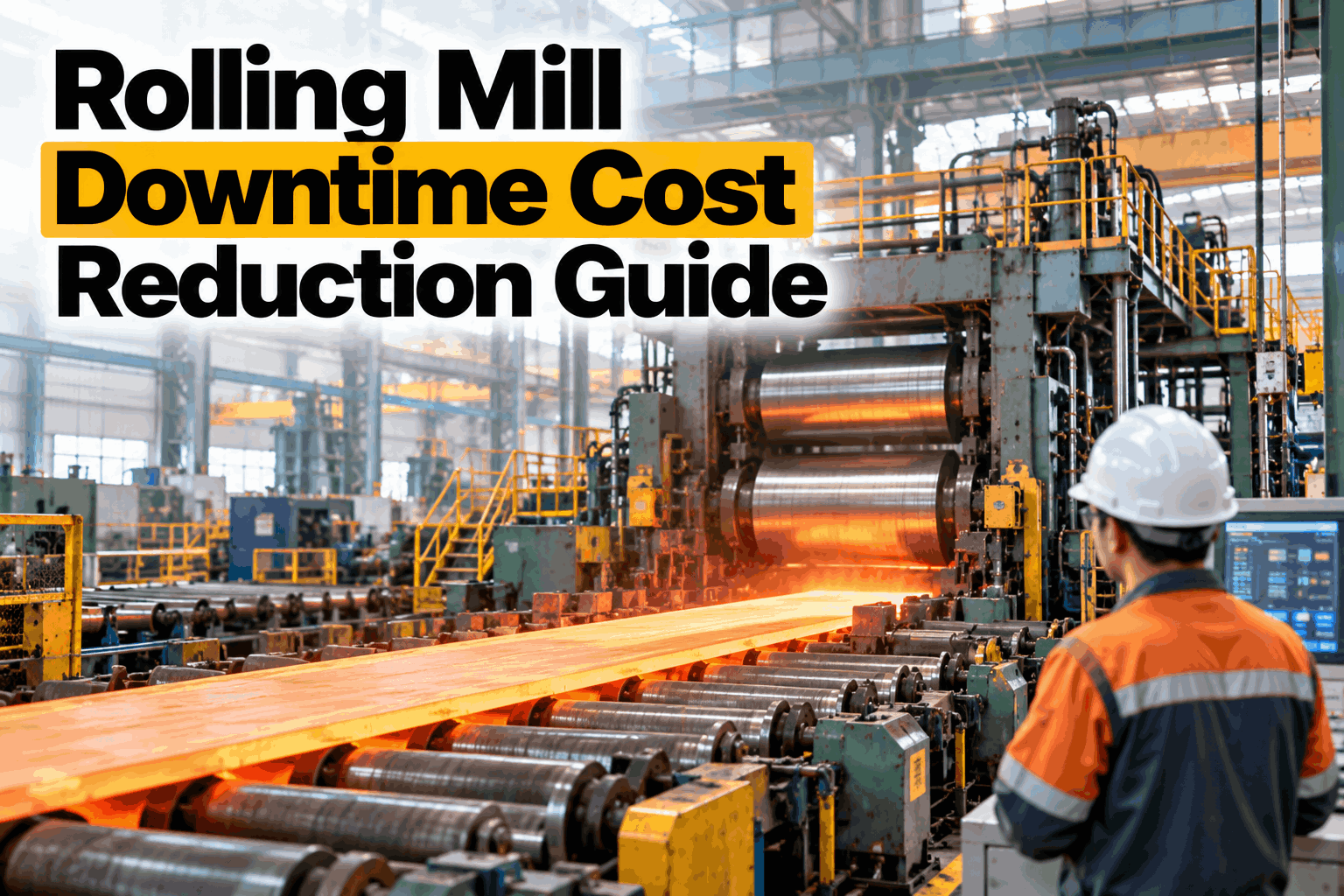
Rolling Mill Downtime Cost Reduction Guide
Attribute every unplanned stop, take minutes out of every roll change, and stop losing the first hour of each shift. A practical path to recovering throughput, and the energy wasted while the mill stands still.
- Where a typical week of mill downtime really goes
- Roll change and changeover tactics that save minutes daily
- Why downtime is also an energy cost
The top three causes make up about 70% of the week. That is usual: a few causes carry most of the loss, and they are where to start.
Where Rolling Mill Time Goes
The big breakdown gets the meeting. The small stops take the hours.
A cobble here, a guide adjustment there, a ten-minute wait for the furnace, a drive trip that clears itself. None feels big on its own, and none gets its own meeting. Added up over a week, they often cost more than the one major breakdown everyone remembers. Our steel support team can help you see the real split in your mill.
Planned stops
Roll changes, guide changes and size changes. Planned, but often longer than they need to be, and longer on some crews than others.
Process stops
Cobbles, misrolls and threading problems. Often linked to temperature, guides or setup, and often repeated.
Equipment stops
Electrical faults, drives, hydraulics and bearings. Short, frequent and easy to overlook until they are added up.
Waiting
For billets, the furnace, cranes or people. Time when nothing is wrong, but nothing is rolled either.
Hours lost per week
All stops, split planned and unplanned, every week.
Stops per shift
Count matters as much as length, because every restart costs too.
Roll change time
Median and worst, by crew and by stand.
Energy while idle
Furnace fuel burned with the mill stopped, in money.
While the mill stands, the reheat furnace keeps burning fuel to hold temperature, and motors and fans may keep running. A stop that costs an hour of output also costs an hour of energy with nothing to show for it.
Attribute Every Unplanned Stop
You cannot cut what you cannot name. Every stop needs a reason and an owner.
Many mills log stops as "mechanical" or "process" with no detail, so the same problem keeps coming back and nobody owns it. Clear reason codes, captured automatically where possible and confirmed by the crew, turn a vague total into a ranked list. To build a code list that fits your mill, book a reason code workshop.
Mill signals know exactly when rolling stopped and restarted. Use them for start and end times, and ask the crew only for the reason. Records become more accurate, and nobody has to remember times at the end of a long shift.
Good stop records have
- Start and end time. From the mill, not memory.
- Location. Stand, area or equipment.
- Reason. From a short, clear list.
- Owner. Who fixes the cause.
Weak stop records say
- "Mechanical" with no detail
- One long stop that was really three
- Times typed in at the end of shift
- No link to the product being rolled
A Weekly Recovery Plan, in Numbers
Here is a realistic first target for the illustrative week above: shorter roll changes, fewer cobbles, faster handovers and less waiting.
Roll Changes: The Biggest Planned Loss
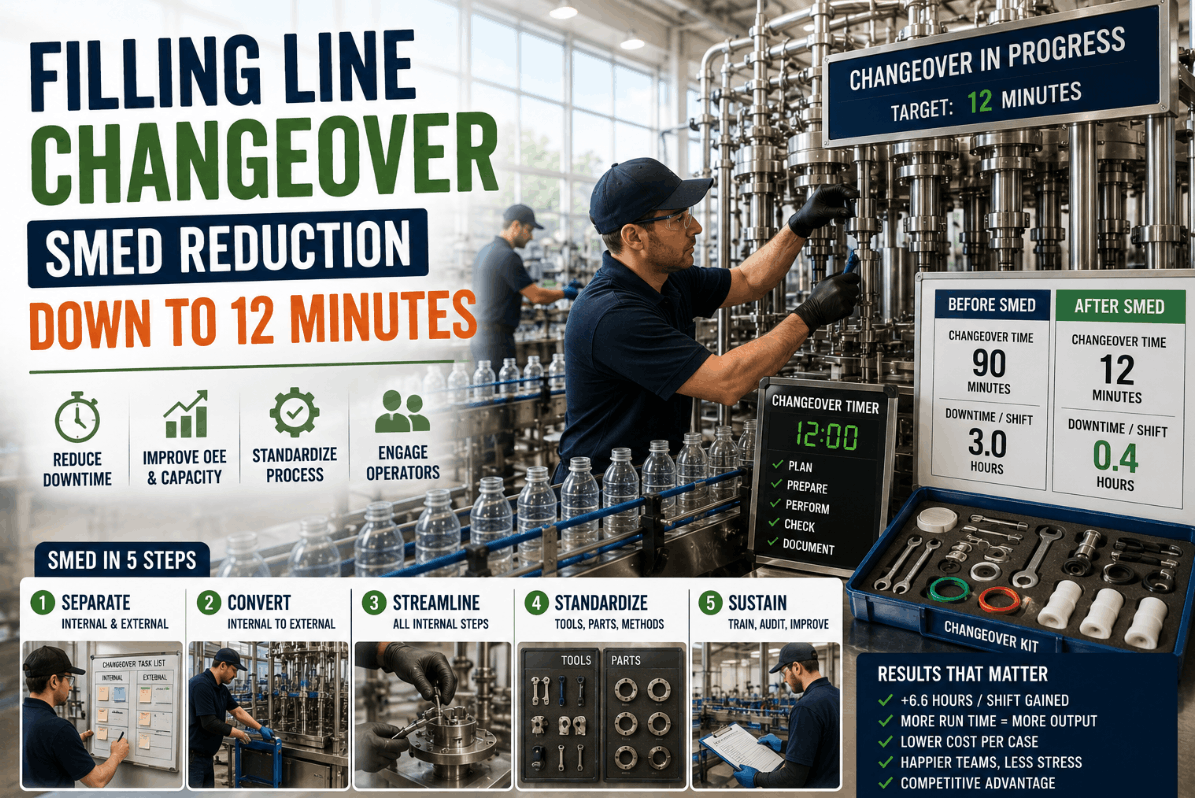
Most roll change time is waiting, searching and checking, not the change itself.
Quick roll change systems can cut a work roll change to minutes. But many mills lose more time before and after the change: rolls not ready, tools missing, setup checks repeated, a first bar that has to be scrapped. Treat each roll change like a pit stop, with as much work as possible done offline before the mill stops. If you want help reviewing your roll change, our engineers can help.
Prepare offline
Rolls, chocks, guides and tools ready and checked before the mill stops, every time.
Standard steps
The same sequence on every shift, with clear roles for each person and a timer on the screen.
Fast first bar
Setup values ready so the first bar is good, not a test bar that ends as scrap.
Fixed roll campaigns change some rolls too early and others too late. Using tonnage, wear and quality data to time each change, and grouping changes with size changes in the schedule, saves both stops and rolls.
Cobbles: Fix the Cause, Not Just the Clean-Up
A cobble costs the clean-up, the lost bar and the restart. Repeats cost far more.
Cobbles often cluster at the same stands, sizes or temperatures. Linking each one to the stand, product, bar temperature and recent setup changes usually shows a pattern the crew already half suspects, and gives them the data to prove it.
Temperature
Bars that leave the furnace too cold or uneven are harder to roll and thread, especially after a delay.
Guides and setup
Worn or misaligned guides, and setup changes made just before the cobble.
Speed and tension
Mismatched stand speeds that push or pull the bar between stands, often after a roll change.
The few bars rolled just before a cobble often carry the warning: a temperature dip, a current spike at one stand, a speed mismatch. Keeping that data with every cobble record makes root cause far faster.
Shift Changeover Tactics
The first and last half hour of a shift are where mills quietly lose time.
Handovers often mean a slow end to one shift and a slow start to the next, with questions, checks and small delays in between. Over a week, those minutes add up to hours. A short, structured handover keeps the mill running through the change. To review your handovers, book a changeover session.
Handover habits that work
- Run through. Hand over on the move, not with the mill stopped.
- One page. Open issues, rolls due and problem stands.
- Same data. Both crews see the same live stop list.
- Overlap. Key roles overlap by a few minutes at the pulpit.
Compare output in the first hour of each shift with the shift average. If it is clearly lower, the handover is costing you tonnes, and the fix is usually simple: rolls staged, issues written down, and the mill kept running through the change.
The Weekly Downtime Review
Thirty minutes a week, the same agenda, the top three causes.
Steady recovery comes from a short, regular rhythm, not a one-off project that fades after a month. One meeting, one ranked list, one owner per cause, and a check the following week on whether the fix worked.
Rank
Top three causes of lost hours this week, from coded stop data.
Assign
One owner and one action per cause, written down.
Fix
Action done during the week, not just discussed.
Check
Next week's data shows if it worked, or if the cause needs a deeper look.
How iFactory Recovers Mill Hours
Every stop timed, coded and costed, in tonnes and in energy.
iFactory's Rolling Mill Energy AI reads mill states, drive and sensor signals, and reheat furnace data. It times every stop, suggests a reason, and adds the energy burned while the mill waited. Schedule Optimization then helps group roll and size changes to cut stops. Questions on fit go to our support desk.
The aim is simple: fewer stops, shorter stops, and less fuel burned while the mill waits. Each week, the stop board shows whether the top causes are shrinking, and the energy view shows what each recovered hour was worth.
Capture
Every stop timed from mill signals, to the second, with no typing.
Attribute
Likely reason suggested from signals, crew confirms in one tap.
Cost
Lost tonnes and furnace energy per stop, in money as well.
Plan
Roll and size changes grouped in the schedule to cut the number of stops.
What crews see
- Live stop board with reasons
- Rolls and guides due next
- Handover sheet filled from data
What managers see
- Hours and tonnes lost by cause
- Furnace energy burned while idle
- Trend of the weekly top three
Recovery depends on your mill, products and starting point. We measure it against your own baseline during the pilot rather than promising a general figure.
Turnkey AI: Delivered, Connected and Live in 6–12 Weeks
You do not build this. It arrives ready.
iFactory ships as a pre-configured NVIDIA AI server, racked and ready, with the software pre-loaded. Rack it, plug in power and Ethernet, and the AI is live on your network.
Our team handles cabling, network setup, PLC and SCADA integration, operator training and 24×7 remote monitoring. The server sits inside your own network, so mill and energy data stay on site. For a scope matched to your mill, request a turnkey quote.
Ship, network and data
Server installed. Mill states, drives and furnace data connected. A short reason code list agreed with the crews.
Model training and pilot
Stops timed and coded automatically. First weekly downtime reviews run with your team, using the new data.
Go-live and training
Live stop board on the pulpit and in the planning office. Crews and planners trained. 24×7 remote monitoring begins.
Frequently Asked Questions
What are the biggest causes of rolling mill downtime?
Usually roll and guide changes, cobbles and misrolls, electrical and drive faults, and waiting for billets or the furnace. The mix differs by mill, which is why stop data matters more than any general list. Your top three may surprise you.
How can we reduce roll change time?
Prepare everything offline, use the same steps every shift, and have setup values ready for the first bar. Quick roll change equipment helps, but preparation often saves as much, at far lower cost.
How should unplanned stops be attributed?
Time each stop from mill signals, give it a reason from a short list, and name an owner who will fix the cause. Split long stops into their real causes, and review the top three every week.
Does downtime affect energy cost?
Yes. The reheat furnace keeps burning fuel to hold temperature while the mill waits, and some motors keep running. Costing stops in energy as well as tonnes shows their full price, and helps decide when to lower furnace temperature during long stops.
How do we cut shift changeover losses?
Hand over while the mill keeps running, use a one-page handover sheet, and give both crews the same live view of stops and rolls due. Check first-hour output to see if it works.
How quickly can we recover hours?
Often within weeks once stops are properly coded, because the top causes become obvious and many fixes are simple. Bigger gains, such as new roll change equipment, take longer.
Do we need new sensors?
Usually not. Most mills already have the signals to time stops, in the mill PLC and drive systems. Furnace fuel and drive power data add the energy side of the picture. To check yours, contact our team.
Find the Hours Your Mill Is Losing
In thirty minutes we look at a few weeks of your stop data, show where the hours go, and point out the first three causes worth fixing. You keep the findings whether or not you go further with iFactory.
- 1A month of stop logs
- 2Roll change records and times
- 3Your current reason codes
- 4Mill rate in tonnes per hour
- 5Reheat furnace fuel data