A coke oven battery depends on a few rail-mounted machines working beside rows of hot, gas-tight doors and lids. When a pusher ram strains or a door starts to smoke, the cause can be the machine, the oven wall or the coking itself, and the crews who find it often wear respirators on the topside. This page covers the machines, push-force trends, door leaks and voice logging. Talk it through in a working session.
Coke Oven Battery Maintenance with Push-Force Trends and Hands-Free Topside Logs
iFactory compares every push with the battery median, trends door and lid leak findings oven by oven, and lets topside crews log what they see by voice, with a read-back before anything is saved.
The Machines That Serve Every Oven
A slot-oven battery is served by machines on rails along the push side, the coke side and the top. Each one cycles through every oven, so a tired drive shows up across the battery while an oven problem stays with one oven. One US patent for a door extractor's drive control is written around compensating for thermal distortion of oven jambs. Ask our support team to map your fleet.
The Whole Battery Is an OSHA Regulated Area
Under OSHA 29 CFR 1910.1029, the regulated area takes in the battery topside and its machinery, the push side and coke side with their machinery, the battery ends, the wharf and the screening station, and access is limited to authorized people. The exposure limit is 150 µg/m³ of coke oven emissions, as the benzene-soluble fraction, averaged over 8 hours. Respirators are required for work such as maintenance and repair where engineering and work-practice controls fall short. See how logging fits that regime in a topside demo.
- Findings spoken at the oven, not written up after the walk
- Leak and lid history per oven, so repeat offenders stand out
- Push-force context before a fitter is sent onto a machine
- Work orders that list the regulated-area entry needs
- Regulated-area access control and signs
- Respirator choice, fit testing and the 1910.134 programme
- Door and jamb cleaning each coking cycle; lid and standpipe cap checks before each charge
- Certified Method 303 observations for EPA
Push Force Rises for More Than One Reason
A torque sensor on the pusher drive shaft gives a pushing curve whose first peak marks the end of cake compression, and Kroh and co-authors put the safe first peak at around 1.5 times the coke weight. Ram motor current is the cheaper proxy: one published plant study counted any push at 310 A or more as hard. A rise can start in the wall, the coking or the machine, so iFactory sorts it first. Ask our support engineers to check your tags.
A 2022 study in Applied Sciences linked hard pushes to low or high temperature, carbon deposits and the wrong charge or coal mix, and found sticky ovens did the most harm to wall integrity. Writing up the pusher for what is really a wall problem leaves the wall to get worse.
Send the Right Crew When a Push Strains
iFactory compares each push with the oven's own history, the machine's other pushes and the battery median, then says whether the heating crew or the fitters should look first.
Worked Example: Oven 47 Against the Battery
All figures here are illustrative or assumed. Force is the first-peak value from a drive-shaft torque sensor, in kN. Run the same comparison on your own pushes in a push review.
The rise follows the oven, not the machine, and it has headroom under the safe-peak guide. The heating crew checks wall carbon and flue temperatures on 47, and the trend is watched push by push. If it kept climbing, the push would be reviewed with operations before the next cycle.
Door, Lid and Offtake Leaks: Your Trend and the Method 303 Count
Under 40 CFR 63 subpart L, a certified observer runs a Method 303 test every day, seven days a week: one run over every door, topside port lid and offtake system, and five charges timed. The enforcement agency turns these into 30-run rolling averages of percent leaking doors, lids and offtakes. Your crews' own leak notes are a separate record, and that is the one iFactory trends. Our support team can show the split.
A door seal damaged by misalignment or by striking latch hooks, described in US patent 5556515, needs a different fix from a distorted jamb or carbon on the sealing edge, so the crew log records where and how. Under §63.309(e) even the observer's figures are not a compliance determination; crew logs are maintenance data only.
Setting Up Voice Logging for Crews in Respirators
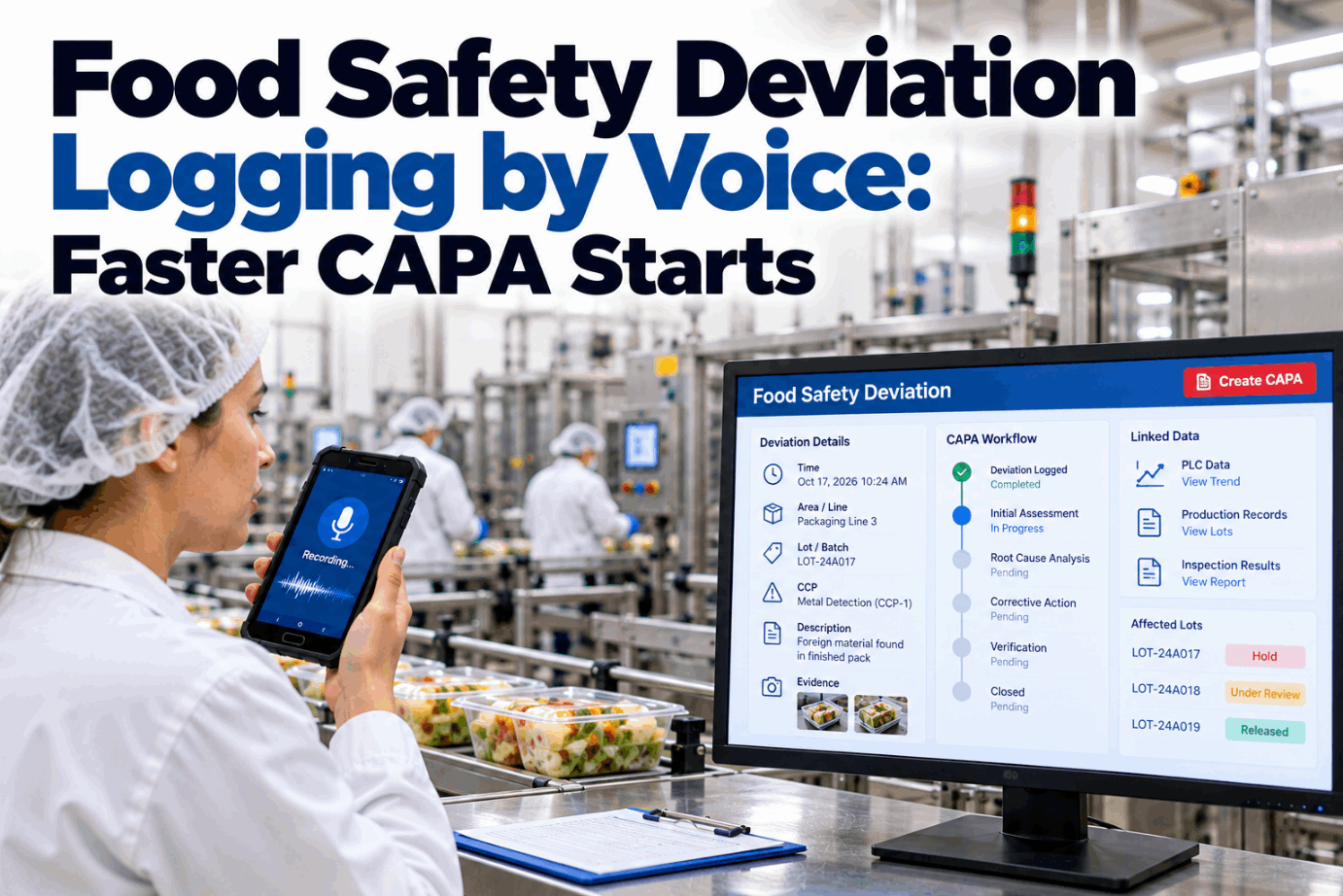
Speech through a facepiece is muffled, and moving the facepiece to talk defeats it. Voice logging only works with a suitable microphone, chosen with your respirator supplier and safety lead, and a read-back of the oven number and side before anything is saved. Hear the read-back in a voice demo.
Not every respirator and mic pairing will work, and no voice set-up is worth a broken seal. Trial it on the topside, in real noise and heat, with your own respirators before crews rely on it.
A PM Template by Machine and Battery Area
Intervals below are illustrative apart from the two OSHA work practices noted. Your OEM manuals, battery age and failure history set the rest. Our support team can load your version.
Push Models, Voice Agent and the Server, Shipped as One
You buy hardware and software together. The pre-configured NVIDIA AI server is shipped racked and ready to run, its push-force models, leak trends and voice agent installed at our end, and battery data never leaves the plant. You rack it, plug in power and Ethernet, and the AI is live. We also handle the cabling, the network, PLC/SCADA integration, operator training and 24×7 remote monitoring. Sketch the timeline in a battery planning call.
- Racked NVIDIA AI server, configured before shipping
- Connectors for pusher, door machine and charging car PLCs
- Push-force models that separate oven, coking and machine causes
- Door, lid and offtake leak history by oven
- Voice agent with oven and side read-back
- PM scheduler loaded with your machines and battery areas
- Site scope: cabling, network, PLC/SCADA, training, round-the-clock remote monitoring
Server racked, machine PLC tags linked, push and leak history loaded.
Per-oven baselines built; voice set-up trialled with crews in their own PPE.
Alerts and voice logs live on one battery, then the next.
Coke Plant Reliability Software for Battery Crews
iFactory runs beside your battery automation, heating records and CMMS, and leaves safety and compliance work where it belongs. Our support desk can answer integration questions.
What Coke Plant Managers Ask About Battery Maintenance
Know Which Ovens and Which Machines Need You Next
Sort push-force rises by cause, trend leaks oven by oven, and let topside crews log hands-free with a read-back. Server, models and site work come as one order, with the first battery live inside 12 weeks.