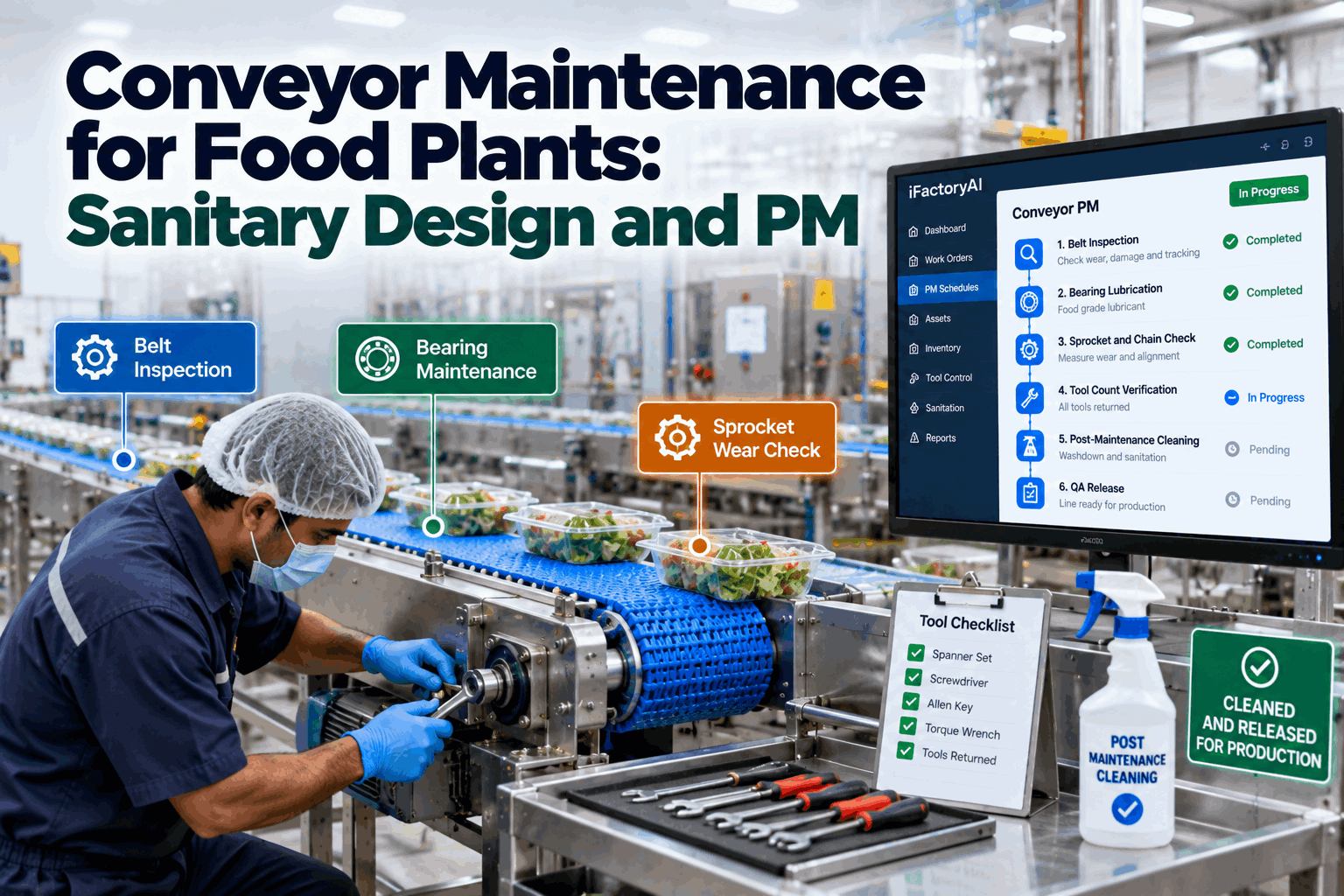
Ask a food plant what keeps its conveyors running and you will hear about belts, bearings and sprockets. Ask what keeps them safe and the answer is different: sanitary design that maintenance must not undo. A worn sprocket sheds plastic, a failed bearing seal lets washdown water in, a dropped tool ends up in the product stream, and a line restarts before anyone confirms the area was cleaned. Sanitation-aware PM puts the tool count and the clean release into every conveyor task, so maintenance protects the line instead of risking it. See it in a conveyor PM demo.
Conveyor Maintenance for Food Plants: Sanitary Design and PM
Belt, bearing and sprocket PMs that protect sanitary design. Every conveyor task carries a tool count and a clean release step, and technicians confirm tools returned by voice before QA can release the line.
- PM checks for belts, bearings, sprockets and drives
- Tool control and post-maintenance clean in every task
- A PM template, best practices and a cost and ROI example
Why Conveyor Maintenance Is Different in Food Plants
A conveyor is both a machine and a food contact surface.
In a food plant, a conveyor is washed down, sanitized and inspected, and maintenance happens on the same equipment. That makes every PM a food safety event. Worn parts shed fragments, damaged seals trap moisture, and tools or hardware left behind become foreign material. A standard PM schedule built for general industry does not cover any of that. Our food plant specialists can review how your PMs handle it today.
Washdown
Water and chemicals attack bearings and seals.
Harborage
Cracks and worn hinges hold residue.
Foreign material
Fragments and lost tools reach product.
Unclean restart
Lines released before the clean is confirmed.
Protecting Sanitary Design During Maintenance
Maintenance should leave the conveyor as clean as it found it.
Sanitary conveyors are designed for cleaning: open frames, sloped surfaces, hygienic fasteners and sealed bearings. Maintenance can quietly undo this by fitting the wrong fastener, using a general lubricant or leaving a guard loose. Putting design rules into the PM task keeps the right parts and methods in front of the technician every time. Review your standards with our sanitary design team.
A conveyor that began as hygienic can drift as parts are replaced with whatever is in the storeroom. Naming the approved fastener, belt part and lubricant in each PM task stops that drift, and makes it easy to show an auditor what was used.
Modular Belt, Bearing and Sprocket PMs
The three parts that cause most conveyor stops.
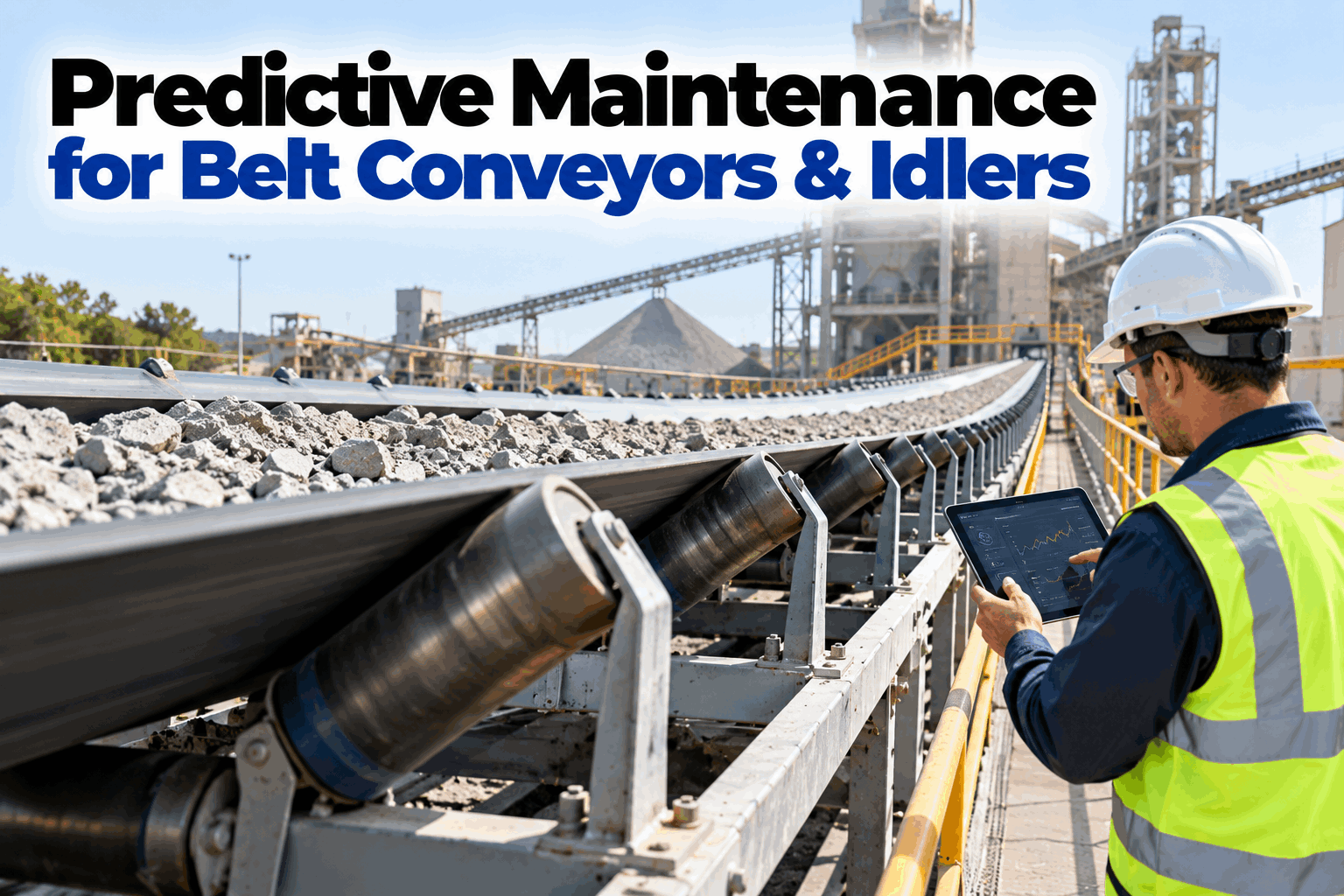
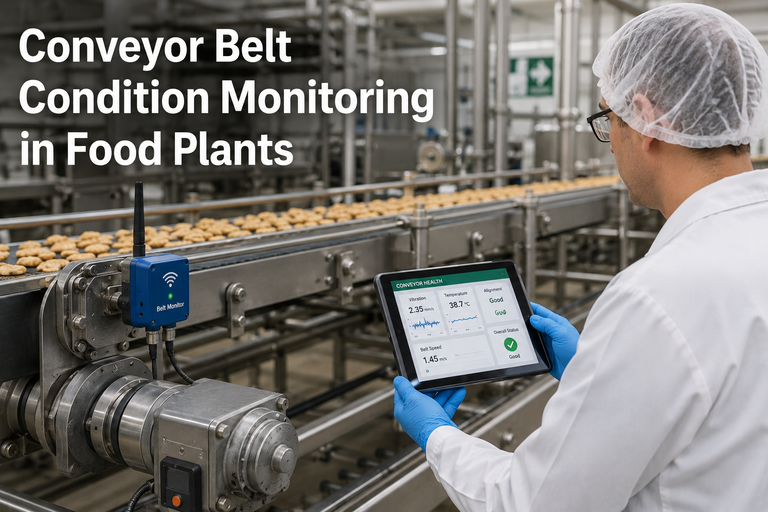
Belt, sprocket and bearing wear are linked: a worn sprocket wears the belt, and a misaligned belt loads the bearings. Scheduling and recording them together shows the pattern, and lets maintenance replace parts at the right time, in a planned window, instead of after a stop. Plan your PM intervals with our reliability team.
Link and hinge wear
Measured against replacement limits.
Tooth profile
Replaced before it damages the belt.
Seal and lube checks
Food-grade lubricant, seals intact.
Alignment and tension
Belt tracking true, load even.
See Every Conveyor PM Close Out Safely
Belt, bearing and sprocket tasks with tool counts and clean release built in, and QA unable to release the line until every step is met.
Sanitation-Aware PM: From Task to QA Release
One flow for every conveyor task.
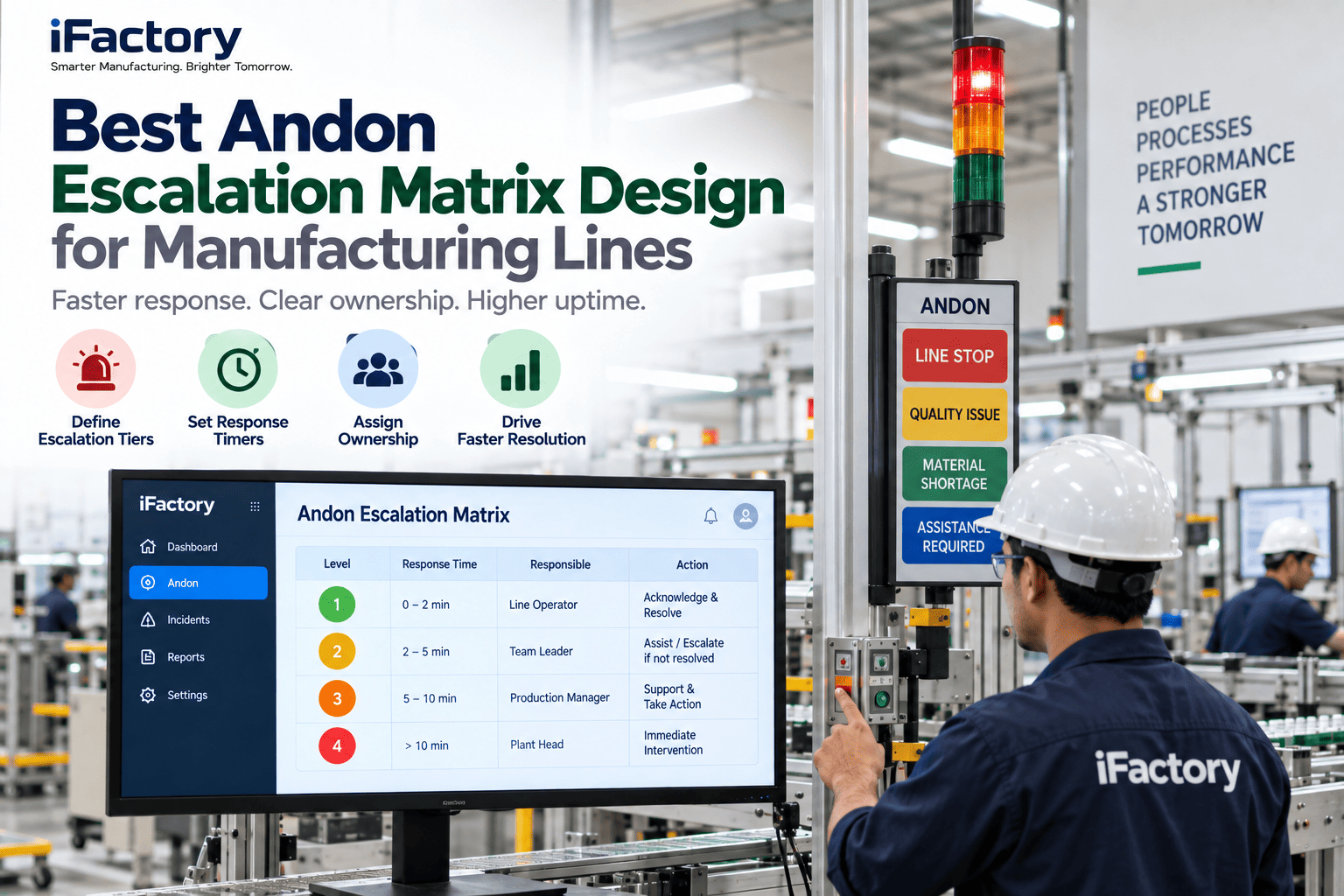
A sanitation-aware PM adds three steps to the usual task: count the tools out, confirm them back, and release the area for cleaning and QA. The technician does the work hands-free, and the line cannot be released until each step is recorded. Plan the flow with our workflow team.
Plan
PM task with tool list and parts.
Maintain
Belt, sprocket and bearing work done.
Tools in
Count confirmed back by voice.
Clean
Post-maintenance clean signed.
QA release
Line released only after steps 3 and 4.
A Conveyor PM Template
The same checklist, built into the task.
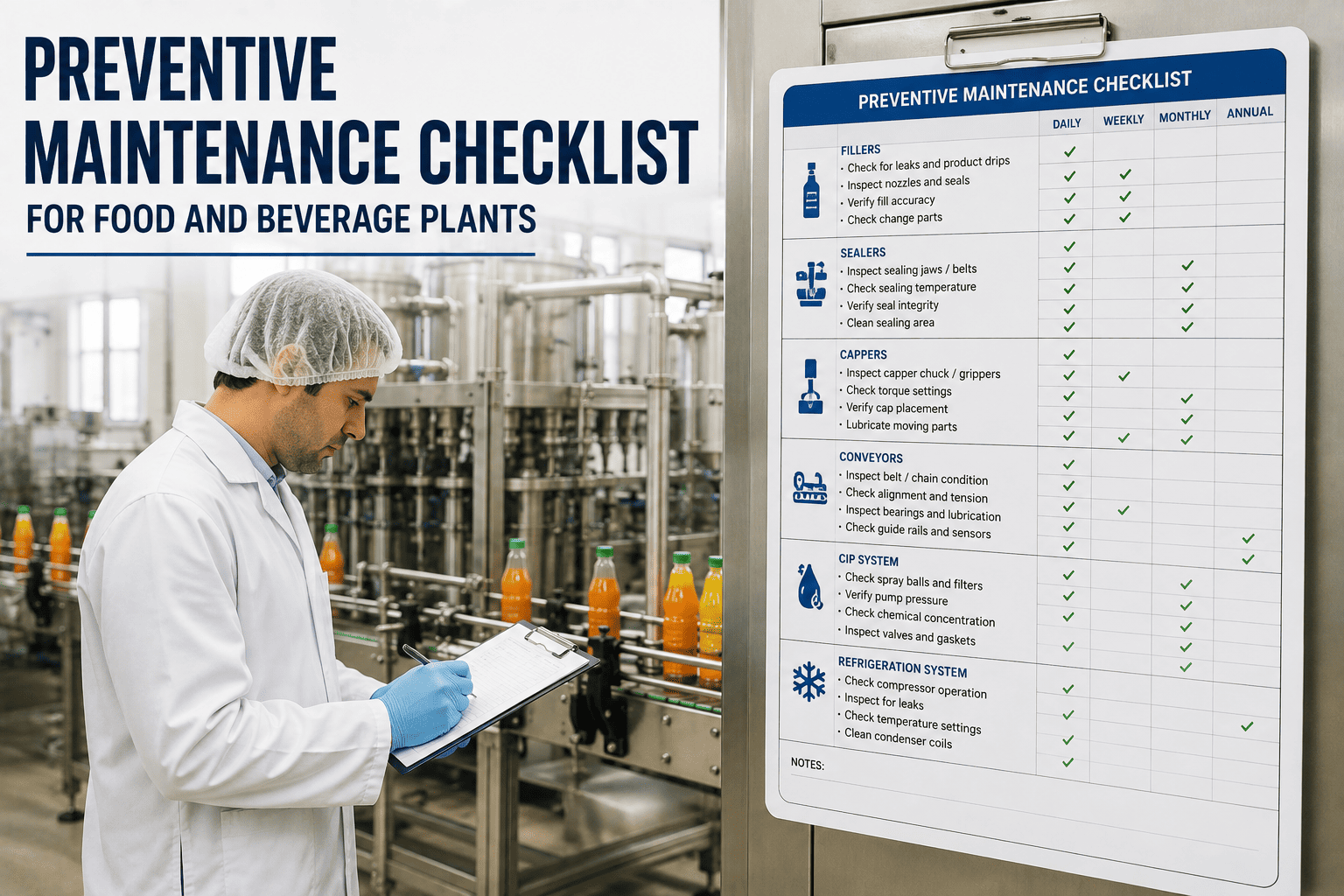
Many plants keep conveyor PM checklists on paper. The workflow turns each line into a step that must be completed, instead of a box that can be ticked later. Use this as a starting template and adapt it to your own sanitary design standards. Build yours with our solutions team.
During the PM
- Lock out and tag out the conveyor
- Check belt, sprockets, bearings and drive
- Use approved parts and lubricants only
- Record measurements and parts changed
Before the line is released
- Tool list confirmed back by voice
- Removed parts and waste taken away
- Post-maintenance clean completed
- QA release recorded
Cost and ROI: A Worked Example
A planned PM costs less than an unplanned stop.
Take a bearing that fails without warning on a production line. Compare the loss from an unplanned stop with the cost of planned PMs that find the problem during a scheduled window. All figures are illustrative. Run the numbers for your lines in a working session.
The example counts lost production only. A foreign material event, a rejected lot or a recall carries a much larger cost that rarely appears in a maintenance budget. Tool control and clean release reduce that exposure, even though it is harder to put a number on.
An AI Agent That Closes the Loop by Voice
Hands-free for the technician, strict for the record.
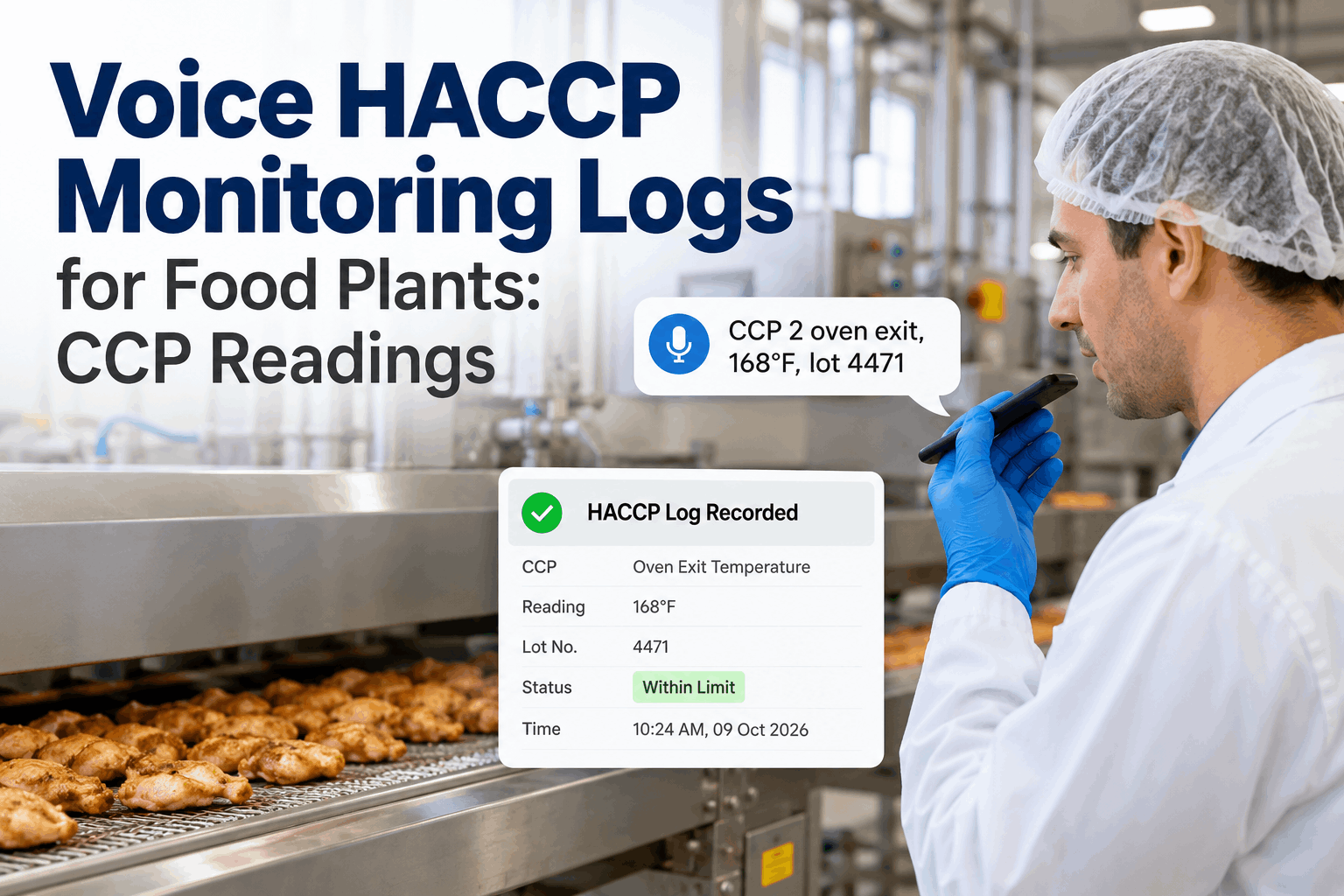
Technicians work with gloves on and tools in hand, so the tool check happens by voice. The agent matches what is said against the PM's tool list, asks about anything missing and keeps the QA release locked until the count is right and the clean step is signed. Ask our AI team how it works on your PMs.
Conveyor Maintenance Best Practices
Most problems come from skipped steps, not missing knowledge.
These are common patterns in food plants that maintain conveyors well, and the ones that cause problems. A short readiness review can show where you stand.
What works
- Belt, sprocket and bearing PMs scheduled together
- Approved parts and lubricants named in the task
- Tool counts confirmed before release
- QA release tied to the clean step
What fails
- PM intervals copied from general industry
- Run to failure on washdown bearings
- Tools counted from memory
- Lines restarted to meet the schedule
Implementation Guide: Start With One Line
Prove it on one line, then spread.
Plant managers rarely switch every conveyor at once. A practical start is one line with a known history of belt or bearing problems, so the benefit is visible quickly. Plan your rollout with our implementation team.
Choose the line
One line with repeat conveyor stops or tool concerns.
Set up the PMs
Tasks, tool lists, parts and clean steps added.
Roll out by line
Lines added as technicians and QA gain confidence.
How iFactory Runs Sanitation-Aware PM
Conveyor maintenance, on your own network.
iFactory links PM schedules, work orders, tool lists, sanitation steps and QA release into one flow. It tracks conveyor wear and failures by line, checks each step in order and holds the release until every step is met. It runs on an on-prem AI server inside your plant, so records stay on your network and are ready for the audits you face. Fit questions go to our solutions team.
Conveyor PM schedules
Belt, sprocket, bearing and drive tasks.
Voice tool count
Tools confirmed back by voice.
QA release lock
Line stays held until steps are met.
Approved parts
Fasteners and lubricants named per task.
Wear trends
Failures and wear tracked by line.
On-prem
Plant records stay in the plant.
The figures and examples on this page are illustrative. Your own PM intervals, lubricants, tool rules and release steps follow your food safety plan and equipment maker guidance, and we set them up with you during the pilot.
Turnkey AI: Delivered, Connected and Live in 6–12 Weeks
You do not build this. It arrives ready.
iFactory ships as a pre-configured NVIDIA AI server with the software pre-loaded, racked and ready. Rack it, plug in power and Ethernet, and the AI is live on your network. Our team handles cabling, network setup, PLC, SCADA, DCS and CMMS integration, voice setup, technician training and 24×7 remote monitoring. Data stays on your network. For a scope matched to your plant, request a turnkey quote.
Ship, network and data
Server installed. CMMS, PM schedules and conveyor lists connected.
Model training and pilot
Tool lists, clean steps and release rules set. Live PMs run on one line.
Go-live and training
Sanitation-aware PM live across conveyor lines. Teams trained. 24×7 monitoring begins.
Frequently Asked Questions
What makes conveyor maintenance in food plants different?
The conveyor touches food and is washed down often, so maintenance must protect sanitary design, control tools and parts, and confirm the area is clean before restart.
What should a modular belt PM cover?
Link and hinge wear, cracks, edges, tracking and tension, measured against replacement limits and recorded for trends.
Why track sprocket wear?
Worn sprockets damage the belt and can create fragments near product. Replacing them on schedule protects the belt and the line.
How are food-grade bearings handled?
The PM names the approved lubricant and checks seals, temperature and vibration, since washdown water is a common cause of bearing failure.
How does the voice tool count work?
The technician says which tools are returned. The system checks them against the PM's tool list and holds the release if anything is missing.
Who releases the line?
QA, or the role your plan names. Release stays locked until the tool count and clean step are recorded.
Does it work with our existing CMMS?
Yes. It integrates with your CMMS and work orders, so PMs, tool counts and releases appear on the same records your team already uses.
Where is the data stored?
On the on-prem server inside your plant, available on dashboards for plant managers, maintenance, sanitation and QA.
How do we start?
Start with one conveyor line. A 6-week pilot sets up the PMs, tool lists and release steps and runs them live. To plan it, contact our team.
Find the Gaps in Your Conveyor PMs This Week
In thirty minutes we walk through how conveyor PMs, tools and releases work on one of your lines today, and show what sanitation-aware PM would change. You keep the notes either way.
- 1Your conveyor list by line
- 2Current PM schedules and checklists
- 3Recent conveyor failures and stops
- 4Your post-maintenance clean procedure
- 5The line that worries QA most