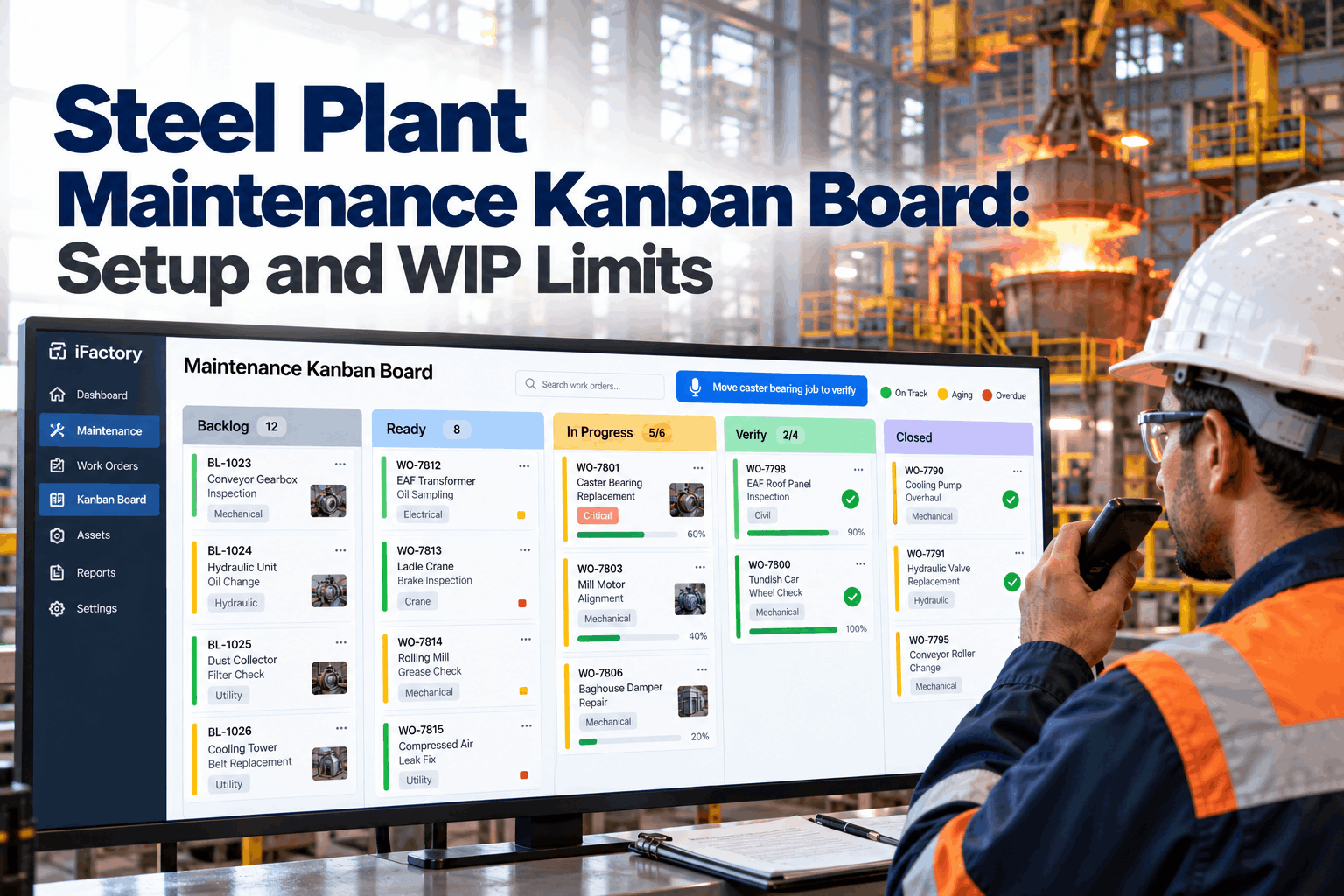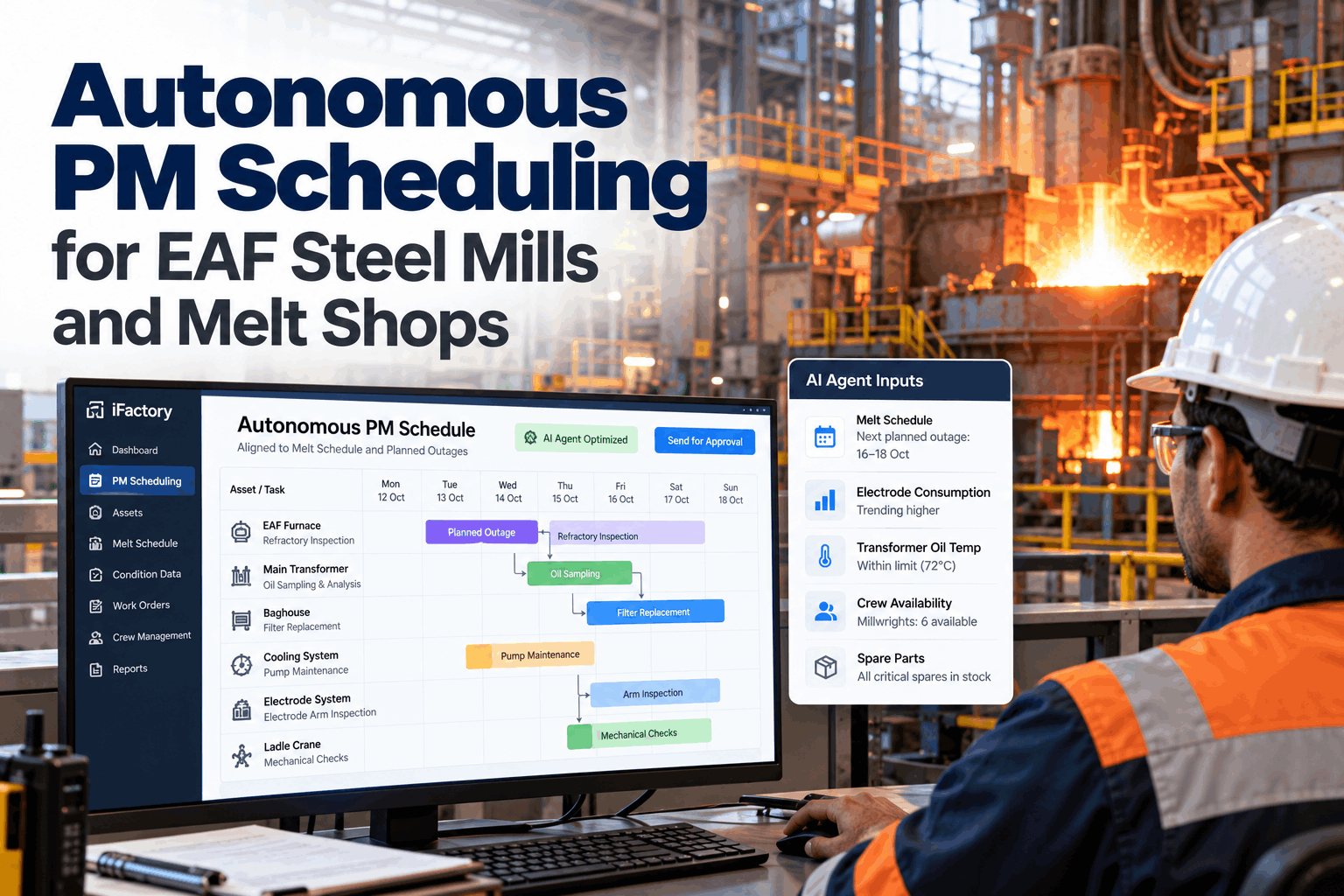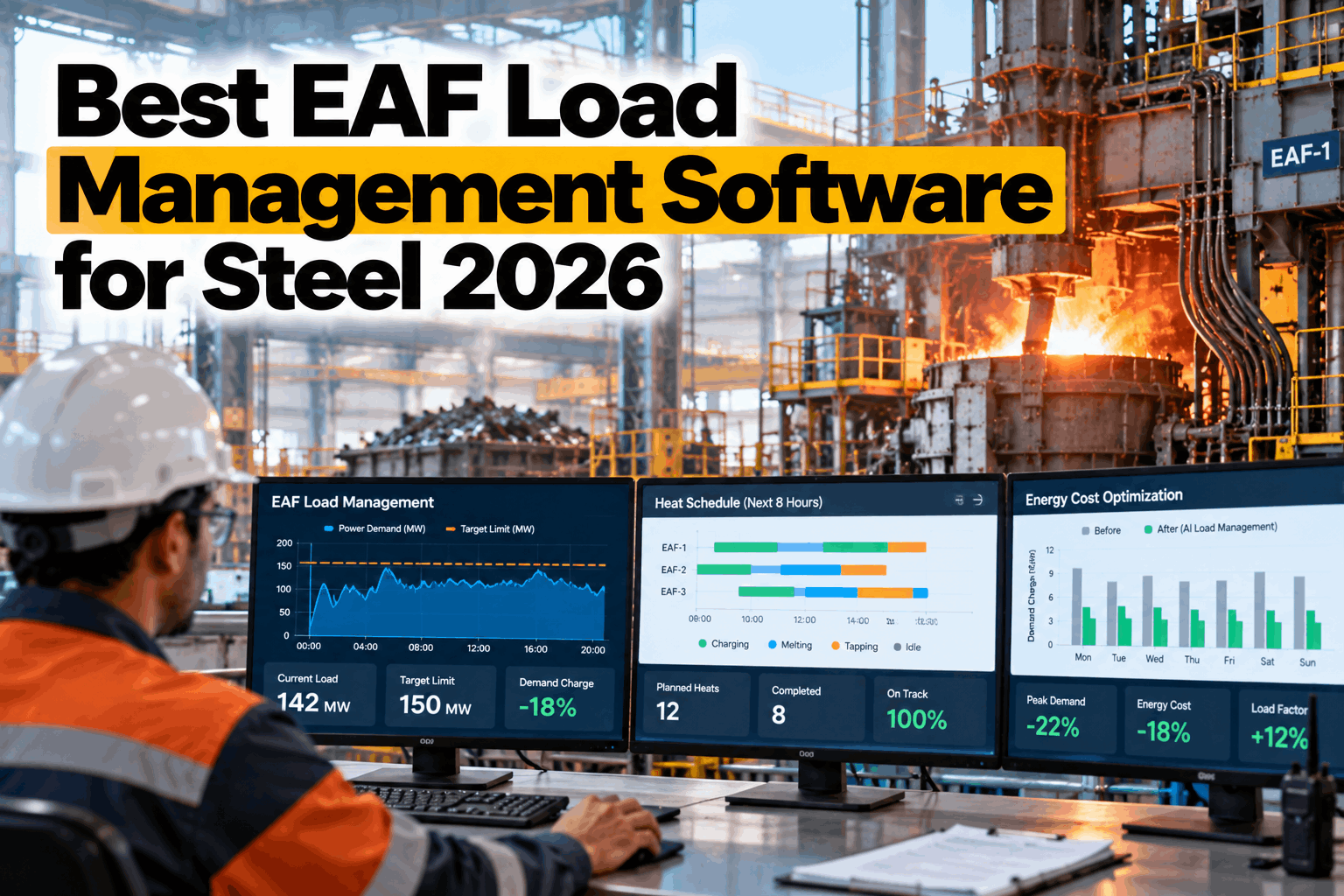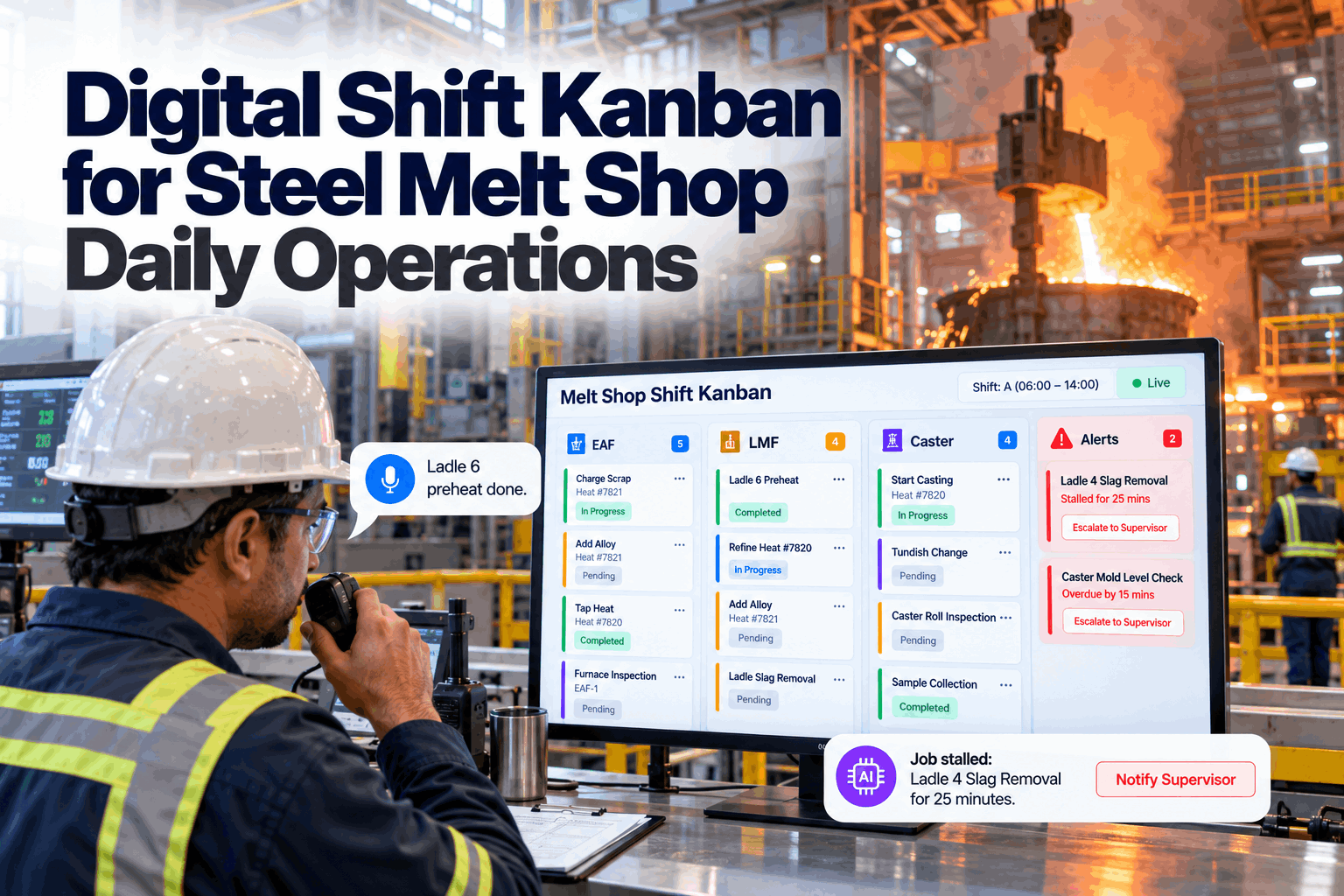
A melt shop shift runs on dozens of small jobs that all have to land in the right order. Ladles must be preheated before tap, the LMF needs its wire and alloys staged, the tundish has to be ready before the caster asks for it. Most of it lives on a whiteboard and the radio. A digital shift kanban puts every furnace, ladle and caster job on one live board, lets operators move cards by voice and alerts the supervisor when a card stalls. See it in a shift board demo.
Digital Shift Kanban for Steel Melt Shop Daily Operations
EAF, LMF and caster in their own swimlanes. Cards moved by voice from the floor. AI that spots a stalled card before it delays the next heat.
- Why whiteboards and radios miss stalled jobs
- Swimlanes, columns and card rules for a melt shop
- Voice commands and stalled-card escalation
Why Whiteboards and Radios Miss Stalled Jobs
A melt shop moves too fast for a board someone changes by hand.
Shift leaders in a melt shop juggle furnace work, ladle logistics and caster readiness at once. A whiteboard shows what was planned at the start of the shift, not what is happening now. Radio calls tell one person at a time. When a ladle preheat runs long or a tundish is not ready, the problem often surfaces only when the next step is already waiting. By then the choices are poor: delay the heat, rush the job or skip a check. A live board gives the shift leader the same picture as every crew, at the same moment, so problems are seen while there are still good options. Our melt shop specialists can map your shift routines.
Stale boards
Written at shift start, wrong by the first heat.
Radio overload
Messages heard by one person, lost to everyone else.
Silent delays
A job running long is noticed when the next step waits.
Lost at handover
Open jobs carried in memory to the next shift.
Setting Up the Melt Shop Shift Board
One lane per area, a few clear columns, simple card rules.
A shift kanban for operations is different from a maintenance backlog board. Cards are short tasks that start and finish within the shift, and many repeat every heat. Swimlanes follow the flow of steel, and columns show where each task stands. Keep the number of columns small, because a crew glancing at a big screen across the shop floor needs to read the board in seconds, not study it. Design your board with our operations team.
Next
Jobs due this heat or the next.
In progress
Someone has started and owns it.
Blocked
Waiting on a crane, material or another lane.
Done
Finished and confirmed this shift.
Ladle preheats, tundish preparation and alloy staging take roughly the same time every heat. Give each repeating card a normal duration, based on a few weeks of real data rather than a guess. That is what lets the system tell the difference between a job that is simply in progress and one that has stalled.
Voice Commands From the Floor
Move a card without taking off gloves or walking to a screen.
Melt shop crews are rarely near a screen, and stopping to tap a screen in heat-resistant gloves is not realistic. Operators speak short commands into a headset or handheld, and the board changes for everyone. The agent reads back each change so the operator knows it was heard correctly, and a large screen in the pulpit and control rooms shows the board to anyone who looks up. Ask our voice team about hardware for hot areas.
"Starting ladle 6 preheat."
Card moves to in progress with the time and operator.
"Tundish 2 waiting on crane."
Card moves to blocked with the reason.
"Ladle 6 preheat done."
Card moves to done and the next dependent card is released.
Stalled Card Alerts and Escalation
Catch the delay while there is still time to recover.
The AI compares each card's time in progress or blocked with its normal time and with the heat schedule. When a card runs too long, or when a blocked card threatens a downstream step, it alerts the right person, starting with the lane lead and escalating to the shift supervisor if nothing changes. Set escalation rules in a planning session.
Watch
Every card's time against its normal.
Link
Check which downstream step depends on it.
Alert
Lane lead notified by voice or screen.
Escalate
Supervisor alerted if still stalled.
Record
Delay and reason kept for review.
A card that runs long but has slack before the next heat is less urgent than a short delay on the ladle due at the LMF in ten minutes. Link cards to the heat schedule, so alerts focus on delays that will actually hold up steel.
One Live Board for the Whole Melt Shop
Furnace, ladle and caster jobs in one view, moved by voice, with stalled cards flagged before they cost a heat.
Cards That Depend on Each Other
Steel flows from lane to lane. The board should too.
Many melt shop tasks only matter because something downstream is waiting. A ladle ready for tap releases the tap card in the EAF lane. A ladle ready for the caster releases the caster's next ladle change. Linking cards lets the board show these chains, so a block in one lane is visible to the lane that will feel it next. Crews stop finding out about upstream problems by radio when it is already too late to adjust their own plans. Map dependencies with our implementation team.
Common dependencies
- Ladle preheat before tap
- Alloys staged before LMF treatment
- Tundish ready before sequence start
- Crane move before ladle transfer
What linking shows
- Which lane a delay will hit next
- How much time is left to recover
- Where a crane is the real bottleneck
- Which blocks repeat every shift
The Board at Shift Handover
Open cards carry over with their history.
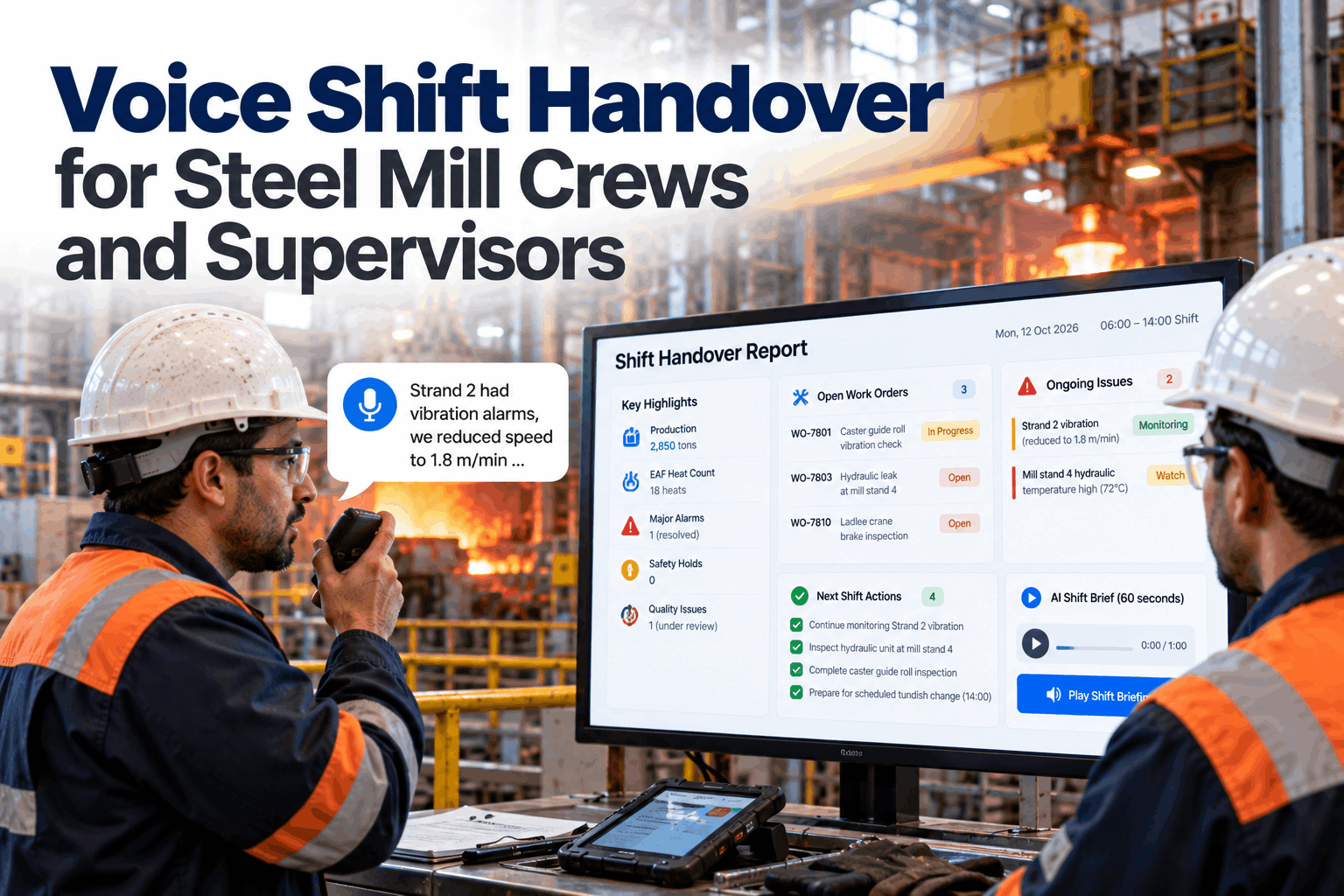
At handover, every open and blocked card stays on the board with who worked on it, how long and why it is blocked. The incoming shift leader walks the board with the outgoing leader instead of relying on memory, and accepts the open cards by name. Plan the handover routine in a coaching call.
Safety Tasks on the Shift Board
Safety-critical routines deserve a card, not a reminder.
Some shift tasks protect people directly: checking water-cooled panels for leaks, confirming the area is clear before tap, verifying ladle condition before it is filled. Putting these on the board as cards with owners and normal times makes them visible and hard to skip. A safety card that stalls is escalated faster than a routine one. Plan safety cards with our safety team.
Panel and roof checks
Water leak checks before power on.
Ladle condition
Refractory and slide gate checks before filling.
Area clear
Confirmation that people are out of the tap zone.
Breakout readiness
Emergency equipment checked at shift start.
Learning From the Board
Every card is a small record of how the shift really ran.
Over weeks, the board shows where time goes. Repeat blocks point to equipment, crane capacity or material supply problems. Bring the top three into the morning meeting each day, so the board leads to fixes instead of just recording the same delays shift after shift. Cards that always run long point to routines that need a better method. Review the patterns with our analytics team.
Top block reasons
Cranes, materials, people or equipment.
Cards that run long
Routines that rarely meet their normal time.
Shift comparison
Where one crew is faster and why.
Heat delays
Delays traced back to the card that caused them.
Shift Kanban Mistakes to Avoid
A board only helps if it shows the truth in real time.
These are the most common reasons shift boards fall out of use. A short readiness review can avoid them.
What works
- Short cards that finish within a shift
- Normal times on repeating cards
- Voice commands from the floor
- Escalation linked to the heat schedule
What fails
- Mixing maintenance backlog into the shift board
- Cards moved only at shift end
- Alerts for every small delay
- No owner named on blocked cards
How iFactory Runs the Melt Shop Shift Kanban
Digital Kanban and Voice Commands, on your own network.
iFactory gives each shift swimlanes for EAF, LMF and caster, lets operators move cards by voice and escalates stalled cards to the shift supervisor. It runs on an on-prem AI server inside your plant and can link to your level 2 system for the heat schedule. Fit questions go to our solutions team.
Shift swimlanes
EAF, ladles, LMF, caster and support.
Voice commands
Cards moved by short spoken commands.
Normal times
Each repeating card has an expected duration.
Stall escalation
Lane lead first, then supervisor.
Linked cards
Dependencies across lanes made visible.
Shift analytics
Blocks, durations and heat delays.
Results depend on your melt shop routines, crews and how consistently the board is used. We measure stalls, recoveries and delays on your own data during the pilot, rather than promising a general figure.
Turnkey AI: Delivered, Connected and Live in 6–12 Weeks
You do not build this. It arrives ready.
iFactory ships as a pre-configured NVIDIA AI server with the software pre-loaded, racked and ready. Rack it, plug in power and Ethernet, and the AI is live on your network. Our team handles cabling, network setup, PLC, SCADA, DCS and CMMS integration, level 2 and crew links, operator training and 24×7 remote monitoring. Data stays on your network. For a scope matched to your plant, request a turnkey quote.
Ship, network and data
Server installed. Heat schedule, crews and card templates set up. Headsets tested in hot areas.
Model training and pilot
Normal times and escalation tuned. Board runs for one shift pattern.
Go-live and training
Shift kanban live for all crews. Shift leaders trained. 24×7 monitoring begins.
Frequently Asked Questions
What is a digital shift kanban for a melt shop?
A live board of shift tasks for the EAF, ladles, LMF and caster, where each task is a card that moves through columns as it is started, blocked or finished.
How is it different from a maintenance kanban?
It holds short operational tasks that finish within a shift, many repeating every heat. Maintenance work orders stay on their own board.
How do operators move cards?
By speaking short commands such as "ladle 6 preheat done" into a headset or handheld. The board changes for everyone straight away.
What counts as a stalled card?
A card that has been in progress or blocked longer than its normal time, especially if a downstream step is waiting on it.
Who gets the alerts?
The lane lead first, then the shift supervisor if the card is still stalled after a set time.
Can it link to our heat schedule?
Yes. Linking to the level 2 or production schedule lets alerts focus on delays that will hold up the next heat.
Can safety checks be cards on the board?
Yes. Safety routines such as panel leak checks and ladle condition checks can be cards with owners and normal times, and they are escalated faster than routine cards if they stall.
Does voice work in a melt shop?
Yes, with noise-cancelling headsets or push-to-talk handhelds suited to hot, noisy areas, tested on your floor during the pilot.
How do we start?
Start with one area, such as ladles and the LMF, on one shift pattern. A 6-week pilot sets up cards, normal times and escalation. To plan it, contact our team.
See Every Melt Shop Job, Live
In thirty minutes we sketch a shift board for your melt shop with swimlanes, card templates and normal times. You keep the sketch either way.
- 1A photo of your shift whiteboard
- 2Your shift routine or checklist
- 3Heat schedule format
- 4Crew structure by area
- 5One delay that started with a small job