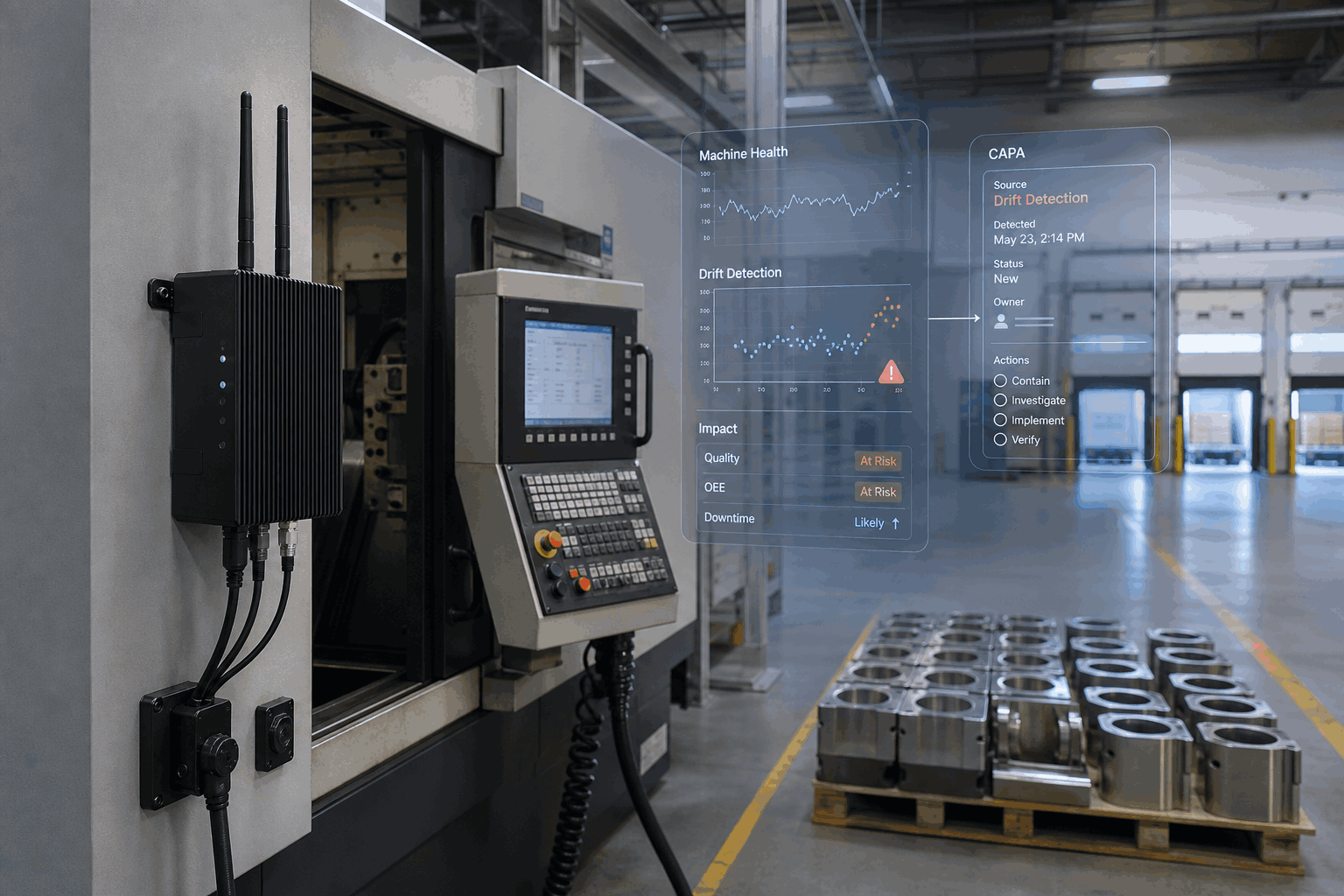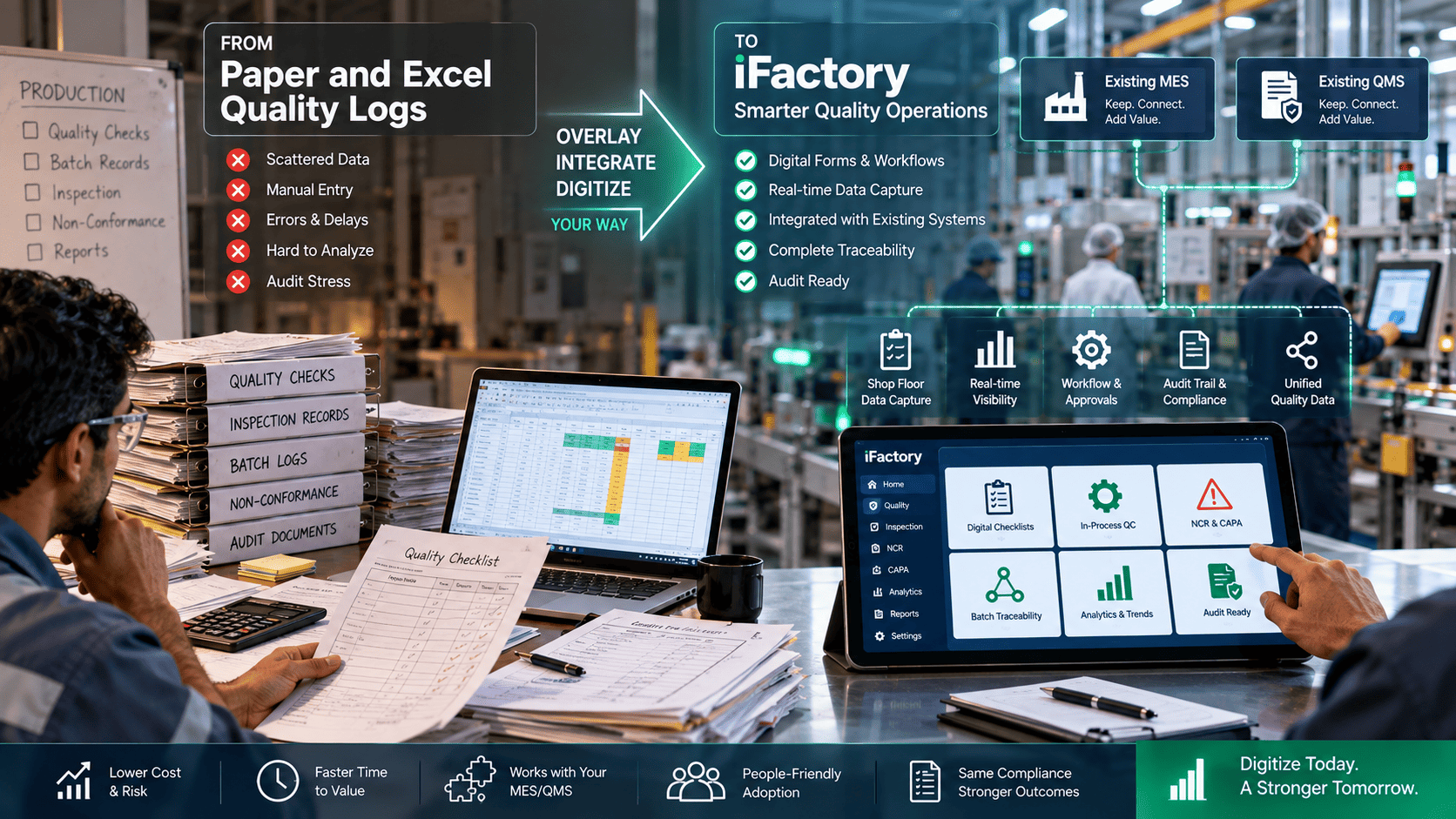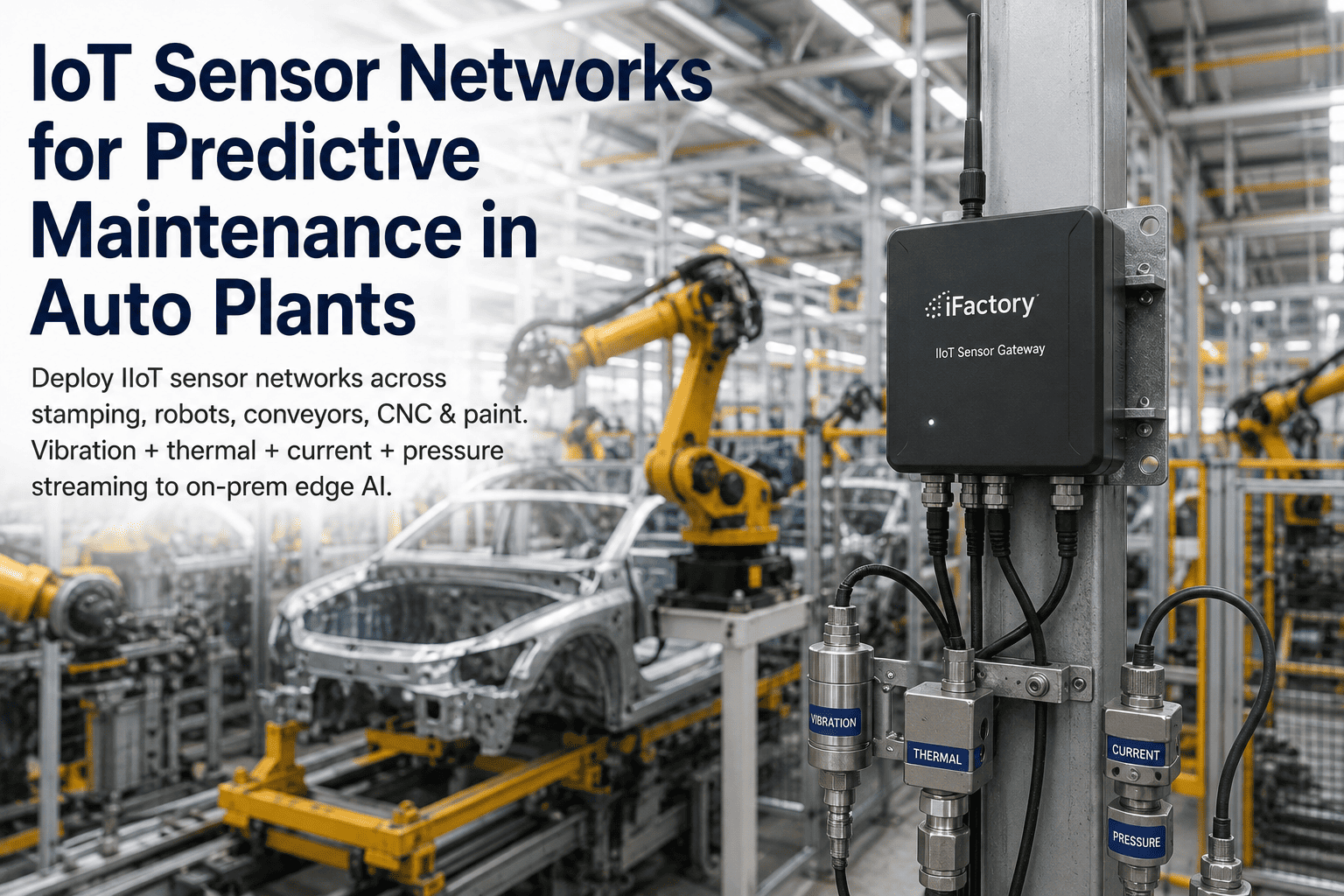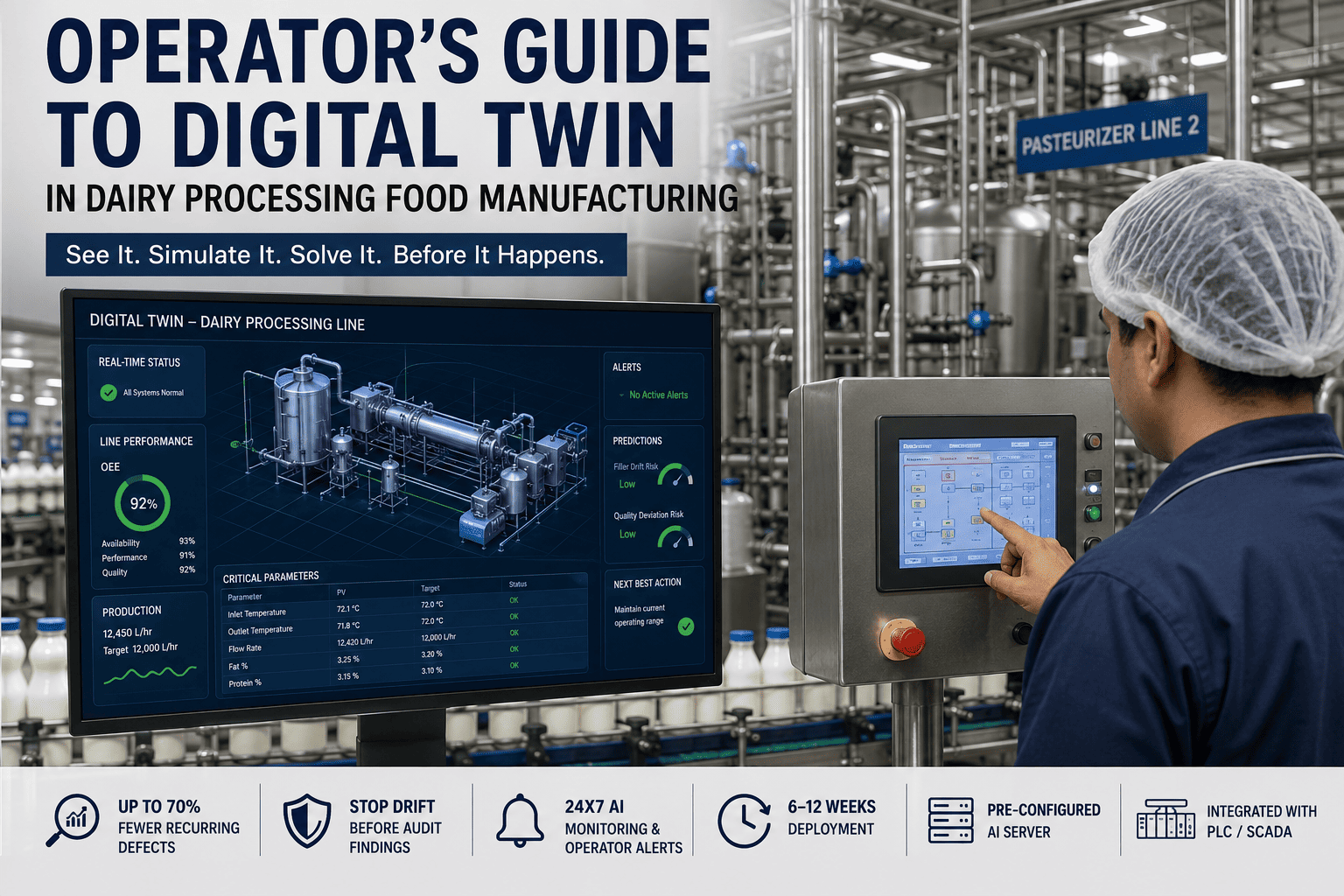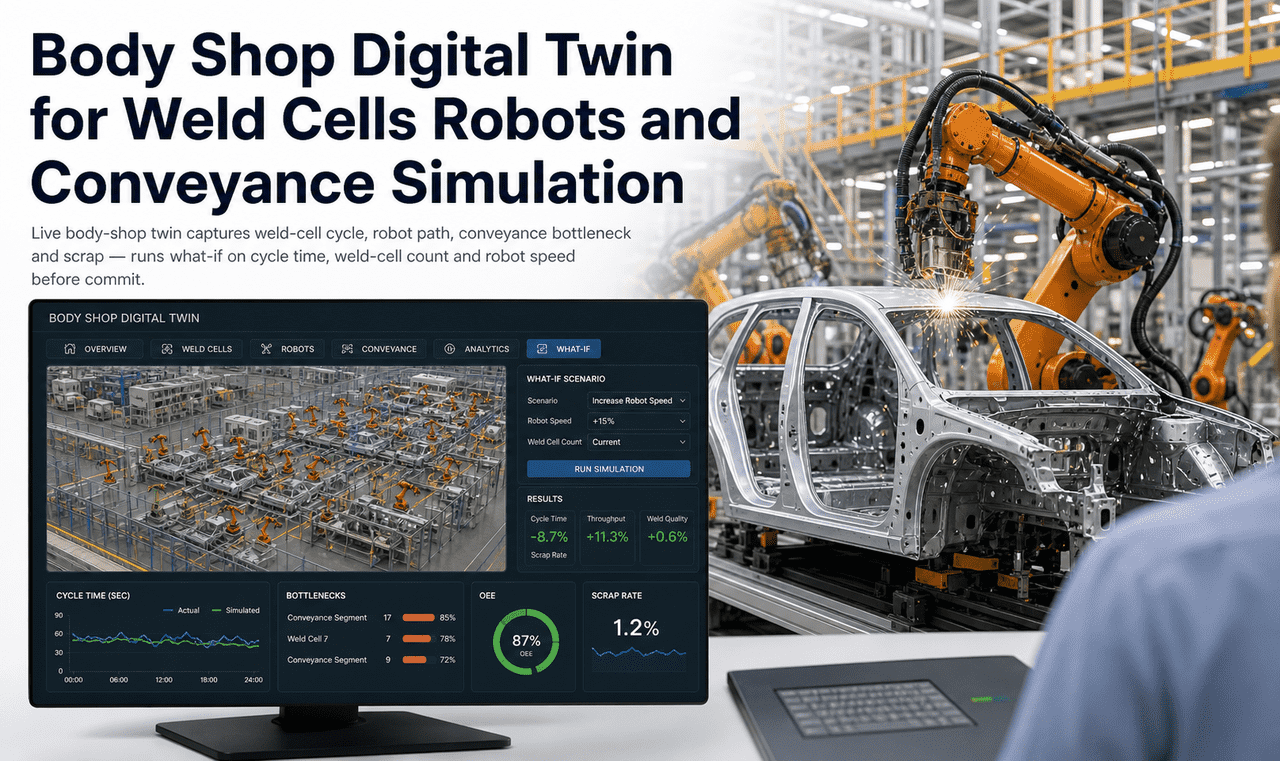
A digital twin simulation predicts a bearing degradation on Line 4 by shift 27, the maintenance planner scheduled the swap, and the twin call ends there — no CAPA gate, no genealogy anchor, no verification that the swap actually restored the OEE the twin promised. That is the digital twin manufacturing blind spot the 2026 market is finally addressing — the insight is real, but the quality and traceability gates the plant already runs never see the twin recommendation. iFactory AI overlays your MES, QMS, historian, SPC, and twin platform so every twin-driven action opens a scoped work order, a CAPA link when quality is affected, verified recovery against the twin prediction, and a genealogy trail that shows exactly what the twin said and what actually happened. Book a 30-minute walkthrough of twin insight to CAPA gate.
The twin predicts. The plant acts. The gap between the two is where CAPA, verification, and genealogy have to live for the insight to compound.
At a Glance
Why Twin Insights Stall at the Governance Gate
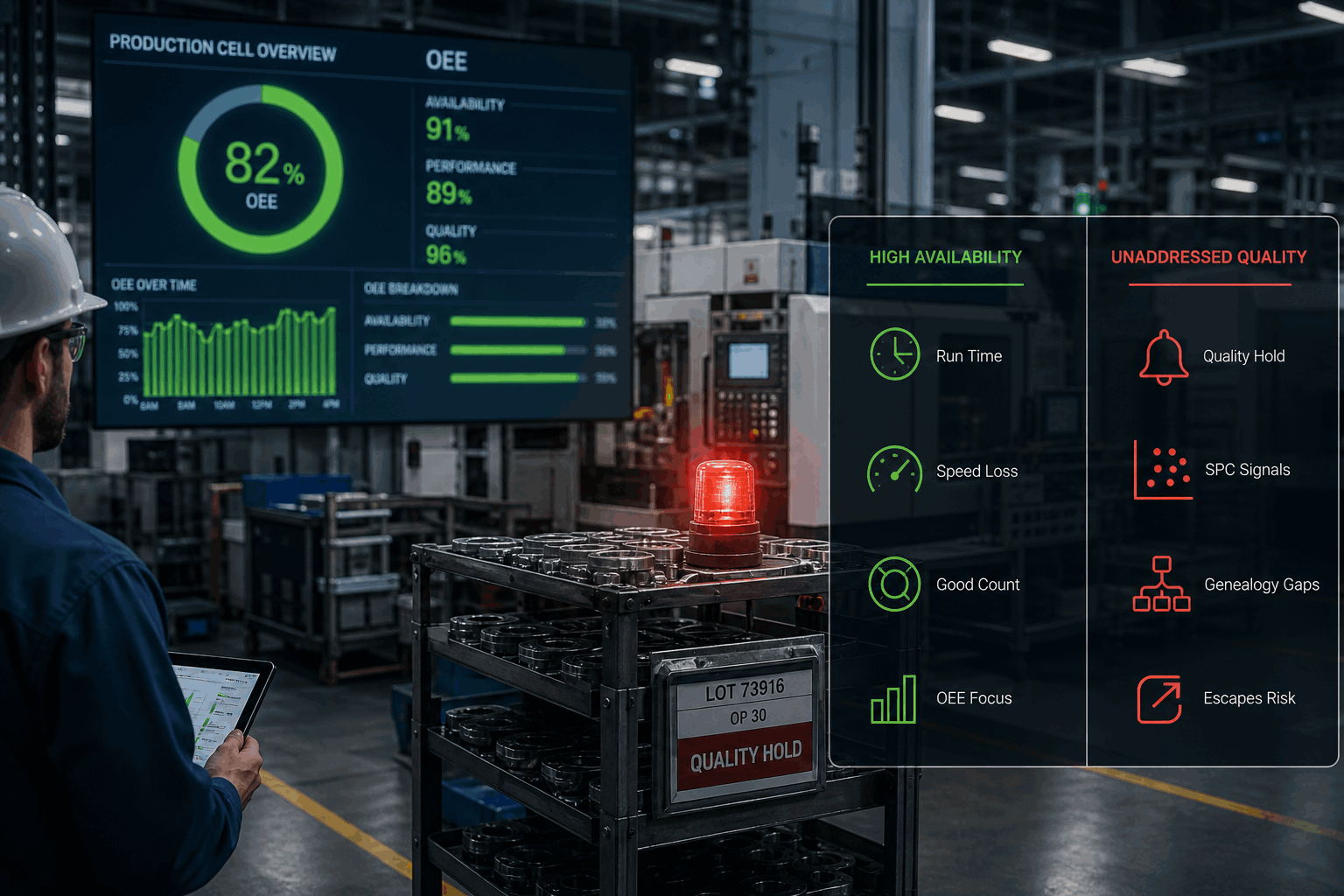
Digital twins are one of the most invested-in categories in manufacturing right now, and they often produce genuinely valuable predictions — bearing degradation, throughput bottleneck, quality drift, energy anomaly. But the value only compounds when the twin insight becomes a governed action inside the same quality and maintenance systems the plant already trusts. Too often the twin runs in its own silo, the recommendation lands in a planner meeting, and the CAPA, hold, and genealogy trail that the rest of the plant lives by simply does not know about it.
That gap has two costs. First, the twin recommendation may be a great insight that gets partially implemented and never verified, so the model never learns whether it was right. Second, when the recommendation touches quality — a suggested process change, a maintenance action that affects a critical characteristic — the CAPA gate that would normally govern that change is not applied. The result is a smart tool with weak integration.
Where the Twin Meets Real Governance
A well-integrated digital twin does not replace the quality and maintenance stack — it feeds into it. Every recommendation carries its assumptions, its confidence, and its predicted outcome, so the reviewer can approve, modify, or reject with the same evidence the twin used.
Twin predicts a component failure window — work order opens with scope, spare, and impact modeled against production plan.
Twin flags a characteristic likely to drift — SPC review scheduled, adjacent lots reviewed for containment scope.
Twin suggests a schedule change — modeled OEE improvement compared to actual after implementation.
Twin identifies an energy anomaly — CAPA opens when the anomaly correlates with a quality-affecting parameter.
Twin simulates a proposed line rebalance — actual throughput measured against prediction after change.
Every twin call logged with prediction, actual outcome, and delta — the twin gets better over time.
The Closed-Loop Path — Twin Call to Verified Outcome
Structured event with prediction, confidence, assumptions, and predicted outcome routes to the correct reviewer.
If the recommendation touches a controlled characteristic, CAPA opens with the twin evidence attached.
Human-approved action lands in CMMS or MES with the twin prediction linked as evidence.
Post-action data feeds back to the twin so the model learns and the CAPA verification is evidence-based.
Twin call, gate decision, action taken, and outcome are one connected record — auditable and reviewable.
Bring one twin scenario. We walk through prediction, governance gate, work order or CAPA link, verification against outcome, and genealogy — all beside your existing MES and QMS.
Best Practices for Twin-to-CAPA Integration
- Never bypass the CAPA gate for quality-affecting twin recommendations, no matter how well the twin has performed historically
- Preserve twin assumptions — the reviewer needs to see what the twin modeled, not just the recommendation
- Verify against actual outcomes — every twin call becomes training data only if actual results are captured
- Route by scope — maintenance recommendations route to CMMS, quality recommendations route to CAPA
- Log every override — human decisions to accept, modify, or reject twin recommendations are all recorded
- Keep genealogy intact — the twin's role in a decision should be visible to the auditor months later
Frequently Asked Questions
No. The twin predicts and recommends. CAPA and quality governance still gate actions that affect controlled characteristics — the twin becomes evidence in the CAPA record rather than a bypass.
iFactory AI overlays your twin, MES, QMS, historian, and SPC. It routes twin recommendations through your governance stack and preserves the evidence trail from prediction to outcome.
Only through the same governance rules that any other event would follow. High-confidence quality-critical predictions can trigger holds, and release always requires human review.
Every prediction is logged with its actual outcome. The delta becomes training data for the twin model and confidence data for the reviewer on future recommendations.
Yes. The audit trail from twin prediction to human-approved action to verified outcome is exactly what regulated environments need to defend a decision driven partly by simulation.
A digital twin without CAPA and genealogy gates is a smart insight that never gets verified. iFactory AI routes every twin recommendation through your existing governance so predictions become evidence and outcomes become learning.