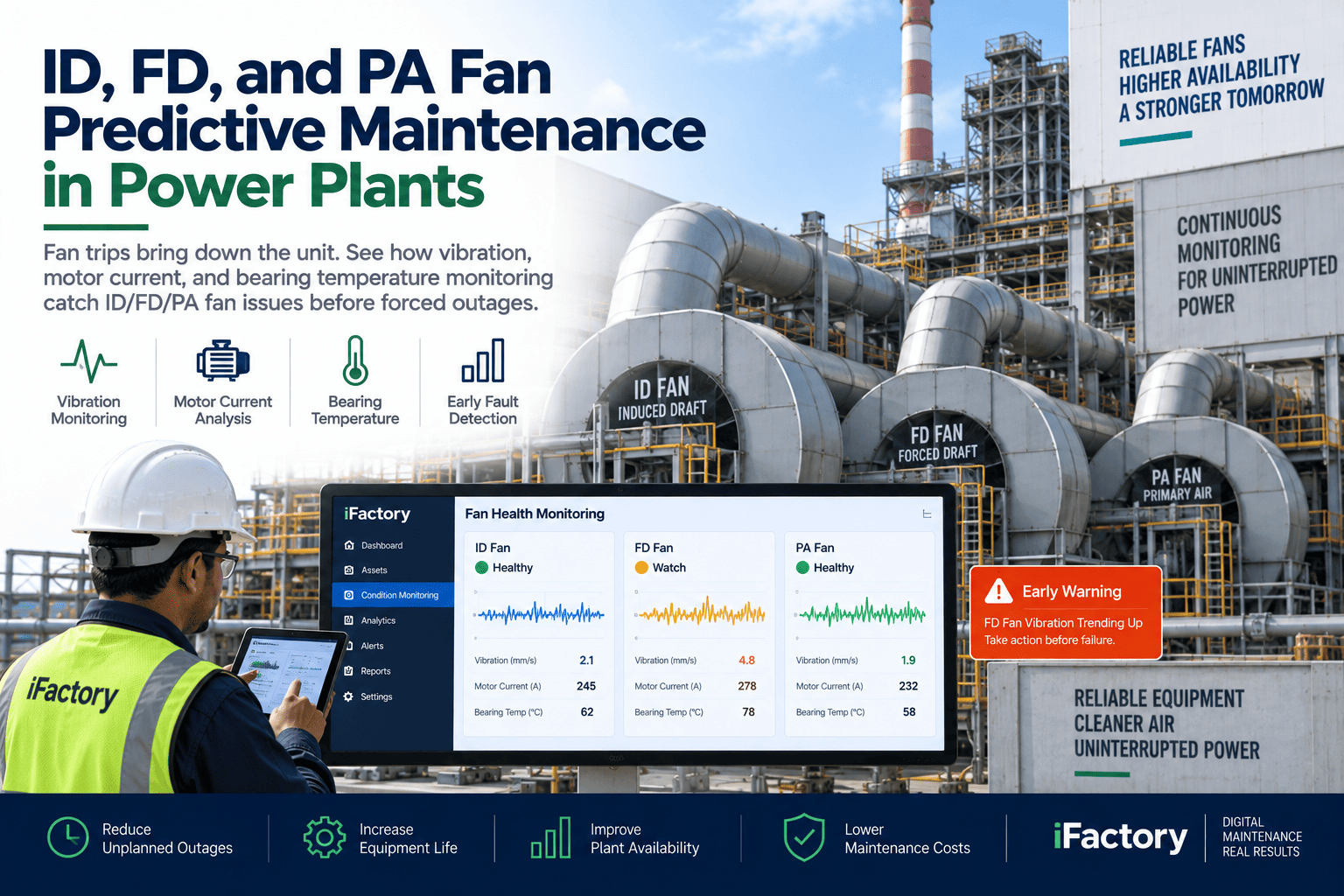
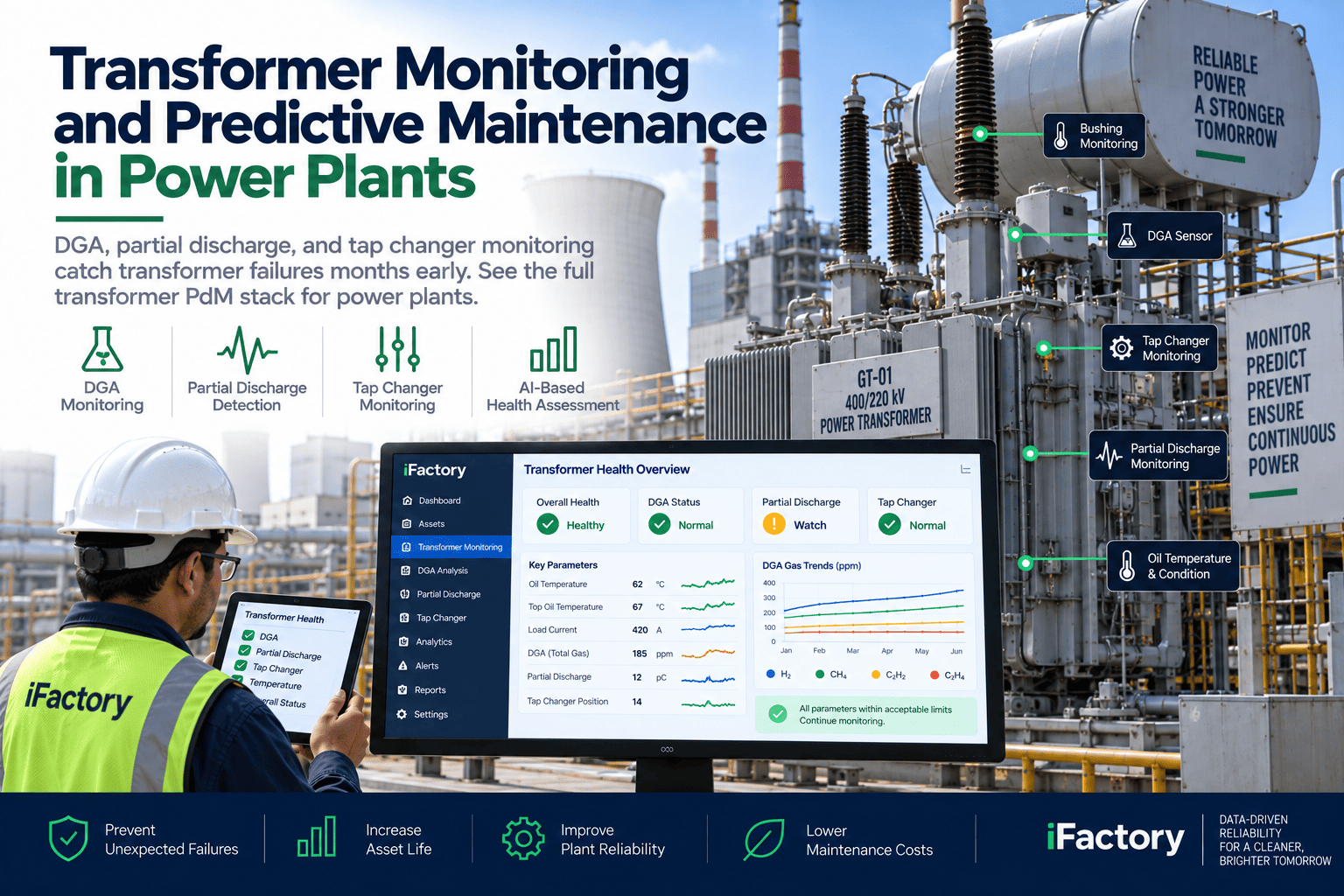
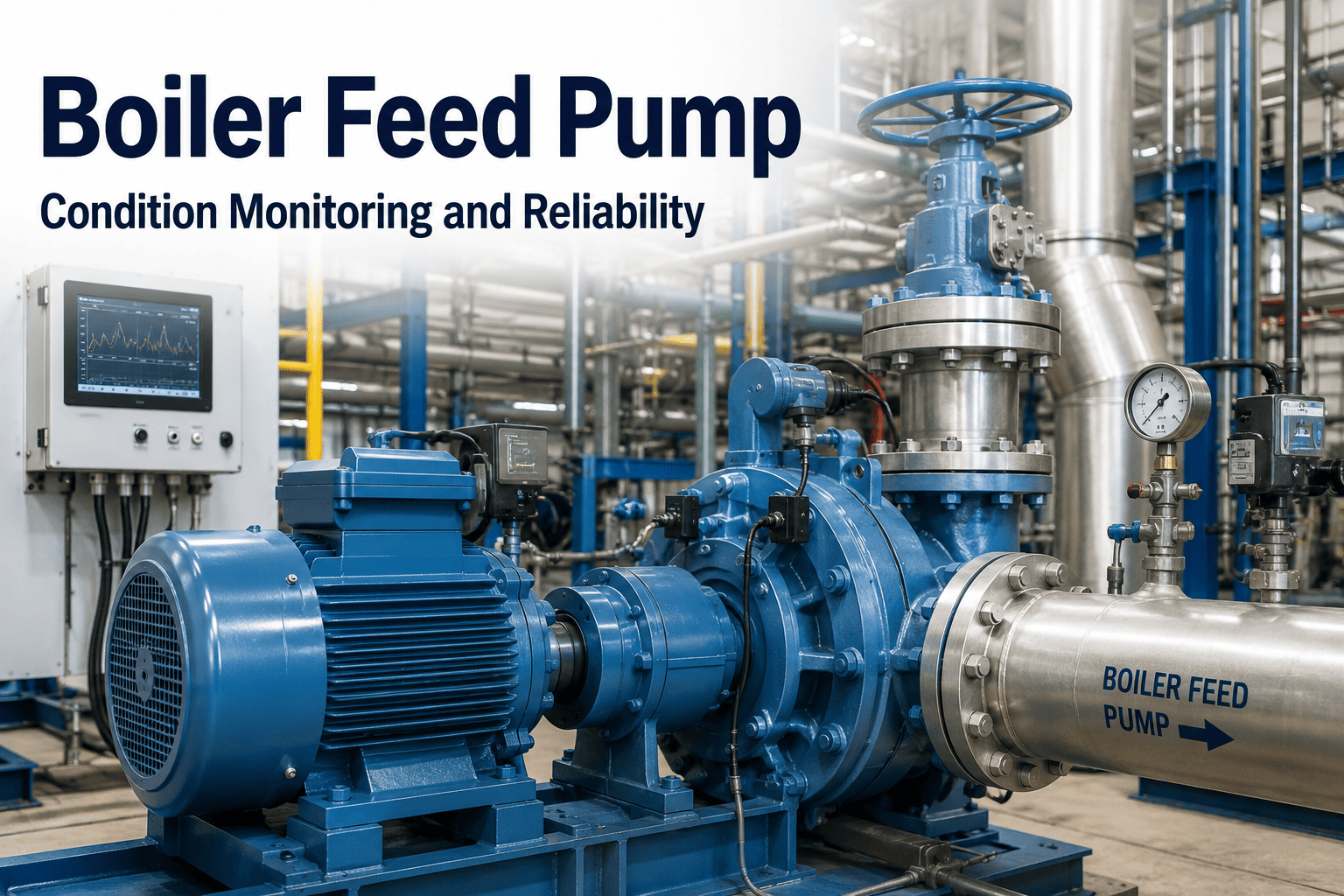
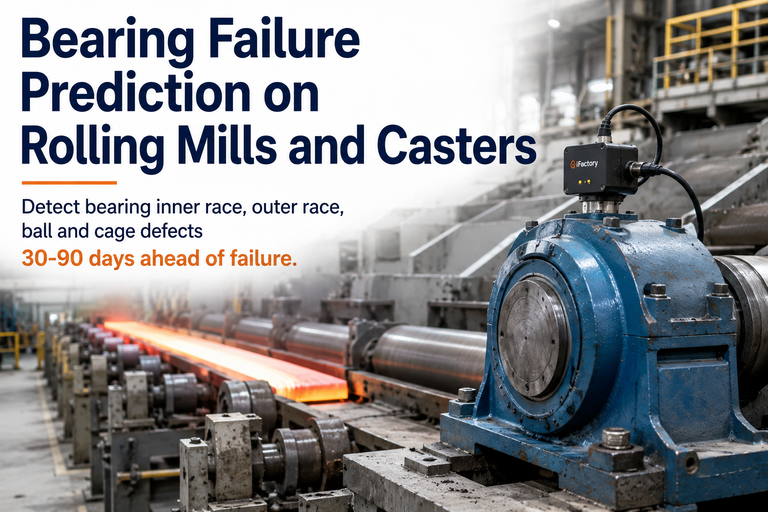
A trip on any one of the three big fans — induced draft, forced draft, or primary air — takes the unit off the grid before the operator has finished writing the alarm entry. On a 600 MW coal unit, that is roughly $180,000 an hour in lost generation revenue at wholesale rates, and rotating auxiliaries like ID, FD, and PA fans account for over 70% of balance-of-plant forced outages at thermal stations. The mechanical reality is not mysterious: 85% of fan forced outages come from imbalance, bearing failure, or misalignment, all three of which are visible in vibration, motor current, and bearing temperature 2 to 8 weeks before the fan actually fails. What the maintenance team lacks is not the physics — it is a system that reads those signals continuously across all three fan types, distinguishes coal buildup from a bearing wearing out, and lands a work order in the CMMS with the right spare part on the right due date. iFactory's Fan Health Agent is that system.
iFactory Fan Health Agent
Catch ID, FD, and PA Fan Failures 2 to 8 Weeks Before They Trip the Unit
Continuous vibration, motor current, and bearing temperature monitoring on every draft fan, with an AI that tells you whether it is coal buildup, bearing wear, or misalignment — and writes the work order.
70%
of BOP outages: rotating
85%
from 3 known failure modes
2–8 wk
early warning window
Three Fans, Three Different Ways They Break
The failure fingerprints are not the same across the three fans. A monitoring program that treats them alike will chase the wrong root cause on at least two of them — which is exactly how a bearing failure gets misread as a blade-cleaning problem.
Rounds-Based PdM
"Vibration was OK on last week's round."
Manual monthly rounds — the fan trips the week between them
Handheld reading logged on paper, never trended into a curve
Coal buildup and bearing wear look alike at 1× rotation
Work order raised after failure, not before
iFactory Fan Health Agent
"Continuous read, agent-classified, work order pre-cut."
Continuous vibration, motor current, bearing temp on every fan
Trend curves per bearing, per fan, per unit, live
Agent distinguishes coal buildup from bearing fault at frequency
Work order with correct spare and lead-time already ordered
What the Three Fans Actually Need Watching
The parameter set, the failure modes, and the early-warning window are different for each fan. iFactory holds a purpose-built model for each of the three.
ID Fan
Pulls flue gas out of the boiler at 120–180°C through ESP/FGD. Fails on fly-ash buildup, blade erosion, and ash-contaminated bearings.
Warn: 3–6 wk on vibration
FD Fan
Pushes combustion air into the boiler on continuous duty. Fails on bearing wear from continuous operation, coupling misalignment, vane actuator drift.
Warn: 2–6 wk on vibration
PA Fan
Carries pulverized coal into the furnace. Fails on coal-dust buildup on blades, erosion, imbalance from worn impellers — the trickiest to classify.
Warn: 3–8 wk with PA-coal ratio
Bearings
Envelope spectrum at bearing defect frequencies and grease condition — the specific method that catches ash-contaminated ID fan bearings 4–8 weeks early.
Method: envelope + grease
Motor
Motor current signature analysis catches drive-side issues — coupling, alignment, rotor bar problems — that vibration alone misses on the fan itself.
Method: MCSA
What the Fan Health Agent Actually Does
The agent is not a dashboard. It is a diagnostic layer that reads the signals, decides what class of fault is developing, calls confidence, and produces the work order — including the specific spare, the lead time, and the recommended shutdown window.
Read
Continuous triaxial vibration, motor current, bearing temperature, and process parameters (PA flow, PA-coal ratio, damper position) into one asset record.
Classify
Frequency-domain analysis distinguishes 1× rotation (imbalance from buildup) from bearing-defect frequencies (bearing wear) — the confusion that costs plants weeks.
Predict
Remaining-useful-life window in weeks, with confidence score, so the maintenance planner can schedule the fix into an economic dispatch dip rather than a forced outage.
Write
Work order in the CMMS with fault class, recommended spare with lead time confirmed, and a shutdown-window recommendation the planner reviews before release.
What Continuous Fan Monitoring Delivers
When the three fans are read continuously and classified correctly, forced-outage hours attributable to draft fans drop sharply — and the wrong maintenance (cleaning a fan that needs a bearing) stops happening.
Weeks
Early warning
vs days on manual rounds
Right
Fault class
buildup vs bearing vs align
Lower
EFOR
fan-attributable forced hours
Pre-cut
Work orders
spare and window included
Take your last three ID or FD fan trips. If any of them had a rising vibration trend that no one saw until the week of the failure, you were losing money to a signal you already owned. Book a plant assessment — we'll audit one month of fan data.
Frequently Asked Questions
Do I need to replace my existing vibration monitoring hardware?
Usually not. iFactory's agent runs on the vibration, current, and temperature signals your plant is likely already collecting — from OEM online systems on the ID and FD fans, portable route data on PA fans, or wireless retrofits where an asset isn't instrumented. What changes is the reading, classification, and work-order-write flow, not the sensors on the bearing housing. The pilot is scoped around the signals you have, and the recommendation on where new sensors would help is data-driven, not vendor-driven.
How does it tell coal buildup on a PA fan blade from a bearing wearing out?
Frequency, not amplitude. Coal buildup or impeller imbalance shows up as elevated vibration at 1× rotation with a stable phase angle. Bearing wear shows up at bearing-defect frequencies — outer race, inner race, ball pass — which are calculable from bearing geometry and RPM. The two problems can produce similar overall vibration numbers on a portable meter, but the frequency signature is different, and the agent reads the signature. That's the classification that stops the wrong maintenance from being ordered.
How fast is the pilot and what does it need from us?
A single-fan pilot on one ID, FD, or PA fan runs 6 to 8 weeks: two weeks of baseline capture, four weeks of agent tuning against your operating profile, then work-order generation live. What we need is read access to your existing vibration data, motor current, bearing temp, and the CMMS API for work-order write. No boiler downtime is required.
Book a plant assessment to scope the first fan.
What CMMS does the write-back support?
Any CMMS with an API — SAP PM, Maximo, OxMaint, eMaint, and the common utility CMMS platforms are all supported. The work-order object written back carries the fault class, the recommended spare with lead-time status, and the shutdown-window recommendation. The maintenance planner reviews and releases; the agent does not push work orders live without a human approval step.
Can we start with one fan on one unit?
Yes — and we recommend it. Most operations start with the highest-consequence single fan on the most-run unit, prove the agent on that asset, then scale to all three fan types across the unit and eventually the plant. Book a plant assessment and we'll help pick the right first fan based on your recent outage history.
Stop trading unit trips for surprise phone calls.
See the Fan Health Agent on Your Own ID, FD, or PA Fan
Bring one fan and one month of its vibration or current data. We'll show the frequency-domain classification, the RUL window, and the work order it would have written before the last trip.