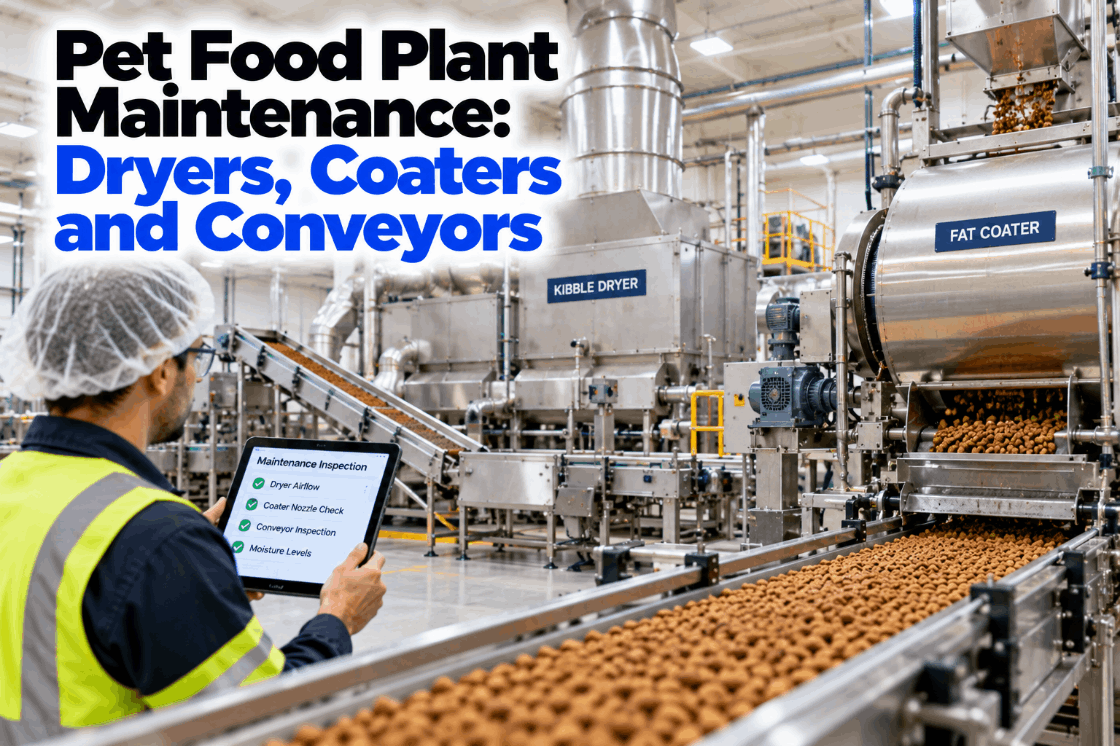
In a dry pet food plant, the extruder gets the attention, but the dryer, the fat coater and the conveyors between them decide how much of the day's kibble leaves the site on spec. A tired recirculation fan widens the moisture spread, a plugged coater nozzle under-coats a batch, and fines left in a dryer plenum become a fire and hygiene risk. Pet food plant maintenance pays off when those slow changes are caught early. See how iFactory watches dryer airflow and moisture data in a short pet food line demo.
Keep Dryers, Coaters and Conveyors Running on Spec
iFactory tracks dryer fan and burner health, checks coater spray nozzles, links maintenance alerts to moisture readings and lets crews log inspections by voice without leaving the line.
The Dry Kibble Line, Stage by Stage
Most dry pet food is extruded. A preconditioner adds steam and water to the mix, the extruder cooks and shapes it under heat and pressure, and a rotating knife cuts it at the die. The wet pieces then pass through a multi-pass dryer and a cooler before fats, digests and palatants are applied in a coater. Every stage after the extruder handles cooked product, so its condition affects both quality and food safety. Map your own line with our process team.
What Wears Inside a Multi-Pass Dryer
A belt dryer is a long run of fans, burners, belts and ductwork working at temperature all shift. Bühler, for example, describes its pet food dryer as carrying fines to a collection point on a mesh belt so they don't build up and disturb airflow. Whatever the make, the same parts need regular attention. Book a dryer review with our dryer specialists.
Why Moisture Spread Matters as Much as the Average
Final moisture for dry kibble is set by each plant to reach a water activity that won't support pathogen growth. Pet Food Industry says it is typically below 10 percent. Uneven airflow means some kibble leaves wetter than the rest, so operators dry everything harder to keep the wettest pieces in limits. Pet Food Industry's worked example shows the effect: with a 10 percent limit, a spread of plus or minus 3 points forces a 7 percent average, while a dryer holding plus or minus 1 point could run near 9 percent. Talk through your dryer data with our support team.
- Average must sit near 7% to keep every piece under 10%
- Extra energy spent drying product below target
- Less saleable weight per tonne of dry solids
- Often caused by a weak fan, blocked plenum or torn belt
- Average can run closer to the limit, near 9% in the example
- Less over-drying and less wasted heat
- Even airflow across the full belt width
- Kept that way by fan, damper and cleanout PMs
The figures above come from a published example. Your moisture and water activity limits come from your product specs and food safety plan, not from this page.
Fines, Fat and Heat Are a Fire Risk
Dryer fires are a known hazard in pet food plants. In October 2020, a fire damaged a dryer at Hill's Pet Nutrition in Emporia, Kansas, and the fire service said it started while workers were cleaning the dryer. Fuel-fired ovens and dryers often fall under NFPA 86, the Standard for Ovens and Furnaces, which calls for yearly inspection and testing of safety interlocks and other safety devices. Confirm how it applies to your dryers with your fire authority and insurer. Plan fire-risk PMs with our safety specialists.
Ask Which Dryer Part Moved the Moisture
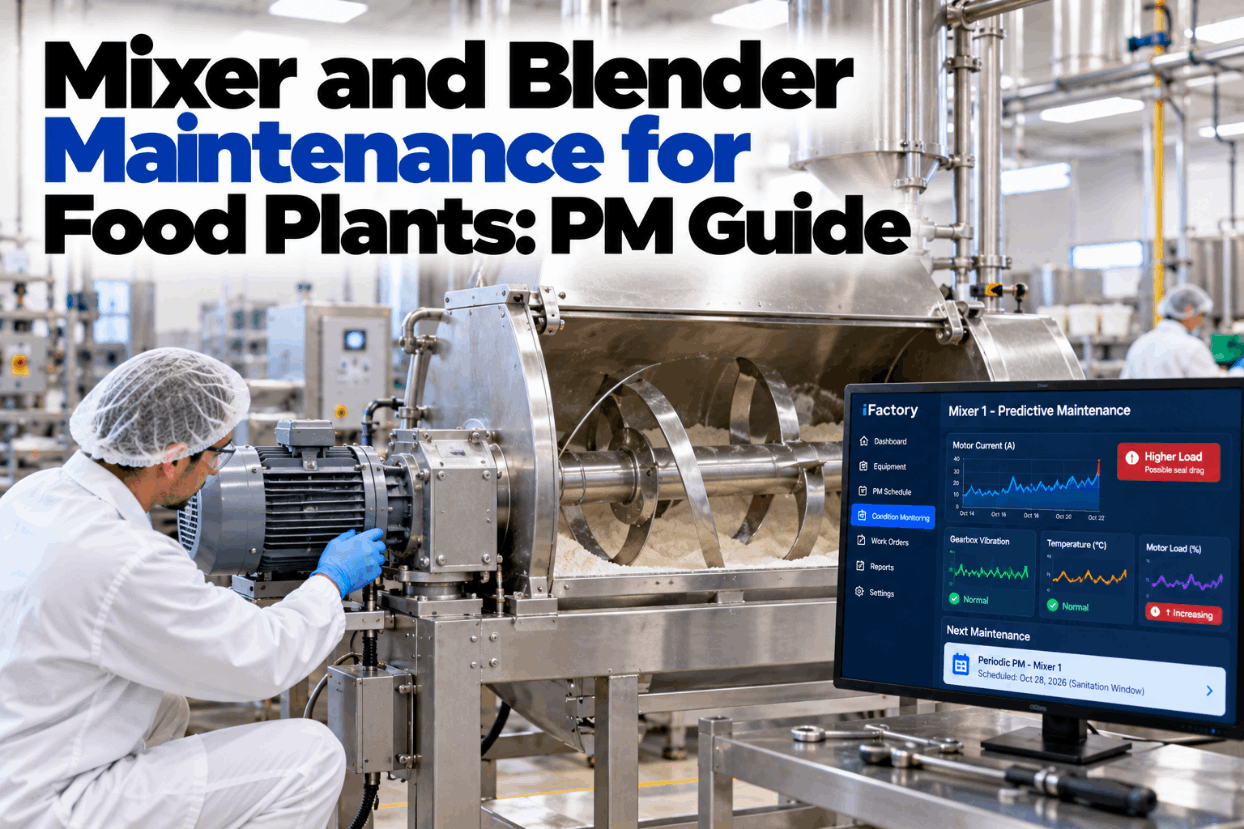
iFactory links fan, burner and damper signals to the moisture readings at the dryer exit, so a widening spread points to the part behind it. Inspections are logged by voice and appear next to the trend.
Vacuum and Drum Coaters Need Different PMs
Coaters decide how much fat and palatant each kibble carries, and coating ingredients are costly. Pet Food Processing reports that vacuum coaters push liquid into the kibble's pores, while drum coaters coat the outside in a continuous flow. It also advises watching nozzle liquid pressure for plugging and fitting inline strainers. Build coater PMs with our support team.
After the Kill Step, Equipment Hygiene Is the Control
Extrusion is usually the kill step for Salmonella. Anything that touches kibble afterwards can recontaminate it, including dryers, coolers, coaters and conveyors. The FDA Preventive Controls for Animal Food rule, 21 CFR Part 507, sets the duties. In a 2021 warning letter, FDA described condensate dripping into the boot of a drag conveyor and cited weak environmental monitoring. Check your post-kill equipment PMs with our food safety team.
AAFCO Writes the Models, States Enforce Them
Searches for an "AAFCO plant" often assume AAFCO inspects or approves factories. It doesn't. AAFCO says it has no regulatory authority at all. It writes model laws and regulations, including the Model Pet Food Regulations, and runs the process for ingredient definitions. State feed control officials and FDA do the enforcing, and most states have adopted the pet food model in some form. Ask our support team how records map to state requirements.
What to Watch Between Dryer, Cooler and Coater
Conveyors move cooked kibble between every stage, and they are easy to overlook. Worn parts shed metal and plastic, and cold spots collect condensation. Each conveyor type has its own checks. Plan conveyor routes with our maintenance planners.
A Dryer Inspection Record Crews Fill by Voice
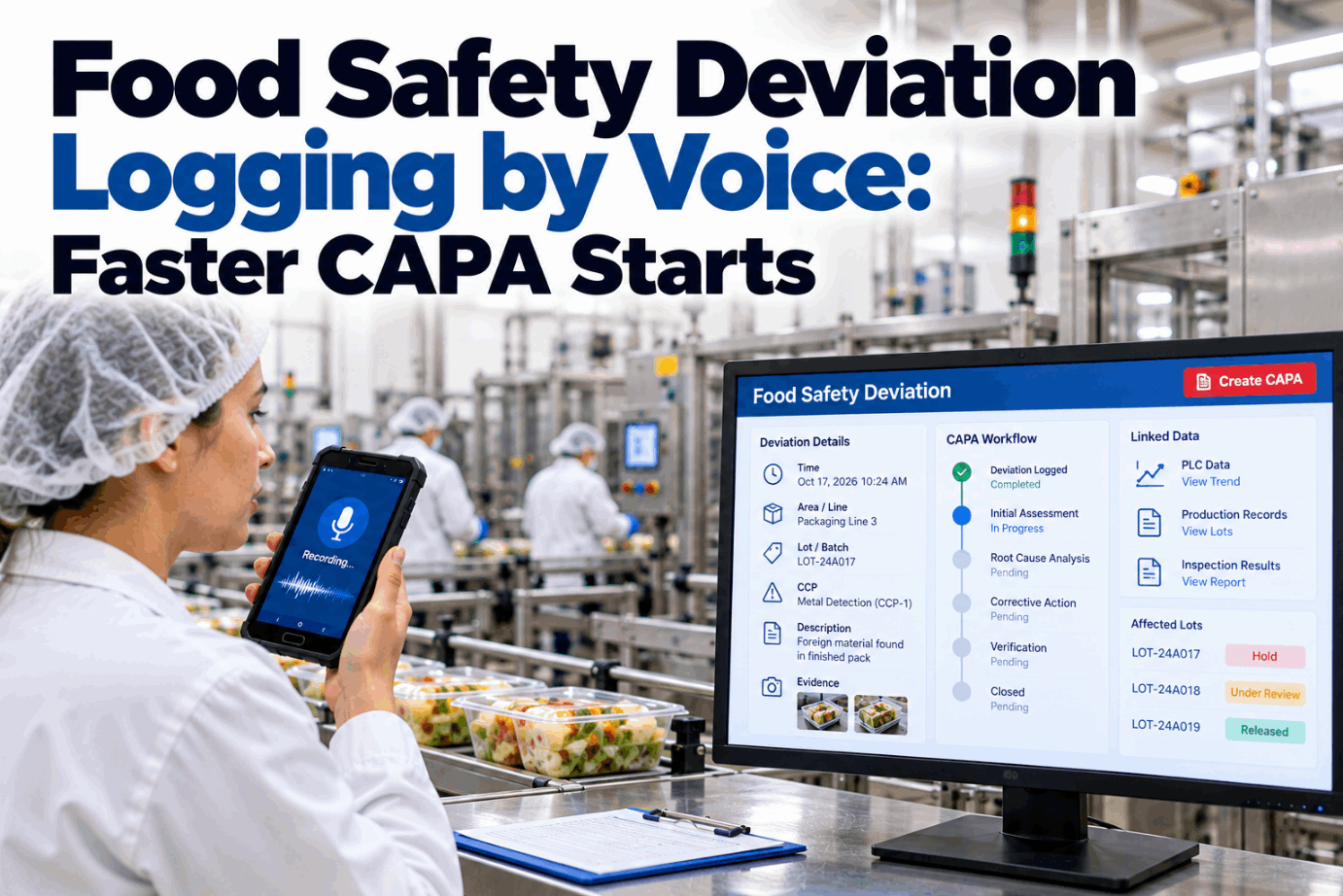
One short record per dryer inspection keeps fire, quality and hygiene checks in one place. Crews speak the entries on the floor, and the record links to the dryer trend. Ask our support team for a blank version.
Three Situations and How the System Responds
These are illustrations of typical responses, not case studies or results from a named plant. Walk through your own scenarios in a line review.
A Simple Worksheet With Assumed Inputs
The clearest value is fewer unplanned dryer and coater stops. Every input below is an assumption made to show the arithmetic only, so replace each one with your own figures. Our team can help build the case with your line data.
Add energy saved from less over-drying and coating ingredient saved from steadier nozzles, but only where your own meter and batch data support it.
Line Analytics, Voice and AI Server in One Package
iFactory is delivered as a turnkey bundle. A pre-configured NVIDIA AI server ships racked and ready, with the dryer, coater and conveyor models loaded, and connects to your PLCs and moisture analysers on site. You rack it, plug in power and Ethernet, and the AI is live. Get a scope for your plant from our deployment team.
- Pre-configured NVIDIA AI server, racked and ready
- Connectors for dryer, coater and conveyor PLCs
- Fan and burner health models
- Moisture-linked maintenance alerts
- Coater nozzle and liquid system checks
- Voice-logged inspections for line crews
- 24×7 remote monitoring of models and hardware
Server installed, dryer and coater signals linked, moisture data mapped.
Normal fan, burner and nozzle patterns learned, alerts checked by maintenance.
Alerts switched on, voice inspections rolled out, planners trained.
Pet Food Plant Maintenance Software for Busy Crews
iFactory is built for lines that run long shifts with hot equipment and strict hygiene rules. Our support team can walk you through a pilot on one dryer.
Pet Food Plant Maintenance for Plant Managers: Common Questions
Fewer Dryer Stops, Steadier Kibble, Cleaner Records
Trend dryer fans and burners, catch coater nozzle problems early and link every alert to moisture data, with inspections logged by voice. The full system is delivered turnkey and goes live in 6 to 12 weeks.