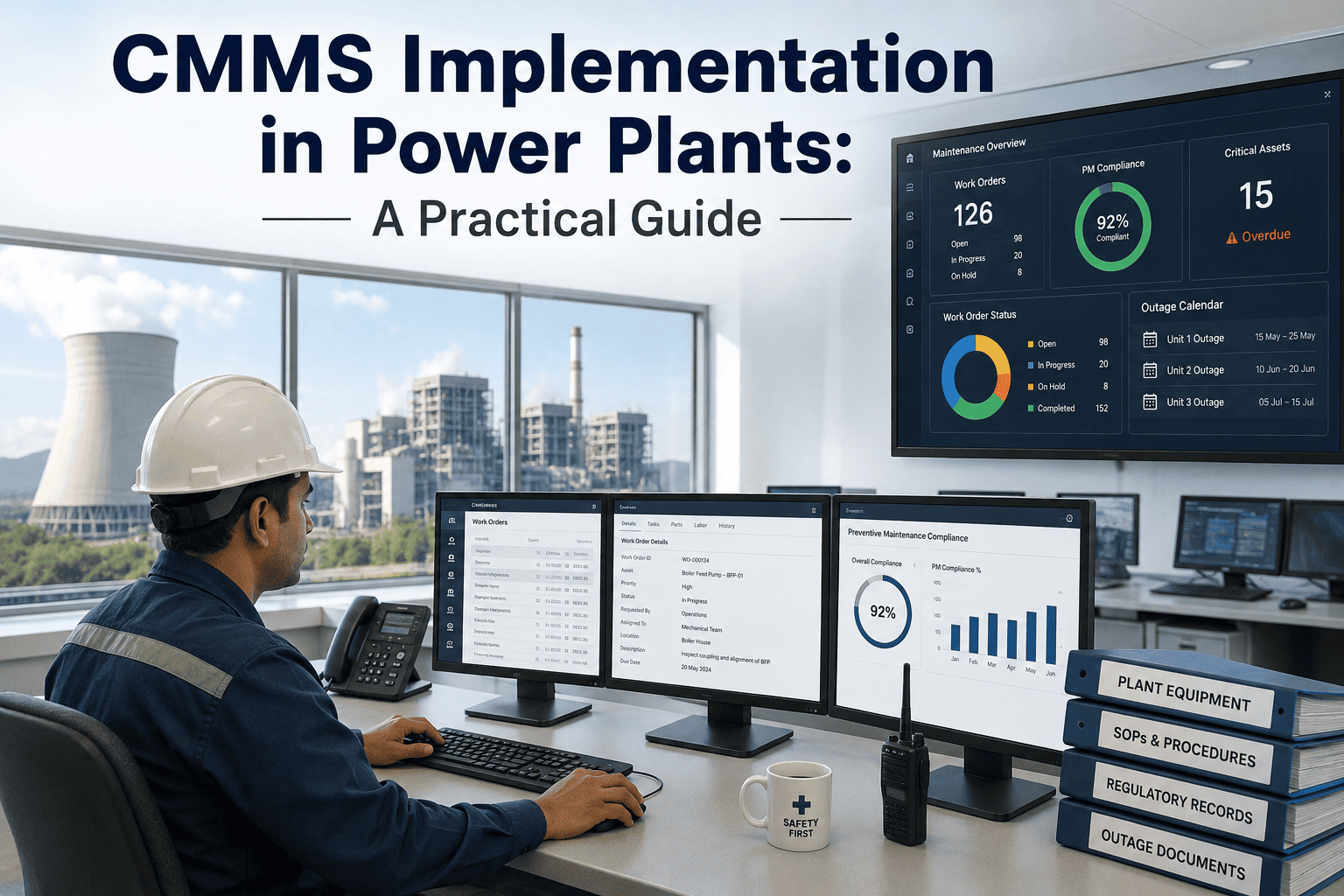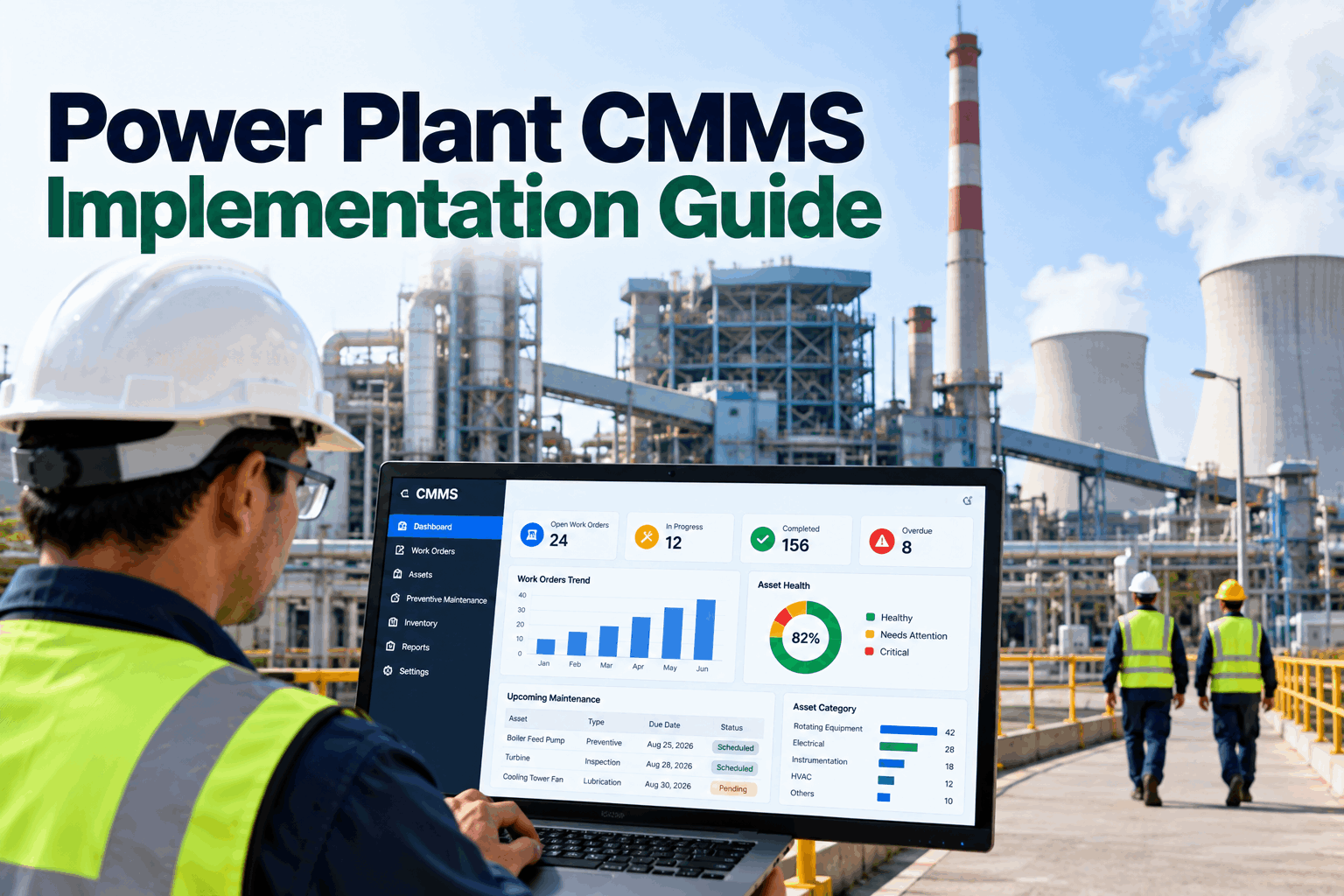
A pump vibration alarm fires at 3:04 a.m. on Unit 2, the CMMS opens a work order, the crew stops leak repair three days later — and the CAPA gate that would normally require documented evidence of what actually caused the vibration and whether the fix held is skipped because it is maintenance, not quality. That is the Power Plant CMMS implementation blind spot the 2026 utility market is finally addressing — the CMMS runs the work, but the evidence trail that operators, regulators, and reliability engineers need for a serious event is often thin. iFactory AI overlays your CMMS, historian, EAM, and quality systems so every high-consequence maintenance event opens a CAPA link, verified recovery, and a genealogy trail that shows the asset history, the corrective action, and the outcome. Book a 30-minute walkthrough of maintenance event to CAPA closure.
The CMMS runs the work. Serious events still need the same CAPA gate and genealogy trail the plant applies to quality signals.
At a Glance
Why Power Plant Maintenance Needs More Than a Closed Work Order
Power generation runs on some of the most reliable maintenance systems in industry. CMMS platforms manage millions of assets across utility fleets, work orders route consistently, spares are tracked, and preventive maintenance schedules are followed. And yet the same fleets face two persistent problems — high-consequence events that get closed as routine work orders and repeat failures that show a pattern nobody stitched together in the moment. Both come from the same gap: the CMMS runs the work but does not always require the CAPA-grade evidence trail that a serious event deserves.
A vibration alarm that fires three times in a month, a seal that leaks after two repairs, a heat exchanger that trends toward failure across a summer season — each of these should carry a governed workflow that captures the actual cause, the corrective action, and the verified outcome. That workflow already exists in the plant's quality world. Extending it to high-consequence maintenance is where CMMS implementation projects create the most reliability value.
Where CAPA and Genealogy Actually Belong in Plant Maintenance
Same asset, same failure mode within a defined window — CAPA opens with prior work order history attached.
Any event with safety, environmental, or regulatory implications — governed evidence trail from the start.
Asset failures that caused or nearly caused a unit trip — full root cause with historian evidence.
Failures on assets that had a recent PM — CAPA on the PM procedure itself, not just the failed asset.
Failed spare parts, wrong specifications, or supplier issues — CAPA links to the procurement record.
Trending degradation caught before failure — CAPA gate on the corrective action before the asset returns to service.
The Closed-Loop Path — Event to Verified Return to Service
Historian data, operator observation, or PM inspection triggers a structured event routed to the correct owner.
Severity rules decide whether the event closes as routine work or opens a CAPA gate with full evidence.
Prior work orders, historian trends, PM records, and spare part history pre-populate the CAPA for reliability engineering.
Work order executed, corrective action logged, PM procedure updated if the root cause implicates it.
Historian and operator observation confirm the fix held. Human sign-off closes the CAPA with the evidence preserved.
Bring one asset and one recent event that should have opened a CAPA. We walk through severity classification, CAPA draft with asset history, verified recovery, and preserved genealogy — all beside your existing CMMS.
Best Practices for CMMS Implementation With Governance
- Define severity rules early — which events auto-close as routine and which require a CAPA gate
- Preserve historian evidence — the pre-event trend is often the most valuable data for root cause
- Link PM effectiveness to failure — a failure on a recently-PM'd asset flags the PM procedure automatically
- Route by consequence — safety and regulatory events go to reliability engineering, not the shift crew alone
- Verify post-return — no CAPA closes until historian or observation confirms the asset behaves as intended
- Keep asset genealogy intact — every event on an asset stays connected to prior events across years
Frequently Asked Questions
No. The CMMS stays as the system of record for work orders and maintenance. iFactory AI overlays it and adds the CAPA gate, verified recovery, and genealogy trail on high-consequence events.
Severity rules configured by your reliability team — safety and environmental implications, repeat failures within a window, trip initiators, and PM effectiveness gaps all trigger the CAPA path automatically.
Yes. Fleet-level configuration with plant-specific overrides — the same governance framework applies across sites while respecting local rules and authority.
Historian data and operator observation confirm the asset behavior post-return. The CAPA closure requires the evidence — no closure by clock-out.
Yes. The audit trail from event detection to human-approved return to service is exactly what regulators and internal reliability audits look for on high-consequence maintenance.
A power plant CMMS runs the work well. High-consequence events deserve the same CAPA gate, verified recovery, and genealogy trail the plant applies to quality signals. iFactory AI adds that layer beside the CMMS you already run.