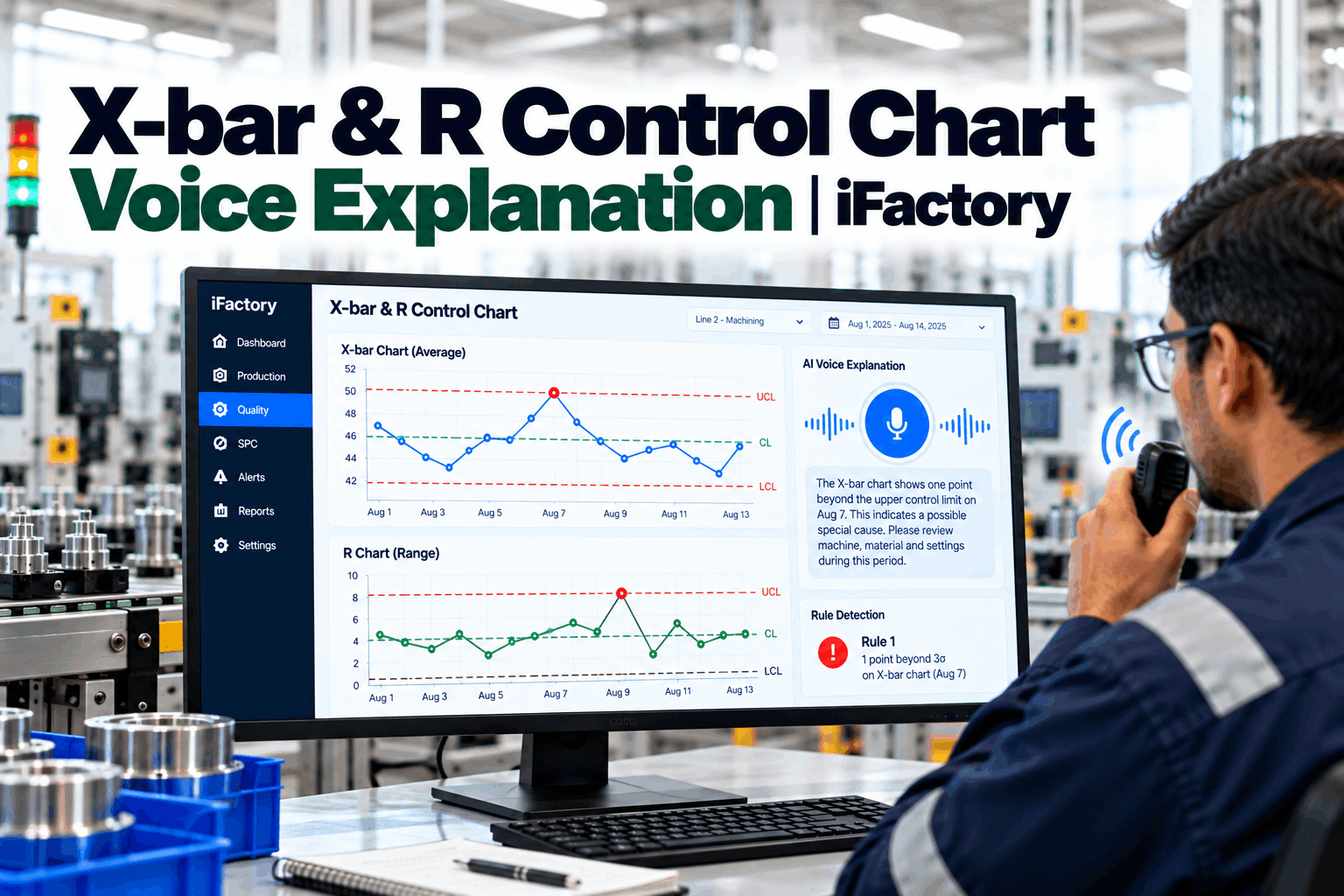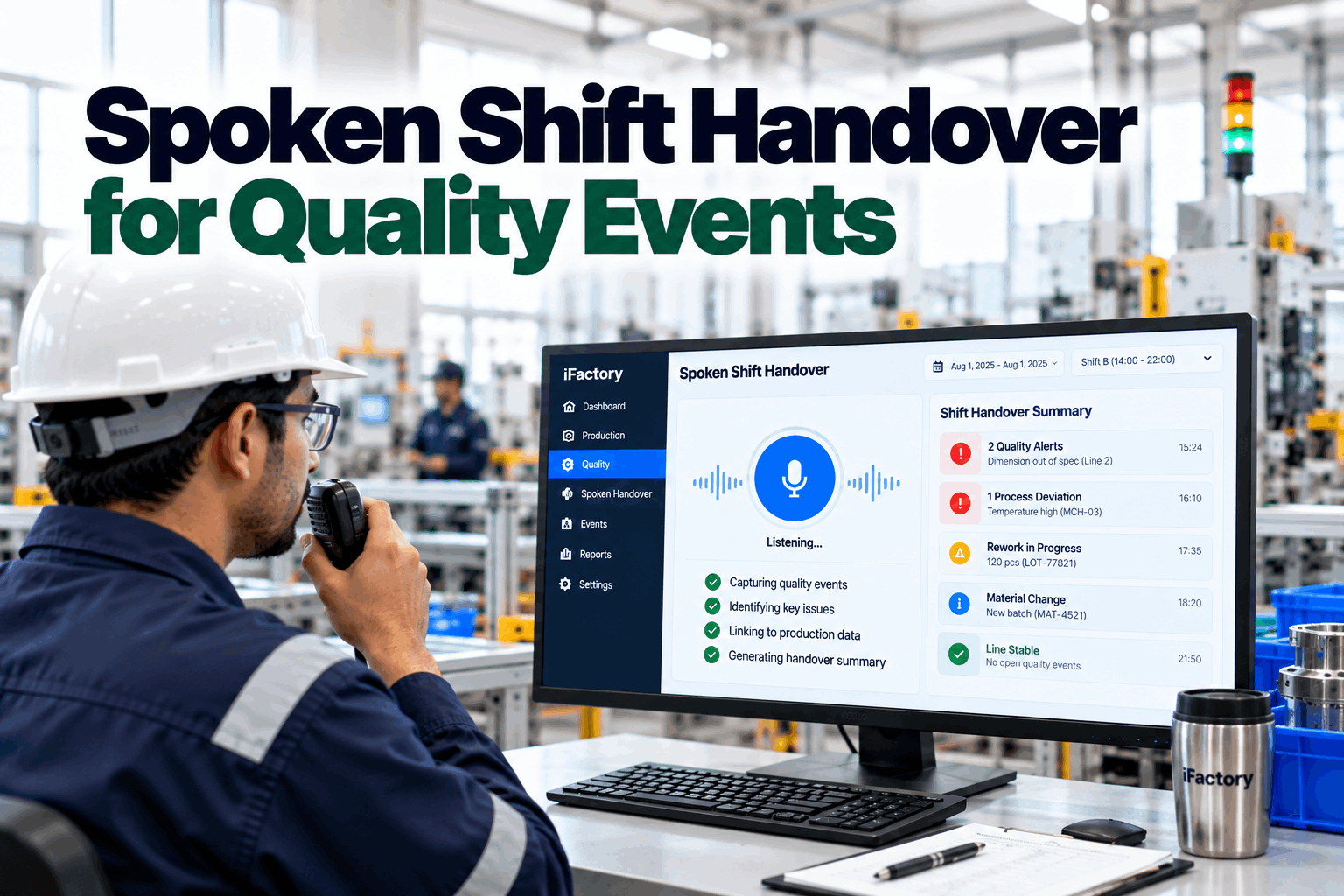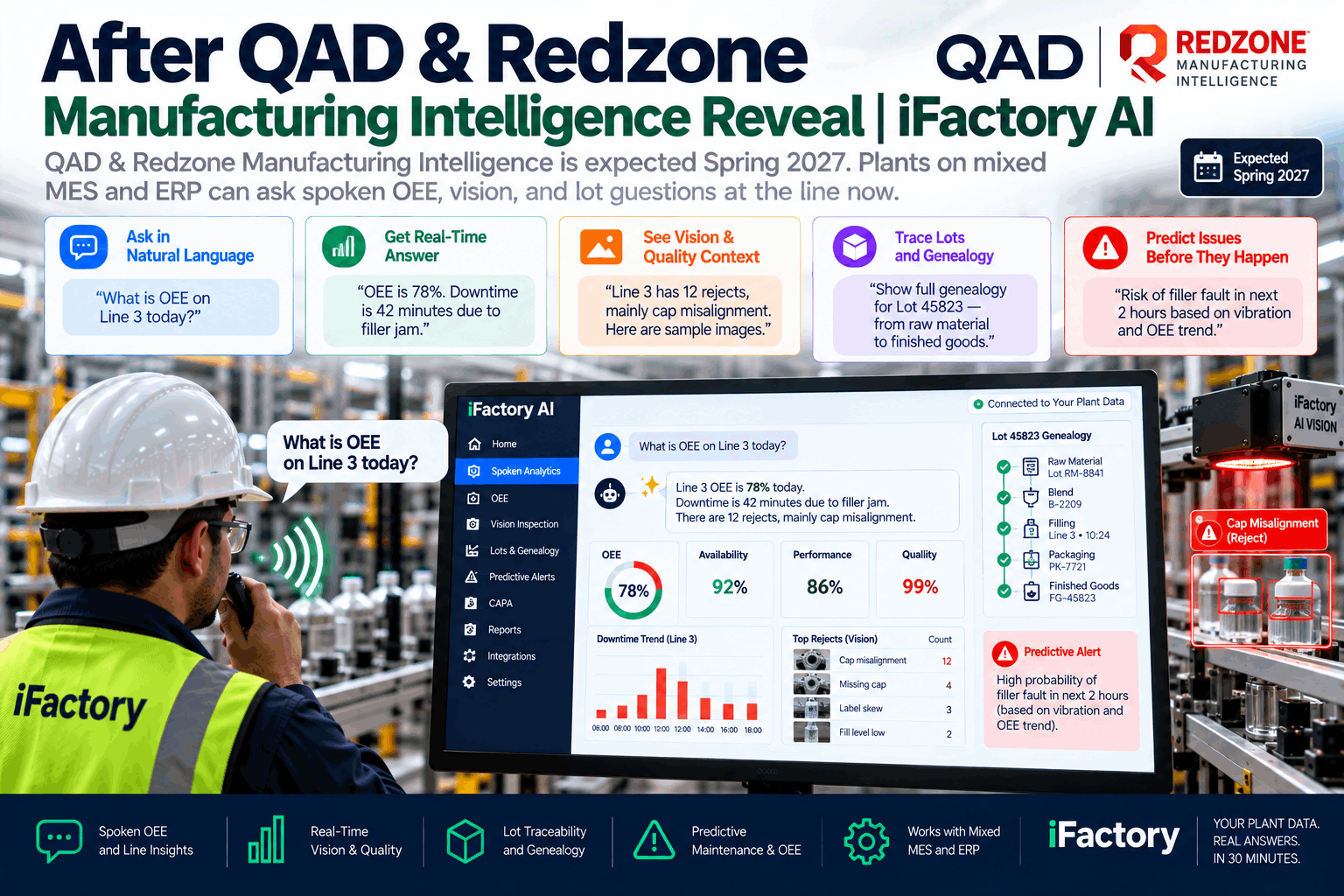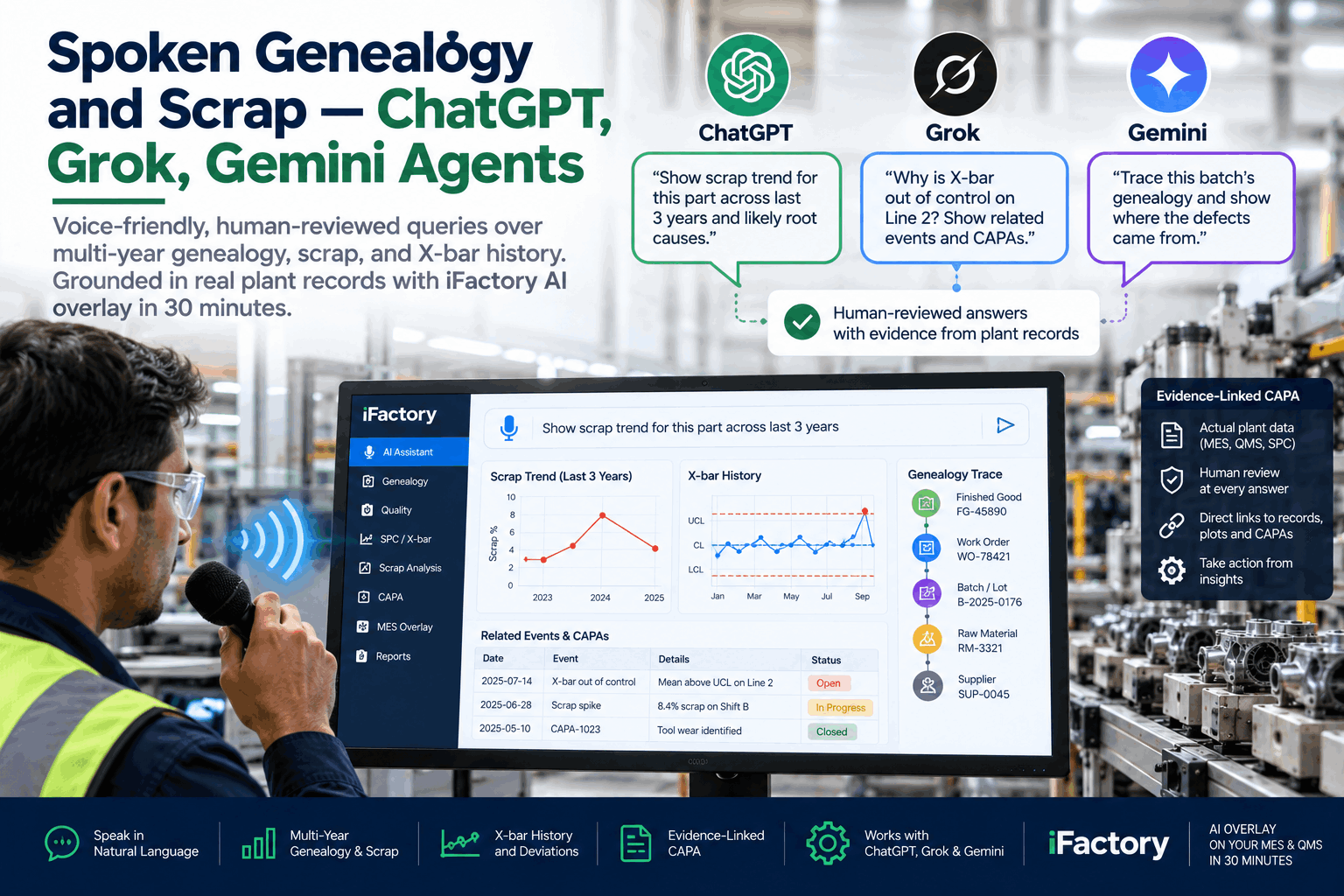
At 2:14 a.m. the X-bar chart goes out of control and the line keeps moving. The real problem is not the red point itself — it is whether this is the same drift that followed the last tool change, the same supplier lot that showed up in quarantine last quarter, or the same recurring variation your CAPA never fully closed. An SPC spoken agent that explains three years of X-bar context in voice is built for that moment, and iFactory AI provides the evidence-linked overlay that keeps the explanation grounded in real MES, QMS, historian, and SPC records — with humans owning every hold and release. See three years of X-bar history explained in voice in 30 minutes.
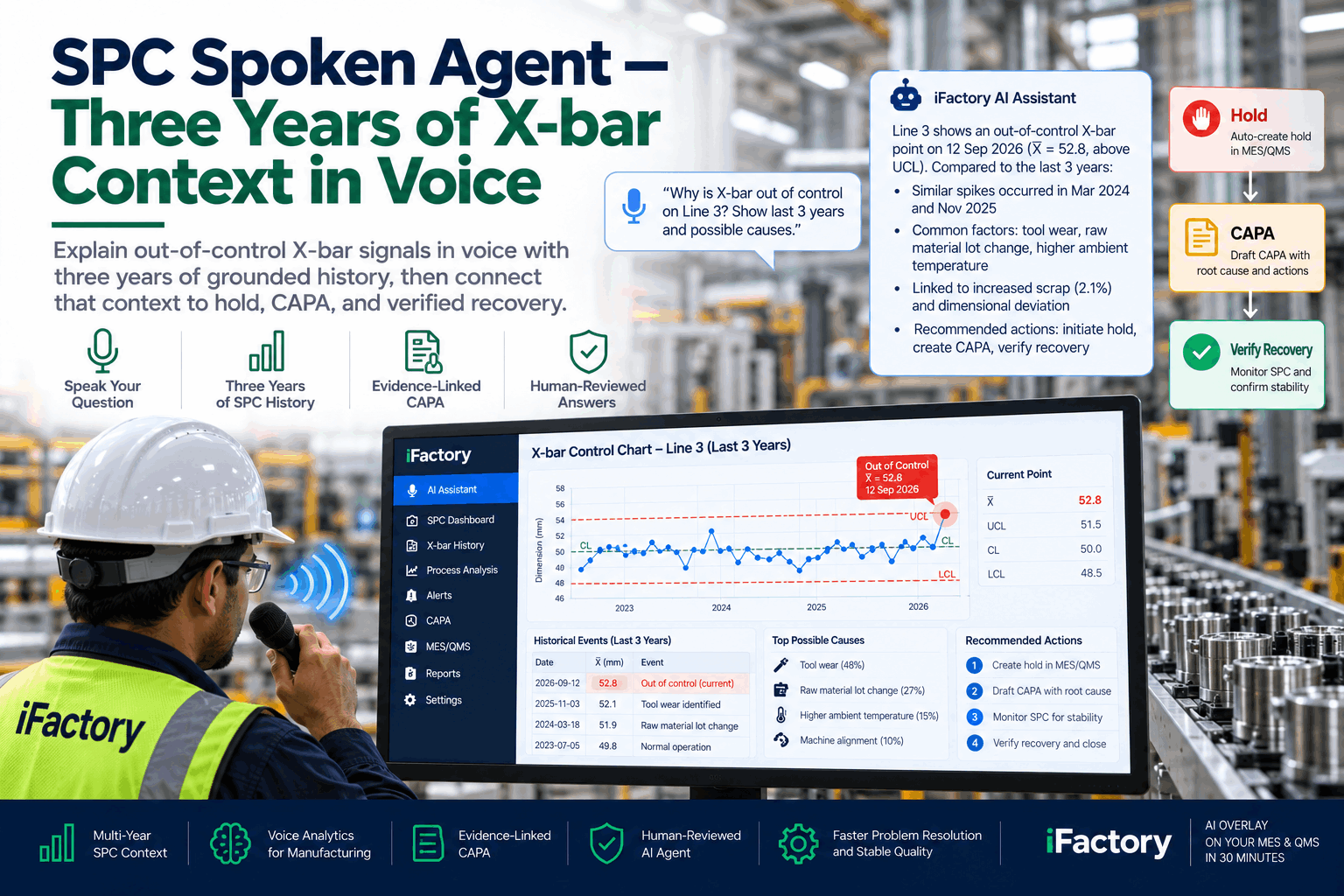
Explain an out-of-control X-bar signal in voice with three years of grounded process history — then connect that context to hold, CAPA, and verification.
At a Glance
Why SPC Signals Stall in Real Plants
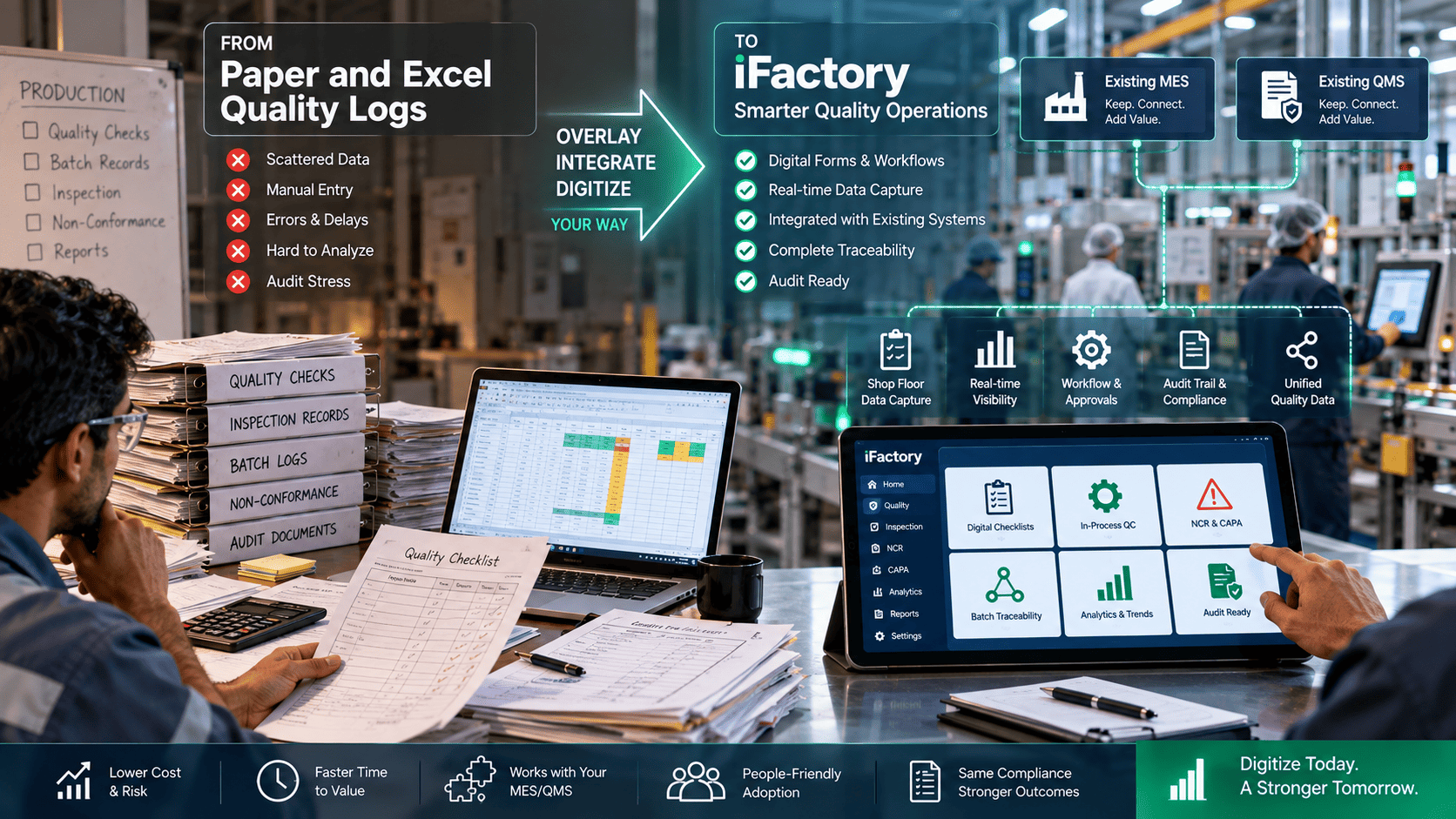
Most plants do not lack data. They lack fast interpretation. An X-bar chart may clearly show a shift, but the signal often gets trapped in a dashboard while the plant keeps running. By the time someone manually traces the event, the trail has already scattered across MES records, QMS notes, maintenance logs, supplier lot changes, and spreadsheet side files. That delay matters because an SPC event is not just a chart issue — it is a decision point.
The common failure pattern looks the same across sites: the chart flags a special-cause signal, the event is reviewed later rather than immediately, quarantine or hold is delayed, genealogy is incomplete or hard to query, CAPA is created without enough process context, the line continues to produce scrap or false rejects, and OEE absorbs hidden quality loss before anyone operationalizes it. The core gap is not detection — it is interpretation with context.
What an SPC Spoken Agent Does
An SPC spoken agent is a voice-based manufacturing assistant that explains chart behavior in plain language while grounding the explanation in evidence. In the case of an X-bar signal, it can narrate the current deviation and then pull in the historical and operational context that matters to quality decisions.
- What changed before this shift?
- Is this tied to a recent tool swap or parameter revision?
- Did a supplier lot transition line up with the signal?
- Has this pattern appeared before in the same family?
- Was there a prior CAPA, and did it work?
- Should we contain now, or continue monitoring?
That is the difference between a chart is red and here is what the plant should review next. The value is not the voice alone. It is the spoken explanation of process memory — years of X-bar history, genealogy slices, similar cases, and prior corrective actions, delivered in a format a quality engineer can use without digging through five systems.
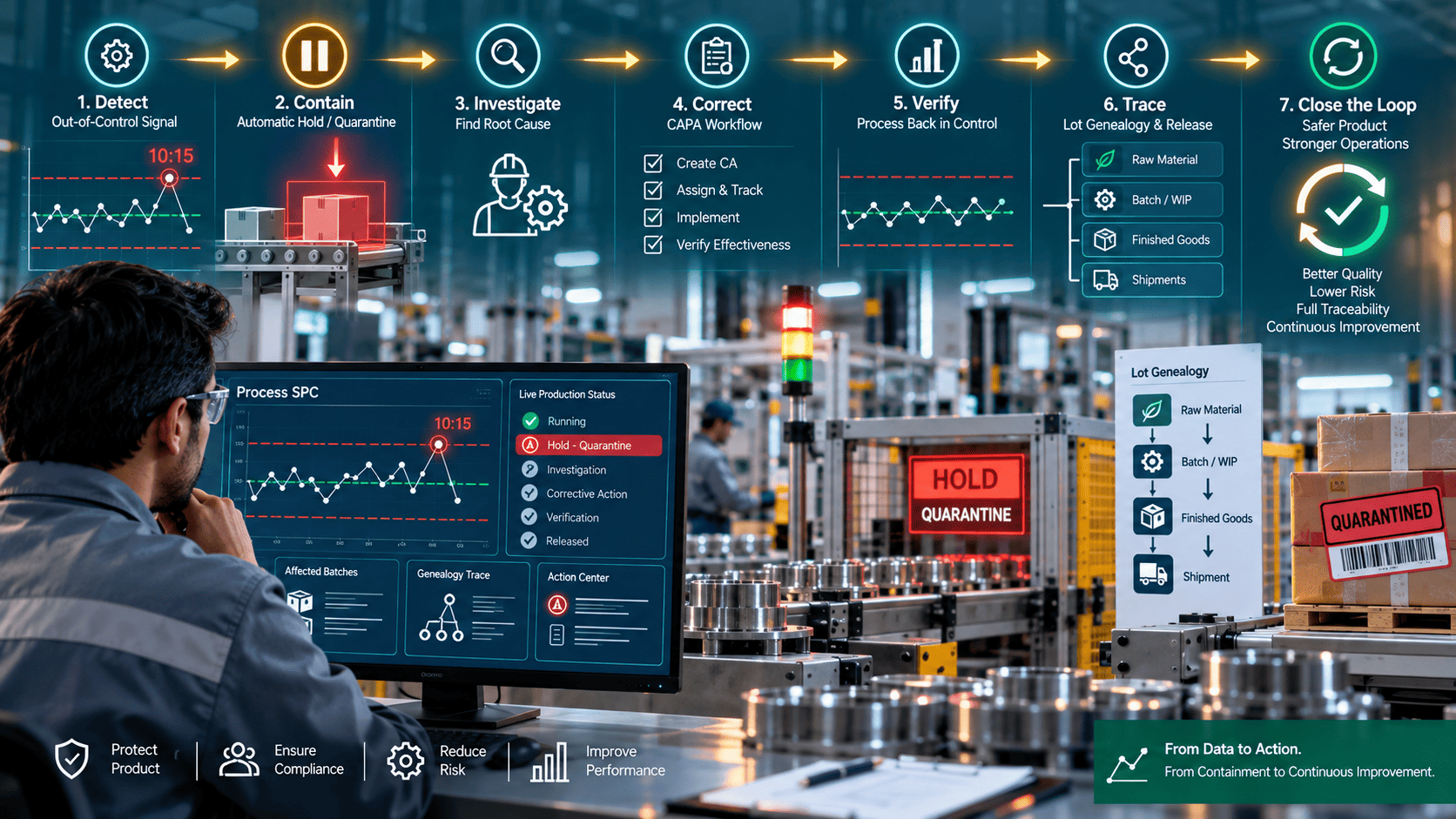
The Closed Loop — Signal, Hold, CAPA, Verification
A useful SPC workflow does not stop at detection. It moves through a closed-loop path because an SPC signal only creates value when it changes behavior.
- Did the X-bar return within control?
- Did variation narrow?
- Did false rejects decrease?
- Did scrap or rework fall?
- Did the same special cause reappear?
Quality instability shows up in OEE as hidden loss. Better containment and better corrective action support recovery by reducing quality loss, avoiding unnecessary stoppages, and preventing repeated rework loops.
Walk through an SPC signal, spoken context, a hold recommendation, and a CAPA draft — with genealogy preserved end to end.
How iFactory AI Fits as an Overlay
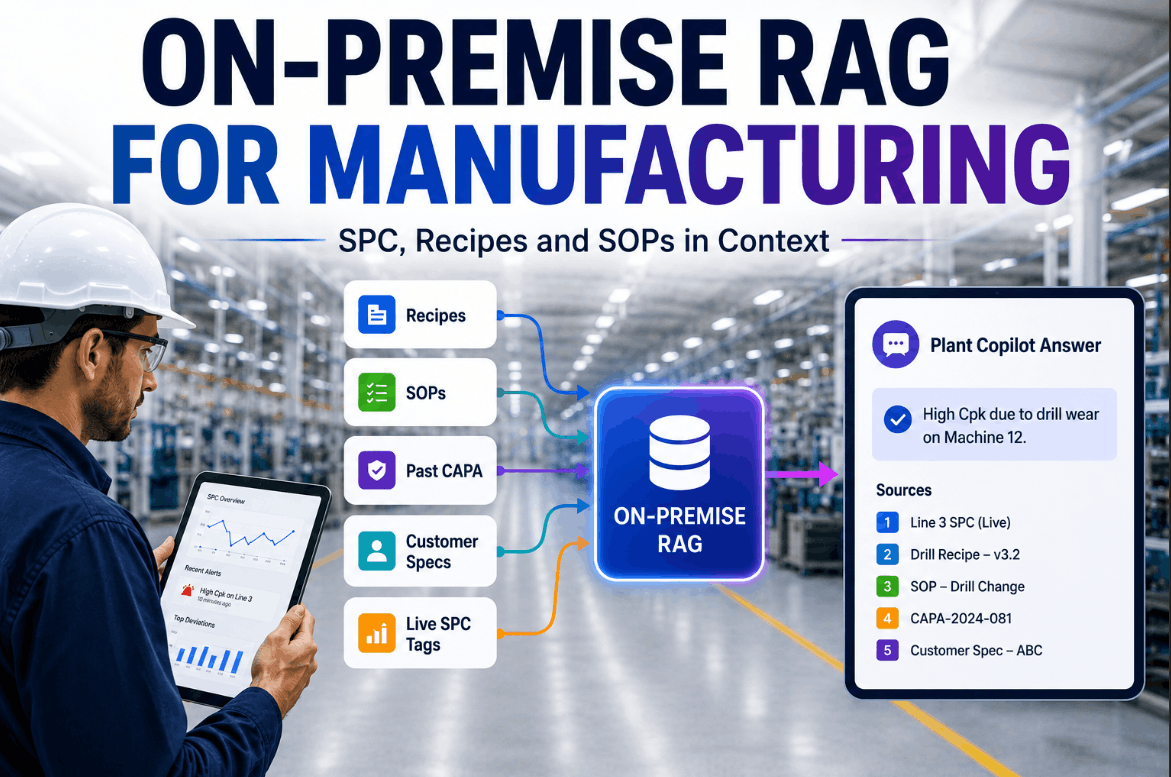
iFactory AI is best positioned as a quality and MES intelligence overlay, not a rip-and-replace platform. That matters because most plants already have MES, QMS, historian, and SPC systems in place. The challenge is not throwing those away — it is connecting them into a decision-ready layer that helps humans interpret signals faster.
Ingest signals without changing where they live. The systems of record stay intact.
Current deviation, likely related process events, comparable historical patterns, linked genealogy, prior corrective actions.
Hold, quarantine, or escalate — with human sign-off preserved for every decision.
Not an auto-approved action — a structured draft the reviewer can accept, modify, or reject.
Post-action defect rate, variation, false rejects, and stop frequency all reviewed together.
The narrative is retained across product, lot, machine, tool, and operator history for future review.
Frequently Asked Questions
A voice-based manufacturing assistant that explains SPC signals in plain language and connects them to process history, genealogy, and CAPA context.
It reduces manual chart hunting by narrating multi-year trend context, related process events, and prior corrective actions so the engineer can decide faster.
It can surface the evidence and suggest the next review step, but final hold authority should remain with the plant human review process and quality rules.
It assembles the relevant chart history, genealogy slice, and prior events into a structured narrative that supports CAPA drafting and review.
No. The right approach is an overlay that works beside existing manufacturing systems to turn signals into action and preserve system-of-record integrity.
If your team is spending too much time reconstructing the story behind an X-bar event, the problem is not visibility — it is context. Voice helps explain three years of SPC history and connect it to action.